
Precision fermentation lets you grow proteins straight from microorganisms, like yeast or bacteria, without needing animals. This innovative method uses genetic engineering to cultivate these microbes, producing sustainable food ingredients with lower environmental impact. You’ll find plant-based meat, dairy substitutes, and flavors created through this process. Not only does it address ethical concerns, but it also supports a healthier planet. Discover how this technique could revolutionize our food systems and offer delicious, animal-free options.
Key Takeaways
- Precision fermentation utilizes microorganisms to produce proteins and flavors traditionally sourced from animals, offering a sustainable alternative.
- The process involves genetic engineering to modify yeast, bacteria, or fungi for targeted protein production.
- This method significantly reduces greenhouse gas emissions and resource consumption compared to conventional animal farming.
- Precision fermentation enables the creation of diverse food products, including plant-based meats, dairy substitutes, and egg replacements.
- It supports ethical food production by eliminating animal welfare concerns, contributing to a more sustainable food system.
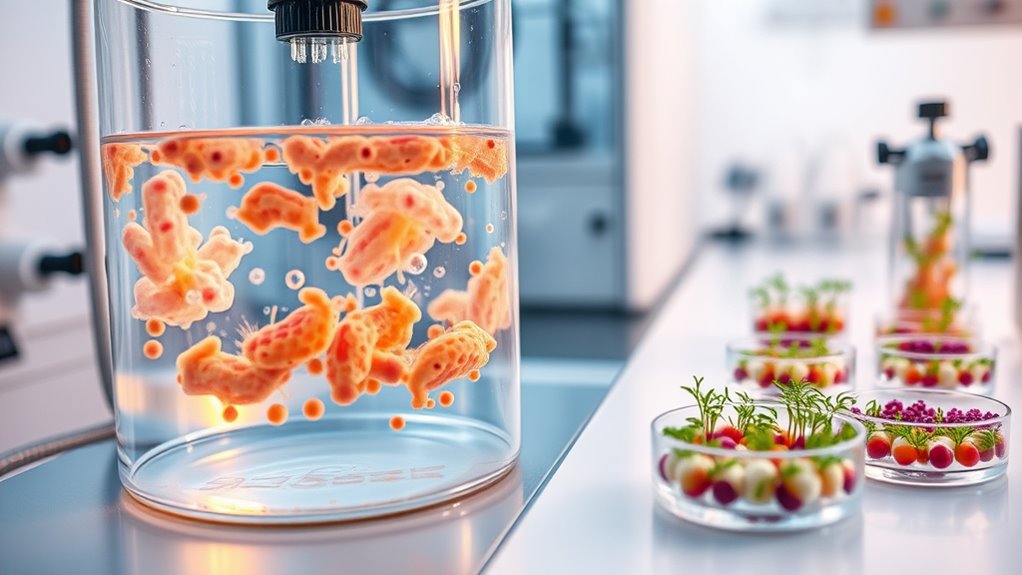
Have you ever wondered how we can create complex flavors and ingredients without traditional farming? Precision fermentation is revolutionizing the way we think about food production. You might be surprised to learn that this innovative process uses microorganisms like yeast, bacteria, or fungi to produce proteins, fats, and even flavors that are typically derived from animals. By harnessing the power of sustainable innovation and biotech advancements, precision fermentation allows you to enjoy a wide range of foods without the environmental impact of conventional agriculture.
Imagine biting into a juicy burger that’s completely free of meat. With precision fermentation, that’s not just a dream. These microorganisms can be engineered to produce the proteins found in animal products, often with fewer resources and lower greenhouse gas emissions. This means you can enjoy your favorite foods while contributing to a healthier planet. You don’t have to sacrifice taste or texture; in fact, many products made through precision fermentation offer flavors that rival their traditional counterparts.
Experience the future of food with precision fermentation, creating delicious meat-free options that are kinder to our planet.
The process begins with identifying the specific proteins or flavors you want to replicate. Scientists then use genetic engineering to modify microorganisms, enabling them to produce these desired compounds. Once cultivated, these microorganisms ferment sugars, creating the proteins or flavors you crave. The result? A product that’s not only sustainable but also free from the ethical concerns often associated with animal farming. You can feel good about what you’re eating, knowing it’s been created with less environmental strain.
What’s even more exciting is that precision fermentation isn’t just limited to proteins. It can produce dairy alternatives, egg substitutes, and even the flavors that make your favorite snacks irresistible. By tapping into the capabilities of biotech advancements, this method reduces reliance on traditional farming and opens up a world of possibilities for food innovation.
As you consider the future of food, precision fermentation stands out as a beacon of hope. It’s a solution that addresses key issues like food security and climate change, providing a more sustainable way to feed the growing global population. You’ll find that these advancements aren’t just a trend; they’re a necessary evolution in how we approach food production. Furthermore, sustainable food practices like precision fermentation are essential for mitigating environmental impact. So next time you enjoy a plant-based meal, remember that precision fermentation is changing the game, offering you delicious options that are kinder to the planet.
Top picks for "precision fermentation grow"
Open Amazon search results for this keyword.
As an affiliate, we earn on qualifying purchases.
Frequently Asked Questions
What Are the Environmental Benefits of Precision Fermentation?
You’ll find that precision fermentation offers significant environmental benefits. It promotes sustainable agriculture by reducing reliance on traditional farming methods, which often involve land degradation and excessive water use. By harnessing microbial processes, you’re directly contributing to carbon footprint reduction. This innovative approach minimizes greenhouse gas emissions associated with livestock production, helping combat climate change. Overall, you’re supporting a more efficient and eco-friendly food system that benefits both the planet and future generations.
How Does Precision Fermentation Compare to Traditional Fermentation Methods?
Precision fermentation offers advantages over traditional methods by allowing for greater control in scaling challenges and flavor customization. While traditional fermentation relies on natural processes, precision fermentation uses engineered microorganisms to produce specific compounds more efficiently. This means you can create tailored flavors and textures that meet consumer demands consistently. Additionally, scaling up production becomes more manageable, ensuring that you can meet market needs without sacrificing quality or taste.
Is Precision Fermentation Suitable for Gluten-Free or Allergen-Free Products?
Yes, precision fermentation is suitable for gluten-free and allergen-free products. You can create gluten-free options and allergen-free formulations without the risk of cross-contamination. This method allows you to engineer proteins specifically tailored to meet dietary restrictions, ensuring safety and quality. By utilizing clean and controlled processes, you can cater to consumers looking for alternatives that fit their needs, providing a safer choice for those with allergies or gluten sensitivities.
Can Precision Fermentation Be Used to Produce Other Nutrients Besides Proteins?
Absolutely, you can use precision fermentation to produce other nutrients besides proteins. Think of it like a garden of alternative nutrient sources, where you cultivate vitamins and minerals just as easily as you grow proteins. This method can create plant-based supplements enriched with essential nutrients, promoting a healthier diet. So, if you’re looking to enhance your nutrition without relying solely on animals, precision fermentation offers exciting possibilities for diverse nutrient production.
What Regulatory Challenges Does Precision Fermentation Face in Different Countries?
Precision fermentation faces various regulatory hurdles in different countries, often stemming from a lack of international standards. You might find that some nations have stringent approval processes for novel food products, while others are more lenient. Managing these regulations can be complex, as they often involve safety assessments and labeling requirements. Staying informed about each country’s policies is essential if you want to successfully introduce precision fermentation products to global markets.
Conclusion
In the world of precision fermentation, you’re witnessing a revolution that’s changing how we think about protein production. By harnessing nature’s own microorganisms, you’re not just reducing reliance on animals; you’re also paving the way for a more sustainable future. As the saying goes, “you reap what you sow.” So, by investing in these innovative methods today, you’re sowing the seeds for a healthier planet tomorrow, where delicious, animal-free proteins are the norm, not the exception.