
Searching for the best computerized telescopes in 2026? The Celestron NexStar 5SE stands out as the overall top pick for its powerful optics and user-friendly interface. For beginners, the Celestron 114LCM offers great value with straightforward setup, while the Celestron NexStar 8SE appeals to experienced enthusiasts seeking professional-grade performance. The main tradeoffs revolve around price, complexity, and portability — higher-end models deliver more features but are bulkier and costlier. Continue reading for a detailed breakdown of these options and how to choose the right one for your needs.

Prime made for students and young adults
- Fast, free delivery for dorm and study essentials
- Prime Video and Amazon Music included
- Member-only deals
Key Takeaways
- Top picks combine ease of use with advanced features, making them suitable for different skill levels.
- Size and weight vary significantly, influencing portability and setup convenience.
- Price correlates strongly with features like aperture size and automation capabilities.
- Not all models are equally upgradeable; consider future needs when choosing a system.
- Budget options often sacrifice some precision or features but still deliver solid performance for beginners.
| Celestron NexStar 127SLT Maksutov-Cassegrain Computerized GoTo Telescope |  | Best Overall for Versatility and Quality | Aperture: 127mm | Optical Design: Maksutov-Cassegrain | Database: 40,000+ objects | VIEW ON AMAZON | See Our Full Breakdown |
| Celestron 114LCM Computerized Reflector Telescope for Beginners |  | Best Value for Entry-Level Stargazing | Type: Reflector | Optics: All glass | Object Locator: GoTo | VIEW ON AMAZON | See Our Full Breakdown |
| Celestron NexStar 5SE Schmidt-Cassegrain Computerized Telescope |  | Best for Versatile Astronomy and Medium-Size Observation | Aperture: 5 inches | Optics: Schmidt-Cassegrain | Mount: GoTo with NexStar+ | VIEW ON AMAZON | See Our Full Breakdown |
| Celestron NexStar 4SE Maksutov-Cassegrain GoTo Telescope |  | Best Compact for Lunar and Planetary Observation | Aperture: 4 inches | Optics: Maksutov-Cassegrain | Mount: GoTo with SkyAlign | VIEW ON AMAZON | See Our Full Breakdown |
| Celestron NexStar 6SE Schmidt-Cassegrain Telescope | 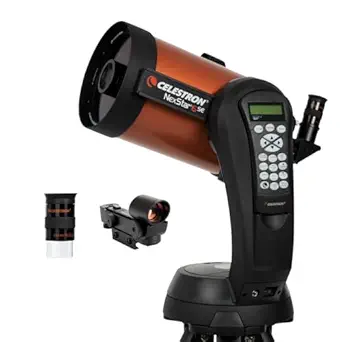 | Best for Serious Observation and Upgrading | Aperture: 6 inches | Optics Type: Schmidt-Cassegrain | Mount: Computerized GoTo | VIEW ON AMAZON | See Our Full Breakdown |
| Celestron AstroMaster 130EQ Telescope for Beginners |  | Best Overall for Beginners | Aperture: 130mm | Optics Coating: Aluminum and SiO₂ coatings | Mount Type: Equatorial | VIEW ON AMAZON | See Our Full Breakdown |
| Smart Telescope with 4K Astrophotography Camera and Dual Screens |  | Best for Casual Observation and Photography | Focal Length: 300mm (f/8.89) | Aperture: 78mm | Magnification: up to 350X | VIEW ON AMAZON | See Our Full Breakdown |
| Celestron NexStar 102SLT Computerized Refractor Telescope |  | Best for Portable, Automated Viewing | Aperture: 102mm | Optical Design: Refractor | Technology: SkyAlign | VIEW ON AMAZON | See Our Full Breakdown |
| Celestron NexStar 8SE Computerized Telescope – Schmidt-Cassegrain |  | Best for Serious Enthusiasts and Deep-Sky Viewing | Aperture: 8 inches | Optics: Schmidt-Cassegrain | Mount: Computerized GoTo with NexStar+ | VIEW ON AMAZON | See Our Full Breakdown |
| Celestron StarSense Explorer DX 5″ App-Enabled Schmidt-Cassegrain Telescope |  | Best for Smartphone-Integrated Easy Setup | Optical Diameter: 5 inches | Optical Coating: StarBright XLT | Mount Type: Manual altazimuth | VIEW ON AMAZON | See Our Full Breakdown |
| computerized telescope | Aperture | Warranty |
|---|---|---|
| Celestron NexStar 127SLT Maksu | 127mm | 2 years |
| Celestron 114LCM Computerized | — | 2-year US |
| Celestron NexStar 5SE Schmidt- | 5 inches | 2 years |
| Celestron NexStar 4SE Maksutov | 4 inches | 2 years |
| Celestron NexStar 6SE Schmidt- | 6 inches | 2 years |
| Celestron AstroMaster 130EQ Te | 130mm | — |
| Smart Telescope with 4K Astrop | 78mm | — |
| Celestron NexStar 102SLT Compu | 102mm | — |
| Celestron NexStar 8SE Computer | 8 inches | 2 years |
| Celestron StarSense Explorer D | — | — |
More Details on Our Top Picks
Celestron NexStar 127SLT Maksutov-Cassegrain Computerized GoTo Telescope
The Celestron NexStar 127SLT stands out for combining portability with a solid optical design, thanks to its 127mm Maksutov-Cassegrain lens. Compared to the Celestron NexStar 5SE, it offers a slightly smaller aperture but excels in delivering bright, well-corrected images of the Moon, planets, and some deep-sky objects, making it a versatile choice for both beginners and intermediate users. Its SkyAlign technology and database of over 40,000 objects ensure accurate, automated tracking, though it depends on a power source and has a learning curve for those new to computerized systems. This pick is ideal for those wanting a lightweight, all-in-one telescope capable of quality views without the bulk of larger scopes.
Pros:- Lightweight and easy to transport for on-the-go observing
- Automatic object locating and smooth tracking with GoTo system
- Bright, color-corrected views thanks to Maksutov-Cassegrain optics
- Includes sky simulation software for learning
Cons:- Requires power source, limiting portability in remote locations
- Steep learning curve for absolute beginners unfamiliar with computerized setups
Best for: Beginners who want a portable, high-quality telescope with a broad celestial catalog
Not ideal for: Advanced astrophotographers seeking extensive deep-sky imaging capabilities or large apertures for detailed astrophotography
- Aperture:127mm
- Optical Design:Maksutov-Cassegrain
- Database:40,000+ objects
- Tripod:Adjustable steel
- Alignment Technology:SkyAlign
- Included Software:Starry Night Special Edition
- Warranty:2 years
Our verdict“A well-rounded choice for amateur astronomers seeking a portable, capable telescope with excellent optics.”
Celestron 114LCM Computerized Reflector Telescope for Beginners
The Celestron 114LCM offers an excellent entry point into computerized stargazing, with a 114mm reflector that automates the process of locating over 4,000 celestial objects. While it doesn’t boast the high-contrast optics of the NexStar 127SLT, its full glass optics and included eyepieces provide clear views suitable for learning the night sky. Its GoTo mount simplifies object finding, but setup and alignment can be challenging for complete novices, especially compared to the more straightforward SkyAlign system of larger models like the NexStar 5SE. This telescope makes the most sense for beginners willing to invest some effort in initial setup who want a budget-friendly, automated scope for casual observation.
Pros:- Automated object locating with GoTo mount
- Includes multiple eyepieces and a red dot finderscope
- Free sky software for sky planning and learning
- Solid 2-year warranty and US-based support
Cons:- Setup and alignment may be complex for absolute beginners
- Limited to basic features, not ideal for advanced users
Best for: Beginners eager to learn the sky with a budget-friendly, automated telescope
Not ideal for: Users seeking quick, hassle-free setup or advanced astrophotography features
- Type:Reflector
- Optics:All glass
- Object Locator:GoTo
- Objects Located:4,000+
- Eyepieces:25mm & 9mm
- Finderscope:StarPointer
- Warranty:2-year US
Our verdict“A practical, affordable choice for beginners ready to put in some initial effort to learn the night sky.”
Celestron NexStar 5SE Schmidt-Cassegrain Computerized Telescope
The NexStar 5SE combines portability with powerful optics, featuring a 5-inch Schmidt-Cassegrain that excels at high-contrast lunar and planetary views. Its automated GoTo system and SkyAlign technology make object finding straightforward, though initial alignment can challenge new users. Compared to the larger NexStar 6SE, this model offers a more manageable size and weight while still delivering crisp images and a broad object database. Its compatibility with accessories allows upgrades for planetary imaging, but it may require additional gear for serious deep-sky astrophotography. This telescope is best suited for intermediate users who want a balance of portability and performance.
Pros:- Easy to set up with automated GoTo and SkyAlign
- Compact and portable design for travel
- Excellent optics for lunar and planetary viewing
- Supports accessories for upgrades
Cons:- Limited to basic eyepieces included
- Additional gear needed for detailed astrophotography
- Alignment can be tricky for beginners
Best for: Amateur astronomers seeking a portable, versatile telescope with good planetary and lunar views
Not ideal for: Deep-sky astrophotographers or those needing advanced imaging capabilities without additional equipment
- Aperture:5 inches
- Optics:Schmidt-Cassegrain
- Mount:GoTo with NexStar+
- Object Database:40,000+
- Included Eyepiece:25mm Plossl
- Warranty:2 years
Our verdict“A flexible, portable telescope perfect for enthusiasts who want quality lunar and planetary views with room to grow.”
Celestron NexStar 4SE Maksutov-Cassegrain GoTo Telescope
The NexStar 4SE offers a compact, 4-inch Maksutov-Cassegrain design that is exceptionally easy to set up with SkyAlign technology. Its small footprint makes it ideal for travel and quick sessions, delivering sharp, high-contrast views of the Moon and planets. While its aperture limits deep-sky object observation, it excels in planetary detail, outperforming larger scopes in portability and ease of use. Its built-in wedge supports some basic astrophotography, though not at the level of larger, dedicated imaging systems. This telescope suits users who prioritize portability and planetary viewing, especially those new to computerized scopes.
Pros:- Quick setup with SkyAlign technology
- Highly portable and travel-friendly
- Bright, sharp lunar and planetary views
- Includes a wedge for basic astrophotography
Cons:- Limited aperture for deep-sky objects
- Requires power for computerized functions
- Not suited for detailed astrophotography beyond basic imaging
Best for: Travelers and beginners focusing on lunar and planetary observation with a compact scope
Not ideal for: Deep-sky astrophotographers or users wanting high-end imaging capabilities
- Aperture:4 inches
- Optics:Maksutov-Cassegrain
- Mount:GoTo with SkyAlign
- Compatibility:Celestron accessories
- Warranty:2 years
Our verdict“A highly portable, planetary-focused telescope perfect for travel and beginner lunar and planetary enthusiasts.”
Celestron NexStar 6SE Schmidt-Cassegrain Telescope
The NexStar 6SE offers a 6-inch aperture that strikes a balance between portability and high-detail viewing, making it suitable for users who want to go beyond basic stargazing. Its automated GoTo system and SkyAlign technology simplify locating deep-sky objects, lunar details, and planetary features. Compared to the smaller 5SE, it provides brighter images and more light-gathering power, with a large object database for comprehensive sky exploration. While it isn’t as portable as smaller models, its upgrade options and clear optics make it a favorite for enthusiasts ready to expand their astrophotography or detailed observation capabilities, albeit with some initial setup complexity.
Pros:- Large 6-inch aperture for detailed views
- Automated GoTo and SkyAlign for ease of use
- Supports a range of accessories for astrophotography
- Quick setup for a scope of this size
Cons:- Heavier and less portable than smaller scopes
- Initial alignment can be challenging for newcomers
- Requires power source for operation
Best for: Intermediate to advanced amateur astronomers seeking a larger aperture with upgrade potential
Not ideal for: Complete beginners who prioritize portability or quick setup over detailed observation
- Aperture:6 inches
- Optics Type:Schmidt-Cassegrain
- Mount:Computerized GoTo
- Object Database:40,000+
- Alignment Technology:SkyAlign
- Warranty:2 years
Our verdict“A versatile, upgrade-ready telescope designed for serious hobbyists ready to explore in more detail.”
Celestron AstroMaster 130EQ Telescope for Beginners
The Celestron AstroMaster 130EQ stands out as the most well-rounded choice for newcomers to astronomy, thanks to its high-quality 130mm optics and stable equatorial mount. Compared to smaller, more portable options like the Celestron StarSense Explorer DX 5, it offers brighter, more detailed views of planets and deep-sky objects, making it ideal for users ready to deepen their sky exploration. Its manual controls, while smooth, may require some practice for precise aiming, which could be a hurdle for absolute beginners. However, the quick setup and included accessories make it accessible for all ages. This model is best suited for those who want a reliable, upgradeable telescope without complex electronics. It does not include motorized tracking or advanced astrophotography features, which might be limiting for more experienced astronomers.
Pros:- High-quality 130mm optics for bright, detailed celestial views
- Stable equatorial mount with smooth manual controls
- Quick, tool-free setup with included accessories
Cons:- Manual controls can require practice for precise aiming
- Limited to basic astronomy, not ideal for advanced astrophotography
Best for: Beginners who want a powerful, stable, and easy-to-use telescope for planetary and deep-sky viewing.
Not ideal for: Advanced astronomers seeking motorized tracking or astrophotography capabilities, as this model focuses on manual operation.
- Aperture:130mm
- Optics Coating:Aluminum and SiO₂ coatings
- Mount Type:Equatorial
- Included Eyepieces:20mm and 10mm
- Finderscope:StarPointer red dot
- Setup:Quick assembly, no tools required
- Tripod:Adjustable, sturdy
Our verdict“This telescope offers a great balance of power and simplicity, making it perfect for beginners eager to learn the skies.”
Smart Telescope with 4K Astrophotography Camera and Dual Screens
This Smart Telescope combines dual screens with a 4K astrophotography camera, making it a compelling choice for beginners, kids, and casual astronomers. Unlike the NexStar 102SLT, which is more portable and geared toward traditional viewing, this model emphasizes real-time observation and high-quality imaging, simplifying astrophotography for novices. Its powerful magnification up to 350X and 4K camera enable capturing sharp images of the Moon and planets with minimal effort. However, its larger size requires more setup space, and the battery life remains unclarified, which could limit outdoor use. This pick is ideal for those who want an interactive experience combining visual observation with photo or video creation, but less suitable for users seeking a lightweight or highly portable telescope.
Pros:- Dual-screen display for real-time observation
- High-resolution 4K astrophotography capabilities
- Powerful magnification up to 350X
- Easy photo and video capture with one-touch controls
Cons:- Relatively large size may require significant setup space
- Battery life details are not specified, which could limit extended use
Best for: Beginners and casual users interested in real-time viewing and astrophotography with minimal setup complexity.
Not ideal for: Users looking for a lightweight, portable telescope for frequent outdoor trips, as this model is relatively large and setup-heavy.
- Focal Length:300mm (f/8.89)
- Aperture:78mm
- Magnification:up to 350X
- Camera Resolution:4K
- Storage Support:up to 512GB external
- Memory Card:64GB included
- Diopter Adjustment:+/-6
Our verdict“This telescope excels at combining live viewing with high-quality imaging, making it perfect for beginners wanting a versatile, interactive experience.”
Celestron NexStar 102SLT Computerized Refractor Telescope
The NexStar 102SLT offers a compact, portable design with computerized sky alignment, making it ideal for those who want quick setup and reliable tracking. Its 102mm refractor optics provide crisp views of the Moon, planets, and some deep-sky objects, outperforming manual models like the AstroMaster 130EQ when it comes to ease of finding objects. The included Starry Night software enhances the experience with star maps and guided tours. However, its smaller aperture limits detailed deep-sky views compared to larger models like the NexStar 8SE. It also requires some assembly and alignment, which may challenge absolute beginners. This telescope suits users who prefer portability and automation but are not focused on advanced astrophotography.
Pros:- Compact and lightweight for portability
- Quick setup with SkyAlign technology
- High-quality refractor optics for sharp planetary views
- Includes star mapping software for guided exploration
Cons:- Limited to amateur observing, not suitable for astrophotography
- Requires some assembly and alignment for optimal use
Best for: Amateur astronomers wanting a portable, easy-to-use telescope with automated object location features.
Not ideal for: Advanced users seeking high-detail deep-sky imaging or large aperture views, as this model is more beginner-friendly and less powerful.
- Aperture:102mm
- Optical Design:Refractor
- Technology:SkyAlign
- Included Software:Starry Night
Our verdict“A highly portable, easy-to-use telescope perfect for beginners who want quick, automated sky viewing without sacrificing quality.”
Celestron NexStar 8SE Computerized Telescope – Schmidt-Cassegrain
The NexStar 8SE combines a large 8-inch Schmidt-Cassegrain aperture with a fully automated GoTo system, making it highly suitable for serious amateur astronomers. Compared to smaller models like the NexStar 102SLT, it offers substantially brighter and more detailed images of planets and deep-sky objects. Its SkyAlign technology simplifies setup, but the heavier weight and larger size make it less portable. Its price reflects its advanced features, which may be overwhelming for absolute beginners without prior experience. This model strikes a balance for those ready to explore advanced sky features while maintaining ease of use, but it does not cater to users seeking lightweight or budget options.
Pros:- Large 8-inch aperture for detailed planetary and deep-sky views
- Fully automated GoTo system for effortless object location
- SkyAlign technology simplifies initial setup
- Expansive object database for comprehensive sky exploration
Cons:- Heavy and less portable, difficult to transport frequently
- Higher price point may deter casual users
- Requires some familiarity with telescope operation
Best for: Intermediate to advanced enthusiasts seeking a large-aperture, automated telescope for detailed celestial observation and some astrophotography.
Not ideal for: Absolute beginners or those needing a highly portable, lightweight setup, as this telescope is heavier and more complex to operate.
- Aperture:8 inches
- Optics:Schmidt-Cassegrain
- Mount:Computerized GoTo with NexStar+
- Object Database:40,000+ objects
- Alignment Technology:SkyAlign
- Warranty:2 years
Our verdict“This telescope provides powerful, detailed views for enthusiasts willing to handle its size and complexity, making it suitable for serious amateur astronomers.”
Celestron StarSense Explorer DX 5″ App-Enabled Schmidt-Cassegrain Telescope
The StarSense Explorer DX 5″ makes celestial observation accessible through smartphone-powered sky navigation, appealing especially to beginners and casual users. Its 5-inch aperture provides clear, bright views of the Moon, planets, and some deep-sky objects, comparable to the NexStar 102SLT. The standout feature is its integration with the StarSense Explorer app, which simplifies alignment and object location, with a manual altazimuth mount that supports smooth tracking. This makes it ideal for those who want straightforward operation without complex electronics, but the manual mount can be challenging for precise tracking during extended sessions. It is best for users who prioritize ease of use and smartphone connectivity over motorized tracking or astrophotography.
Pros:- Smartphone app integration for effortless sky navigation
- Sharp, vivid views of celestial objects
- Simple setup with manual altazimuth mount
- Includes a 2-year US warranty
Cons:- Manual mount requires steady hands for precise tracking
- Limited to manual operation without motorized features
Best for: Beginners or casual astronomers seeking an easy-to-set-up, app-enabled telescope with sharp visual performance.
Not ideal for: Users wanting motorized tracking or advanced astrophotography, as this model relies solely on manual operation with app support.
- Optical Diameter:5 inches
- Optical Coating:StarBright XLT
- Mount Type:Manual altazimuth
- Included Warranty:2 years
Our verdict“This telescope offers an intuitive, app-supported experience perfect for beginners wanting easy access to the night sky without complexity.”

How We Picked
The products in this roundup were evaluated based on several key criteria that matter most to buyers. Performance factors such as optical quality, motor smoothness, and tracking accuracy were prioritized, ensuring reliable observations or astrophotography. Usability was also crucial — models with intuitive controls, clear interfaces, and straightforward setup ranked higher. Build quality and durability were considered to ensure longevity, while value was assessed by comparing features against price. Finally, versatility and upgrade potential helped determine which telescopes are suitable for both beginners and more advanced users, influencing their placement in the list.Factors to Consider When Choosing Computerized Telescopes
Choosing the right computerized telescope involves balancing several factors beyond just specifications. The key considerations include optical performance, automation features, portability, and future upgradeability. Understanding these factors can help avoid common pitfalls, such as buying a model too complex for your skill level or one that lacks essential features you may need later. This guide highlights the most important aspects to keep in mind to make a confident purchase that matches your observing goals and budget.Optical Quality and Aperture Size
The primary determinant of image clarity and detail is the optical system, especially aperture size. Larger apertures gather more light, revealing fainter objects and finer details, which is vital for serious astrophotography or deep-sky observation. However, bigger telescopes tend to be heavier and less portable. For casual stargazing or beginners, a smaller aperture may suffice, providing easier handling and quicker setup without sacrificing enjoyment.
Automation and GoTo Capabilities
The core advantage of computerized telescopes is their GoTo technology, which automatically locates objects based on your location and time. More advanced systems offer extensive object databases, tracking, and even smartphone control. However, these features often add complexity and cost. Buyers should consider how much automation they need — a simple control panel may suit beginners, while more seasoned users may prefer advanced app integrations and tracking precision.
Portability and Size
Portability impacts how easily you can transport and set up your telescope. Compact models like the Celestron NexStar 4SE are ideal for travel and quick star sessions, but may sacrifice some aperture size. Larger models like the 8SE deliver better viewing but require more effort to move and set up. Think about where you’ll use the telescope most often — at home, in the field, or during travel — to pick a size that balances convenience and performance.
Ease of Use and Learning Curve
While many computerized telescopes boast user-friendly interfaces, some still demand a learning curve. Features like detailed menus, motorized tracking, and alignment procedures can vary widely. For beginners, models with simplified controls, guided setup, and comprehensive instructions reduce frustration. More advanced users might prefer systems with customizable settings and manual override options for greater flexibility.
Upgradeability and Future Proofing
Considering whether a telescope can be upgraded — such as adding new filters, cameras, or motor modules — helps extend its usability over time. Entry-level models often lack this flexibility, while premium options usually support a range of accessories and software updates. Think about your future interests, whether astrophotography or deep-sky imaging, to choose a system that can grow with your skills.
Frequently Asked Questions
Can I use a computerized telescope without prior experience?
Yes, many computerized telescopes are designed with beginners in mind, featuring guided setup processes, intuitive controls, and automatic object location. These tools simplify the learning curve, allowing new users to quickly enjoy observing the night sky without needing extensive prior knowledge. However, some initial reading and practice can greatly enhance your experience and help you make the most of the automation features.
Are more expensive models worth the extra cost?
Higher-priced telescopes generally offer larger apertures, more advanced automation, and better build quality, which can significantly improve your viewing experience and expand your capabilities. For serious astrophotography or deep-sky observation, investing in a premium model often pays off through clearer images and more precise tracking. Conversely, if you’re a casual viewer or just starting out, a more affordable model can provide excellent value and satisfy your curiosity without breaking the bank.
How portable are these telescopes for travel?
Portability varies widely: compact models like the Celestron NexStar 4SE are lightweight and easy to carry, making them suitable for field trips and outdoor adventures. Larger systems, such as the 8SE or 6SE, tend to be heavier and more cumbersome to transport, often requiring a dedicated case or vehicle. Consider how often you’ll need to move your telescope and how much setup time you’re willing to invest when choosing a portable option.
Do I need a computer or smartphone to operate a computerized telescope?
While many models integrate with smartphones or tablets via dedicated apps for enhanced control and convenience, some still operate with built-in hand controllers or remote controls. The choice depends on your preference for interface complexity and your desired features. Using a smartphone can simplify operation and expand functionality, but it also introduces reliance on additional devices and batteries. Evaluate your comfort with technology and the environment in which you’ll observe when deciding.
Is it better to buy a telescope with a larger aperture or more automation features?
The decision depends on your observing goals and experience level. A larger aperture generally provides better optical performance, revealing more detail and faint objects, which is ideal for serious astronomy. On the other hand, automation features make locating objects easier and more accurate, especially helpful for beginners or those with limited time. For a balanced approach, consider a model that offers a decent aperture along with reliable automation, aligning with your current skills and future aspirations.
Conclusion
For newcomers or casual skywatchers, models like the Celestron 114LCM provide an accessible entry point with straightforward controls and good value. Enthusiasts seeking a blend of portability and powerful viewing should consider the Celestron NexStar 4SE. The Celestron NexStar 8SE stands out for advanced users prioritizing high performance and astrophotography potential. For those who want a premium experience with maximum upgrade options, investing in a larger aperture system like the 6SE or 8SE makes sense. Ultimately, your choice should align with your skill level, budget, and specific observing goals — whether casual stargazing, astrophotography, or deep-sky exploration.
As an affiliate, we earn on qualifying purchases.Halloween Picks
halloween