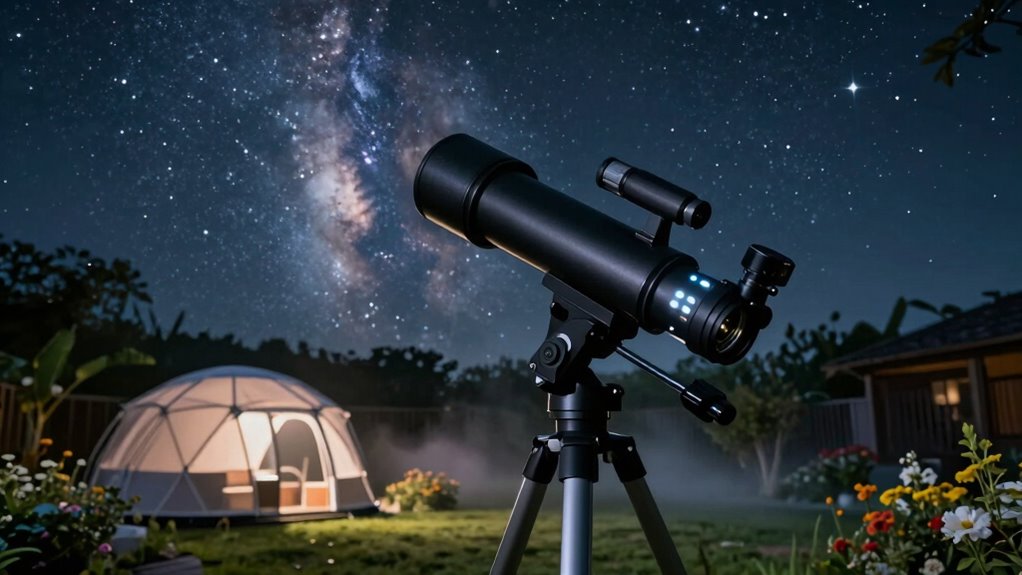

Choosing a smart telescope in 2026 means balancing portability, imaging quality, and ease of use. My top picks include the Dwarflab Dwarf 3 for its versatility and user-friendliness, the DWARFLAB Dwarf Mini for ultra-light portability, and the ZWO Seestar S30 Pro for its beginner-friendly features and astrophotography capabilities. Each offers unique strengths but also comes with tradeoffs like limited manual control or battery life. Here’s a clear look at what makes each model stand out and who they best serve.

Prime made for students and young adults
- Fast, free delivery for dorm and study essentials
- Prime Video and Amazon Music included
- Member-only deals
Key Takeaways
- The Dwarflab Dwarf 3 excels in dual imaging and auto-tracking but has limited manual controls.
- The Dwarf Mini is ideal for outdoor travel with its ultra-lightweight design, though it requires a smartphone for full functionality.
- The ZWO Seestar S30 Pro offers high-res 4K imaging perfect for beginners, but deep-sky imaging may need careful setup.
- The Smart Telescope with dual screens provides real-time viewing and high magnification, best suited for kids and casual users.
- Odyssey UNISTELLAR balances portability and advanced features, but lacks an eyepiece and has limited battery life.
| Dwarflab Dwarf 3 Smart Telescope, App-Controlled Astrophotography Camera |  | Best Overall Versatile Smart Telescope | Weight: 3 lb / 1.35 kg | Lens System: Dual lens (telephoto and wide-angle) | Auto-Tracking: Yes | VIEW ON AMAZON | See Our Full Breakdown |
| DWARFLAB Dwarf Mini Smart Telescope – Portable Astronomy Telescope |  | Best for Ultra-Lightweight Travel | Weight: 1.85 lbs | Sensor: Sony IMX662 (1/2.8-inch, 2.9μm pixels) | Exposure Support: Up to 90 seconds | VIEW ON AMAZON | See Our Full Breakdown |
| ZWO Seestar S30 Pro Smart Telescope, App-Controlled Astrophotography |  | Best for Beginners and Urban Astronomers | Weight: 3.64 lbs | Imaging: Dual-camera 4K | Features: Automatic GOTO, AI Smart Imaging | VIEW ON AMAZON | See Our Full Breakdown |
| Smart Telescope with 4K Astrophotography Camera and Dual Screens |  | Best for Beginners and Kids | Focus Type: Auto Focus | Finderscope: Straight-Through | Focal Length: 300mm | VIEW ON AMAZON | See Our Full Breakdown |
| Odyssey UNISTELLAR Smart Telescope (no Eyepiece), 85mm f/3.9, Digital & Computerized |  | Best for Citizen Science and Enthusiasts | Mount: Motorized Alt-Az | Focal Length: 320 mm | Aperture: 85 mm | VIEW ON AMAZON | See Our Full Breakdown |
| smart telescope | Weight | Connectivity |
|---|---|---|
| Dwarflab Dwarf 3 Smart Telesco | 3 lb / 1.35 kg | USB-C |
| DWARFLAB Dwarf Mini Smart Tele | 1.85 lbs | USB-C |
| ZWO Seestar S30 Pro Smart Tele | 3.64 lbs | — |
| Smart Telescope with 4K Astrop | — | — |
| Odyssey UNISTELLAR Smart Teles | — | Wi-Fi |
More Details on Our Top Picks
Dwarflab Dwarf 3 Smart Telescope, App-Controlled Astrophotography Camera
The Dwarflab Dwarf 3 stands out for its portability and dual-lens system, making it suitable for both daytime and nighttime photography. Its smart auto-tracking and 4K resolution deliver professional-quality images, especially appealing to users who want a straightforward experience. Compared with other models, it lacks detailed manual controls, which might frustrate seasoned astrophotographers, and battery details are sparse, making long sessions less predictable.
Pros:- Lightweight and portable for travel
- Dual lenses for versatile imaging
- Smart auto-tracking with 4K clarity
Cons:- Limited info on battery life
- Requires smartphone app, which may have compatibility issues
- No manual controls for advanced users
Best for: Users seeking a portable, all-in-one imaging solution suitable for beginners and casual users
Not ideal for: Experienced astronomers who prefer manual control or extended power options
- Weight:3 lb / 1.35 kg
- Lens System:Dual lens (telephoto and wide-angle)
- Auto-Tracking:Yes
- Resolution:4K
- Connectivity:USB-C
- App Compatibility:Yes
Our verdict“A well-rounded choice for portability and ease of use, best suited for casual observers and beginners.”
DWARFLAB Dwarf Mini Smart Telescope – Portable Astronomy Telescope
The Dwarf Mini is perfect for outdoor adventures, weighing just 1.85 lbs. Its compact design and app control make it a natural choice for hikers and campers heading to dark skies. Advanced imaging features like long exposure support and cloud processing give it an edge, but it relies heavily on a smartphone or compatible device, and the optical specs are somewhat limited, which might restrict detailed viewing for more serious astronomers.
Pros:- Extremely portable and lightweight
- User-friendly sky atlas app for navigation
- Supports long exposures and cloud processing
Cons:- Dependent on a smartphone or device for full use
- Limited info on optical quality
- Steeper learning curve for app controls
Best for: Travelers and outdoor enthusiasts who prioritize portability and ease of setup
Not ideal for: Users seeking extensive manual controls or deep-sky astrophotography
- Weight:1.85 lbs
- Sensor:Sony IMX662 (1/2.8-inch, 2.9μm pixels)
- Exposure Support:Up to 90 seconds
- Connectivity:USB-C
Our verdict“A top pick for those who need a lightweight, travel-friendly telescope with decent imaging features, best for casual use or beginners on the go.”
ZWO Seestar S30 Pro Smart Telescope, App-Controlled Astrophotography
The ZWO Seestar S30 Pro provides a user-friendly experience with automatic GOTO and 4K dual-camera imaging, making it ideal for newcomers and city dwellers. Its AI-enhanced photo quality simplifies capturing stunning celestial images, though detailed specs like maximum magnification are not emphasized, and deep-sky imaging requires some setup finesse. Compared to more advanced models, it balances ease of use with respectable imaging performance.
Pros:- Easy automatic targeting and app control
- High-resolution 4K imaging
- Lightweight and portable
Cons:- Limited details on maximum magnification
- Dependent on a smartphone app for operation
- Deep-sky imaging needs careful setup
Best for: Beginners and urban astronomers seeking accessible astrophotography
Not ideal for: Advanced astrophotographers needing high magnification or manual control
- Weight:3.64 lbs
- Imaging:Dual-camera 4K
- Features:Automatic GOTO, AI Smart Imaging
- Compatibility:Smartphone app
Our verdict“A strong choice for those starting out or living in light-polluted areas, combining simplicity and quality at an accessible price point.”
Smart Telescope with 4K Astrophotography Camera and Dual Screens
This model’s standout feature is its dual-screen display, providing real-time observation and sharing. Its 78mm aperture and 300mm focal length support up to 350X magnification, and 4K imaging makes it suitable for capturing detailed celestial objects. It’s designed to be accessible for beginners and kids alike, but the external screen could be fragile, and its build quality is less clear—potentially limiting durability for rough outdoor use.
Pros:- Dual-screen for real-time sharing
- Supports high magnification and 4K imaging
- Suitable for beginners and kids
Cons:- Fragile external screen
- Limited info on durability and build quality
- External storage needed for extensive capture
Best for: Families, kids, and entry-level users seeking fun and educational astronomy
Not ideal for: Serious astrophotographers or those needing high durability
- Focus Type:Auto Focus
- Finderscope:Straight-Through
- Focal Length:300mm
- Zoom Ratio:350
- Objective Lens Diameter:80mm
- Additional Features:Dual-Screen Display, Auto Focus, 4K
Our verdict“A compelling option for educational and family use, combining real-time view with decent imaging features, though less rugged than professional models.”
Odyssey UNISTELLAR Smart Telescope (no Eyepiece), 85mm f/3.9, Digital & Computerized
The Odyssey UNISTELLAR offers a compact, all-in-one package with an 85mm aperture, motorized GoTo, and 64GB storage, making it well-suited for hobbyists and citizen scientists. Its quick setup and digital viewing from mobile devices are convenient, but the absence of an eyepiece might be a drawback for traditional stargazing enthusiasts. Battery life of around five hours limits longer outdoor sessions, yet its advanced features support a wide range of sky observations and astrophotography.
Pros:- Easy setup with automatic alignment
- High-quality digital imaging with RAW/FITS
- Compact and lightweight for travel
Cons:- No eyepiece included, additional purchase needed
- Limited battery life of 5 hours
- Requires smartphone or tablet for operation
Best for: Enthusiasts and citizen scientists needing a portable, feature-rich setup
Not ideal for: Photographers seeking extensive manual control or long-duration sessions
- Mount:Motorized Alt-Az
- Focal Length:320 mm
- Aperture:85 mm
- F/Number:f/3.9
- Field of View:33.6 × 45 arcmin
- Limiting Magnitude:17.2
- Pixel Size:1.45 µm
- Resolving Power:1.68″
- Compatibility:iOS & Android
- Connectivity:Wi-Fi
- Battery Life:up to 5 h
- Storage:64 GB
- Tripod:Included
Our verdict“A versatile choice for hobbyists wanting a portable, digitally controlled telescope with good imaging potential, though it may lack some traditional viewing features.”
How We Picked
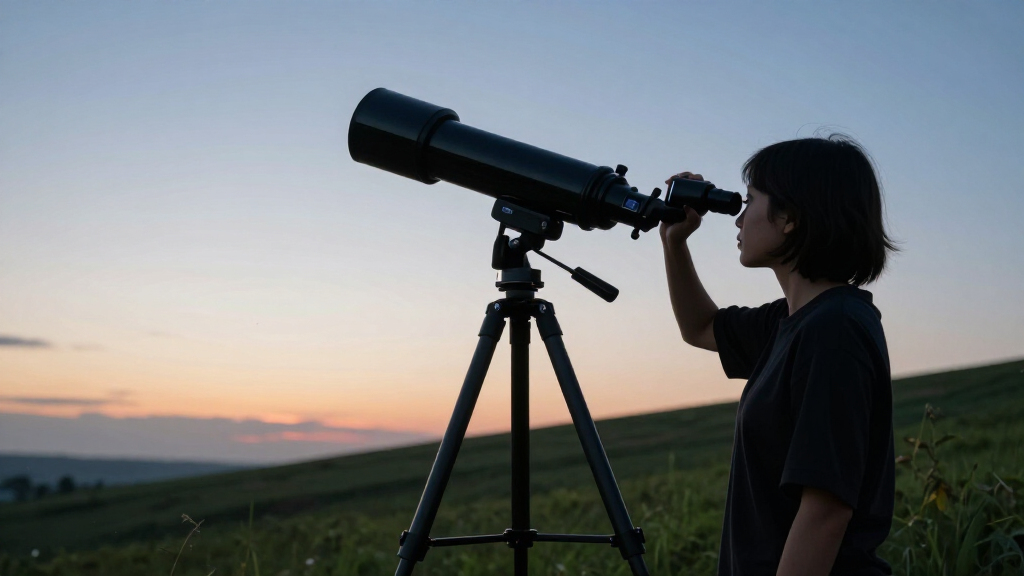
Our selection process focused on smart telescopes that combine portability, ease of use, and imaging capabilities suitable for various skill levels. We prioritized models with app control, auto-tracking, and integrated imaging features, comparing specs like weight, camera resolution, and connectivity. We also considered user roles—from beginners to advanced hobbyists—and evaluated tradeoffs such as battery life, manual control, and compatibility. The goal was to identify options that balance performance with accessibility for different types of buyers.
| smart telescope | Connectivity |
|---|---|
| Dwarflab Dwarf 3 Smart Telesco | USB-C |
| DWARFLAB Dwarf Mini Smart Tele | USB-C |
| ZWO Seestar S30 Pro Smart Tele | — |
| Smart Telescope with 4K Astrop | — |
| Odyssey UNISTELLAR Smart Teles | Wi-Fi |
Factors to Consider When Choosing Smart Telescopes
Choosing the right smart telescope depends on your priorities—portability, imaging quality, user experience, or budget. Understanding the key features and how they align with your interests can help narrow down options. For beginners, ease of use and app control matter most. Experienced users may look for manual controls and longer battery life. Outdoor explorers need lightweight models, while astrophotographers seek high-resolution cameras and advanced features. Below, I break down these considerations to help you find the perfect match.
Portability and Size
If you plan to take your telescope on trips, hikes, or outdoor adventures, focus on lightweight, compact models like the Dwarflab Dwarf Mini or the Odyssey UNISTELLAR. They offer ease of transport but may compromise on optical size or battery duration. Larger, more capable telescopes tend to be bulkier and less convenient for field use, so weigh your need for mobility against optical performance.
Imaging and Photography
For astrophotography, prioritize models with high-resolution cameras and advanced imaging features. The Dwarflab Dwarf 3 and ZWO Seestar S30 Pro excel here, providing 4K imaging and AI enhancements. However, they might lack manual controls for deep-sky imaging or long exposures. Conversely, models like the Odyssey UNISTELLAR offer RAW data export but require careful setup to capture detailed images.
Ease of Use and App Control
Beginners should look for telescopes with intuitive app interfaces and automatic GOTO targeting, such as the Seestar S30 Pro or the Smart Telescope with dual screens. These models simplify tracking and object identification. More advanced users may prefer manual controls and customizable settings, which are less common in these smart models but available on traditional telescopes.
Power and Battery Life
Battery life varies significantly among these models. The Odyssey UNISTELLAR offers around five hours, suitable for short observing sessions, while others like the Dwarflab Dwarf 3 lack detailed power specs. Consider your typical session length and access to power sources when choosing, especially for extended outdoor use.
Budget and Value
Smart telescopes range from budget-friendly options like the Dual-screen model to more feature-rich choices like the Dwarflab Dwarf 3 and Seestar S30 Pro. Determine how much you’re willing to spend based on desired features and intended use. Remember, a higher price often correlates with better imaging quality and more advanced automation, but entry-level models can still provide excellent beginner experiences.
Frequently Asked Questions
Are smart telescopes suitable for beginners?
Yes, many smart telescopes are designed with ease of use in mind, featuring automatic targeting, app control, and simplified interfaces. Models like the ZWO Seestar S30 Pro and the Smart Telescope with dual screens make it straightforward for newcomers to start exploring the night sky and capturing images without needing extensive prior knowledge.
Can I do deep-sky astrophotography with these telescopes?
Some models, like the Dwarflab Dwarf 3 and Seestar S30 Pro, support long exposures and cloud processing, enabling decent deep-sky imaging. However, true deep-sky astrophotography often requires more specialized equipment and manual controls. These smart telescopes are excellent for bright objects and general astrophotography but may have limitations for advanced deep-sky imaging.
How important is battery life in choosing a smart telescope?
Battery life is a key factor if you plan to observe outdoors for extended periods. While some models like the Odyssey UNISTELLAR provide around five hours of use, others do not specify battery duration. If you’re on the go, look for models with longer battery life or options for external power sources to avoid interruptions during your sessions.
Do smart telescopes require a lot of setup time?
Most smart telescopes aim for quick and easy setup, especially with automatic alignment and app-guided procedures. The Odyssey UNISTELLAR boasts fast setup with minimal fuss, making it ideal for spontaneous observations. More complex models may need initial calibration or connection steps, but overall, smart telescopes are designed to reduce the time from unboxing to viewing.
Are external accessories necessary for these smart telescopes?
Depending on your needs, you might want additional accessories. For instance, the Dual-screen model might require external storage for videos and photos, while others may need a separate eyepiece or power bank. Most models include essential features, but consider what extras will enhance your experience and budget accordingly.
Conclusion
For casual observers or families, the Smart Telescope with dual screens offers easy live viewing and fun features. Beginners and urban astronomers will find the ZWO Seestar S30 Pro a perfect entry point with its automatic targeting and high-res imaging. Those who travel frequently or enjoy outdoor adventures should consider the Dwarflab Dwarf Mini for its portability. More advanced hobbyists seeking detailed imaging and citizen science capabilities might prefer the Odyssey UNISTELLAR. Ultimately, your choice depends on your specific interests, mobility needs, and experience level.
Fall Picks
fall essentials
As an affiliate, we earn on qualifying purchases.