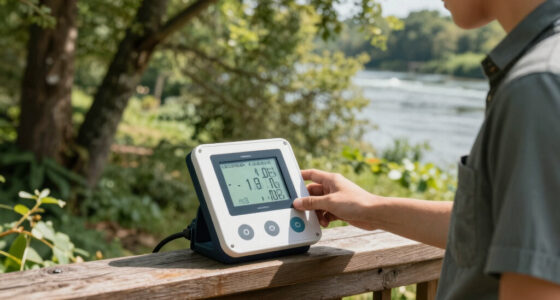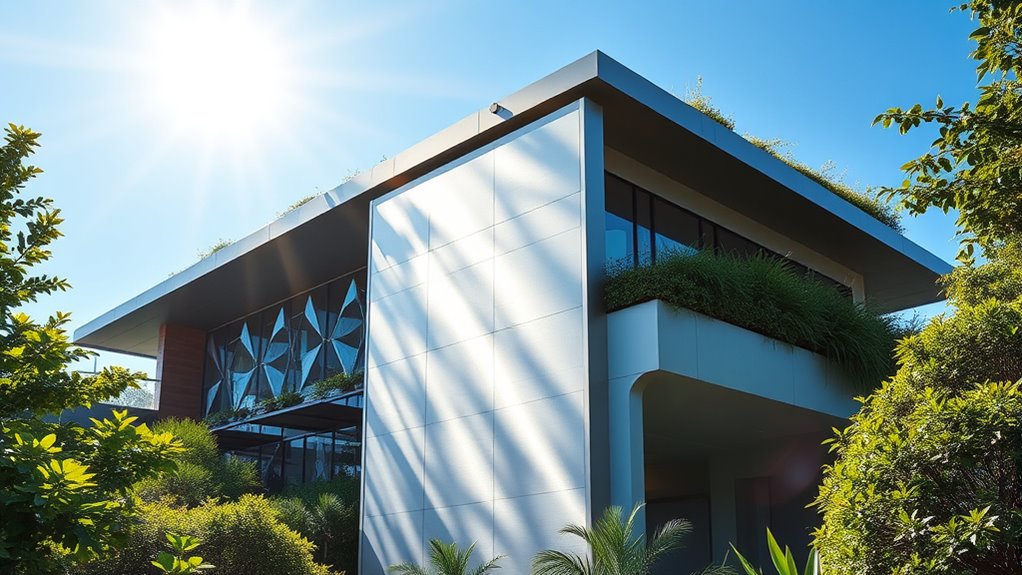

To beat the heat naturally, you can design buildings with passive cooling strategies that use the environment for temperature regulation. Techniques like proper insulation, shading devices, reflective surfaces, vegetation, and natural ventilation help reduce heat gain and promote cooling without energy. Thermal mass materials absorb and release heat to smooth temperature swings. By incorporating these elements, your building stays comfortable while minimizing energy use. Explore more ways to chill buildings naturally as you continue to discover innovative design ideas.

Prime made for students and young adults
- Fast, free delivery for dorm and study essentials
- Prime Video and Amazon Music included
- Member-only deals
Key Takeaways
- Incorporate natural ventilation strategies like cross-breezes and stack effect to promote airflow and remove heat.
- Use reflective surfaces and shading devices to reduce solar heat gain during peak hours.
- Design with high-performance insulation and airtight envelopes to minimize heat transfer and maintain cool indoor temperatures.
- Utilize thermal mass materials to absorb heat during the day and release it at night, balancing indoor temperature fluctuations.
- Apply radiative cooling surfaces and green roofs to emit heat and enhance natural cooling through environmental radiation.
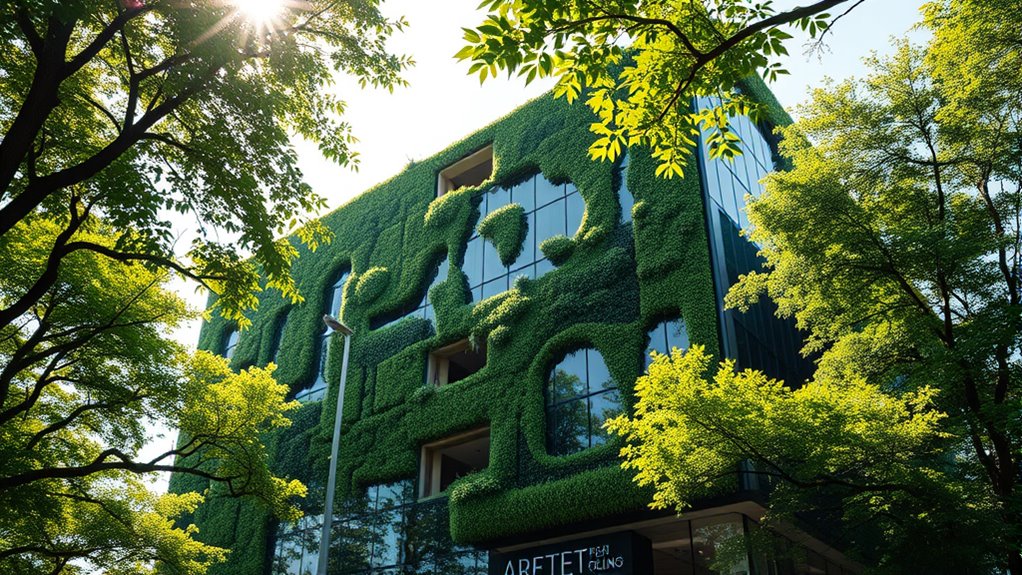
Self‑Cooling Buildings
Self‑Cooling buildings harness natural design principles and environmental sources to reduce indoor heat without relying on energy-intensive air conditioning. By integrating passive cooling strategies into their architecture, these buildings minimize heat gain and promote heat dissipation naturally. They use on-site energy sources like the night sky’s radiation, outdoor air, and the earth itself as heat sinks, helping maintain comfortable indoor temperatures with minimal mechanical intervention. Passive cooling techniques aim to lower energy consumption and reduce greenhouse gas emissions, contributing to sustainable building practices. Advances in radiative cooling materials are enhancing daytime radiative cooling capabilities, offering new opportunities for energy-efficient cooling solutions.
Design plays a critical role in passive cooling. Continuous, high-performance insulation throughout the building envelope acts as a barrier to heat transfer, keeping indoor spaces cooler during hot days. Eliminating thermal bridges prevents temperature fluctuations and reduces the risk of mold, ensuring a healthier, more comfortable environment. Airtight construction limits outside air infiltration, preserving conditioned indoor air and cutting energy costs. When combined with balanced mechanical ventilation that employs heat and moisture recovery, these buildings provide fresh air without sacrificing cooling efficiency, making them both sustainable and occupant-friendly.
High-performance insulation and airtight design enhance passive cooling and indoor comfort sustainably.
Passive cooling strategies focus on reducing heat gain and enhancing heat loss. Shading devices like awnings and louvers prevent excessive solar radiation from entering windows and walls, keeping interiors cooler. Installing insulation on roofs and walls further restricts heat transfer, while reflective surfaces and materials minimize heat absorption, helping maintain lower indoor temperatures. Incorporating vegetation and green roofs offers natural shading and utilizes evapotranspiration to cool the environment. Proper building orientation also matters: positioning structures to avoid direct sunlight on sensitive façades during peak heat hours limits heat gain and keeps indoor spaces comfortable.
To promote heat dissipation, natural ventilation is key. Designing for cross-breezes and stack ventilation allows hot air to escape and cooler outdoor air to enter, flushing out internal heat buildup. Nighttime ventilation takes advantage of cooler evening temperatures, helping to reset indoor heat levels. Using thermal mass materials like concrete or stone enables the building to absorb heat during the day and release it at night, smoothing out temperature fluctuations. Additionally, passive radiative cooling surfaces—materials that reflect sunlight and emit heat to the cold upper atmosphere—can cool roofs and interiors without any energy input, further reducing reliance on mechanical cooling systems. [Advances in photonic materials are enhancing daytime radiative cooling capabilities, offering new opportunities for energy-efficient cooling solutions.] Beyond the building envelope, occupant comfort is enhanced through strategic airflow and humidity control. Increased air movement supports perspiration evaporation, aiding body cooling. Proper humidity levels prevent discomfort and mold growth, while daylighting reduces artificial lighting heat loads and improves indoor environmental quality. By managing shading and airflow around living areas, self-cooling buildings create microclimates that are naturally comfortable. These integrated strategies prove that with thoughtful design, buildings can stay cool efficiently, sustainably, and comfortably—no energy-hungry air conditioning required.
passive cooling building materials
As an affiliate, we earn on qualifying purchases.
As an affiliate, we earn on qualifying purchases.
Frequently Asked Questions
How Much Energy Do Self-Cooling Buildings Typically Save?
You’re wondering how much energy self-cooling buildings save. On average, these buildings reduce energy use by around 12% compared to conventional systems, with some achieving up to 28%. The actual savings depend on climate, building type, and passive strategies used. In hot areas, you’ll see more savings, but in cooler zones, the reduction is less significant. Overall, passive design can make a noticeable difference in energy efficiency.
What Are the Initial Costs of Constructing Self-Cooling Buildings?
Did you know that building a self-cooling structure can increase initial costs by about 5% to 10%? You’ll likely spend between $15 and $25 per square foot for prefabricated kits, or $24 to $43 for turnkey steel buildings. Adding features like cool roofs, advanced insulation, and automation raises costs further. However, these investments pay off through energy savings, making self-cooling buildings a smart, cost-effective choice long-term.
Can These Buildings Withstand Extreme Weather Conditions?
You want to know if these buildings can withstand extreme weather. They’re designed with passive features like natural ventilation, reflective coatings, and earth coupling, which help resist heat and cold. By minimizing reliance on mechanical systems, they stay resilient during power outages and severe conditions. While effectiveness depends on local climate, these buildings often outperform traditional ones, maintaining safety and structural integrity during extreme weather events.
Are Self-Cooling Buildings Suitable for All Climates Worldwide?
You might wonder if self-cooling buildings work everywhere. The truth is, they’re most effective in dry, warm climates where systems like evaporative cooling thrive. In humid areas, these methods lose efficiency because moisture hampers evaporation. You’ll find they perform well in arid regions but struggle in tropical or cold climates. To be truly suitable worldwide, these buildings need tailored designs that consider local climate conditions and resources.
How Long Do Self-Cooling Features Take to Adapt or Upgrade?
The time it takes to adapt or upgrade passive cooling features varies based on your project scope. For minor enhancements like adding shading or operable windows, it can take a few months, especially if approvals are straightforward. More extensive renovations, such as reconfiguring building envelopes or installing advanced materials, may require several months to over a year. Factors like permits, design complexity, and climate considerations influence the timeline considerably.
radiative cooling surfaces for buildings
As an affiliate, we earn on qualifying purchases.
As an affiliate, we earn on qualifying purchases.
Conclusion
Imagine living in a building that keeps itself cool without energy bills or noisy air conditioners. Isn’t it time we embraced nature’s solutions to beat the heat? Self-cooling buildings show us how innovation and sustainability go hand in hand, offering a smarter way to stay comfortable. As we look toward the future, aren’t we missing out if we don’t harness these natural cooling methods? The heat is on—are you ready to make the change?
As an affiliate, we earn on qualifying purchases.
high performance insulation for passive cooling
As an affiliate, we earn on qualifying purchases.
As an affiliate, we earn on qualifying purchases.
Halloween Picks
halloween
As an affiliate, we earn on qualifying purchases.