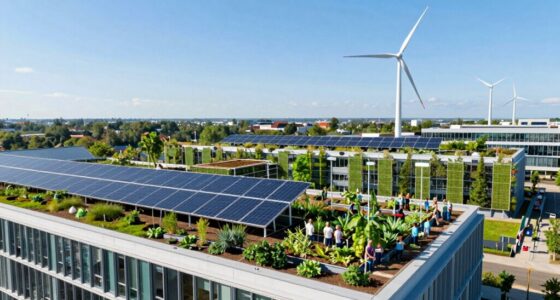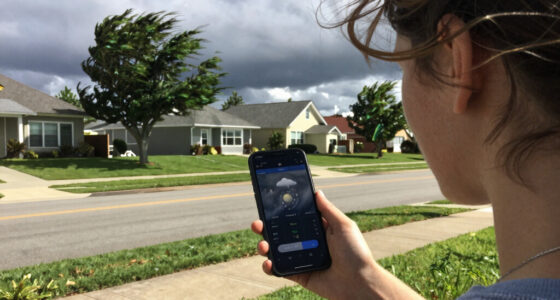
Urban climate adaptation on the ground involves creating green spaces like parks, community gardens, and pocket parks to reduce heat and improve air quality. You’ll see neighborhoods designed to be walkable and bike-friendly, encouraging less reliance on cars. Communities often participate in planting native vegetation, maintaining green infrastructure, and supporting policies that promote sustainability. These efforts boost resilience, foster social bonds, and help cities better withstand climate challenges. Keep exploring to discover how these strategies shape healthier, more resilient urban environments.

Prime made for students and young adults
- Fast, free delivery for dorm and study essentials
- Prime Video and Amazon Music included
- Member-only deals
Key Takeaways
- Green spaces and parks are integrated into urban areas to cool temperatures and improve air quality.
- Community-led projects turn vacant lots into gardens, fostering local ownership and resilience.
- Cities implement walkable, bike-friendly designs to reduce vehicle emissions and promote sustainable mobility.
- Educational programs inform residents about climate risks and encourage participation in green initiatives.
- Natural ecosystems and native plants are incorporated to support biodiversity and enhance stormwater management.
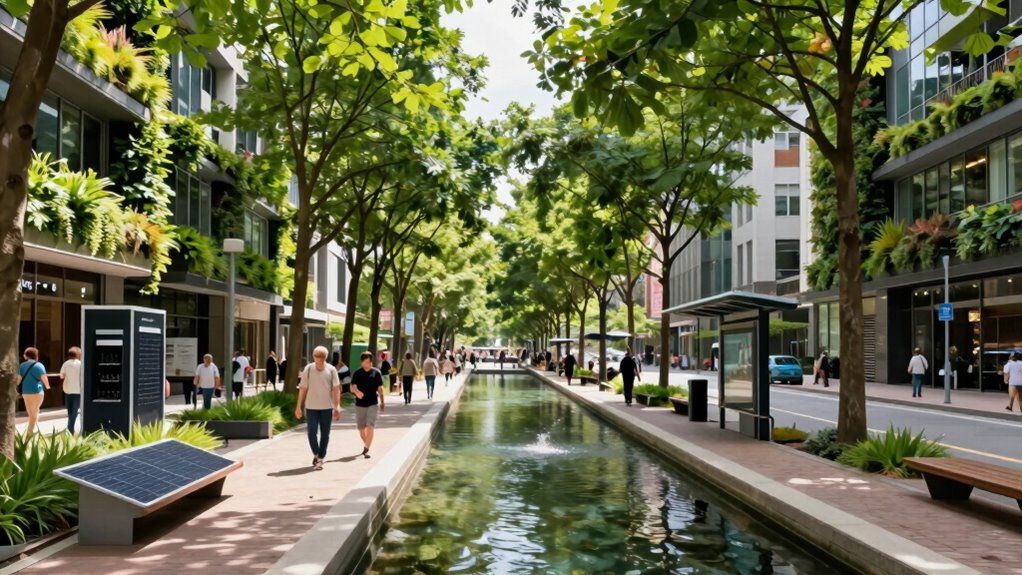
Implementing green infrastructure not only manages water but also cools the urban environment. During heatwaves, these green spaces provide relief, lowering temperatures and improving air quality. This directly supports community resilience, as residents experience fewer health risks related to extreme heat and poor air conditions. The lush greenery encourages outdoor activity, strengthens social bonds, and fosters a sense of ownership among community members. When communities are involved in planning and maintaining these green systems, they develop a stronger connection to their environment, which boosts overall resilience in the face of climate challenges. Additionally, incorporating household tips like efficient watering and composting can help sustain these green spaces and promote community participation. On the ground, you’ll see efforts to create more walkable, bike-friendly neighborhoods, reducing reliance on cars that emit greenhouse gases. Urban planners might convert vacant lots into community gardens or pocket parks, providing both green space and local food sources. These initiatives not only improve the local environment but also empower residents, fostering a sense of ownership and shared responsibility. By engaging communities in these projects, cities build social cohesion, which is essential during climate emergencies. When people feel connected and invested in their neighborhood, they’re more likely to support and maintain resilience strategies. Moreover, cities are adopting policies that prioritize green infrastructure investments and community participation. This includes incentives for green building practices and programs that educate residents about climate risks and adaptation measures. As you observe these changes, it becomes clear that urban climate adaptation isn’t just about physical infrastructure; it’s about strengthening the social fabric. When communities are resilient, they can better respond to emergencies, recover quickly, and adapt to ongoing climate shifts. On the ground, these strategies create healthier, more sustainable, and more equitable urban environments that stand a better chance of withstanding the challenges of a changing climate. Community involvement plays a vital role in ensuring the long-term success of these adaptation efforts. Recognizing the importance of urban greenery can motivate more comprehensive and inclusive planning processes. Incorporating natural systems into city design can further enhance resilience by providing additional cooling, habitat, and stormwater management benefits. For instance, the integration of native plant species can improve the sustainability and maintenance of green spaces while supporting local biodiversity.
As an affiliate, we earn on qualifying purchases.
Frequently Asked Questions
How Do Communities Prioritize Climate Adaptation Projects?
You prioritize climate adaptation projects by engaging your community early and often, ensuring their needs and insights shape your plans. You also focus on policy integration, aligning local regulations and resources to support sustainable solutions. By fostering community engagement and weaving climate resilience into policies, you create a collaborative approach that addresses urgent needs while building long-term resilience, making sure projects are relevant, effective, and supported by those they serve.
What Funding Sources Support Urban Climate Resilience Initiatives?
You can tap into federal programs like the EPA’s Green Infrastructure Program, which funds projects that integrate nature-based solutions. Local governments often leverage policy incentives, such as tax credits or grants, to promote green infrastructure investments. For example, a city might secure funding through these channels to create urban parks that reduce flooding and heat islands, making communities more resilient against climate impacts while improving quality of life.
How Do Urban Planners Involve Residents in Adaptation Planning?
You involve residents through community engagement and participatory planning, ensuring their voices shape adaptation strategies. You hold public meetings, workshops, and surveys to gather diverse perspectives, making planning more inclusive. By actively involving residents, you build trust, raise awareness, and develop solutions that reflect local needs. This collaborative approach fosters a sense of ownership, encouraging communities to participate in implementing and maintaining urban climate resilience initiatives effectively.
What Are the Biggest Challenges Faced During Implementation?
Imagine a tangled web, where policy hurdles and technological barriers trap your efforts. You face the challenge of aligning regulations, securing funding, and adopting new tech, all while communities await change. These obstacles slow progress, making implementation feel like a steep climb. Steering through policy complexities and overcoming tech limitations require persistence. Your dedication is essential to transforming urban spaces into resilient habitats, despite these formidable hurdles.
How Is Success Measured in Urban Climate Adaptation Efforts?
You measure success in urban climate adaptation by evaluating how well green infrastructure projects reduce flood risks, improve air quality, and enhance city resilience. Policy integration is key—when climate policies align with urban planning, you see more effective outcomes. You also track community engagement and equity, ensuring vulnerable populations benefit from adaptation efforts. Overall, success means tangible improvements in environmental health, safety, and quality of life for city residents.
As an affiliate, we earn on qualifying purchases.
Conclusion
Imagine your city as a sturdy ship steering stormy seas. Urban climate adaptation is your crew, working tirelessly to patch leaks, strengthen sails, and steer clear of hidden icebergs. Together, you can keep the vessel afloat amid rising waters and unpredictable weather, charting a course toward calmer, resilient harbor. By embracing these on-the-ground efforts, you become the captain of a city that not only survives but thrives in the face of climate change.
As an affiliate, we earn on qualifying purchases.
stormwater management rain garden kit
As an affiliate, we earn on qualifying purchases.
As an affiliate, we earn on qualifying purchases.
Fall Picks
fall essentials
As an affiliate, we earn on qualifying purchases.