

Battery-free IoT sensors use ambient radio waves and indoor light to operate without traditional batteries, making them highly sustainable and low-maintenance. They harvest energy from sources like radio signals, which helps extend their lifespan and reduces electronic waste. This technology enhances system reliability in various environments, especially where power sources are limited. If you keep exploring, you’ll discover how these sensors are shaping smarter, greener IoT solutions for the future.
Key Takeaways
- Battery-free IoT sensors utilize ambient radio waves and indoor light to generate energy, eliminating the need for traditional batteries.
- Incorporating ambient radio wave harvesting enhances sensor sustainability and extends operational lifespan with minimal maintenance.
- These sensors promote eco-friendly deployment by reducing electronic waste and reliance on battery supply chains.
- Advanced energy harvesting techniques ensure reliable, continuous operation in diverse indoor environments.
- AI-powered security integration safeguards data integrity and device functionality in autonomous, battery-free IoT systems.
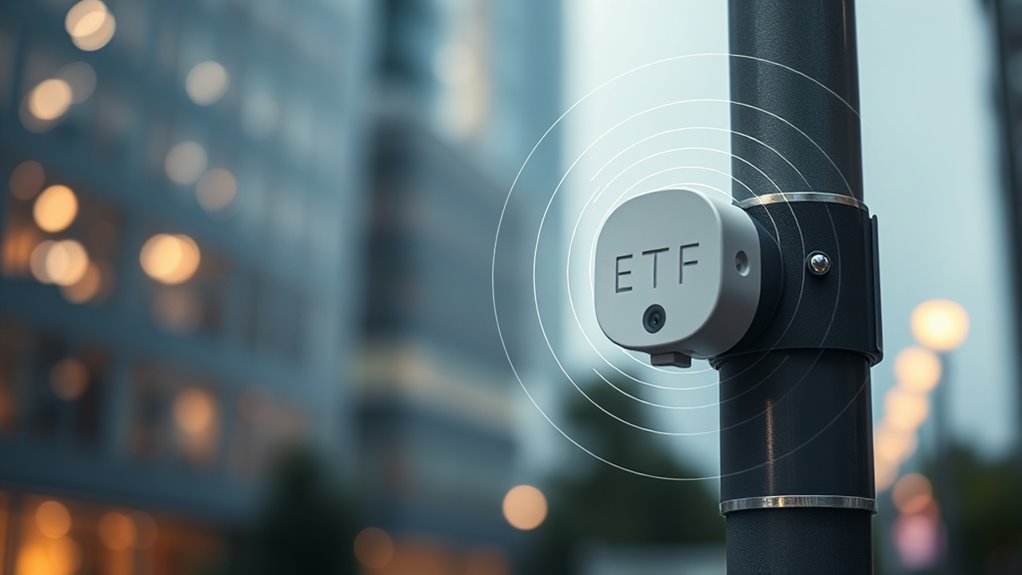
You are trained on data up to October 2023. This innovative approach leverages ambient radio waves as an additional energy source, further enhancing the sustainability and autonomy of the sensors. Incorporating AI security considerations can help ensure the safety and reliability of these battery-free systems in various environments.

Battery-free Sensor Networks for Sustainable Next-generation Iot Connectivity
As an affiliate, we earn on qualifying purchases.
As an affiliate, we earn on qualifying purchases.
Frequently Asked Questions
How Do Ambient Radio Waves Generate Enough Power for Sensors?
You wonder how ambient radio waves generate enough power for sensors. Well, these waves come from sources like Wi-Fi and cellular signals, providing a steady energy flow. Specialized hardware captures and converts these signals into electricity, powering low-energy sensors. With recent tech advancements, such as improved RF diodes and circuits, this process becomes more efficient, enabling sensors to operate sustainably without batteries, especially in areas with strong ambient RF signals.
What Are the Limitations of Battery-Free Iot Sensors?
You might think battery-free IoT sensors are seamless, but they face real limits. Their reliance on unpredictable ambient energy causes frequent power failures, halting operations. With tiny energy buffers, they can’t process complex tasks or communicate often. Environmental factors like weak signals or obstructions further restrict their use. Plus, designing and integrating these sensors demands innovative, low-power solutions, making widespread deployment challenging and still in development.
How Secure Are Data Transmissions From These Sensors?
You might think data transmissions are secure, but many are vulnerable. Reusing unencrypted keys makes it easy for attackers to intercept or tamper with signals. Unsecured RF channels allow eavesdropping and unauthorized access. Standard cybersecurity measures for wired networks don’t work well wirelessly. Without robust encryption and authentication, your sensitive data could be compromised, often going unnoticed until serious issues occur. Protecting these transmissions requires advanced, physical-layer security techniques.
Can These Sensors Operate in Remote or Underground Locations?
Did you know that over 60% of underground environments block traditional wireless signals? You can operate sensors in remote or underground locations using RF energy harvesting, mesh networks, or RFID tags. These methods help overcome signal attenuation and limited energy availability. With dedicated RF transmitters and efficient sensors, you can guarantee reliable data collection without batteries, even in challenging environments like deep underground or remote sites.
What Is the Typical Lifespan of Battery-Free Iot Sensors?
You’re asking about the typical lifespan of battery-free IoT sensors. These sensors can operate for 10 or more years because they don’t rely on batteries that wear out. Instead, they harvest ambient energy like radio waves, light, or heat, enabling continuous operation without maintenance. This extended lifespan makes them ideal for long-term applications, reducing costs and environmental impact while ensuring reliable data collection over many years.
ambient radio wave energy harvester
As an affiliate, we earn on qualifying purchases.
As an affiliate, we earn on qualifying purchases.
Conclusion
Imagine deploying these battery-free IoT sensors everywhere—no batteries to replace means less hassle and waste. Some might worry about inconsistent power, but ambient radio waves are constantly present, like a steady breeze fueling a wind turbine. Think of it as turning invisible radio signals into a reliable energy source, keeping your sensors active without interruptions. This breakthrough makes your IoT solutions smarter, greener, and easier to maintain—empowering you to focus on what truly matters.

Energy Harvesting with Functional Materials and Microsystems (Devices, Circuits, and Systems)
As an affiliate, we earn on qualifying purchases.
As an affiliate, we earn on qualifying purchases.

Wireless Closet Lights Motion Sensor – No Wiring Rechargeable Ceiling Light Night Light Indoor, Battery Operated Led Lights for Bedroom with Remote, Living Room Bathroom Home & Kitchen Decor Lighting
3 Modes Available Motion Sensor Light: Our wireless ceiling light fixture is equipped with 3 modes (Day/Night Motion…
As an affiliate, we earn on qualifying purchases.
As an affiliate, we earn on qualifying purchases.