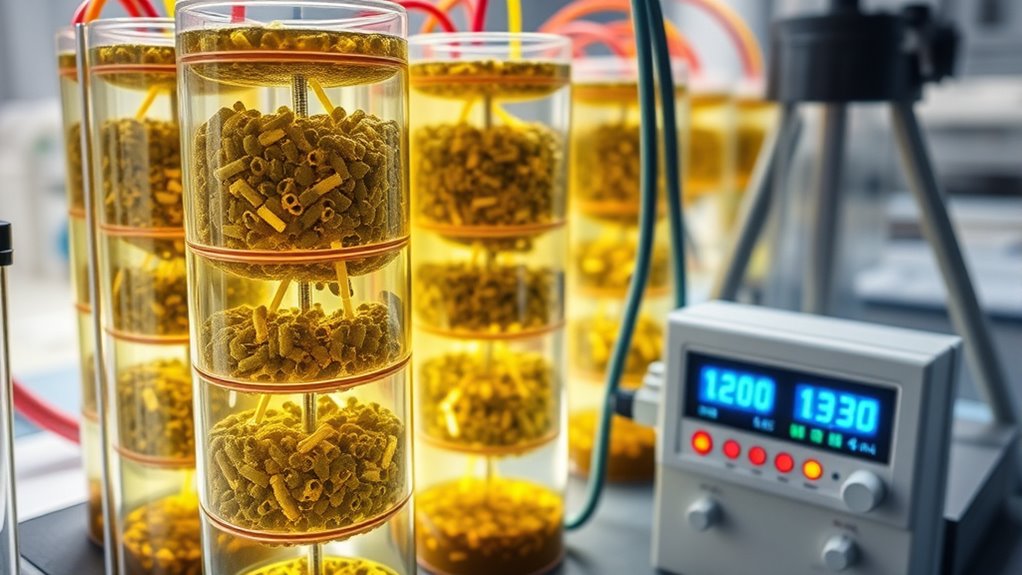

Microbial fuel cells (MFCs) turn wastewater into electricity by using bacteria that break down organic matter. As microbes oxidize waste, they release electrons that flow through an external circuit, generating power. The process also treats water, making it eco-friendly. Advances in electrode materials and microbial engineering can boost efficiency, making MFCs more practical. Keep exploring to discover how ongoing research is transforming waste into sustainable energy.

Prime made for students and young adults
- Fast, free delivery for dorm and study essentials
- Prime Video and Amazon Music included
- Member-only deals
Key Takeaways
- Microbial fuel cells use microbes to oxidize organic matter in wastewater, releasing electrons for electricity generation.
- The anode hosts biofilms that transfer electrons directly or via mediators during wastewater treatment.
- MFCs simultaneously clean wastewater and produce renewable electricity, offering sustainable waste management.
- Advances in electrode materials and microbial engineering enhance power output and system efficiency.
- These systems enable remote power supply and bioremediation by converting wastewater into usable energy.
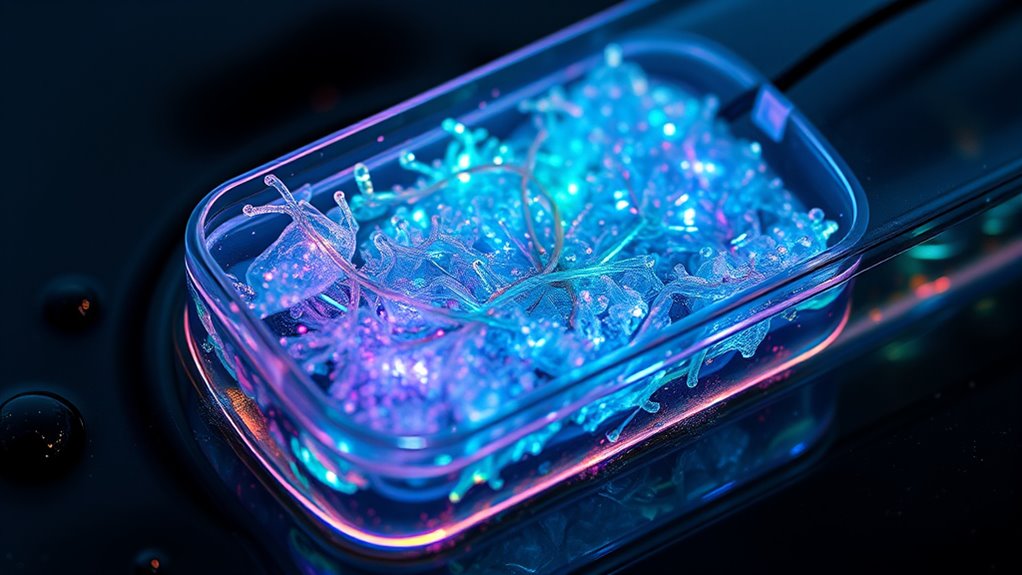
A typical microbial fuel cell consists of three main parts: the anode, the cathode, and the PEM. The anode is where microbes grow as a biofilm, oxidizing organic compounds and releasing electrons. The cathode, often exposed to oxygen, accepts these electrons, enabling the formation of water. Both electrodes are connected by an external circuit, which captures the flow of electrons as electricity. The materials used for electrodes and membranes are *essential*, as they influence the overall efficiency and power output of the cell. Researchers are continually exploring new materials to optimize performance. Additionally, the presence of discoloration or separation in the electrodes can indicate spoilage or degradation, impacting the cell’s efficiency. The process hinges on microbes’ ability to transfer electrons to the electrodes. Some bacteria do this directly via outer membrane proteins or nanowires, while others rely on mediators. Improving this electron transfer is a major focus of ongoing research, including genetic modifications to enhance microbial efficiency. Despite their promise, MFCs typically generate low power densities, and slow startup times hinder large-scale applications. Still, they hold potential for treating wastewater while producing electricity, powering remote devices, and advancing bioremediation efforts. As scientists refine electrode materials and microbial engineering, microbial fuel cells could become more efficient, turning waste into a valuable resource—electricity—while cleaning our water.
As an affiliate, we earn on qualifying purchases.
Frequently Asked Questions
How Long Do Microbial Fuel Cells Typically Last?
You might wonder about the typical lifespan of microbial fuel cells. Generally, they last around 3 to 6 months in plant-based setups, with performance gradually declining as bacteria and plants weaken. Soil MFCs can operate for similar durations, but their longevity depends on environmental factors, bacterial health, and system maintenance. Advances in bacterial preservation could extend these lifespans considerably in the future.
What Are the Environmental Impacts of Microbial Fuel Cells?
You’re wondering about the environmental impacts of microbial fuel cells. MFCs reduce pollution by efficiently degrading organic waste without harmful chemicals or high energy use, making them eco-friendly. They produce clean energy, lowering carbon footprints, and support biodiversity by using natural microbes. Plus, they emit fewer secondary pollutants than traditional methods. However, slow startup times and costs can limit widespread adoption, so ongoing innovations are needed to maximize their sustainable benefits.
Can Microbial Fuel Cells Operate in Cold Climates?
Imagine a winter river still flowing beneath icy surfaces—that’s how microbial fuel cells can operate in cold climates. You might think cold stops them, but microbes adapt like resilient travelers, maintaining activity at low temperatures. While performance dips, they still generate power, shifting microbial communities to survive. With proper system adjustments, you can keep these tiny power plants humming, even in the harshest winter conditions.
What Are the Cost Implications of Scaling Up?
When you scale up microbial fuel cells, you face significant costs. You’ll need substantial initial investment for modular units and advanced materials, which can be expensive. Operating costs include maintenance, membrane cleaning, and energy losses. However, you can offset these with energy savings and environmental incentives. By investing in durable, low-cost materials and optimizing system design, you can make large-scale deployment more affordable and sustainable in the long run.
How Does Wastewater Composition Affect Efficiency?
Think of wastewater as a recipe; the ingredients determine the dish’s outcome. If it’s rich in organics, your microbial community thrives, boosting electricity and treatment efficiency. But if toxic or inorganic components dominate, microbes struggle, reducing power. You need a balanced mix—optimal organic content and minimal inhibitors—for your system to perform well. Adjusting to wastewater’s changing composition is like fine-tuning a recipe for consistent, tasty results.
electrode materials for microbial fuel cells
As an affiliate, we earn on qualifying purchases.
As an affiliate, we earn on qualifying purchases.
Conclusion
As you explore microbial fuel cells, you’re discovering a gentle way to transform wastewater into a subtle source of energy. These innovative systems quietly harness nature’s own processes, offering a promising path toward cleaner, more sustainable solutions. While they may not replace traditional power sources overnight, their delicate efficiency hints at a future where waste finds new purpose. Embrace this quiet revolution, and watch how it gradually reshapes our relationship with wastewater and energy.
bioremediation microbial fuel cell
As an affiliate, we earn on qualifying purchases.
As an affiliate, we earn on qualifying purchases.
microbial fuel cell for wastewater treatment
As an affiliate, we earn on qualifying purchases.
As an affiliate, we earn on qualifying purchases.
Halloween Picks
halloween
As an affiliate, we earn on qualifying purchases.




![Terence Tao: Math 2.0 [Pdf]](https://thegeniusfactory.net/wp-content/uploads/2026/10/terence-tao-math-2-0-pdf-featured-260x140.jpg)