
Electric roads are transforming how you power your electric vehicle by integrating solar panels directly into the roadways. As you drive, these surfaces capture sunlight and generate energy, allowing for convenient on-road charging. This innovative infrastructure not only reduces your reliance on traditional charging stations but also supports sustainability goals. With advancements in materials, these roads are durable and efficient. Want to discover more about the benefits and future of solar roads?

Prime made for students and young adults
- Fast, free delivery for dorm and study essentials
- Prime Video and Amazon Music included
- Member-only deals
Key Takeaways
- Solar roads integrate solar panels within roadways, enabling electric vehicles (EVs) to charge while driving, reducing dependence on traditional charging stations.
- These roads are designed with durable materials, ensuring they can withstand heavy traffic and harsh weather conditions for long-term energy generation.
- By utilizing existing road infrastructure, solar roads promote urban sustainability and minimize land use for separate solar installations.
- The renewable energy generated by solar roads enhances the eco-friendliness of EV usage, providing a convenient charging solution for drivers.
- Increasing adoption of solar roads could lead to a significant rise in solar-powered EV charging stations, supporting the growth of renewable energy in transportation.
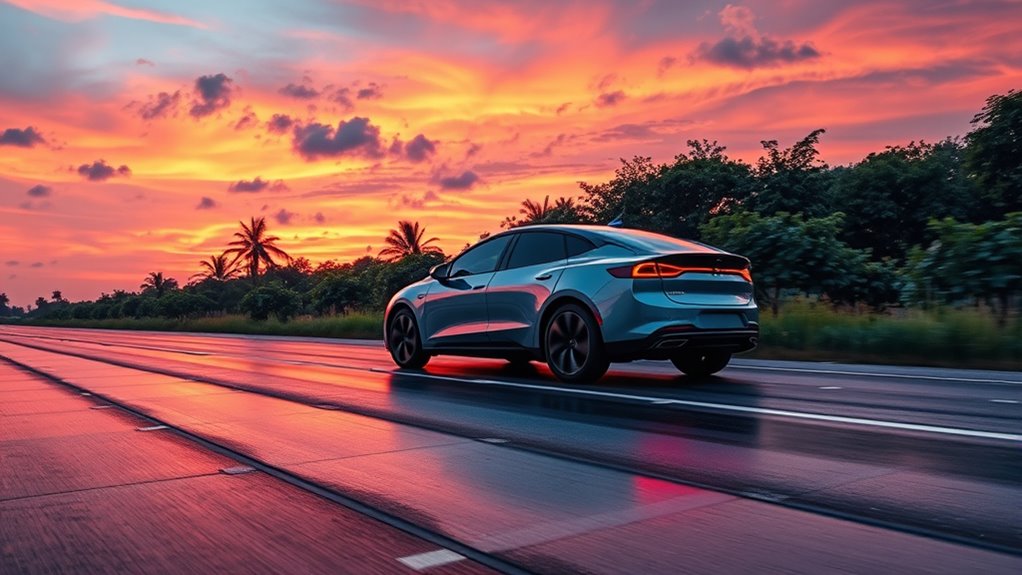
As the world increasingly shifts toward sustainable energy solutions, you might wonder how electric vehicles (EVs) can further benefit from innovative technologies like solar roads. These futuristic surfaces, embedded with solar panel integration, promise to revolutionize how we power our vehicles while also addressing the growing demand for renewable energy. Imagine driving over a road that not only supports your car but also generates electricity to charge your EV. It sounds like something out of a sci-fi movie, but it’s becoming a reality.
Solar roads utilize durable materials designed to withstand the rigors of traffic while capturing sunlight. When you drive on these roads, you’re not just commuting; you’re also tapping into a clean energy source that can help charge your vehicle. This means you could potentially reduce or even eliminate your reliance on traditional charging stations, making your driving experience more convenient and eco-friendly. The combination of road surface durability and efficient solar panel integration ensures that these roads can handle heavy loads and harsh weather, providing a reliable solution for energy generation.
One of the significant advantages of solar roads is their ability to generate power without taking up additional space. Since they’re installed on existing roadways, you won’t have to worry about finding new locations to put solar panels. Instead, you’ll benefit from a dual-purpose infrastructure that serves both transportation and energy needs. As more cities explore this technology, you could see an increase in EV charging stations powered directly by the roads you drive on.
Moreover, the durability of the road surfaces means they can withstand years of wear and tear while still producing energy. Engineers are continuously improving the materials used in solar roads, ensuring they can resist cracking and damage from weather conditions, heavy vehicles, and other stresses. This durability allows for long-term sustainability, making solar roads a viable option for powering your electric vehicle for years to come.
As an affiliate, we earn on qualifying purchases.
Frequently Asked Questions
How Do Solar Roads Generate Electricity for Electric Vehicles?
Solar roads generate electricity for electric vehicles by harnessing solar energy through photovoltaic panels embedded in road infrastructure. When sunlight hits these panels, they convert the light into electricity. This energy can then be used to power electric vehicles directly or stored in batteries for later use. By integrating solar technology into roads, you’ll create a sustainable energy source, reducing reliance on conventional power grids and contributing to a greener transportation system.
What Are the Maintenance Costs of Solar Roads?
Maintenance costs for solar roads can vary considerably, but you should expect a range of cost estimation between $200,000 to $500,000 per mile annually. As you consider this investment, keep in mind the maintenance challenges, like repairing cracks or ensuring maximum energy production. Coincidentally, this could be similar to maintaining traditional roads; however, the added technology requires specialized care. Balancing these costs with benefits is essential for long-term sustainability.
Can Solar Roads Work in Cloudy or Snowy Conditions?
Yes, solar roads can work in cloudy or snowy conditions, but their efficiency decreases. Cloudy days reduce solar absorption, impacting energy generation. However, advancements in solar technology can enhance cloudy efficiency, allowing for better performance even in less-than-ideal weather. Snow can create interference, but heated surfaces can help melt it away, ensuring continued functionality. So, while conditions may challenge performance, solar roads can still generate power with the right technology.
How Durable Are Solar Panels Embedded in Roads?
Think of solar panels in roads like a warrior’s shield, built to withstand battle. These panels are designed to endure significant wear and tear, thanks to robust materials that offer impressive weather resistance. They handle everything from heavy traffic to harsh climates. However, just like any shield, they can show signs of battle over time. Regular maintenance guarantees they keep protecting and generating energy effectively, even under challenging conditions.
What Is the Average Lifespan of Solar Road Technology?
The average lifespan of solar road technology is about 20 to 30 years, depending on various factors. You’ll find that solar panel degradation plays a significant role, as it affects energy output over time. Additionally, pavement wear and tear can impact the overall durability of the system. Regular maintenance can help extend the lifespan, but you should be prepared for potential replacements as conditions change and technology advances.
electric vehicle charging station
As an affiliate, we earn on qualifying purchases.
As an affiliate, we earn on qualifying purchases.
Conclusion
In a world racing towards sustainable energy, electric vehicles powered by solar roads shine like a beacon of hope. These innovative pathways not only recharge your ride but also pave the way for a greener future. Imagine driving on roads that work for you, soaking up the sun’s energy while you cruise along. Embracing this technology means being part of a revolution, where every journey contributes to a cleaner planet. Let’s hit the road to a brighter tomorrow!
As an affiliate, we earn on qualifying purchases.
As an affiliate, we earn on qualifying purchases.
Fall Picks
fall essentials
As an affiliate, we earn on qualifying purchases.