
This guide helps a parent, caregiver, or educator select a science experiment kit for a child, prepare the activity, and guide the child through an experiment. You will check age and safety information, gather basic supplies, follow the kit instructions, and confirm what the child learned. No science background is needed. Allow about 30-90 minutes for setup and one experiment; some kits need extra time for growing, drying, or repeated observations.

Prime made for students and young adults
- Fast, free delivery for dorm and study essentials
- Prime Video and Amazon Music included
- Member-only deals
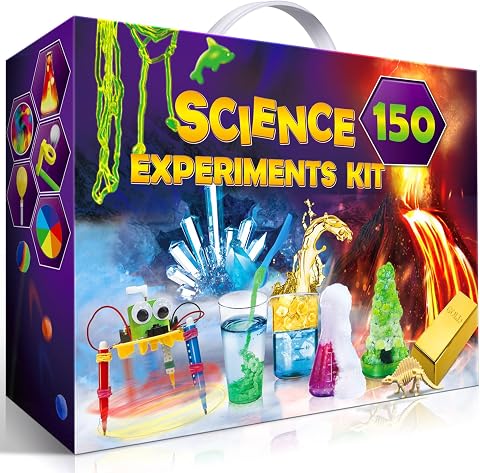
UNGlinga 150 Experiments Science Kits for Kids – Chemistry Lab & STEM Toys
- ✔ Brand: UNGlinga
- ✔ Age range: 8 years and up
- ✔ Number of experiments: 150
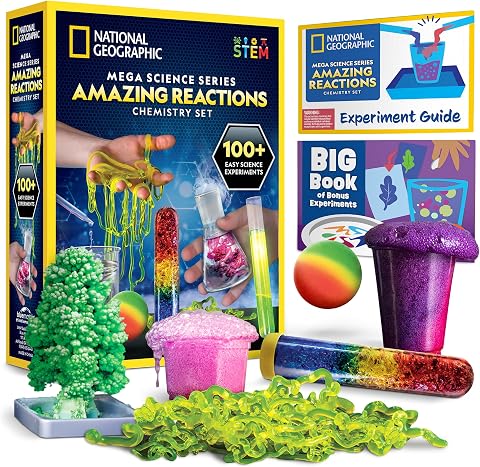
National Geographic Amazing Chemistry Set with 100+ Experiments for Ages 8-12
- ✔ Brand: Blue Marble
- ✔ Age range: 8 years and up; title specifies ages 8–12
- ✔ Experiment count: 100+

National Geographic Science Magic Kit with 100+ Experiments for Kids 8-12
- ✔ Brand: Blue Marble
- ✔ Age range: 8 years and up; title specifies ages 8–12
- ✔ Core experiments: 20
Difficulty: Beginner | Time: 30-90 minutes, depending on the kit and experiment
What You’ll Need
Tools & Materials:
- A science experiment kit with its instruction booklet and all listed components
- A clear, washable work surface
- A tray or shallow bin to contain spills
- Paper towels and access to water for cleanup
- A timer, pencil, and notebook or observation sheet, if the activity calls for them
- Safety glasses, gloves, or other protective equipment specified by the kit
Knowledge:
- Read and follow the kit’s age guidance, warnings, and experiment instructions
- An adult should supervise children, especially when the kit includes small parts, liquids, heat, sharp tools, or chemicals
Check the packaging and booklet before opening materials. Confirm that the child meets the age guidance and that the kit is complete, intact, and appropriate for the child’s abilities. Do not substitute household ingredients or combine materials unless the instructions specifically allow it. Set aside the full activity time, plus cleanup time; some experiments continue beyond one session.
UNGlinga 150 Experiments Science Kits for Kids – Chemistry Lab & STEM Toys
For families who want one kit to cover more than a single branch of science, UNGlinga earns our top spot. Its stated 150 experiments include chemistry, physics, and earth science, giving it a broader learning brief than either National Geographic option. That variety matters when a child’s interests are still developing: a chemistry activity can be followed by a different kind of investigation rather than making every session feel like another reaction demonstration.The kit is described as including kid-friendly tools, materials, and easy-to-follow instructions, which helps make it a plausible home or school activity set. Compared with the Amazing Chemistry Set, its advantage is breadth rather than a particularly clear emphasis on crystal growing or reactions. Compared with the Science Magic Kit, it is positioned more as general hands-on exploration than as a collection of entertaining tricks. Those distinctions make UNGlinga the most flexible starting point in this lineup, not necessarily the most specialized.There are limits behind that wide count. The supplied details do not specify what every experiment needs or how much material each activity uses, and the description notes that tools or materials may not stretch to advanced projects. Some experiments also need adult supervision. We would choose it for a child who likes variety and basic guided projects, but look to the chemistry set for a more deliberate chemistry theme or the magic kit for a show-and-tell style experience.
Pros:
- Lists 150 experiments across chemistry, physics, and earth science.
- Includes kid-friendly tools and materials for hands-on activities.
- Easy-to-follow instructions are described as supporting accessible projects.
- Its subject variety makes it less narrowly focused than the other two picks.
Cons:
- Some experiments may need adult supervision.
- The supplied description warns that tools and materials may be limited for advanced projects.
- The details do not identify the materials or time requirements for each activity.
Best for: Children ages eight and up who want to move among chemistry, physics, and earth science in one activity kit.
Not ideal for: Families seeking advanced projects, a clearly specialized crystal-growing curriculum, or activities guaranteed to require no adult help.
Bottom line: We recommend UNGlinga as the most versatile choice for children who want a wide-ranging introduction to hands-on science.
“We recommend UNGlinga as the most versatile choice for children who want a wide-ranging introduction to hands-on science.”
National Geographic Amazing Chemistry Set with 100+ Experiments for Ages 8-12
When a child is drawn specifically to bubbling reactions, crystals, and chemistry tools, the Amazing Chemistry Set is the clearest match. It advertises 100+ experiments and calls out crystal growing and chemical reactions, giving its activity mix a more defined subject focus than UNGlinga’s cross-disciplinary collection. The kit also identifies real scientific tools such as test tubes and beakers, which can make a guided activity feel more like working at a small lab bench.Its bonus experiments using household items are another useful distinction. They may extend the kit beyond its supplied materials and give families more ways to continue exploring, although the listing does not specify the requirements for every bonus activity. Compared with the Science Magic Kit, this set is a better fit for children who want chemistry to be the point rather than a vehicle for a trick. Compared with UNGlinga, it gives up the stated physics and earth science range in exchange for a more concentrated chemistry identity.That focus will not suit every young scientist. Some experiments may take time, younger children may need adult supervision, and the stated age range begins at eight. We would skip it if the child prefers varied science topics or quick activities that can be done independently. For a chemistry-curious child who is happy to follow a more focused set of projects, its tools and crystal-growing theme make the choice easy to understand.
Pros:
- Advertises more than 100 chemistry experiments.
- Highlights crystal growing and chemical reactions.
- Includes identified tools such as test tubes and beakers.
- Bonus experiments using household items may extend activity options.
Cons:
- Some experiments may take time to complete.
- Adult supervision may be needed, especially for younger children.
- Its chemistry focus is narrower than UNGlinga’s stated subject range.
Best for: Children ages eight and up who are especially interested in chemical reactions, crystal growing, and using basic lab-style tools.
Not ideal for: Children looking for a broad mix of science disciplines, very short activities, or a kit intended for unsupervised younger users.
Bottom line: We’d choose this set over the broader UNGlinga kit when chemistry, crystals, and lab-style tools are the child’s main interests.
“We’d choose this set over the broader UNGlinga kit when chemistry, crystals, and lab-style tools are the child’s main interests.”
National Geographic Science Magic Kit with 100+ Experiments for Kids 8-12
The Science Magic Kit gives science a different kind of hook: experiments are framed as magic tricks and demonstrations. That presentation may appeal to children who enjoy surprising an audience, explaining how a trick works, or sharing an activity with family. Where the Amazing Chemistry Set foregrounds reactions and crystal growing, this kit emphasizes curiosity and performance. It is also a more playful alternative to UNGlinga’s broad, general-science approach.Its activity count needs a little context. The supplied specifications identify 20 experiments plus 85+ activities in a bonus booklet, while the product title describes 100+ experiments. We would treat it as a core set supplemented by additional booklet activities rather than assume every item has the same format or uses only pieces from the box. This makes it a distinctive choice for a child motivated by tricks, but less straightforward for a family seeking a clearly defined chemistry sequence.As with the other kits, the age guidance starts at eight and some experiments may require adult supervision. The description also leaves the particular tools and materials less clearly detailed than the chemistry set’s named beakers and test tubes. Choose this option for a child who values the reveal as much as the science explanation; skip it if the main goal is a broad subject survey or a focused collection of chemistry projects. Its special appeal is engagement through presentation, not maximum topic range.
Pros:
- Combines science activities with a magic-trick presentation.
- Lists 20 core experiments and 85+ bonus-booklet activities.
- A performance-oriented format can suit children who like sharing demonstrations.
- Offers a different engagement style from the chemistry-focused alternative.
Cons:
- The listed core and bonus activity counts require more interpretation than a single experiment total.
- Some activities may require adult supervision.
- The supplied details do not name specific tools or materials.
Best for: Children ages eight and up who enjoy magic tricks, surprising demonstrations, and explaining how an effect works.
Not ideal for: Children who want a clearly specified chemistry curriculum, broad coverage of science subjects, or a detailed inventory of included tools.
Bottom line: We’d pick the Science Magic Kit for a child who wants science to surprise an audience, not for the broadest or most chemistry-focused activity set.
“We’d pick the Science Magic Kit for a child who wants science to surprise an audience, not for the broadest or most chemistry-focused activity set.”
As an Amazon Associate we earn from qualifying purchases.
Before You Start
Choose an activity that matches the child’s age, interests, and ability to follow instructions. Read the full experiment before starting, including disposal directions. Keep food and drinks away from the workspace, and have children wash their hands after handling kit materials. Do not taste, smell closely, or touch substances unless the booklet directs it. If a kit is missing a part, has damaged packaging, or lacks clear safety directions, pause and contact the manufacturer rather than improvising.
Step-by-Step Instructions
Step 1: Choose a suitable kit
Read the age range, activity descriptions, required adult involvement, and safety warnings on the box or product listing. Pick one experiment that fits the child’s interests and attention span, such as building, observing, growing, or testing. Check whether you must provide extra supplies, batteries, or ingredients. If the child is young, select a kit with simple directions and few small parts; follow the manufacturer’s age guidance rather than relying on the box theme alone.
Tip:Look for clear instructions, a materials list, and a way to repeat or observe the experiment. A kit with many activities is not automatically a better fit if the steps are too difficult for the child.
Check: You can name the experiment you will do, identify the adult’s role, and confirm that the child meets the stated age guidance.
Step 2: Check the kit and gather supplies
Open the kit over the tray and compare every component with the booklet’s parts list. Set aside the materials needed for the selected activity and gather any listed household supplies. Inspect containers and tools for leaks, cracks, or damage. Keep unused kit parts together so they do not get mixed into the experiment, and store materials that are not needed out of the child’s reach.
Tip:Do not replace a missing measurement tool, ingredient, or safety item with a guess. Check the manufacturer’s instructions or contact the seller for a replacement before proceeding.
Check: All required parts and supplies are present, undamaged, and within reach, and you know what to do with leftover materials.
Step 3: Prepare the workspace
Choose a stable, well-lit surface away from food preparation, pets, and foot traffic. Cover it with a washable mat or use a tray if the activity may spill. Put on any protective equipment named in the booklet, tie back long hair, and move unrelated items away. Keep a paper towel and cleanup water nearby, but do not place water next to electrical components unless the instructions say it is safe.
Tip:Decide in advance where the child will place finished samples or equipment. This prevents an experiment from being knocked over while the next step is underway.
Check: The work area is clear and stable, safety equipment is ready, and the child can reach materials without leaning over or crowding the setup.
Step 4: Read the experiment instructions together
Have the child look at the experiment title, materials, and each step before starting. Explain unfamiliar words in plain language and ask the child to point out what will be measured, changed, or observed. Mark any step that requires an adult, such as pouring, cutting, heating, or handling a substance. Agree on a simple question or prediction, and write it in a notebook if the activity allows.
Tip:Let the child do age-appropriate tasks, such as counting drops or recording observations, while an adult handles tasks the booklet reserves for adults.
Check: The child can describe what they are testing and what they will watch for, and everyone knows which tasks require adult help.
Step 5: Follow the steps in order
Carry out the booklet’s instructions one step at a time, using the listed quantities and tools. Measure carefully, keep containers labeled if the experiment uses more than one, and pause to record what happens at the points named in the instructions. Do not skip ahead, add extra ingredients, or repeat a step unless the booklet says to. Keep the adult present throughout the activity and stop if a spill, unexpected reaction, or damaged component creates a safety concern.
Tip:For experiments involving timing, start the timer only when the instructions specify. For comparisons, change only the variable named in the procedure so the results remain meaningful.
Check: The setup matches the diagrams or written directions, measurements are recorded as requested, and no unlisted materials have been added.
Step 6: Observe and record the result
Give the experiment the time specified in the booklet. Ask the child to describe visible changes, sounds, movement, temperature changes, or other observations called for by the activity. Record observations with words, numbers, or drawings, and compare them with the original prediction. Avoid touching or disturbing the setup while it is producing a result, unless the instructions require a specific action.
Tip:If a result takes several hours or days, label the setup with the date and keep it in the location stated in the booklet. Set a reminder for follow-up observations.
Check: The child has an observable result or a clear record of what happened over time, even if the result differs from the prediction.
Step 7: Clean up and discuss what happened
Follow the kit’s disposal directions before emptying containers or washing tools. Ask the child to help with safe tasks, such as putting away dry parts or wiping the workspace; an adult should handle any materials the booklet identifies as hazardous. Wash hands with soap and water after handling the kit. Talk through what changed, what stayed the same, and what the observations suggest. Store reusable components and the booklet together, and keep leftover materials as directed.
Tip:Do not pour leftover substances down a drain or place them in household waste unless the kit instructions permit it.
Check: The experiment has been disposed of as directed, the work area is clean, reusable parts are stored, and the child can describe at least one observation.
Common Mistakes to Avoid
- Choosing a kit based only on its theme or advertised number of experiments. — Check the age guidance, reading level, adult-supervision needs, safety warnings, and extra supplies before choosing. Match the first activity to the child’s interests and attention span.
- Starting before checking the parts list or reading the full procedure. — Read the complete activity first and lay out every required component. This catches missing supplies and reveals steps that need adult handling or extra waiting time.
- Changing quantities, combining substances, or improvising a replacement ingredient. — Use the booklet’s measurements and listed materials exactly. Pause and ask the manufacturer about missing or unclear items instead of guessing.
- Treating a different result as a failed experiment. — Record what actually happened and compare it with the prediction. Differences can be useful observations; check the method and safety directions before deciding whether to repeat the test.
Troubleshooting
Problem: A required part or supply is missing.
Solution: Stop before beginning that experiment. Check the packaging and parts list once more, then contact the manufacturer or seller for a replacement or approved alternative. Do not guess at quantities or substitute materials.
Problem: The experiment produces little or no visible change.
Solution: Check that you followed the correct order, used the specified amounts, and waited the full stated time. Review storage or temperature requirements. If everything matches, record the result and contact the manufacturer if the booklet provides support details.
Problem: The child spills a material or gets it on their skin or clothing.
Solution: Pause the experiment and follow the kit’s spill or exposure directions. Keep the child away from the spill while an adult cleans it with the specified precautions. For skin or eye exposure, follow the booklet’s first-aid instructions and seek medical or poison-control advice when directed.
Problem: The child cannot follow a written instruction.
Solution: Pause and read the step aloud. Point to the matching diagram or show the tool without changing the procedure. Break the step into small actions, then have the child repeat what they will do before continuing.
What Success Looks Like
The activity is successful when the child has completed the kit’s procedure safely, the result or observations have been recorded, and cleanup follows the booklet’s directions. The outcome does not have to match the child’s prediction or look exactly like a promotional picture; a careful observation of an unexpected result still completes the investigation. You should be able to verify that required steps were followed, materials were handled as directed, and reusable parts are stored or disposed of appropriately.
Next Steps
Save the observation notes with the kit and add the date, the child’s prediction, and anything you would change in a repeat test. If the kit has more activities, choose one related to the first experiment and check its materials and safety directions before the next session. Reuse parts only as the booklet permits, and replace damaged components rather than repairing them with unapproved materials. Contact the manufacturer for unclear safety or disposal directions; seek medical or poison-control guidance for an exposure when the kit’s instructions call for it.
Frequently Asked Questions
What age should a child be to use a science experiment kit?
Use the age range printed by the manufacturer as your starting point. Also check reading demands, small parts, and whether an adult must handle particular steps. A child below the stated range should not use the kit unless the manufacturer explicitly approves adult-assisted use.
Does an adult need to stay with the child?
Follow the kit’s supervision instructions and stay present whenever the booklet requires adult help or the activity includes chemicals, heat, sharp tools, small parts, or electrical components. Even for simpler activities, an adult should check setup, safe handling, and disposal.
Can I use household items if a kit part is missing?
Only use a substitute if the booklet or manufacturer specifically approves it. Different ingredients, containers, or measurements can change the result or create a safety risk. Pause the activity and ask the manufacturer for guidance when a required item is missing.
What should I do if the result does not match the instructions’ example?
Compare your procedure with the booklet, including measurements, order, timing, and storage conditions. Record the result rather than altering the setup. If the materials were used correctly and the outcome remains unclear, check the kit’s support information before repeating the experiment.
Halloween Picks
halloween
As an affiliate, we earn on qualifying purchases.