
When parents compare science experiment kits, the real choice is often between a straightforward kit that delivers a particular activity and a more structured project experience designed around a child’s age and interests. National Geographic Science Kits and KiwiCo are two recognizable ways to make hands-on science part of play, but they are not identical products: National Geographic commonly sells themed kits as individual purchases, while KiwiCo offers curated project boxes and kits with age-specific instructions and activities.

Get school and study supplies delivered free — and shop member deals
- Fast, free delivery on millions of items
- Access to Prime Big Deal Days deals on October 6–7
- Prime Video, Amazon Music and more included
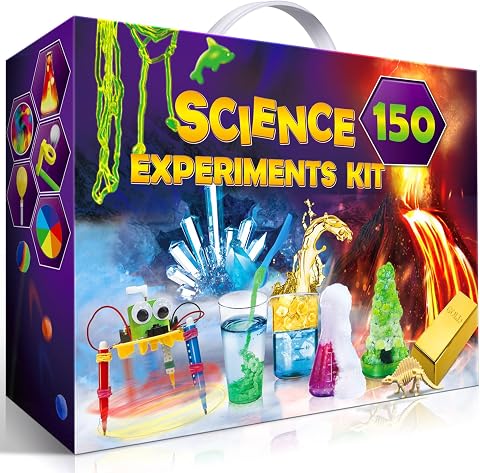
UNGlinga 150 Experiments Science Kits for Kids – Chemistry Lab & STEM Toys
- ✔ Brand: UNGlinga
- ✔ Age range: 8 years and up
- ✔ Number of experiments: 150
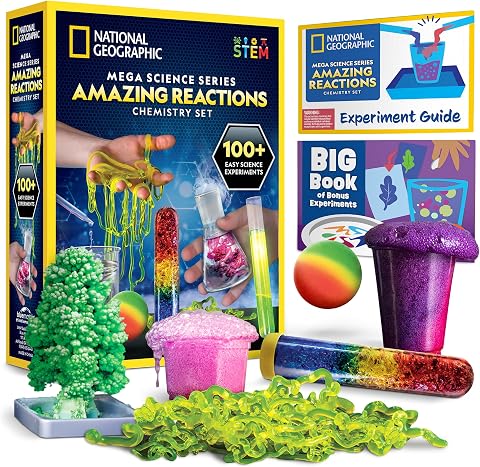
National Geographic Amazing Chemistry Set with 100+ Experiments for Ages 8-12
- ✔ Brand: Blue Marble
- ✔ Age range: 8 years and up
- ✔ Experiment count: 100+

National Geographic Science Magic Kit with 100+ Experiments for Kids 8-12
- ✔ Brand: Blue Marble
- ✔ Age range: 8 years and up
- ✔ Experiments listed in specifications: 20
That distinction affects more than what arrives in the box. It shapes how much adult help a child may need, how much variety the purchase provides, and whether the kit feels like a one-time activity or part of an ongoing learning routine. National Geographic is generally the practical pick for a focused experiment, gift, or lower-commitment purchase. KiwiCo is a stronger fit for families who value guided projects and a more tailored experience enough to pay more. Exact contents, prices, and age recommendations vary by product, so compare the specific kits before buying.
At a Glance
| Criteria | National Geographic Science Kits | KiwiCo Science Kits | Winner |
|---|---|---|---|
| Purchase format | Most commonly sold as a single themed kit | Includes one-time kits and recurring subscription boxes | A |
| Activity focus and variety | Often centers on a defined topic or set of experiments | Curated projects combine making, experimenting, and learning | Depends |
| Instructions and guidance | Instructions and depth vary by individual kit | Typically emphasizes structured, child-facing project guidance | B |
| Age targeting | Age recommendations depend on the specific product | Organized into age-focused product lines, with specific recommendations varying | B |
| Adult involvement | Varies; some activities need adult setup or supervision | Guidance can support independent work, though younger children still need supervision | B |
| Reuse and lasting play | Depends on the materials and whether experiments can be repeated | Depends on the individual project; some builds invite continued use | Depends |
| Value | Often attractive for a one-time activity or gift | Higher cost can make sense for tailored guidance and ongoing projects | Depends |
UNGlinga 150 Experiments Science Kits for Kids – Chemistry Lab & STEM Toys
UNGlinga is our best overall pick because it covers chemistry, physics, and earth science rather than asking a child to stay with one theme. That range matters when a young experimenter is still figuring out whether reactions, physical effects, or earth science are most appealing. Its stated 150 experiments give the kit a strong variety-first identity, and the included kid-friendly tools, materials, and easy-to-follow instructions are intended to make home or school activities accessible.Compared with National Geographic Amazing Chemistry, UNGlinga is the better match for kids whose interests shift across subjects; the National Geographic set offers a more concentrated chemistry path, including crystal growing. Compared with Science Magic, UNGlinga puts the emphasis on general exploration rather than turning demonstrations into tricks to share. The tradeoff is that breadth does not necessarily mean every project is advanced or equally self-contained. The description notes that tools and materials may be limited for more advanced projects, and some experiments need adult supervision. We would choose it for variety, not as a substitute for an advanced lab or a fully independent activity book.Who should choose it: families looking for one kit that can support different science interests over time. Who should skip it: children specifically seeking chemistry-only projects, or caregivers who need every activity to be unsupervised and ready to complete without extra help.
Pros:
- Lists 150 experiments across chemistry, physics, and earth science.
- Includes kid-friendly tools and materials for hands-on activities.
- Easy-to-follow instructions are intended to make projects accessible.
- Broad subject coverage can accommodate changing interests.
Cons:
- Some experiments may require adult supervision.
- The included tools and materials may not support more advanced projects.
Best for: Kids aged 8 and up who want to explore more than one science subject and benefit from a wide selection of activities.
Not ideal for: Children who want a tightly focused chemistry curriculum or advanced projects, and families looking for a kit that requires no adult involvement.
Bottom line: Choose UNGlinga when breadth and a large stated activity selection matter more than a single, tightly defined science theme.
“Choose UNGlinga when breadth and a large stated activity selection matter more than a single, tightly defined science theme.”
National Geographic Amazing Chemistry Set with 100+ Experiments for Ages 8-12
This National Geographic set is the most focused chemistry pick in our comparison. Its activities center on chemical reactions and crystal growing, giving kids a clearer subject thread than UNGlinga’s mix of chemistry, physics, and earth science. For a child who is already curious about what happens when materials combine or how crystals form, that concentration can make the kit feel more purposeful than a broader assortment.The set includes real scientific tools such as test tubes and beakers, and its description notes bonus experiments using household items. That combination may help extend the activity experience beyond the supplied projects, though the household-item detail means caregivers should check what each activity calls for before starting. Compared with Science Magic, this is the more direct choice for chemistry exploration; Science Magic puts more of its appeal in tricks and demonstrations. Compared with UNGlinga, it gives up cross-subject breadth in exchange for a stronger chemistry identity.There are practical limits: the kit is intended for ages 8 and up, younger children may need supervision, and some experiments take time. We would not pick it for a child who wants equal exposure to multiple science fields or quick activities that can be started and finished with minimal planning. For a chemistry-curious child willing to work through projects, however, its tools and topic focus make the distinction clear.
Pros:
- Focuses on chemistry, including reactions and crystal growing.
- Includes real scientific tools such as test tubes and beakers.
- Offers bonus experiments that use household items.
- Provides more than 100 stated experiments and activities.
Cons:
- Some experiments may take time to complete.
- Younger children may need adult supervision.
- Its chemistry emphasis is less suitable for kids seeking broader science coverage.
Best for: Kids aged 8 and up who are especially interested in chemical reactions, crystal growing, and lab-style tools.
Not ideal for: Children who prefer a mix of science subjects, need very quick activities, or expect to complete every experiment independently.
Bottom line: Pick this set over UNGlinga or Science Magic when chemistry itself—not broad STEM variety or performance—is the child’s main interest.
“Pick this set over UNGlinga or Science Magic when chemistry itself—not broad STEM variety or performance—is the child’s main interest.”
National Geographic Science Magic Kit with 100+ Experiments for Kids 8-12
Science Magic is the most presentation-friendly kit here: it combines experiments with magic tricks and STEM activities, making it a natural match for kids who like to surprise an audience as much as investigate an effect. That performance angle distinguishes it from National Geographic Amazing Chemistry, which keeps the focus on chemistry activities, and from UNGlinga, which offers broader subject variety. A child who enjoys showing a sibling or family member how an apparent trick works may find this framing especially motivating.The activity-count details need a closer look. The product description promotes 100+ experiments, while the specifications list 20 experiments in the kit and 85+ additional experiments in a bonus booklet. Those figures suggest that a substantial portion of the stated activity total is presented through the booklet, so we would not assume all activities have identical materials or setup requirements. Compared with UNGlinga’s 150 listed experiments, this is less about maximizing a broad catalogue and more about giving science a playful, demonstrable hook. Compared with the chemistry set, it may appeal to a wider range of performance-minded interests, but it is less clearly targeted at crystal growing or chemistry practice.As with the other two kits, adult supervision may be needed, and its stated audience is ages 8 and up. It is not the best fit for a child who wants a strictly chemistry-focused set or a caregiver seeking a clearly documented collection of independent projects. We rank it third because its distinct magic angle is compelling for a particular child, but its core-versus-bonus activity breakdown makes the headline count less straightforward to interpret.
Pros:
- Combines science activities with magic tricks and demonstrations.
- The description states 100+ activities when bonus-booklet experiments are included.
- A performance angle can make scientific ideas engaging to share.
- Designed for children aged 8 and up.
Cons:
- Specifications separate 20 kit experiments from 85+ bonus-booklet experiments.
- Some activities may require adult supervision.
- The magic theme may not suit children who want focused chemistry projects.
Best for: Kids aged 8 and up who enjoy magic tricks, surprising demonstrations, and sharing what they discover.
Not ideal for: Children seeking a focused chemistry kit, families prioritizing the largest clearly specified core collection, or kids who dislike performing activities for others.
Bottom line: Choose Science Magic for a child motivated by tricks and demonstrations, while checking the activity breakdown rather than relying on the combined headline count alone.
“Choose Science Magic for a child motivated by tricks and demonstrations, while checking the activity breakdown rather than relying on the combined headline count alone.”
As an Amazon Associate we earn from qualifying purchases.
Key Differences
The clearest difference is what the purchase is meant to do. A National Geographic kit is generally a direct route to a themed activity: choose a subject, buy the kit, and use its contents for that experience. That makes it easier to shop for a specific interest or occasion without committing to repeated deliveries. KiwiCo is more centered on guided projects and age-based curation. Its subscription option can turn science and building activities into a regular routine, while its individual kits let families try the format without subscribing.
For a child who enjoys following a project from start to finish, KiwiCo’s more structured approach can be worth the added cost. Clear, age-conscious guidance may reduce the work of inventing an activity or translating instructions for a young learner, though it does not remove the need for adult supervision. National Geographic can deliver better value when the child wants one particular experiment or the parent wants a lower-commitment gift. Neither brand guarantees that every activity will be reusable or equally engaging: check the contents, recommended age, setup needs, and project count of the exact product.
Detailed Comparison
Purchase format (National Geographic Science Kits wins — moderate)
National Geographic wins for a simple one-off purchase; the gap is moderate. Its kits are commonly sold as individual themed products, which suits a birthday, school-break activity, or child with a clear interest. KiwiCo also sells individual kits, but its subscription-box option is a bigger part of its appeal. That format offers continuing projects, yet asks families to plan for recurring purchases and deliveries. Pick the format that matches how often your child will actually use a new kit.
Activity focus and variety (minor difference)
Neither brand wins across the board; the difference is minor and product-dependent. National Geographic kits often focus on a recognizable theme, which is useful when a child already likes a subject and wants to explore it directly. KiwiCo projects tend to package making and learning into a curated activity, and a subscription can bring new themes over time. A single kit from either brand may be narrow or broad, so compare the listed experiments, builds, and materials rather than assuming the brand name tells the whole story.
Instructions and guidance (KiwiCo Science Kits wins — moderate)
KiwiCo has the advantage; the gap is moderate. Its age-focused project format is designed to guide children through an activity, which can help a child understand what to do next and connect the build with the underlying idea. National Geographic’s guidance varies by kit and may be perfectly adequate, but parents should inspect the product details if instruction quality is a deciding factor. Better guidance is most valuable for children who want to work through a project themselves; it matters less when an adult plans to lead the activity.
Age targeting (KiwiCo Science Kits wins — moderate)
KiwiCo wins by a moderate margin. Its product lines are organized around age ranges, making it easier to start with a project pitched to a child’s developmental stage. National Geographic kits also list age recommendations, but buyers need to evaluate each kit individually. In either case, the printed age is a guide, not a promise of independent use: reading ability, patience, fine-motor skills, and familiarity with tools can change how challenging a project feels.
Adult involvement (KiwiCo Science Kits wins — minor)
KiwiCo has a modest advantage for guided child participation, but neither brand is a hands-off babysitter. Clear project steps can make it easier for a child to take the lead, especially when the activity is matched to their age. National Geographic kits can also be manageable, but the amount of explanation and setup depends on the specific experiment. Younger children may need help with measuring, reading, cleanup, or safety regardless of brand. If minimal adult involvement is the priority, look for explicit independence guidance and avoid projects requiring complex setup.
Reuse and lasting play (moderate difference)
This is a tie because the individual project matters more than the brand. Some experiments use up materials or produce a result that is interesting once; other builds can be kept, adjusted, or revisited. A recurring KiwiCo box supplies new activities over time, but that is variety from additional purchases, not proof that each project itself is reusable. National Geographic kits can offer repeatable activities when supplies allow. Before buying, check whether consumables are included, whether refills are needed, and what the child can do after the first run.
Value (moderate difference)
The better value depends on the use case; the difference is moderate. National Geographic is often the more economical way to buy one themed activity without a subscription commitment. KiwiCo may justify a higher spend for families who want age-conscious curation, structured guidance, or a steady stream of projects. Paying more is not worthwhile just because the box looks polished: it makes sense when the child will use the instructions, complete the projects, and benefit from receiving new activities. Compare project quantity and materials against the actual price of the exact item.
National Geographic Science Kits: Pros and Cons
Pros:
- Straightforward option for buying one themed kit at a time
- Often suits gifts or a specific science interest
- Can be a lower-commitment purchase than a recurring box
- Product range lets families choose a topic before buying
Cons:
- Instruction depth and activity design vary by kit
- Age fit and adult setup needs require product-by-product checking
- A single themed kit may not provide an ongoing supply of fresh projects
- Repeat use depends on included materials and consumables
KiwiCo Science Kits: Pros and Cons
Pros:
- Age-focused product lines make matching a project to a child easier
- Structured guidance can support child-led activity
- Subscription option provides a continuing stream of projects
- Curated projects can combine building with science learning
Cons:
- Subscriptions require an ongoing budget and may deliver more than a family needs
- The higher cost may not pay off for a child who only wants one experiment
- Project quality, reuse, and adult help still vary by individual box or kit
- Age labels do not mean every child can complete a project alone
Who Should Choose What
Choose National Geographic Science Kits if:
- You want one themed science activity without signing up for recurring deliveries.
- You are buying a gift for a child with a specific interest and can match a kit to it.
- You want to keep the purchase focused and compare the exact activities before spending.
- You are comfortable helping with setup if the selected kit needs adult support.
Choose KiwiCo Science Kits if:
- You want projects with structured, age-conscious guidance rather than choosing activities entirely on your own.
- Your child enjoys regular new builds and experiments, and your household will use a subscription consistently.
- You are willing to pay more for curation and a guided project experience.
- You want an individual KiwiCo kit but prefer its particular project over a themed alternative.
Skip both if: Skip both if your child needs an activity with no adult supervision, has little interest in hands-on projects, or you cannot confirm the kit’s age fit, safety details, and required household supplies.
Value for Money
For a single activity, National Geographic is usually the stronger value: you can select one theme, pay once, and avoid a subscription that may outlast your child’s interest. That does not make it automatically cheaper per hour of engagement; a kit that gets used once can be poor value at any price. Check the number of activities, whether materials are consumable, and whether the child can repeat or extend the experiment.
KiwiCo is worth paying more for when the value is in the structure and continuity: your child benefits from age-targeted instructions, you want help selecting projects, and new boxes will genuinely be used. If you only want a one-time gift or your child already has a specific experiment in mind, pay extra only when that particular KiwiCo project offers something meaningfully better. For most occasional kit buyers, National Geographic is the more sensible starting point; for families building a regular project habit, KiwiCo can earn its higher cost.
Final Verdict
Choose National Geographic for a focused, one-time science activity, especially when you know the child’s preferred subject and want to avoid recurring costs. Choose KiwiCo when the child benefits from guided, age-targeted projects and your family will make regular use of new activities. The biggest deciding factor is not which logo promises more science; it is whether you need one specific kit or a continuing, more structured project experience. For most families buying an occasional experiment kit, start with National Geographic and inspect the exact contents. Pay more for KiwiCo when its guidance and ongoing format solve a real need in your home.
Frequently Asked Questions
Are National Geographic or KiwiCo science kits better for younger children?
KiwiCo has an advantage when you want an age-organized range and guided project steps. Still, compare the specific age recommendation and activity requirements: younger children may need adult help with reading, measuring, setup, and safety whichever brand you choose.
Do you have to subscribe to KiwiCo to buy a science project?
No. KiwiCo offers individual kits as well as subscription boxes, though the products and availability vary. Buying one kit is a good way to test whether its project style suits your child before committing to recurring deliveries.
Which brand is better for a child who wants to work independently?
KiwiCo is often the better starting point because its projects emphasize structured, age-conscious guidance. Independence still depends on the child and the particular kit; check whether adult setup or supervision is recommended before purchasing.
Are these kits reusable?
Reuse depends on the experiment, not just the brand. Some projects use consumable materials or produce a one-time result, while some builds can be repeated or kept for continued play. Check each product’s included materials and whether additional supplies are required.
Is KiwiCo worth the extra cost?
It can be if your child values guided projects, the age-based selection helps you choose, and you expect to use new boxes regularly. For a single themed activity or occasional gift, National Geographic is often the better-value choice. Compare the exact project contents and price before deciding.
Fall Picks
fall essentials
As an affiliate, we earn on qualifying purchases.