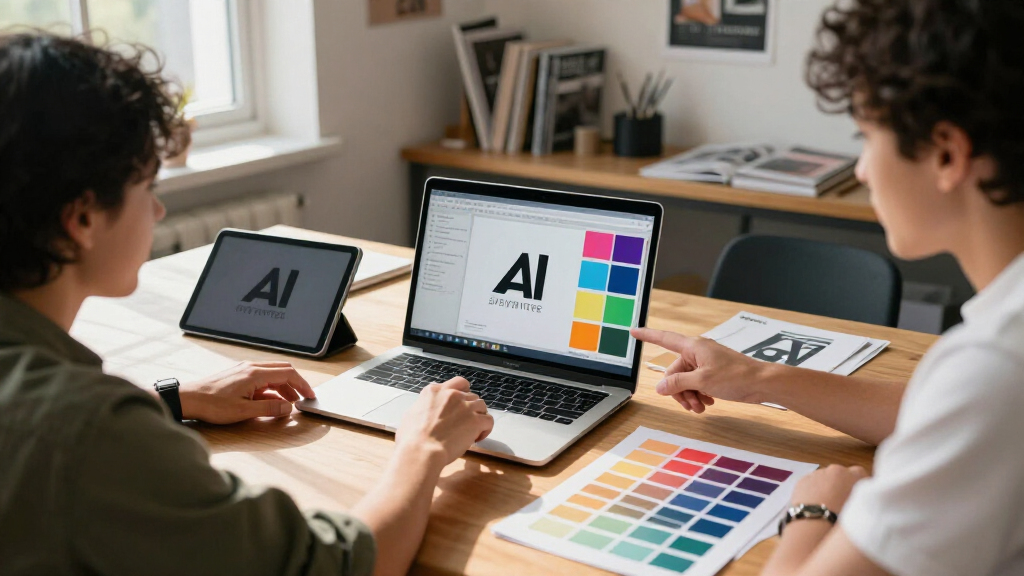

🔍 Read the full analysis: How Gewerkton Turned A Two-Day Sprint Into A Brand Relaunch With AI on ThorstenMeyerAI.com

Prime made for students and young adults
- Fast, free delivery for dorm and study essentials
- Prime Video and Amazon Music included
- Member-only deals
TL;DR
Gewerkton says it replaced the design across its web and phone apps, Studio, icons and 40-language website on October 2–3, 2026, using AI coding agents to carry out plans approved by founder Thorsten Meyer. The company reports passing app and website checks, while also documenting visual defects, failed film jobs and fixes that required human review. The publisher builds Gewerkton, and the account is its own report of the project.
Gewerkton, a construction-site documentation tool built in Bavaria, says it replaced the design across its web app, iPhone and Android apps, Studio, 26 icons and a 529-page website during a two-day implementation sprint on October 2 and 3, 2026. The company says AI coding agents implemented a previously approved plan, while founder Thorsten Meyer reviewed the work and released each part; the relaunch matters as a detailed example of where automation helped and where human checks caught defects.
The new design, named HORIZON, was applied to the web app, phone apps, Studio and website. Gewerkton says the website covers 40 languages, and that 1,583 files were uploaded without an error. The web app’s redesign replaced 281 hard-coded colour values with design tokens, with 11 exceptions retained, and restyled 47 cards. The phone app release is version 0.5.0; the Studio received light and dark versions of the new look.
The company says its AI agents, using Codex and Claude, worked from written plans in a separate code copy and branch. The plan listed unresolved choices, options and recommendations, which Meyer approved. He then reviewed results and authorized each release. Films showing the redesigned products were held until he had reviewed the interface, and paid film reruns also required his approval. Apple’s developer agreement presented another human-only gate: Meyer had to accept the latest Program License Agreement before the iPhone build could proceed.
Gewerkton reports that the website received 228 AI film runs for five regions, including 222 regional versions, as well as eight help videos. Its project records put the actual film cost at about $134. The company says production paused after the ninth round when 38% of jobs were failing; 208 of the 228 runs had been completed by then, and 76 failed jobs were not billed. Those figures are the publisher’s account of its own project, not an independently audited cost or performance study.
Human Checks Shaped the Relaunch
The account’s significance lies less in the claim that a brand can be changed quickly than in the work needed to make the changes safe to publish. Gewerkton says agents handled implementation across several products and a large multilingual site, but approval remained with Meyer. The case shows a division of tasks: agents could execute a plan and run checks, while a person made release decisions, handled account permissions and judged visual quality.
Some defects were not caught by automated tests. The first icon set had white tiles that obscured nearby labels in dark mode; Meyer spotted the problem by inspecting the interface. The fix combined changes to icon transparency and a dark variant with a layout correction. The company says it went live that evening. In another example, an automatic mask used to remove red from promotional films missed red in shadows and warm backlighting. Visual review found errors, including a helmet left partly red, and led to 24 files being cleaned and 10 regional versions temporarily replaced with a European cut.
These examples qualify the productivity story. Automated tests and image processing can help check a large workload, but passing a test suite did not establish that every visual result was acceptable. For teams considering a similar workflow, the report points to the need for explicit approval gates and human inspection, especially when output is customer-facing or generated across many languages and regions.
Popular right now

Dyson Big Ball Multi Floor Canister Vacuum, Yellow

Dyson Cyclone V10 Origin Cordless Vacuum

De'Longhi Stilosa Compact Manual Espresso Machine with Milk Frother
As an affiliate, we earn on qualifying purchases.
A Sprint Built on Earlier Design Work
The phrase “two-day sprint” describes implementation, not the full design process. Gewerkton says an interim draft of the visual direction dated September 26 was carried into the October work. The sprint therefore began with an existing design proposal rather than an empty brief. The account does not give a full schedule for the earlier design work or quantify how many people or agent-hours the project required.
Gewerkton is built in Iffeldorf, Bavaria, by Thorsten Meyer, who says he directs the AI coding agents. The company’s disclosure states that it is built by the publisher and that the publisher is documenting what it learns. That relationship matters when interpreting the reported figures and success claims: the account offers unusually detailed project measurements, but they come from the company responsible for the work.
Before release, the web app was checked in 200 views across English, German, Japanese and Hindi; three screen widths—390, 834 and 1,440 pixels; and light and dark modes. Gewerkton reports no overflow or console errors in those checks. It also reports 853 of 853 phone-app tests passing and 2,158 of 2,158 Studio tests passing. The website passed seven test suites and was checked in five regions at the same three widths, then tested again after upload.
““Two days” needs one qualification. An interim draft of the look from 26 September was carried into the work, so the design did not start from nothing on 2 October.”
— Gewerkton’s project account
Reported Results Need Independent Verification
The figures and outcomes in the account are reported by Gewerkton; no independent audit or outside evaluation is provided. The source does not define the accounting basis behind the roughly $134 film cost, beyond calling it actual cost, or provide a full breakdown of that figure. It also does not say how much staff time, agent usage or earlier design work contributed to the overall effort.
Some test results have limits. Gewerkton says eight web-app tests failed in seven files. Six of those files fail in the main branch as well, while one test depends on execution order and passes when run alone. The company says these failures were not caused by the redesign, but also says the redesign did not fix them. The precise status of the remaining test issue and the underlying failures is not detailed.
The film workflow also involved discarded or replaced outputs. Gewerkton says nine regional runs were later reshot with Meyer’s approval and passed visual review, but it does not give a complete final accounting of every version ultimately published in each region. It reports that five major findings from a Pixel 10a Android test were not blockers and are scheduled for version 0.5.1; the source does not establish whether that update has since shipped.
Version 0.5.1 and Film Rechecks
The next stated product milestone is phone-app version 0.5.1, where Gewerkton says it plans to address five major findings from testing on a Pixel 10a. One described issue involved camera-screen buttons breaking German words across lines because the redesigned buttons use larger type and more padding. The company classified all five findings as non-blocking, but has not supplied a release date in the source material.
The account says nine film runs were reshot after review and passed a further visual check, while 10 regional versions with residual red were temporarily switched to a European cut. It does not provide a later status for all of those regional versions. Further updates would clarify which cuts are now in use, whether remaining defects have been addressed and how the app update performs after release. For now, Gewerkton’s report documents the relaunch and its own checks, rather than an independent assessment of the results.
Key Questions
What did Gewerkton change in the relaunch?
Gewerkton says it applied the HORIZON design to its web app, iPhone and Android apps, Studio, all 26 icons and a 529-page website available in 40 languages. The work took place on October 2 and 3, 2026, according to the company.
Did AI agents make the design and release decisions?
The company says agents implemented a written plan in a separate code branch. Founder Thorsten Meyer approved the plan, reviewed results and authorized releases. Some steps, including accepting Apple’s developer agreement and approving paid film reruns, required his direct action.
What problems did the team find?
Gewerkton reports that white icon tiles obscured labels in dark mode, and that automated film recolouring missed red details in shadows and warm lighting. It also reports failed web-app tests that it says were already present on the main branch, plus five non-blocking findings in an Android device test.
How much did the film work cost?
The project account gives an actual cost of about $134 for the films. It says 76 failed jobs were not billed, but does not provide a full cost breakdown or independent verification of the figure.
What happens after the relaunch?
Gewerkton says five findings from the Android test are scheduled for phone-app version 0.5.1. The source does not give a release date, and it does not fully establish the final status of every regional film version.
Source: ThorstenMeyerAI.com