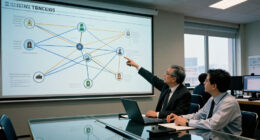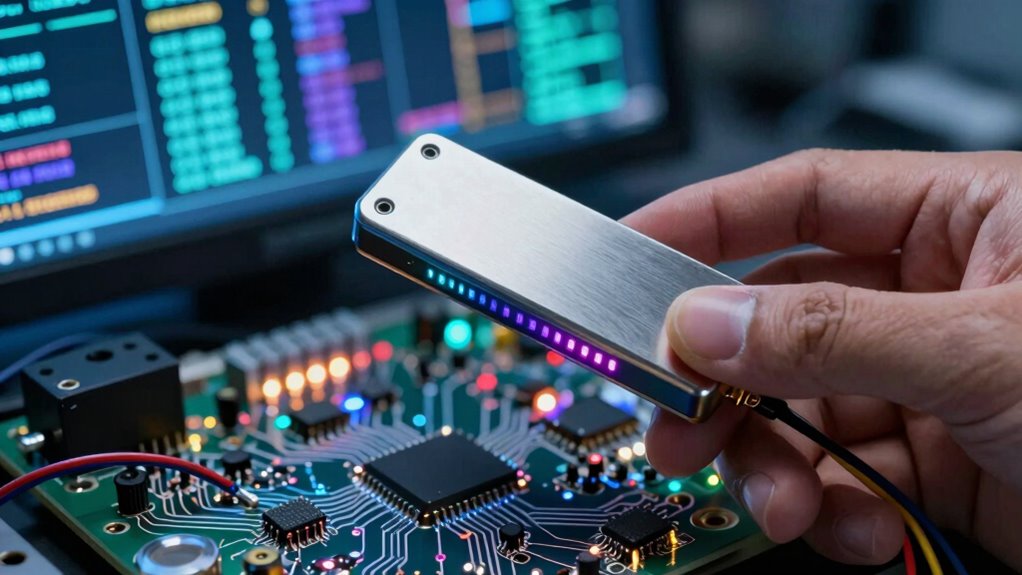

Advancements in sensor technology now let you monitor tiny environmental or physiological changes with higher sensitivity and accuracy, making data collection easier and more versatile across industries. These new sensors generate massive data sets that, when paired with sophisticated analytics, reveal subtle patterns and trends previously hidden. This accelerates discoveries in health, environment, and industry, enabling faster responses and innovations. Keep exploring how these breakthroughs are shaping a future full of new possibilities.

Prime made for students and young adults
- Fast, free delivery for dorm and study essentials
- Prime Video and Amazon Music included
- Member-only deals
Key Takeaways
- Enhanced sensitivity and miniaturization enable detection of subtle environmental and physiological changes previously undetectable.
- Large volumes of sensor data combined with advanced analytics reveal new insights and complex system behaviors.
- Widespread, affordable sensors facilitate extensive data collection across diverse industries and research fields.
- Real-time monitoring accelerates research, diagnosis, environmental assessment, and predictive maintenance.
- Integration with data analytics unlocks discoveries in climate modeling, healthcare, conservation, and industrial processes.
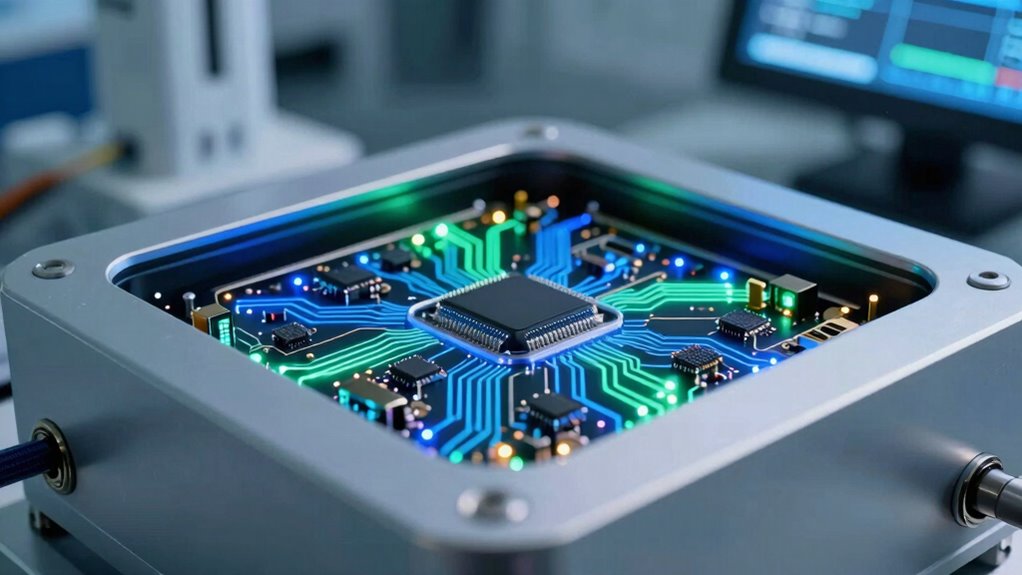
Advancements in sensor technology are fueling a surge in discoveries across various fields, from environmental monitoring to healthcare. These innovations are revolutionizing how you collect, analyze, and interpret data, making it possible to uncover insights that were previously out of reach. Sensor innovation continues to push the boundaries of sensitivity, accuracy, and miniaturization, enabling you to monitor even the tiniest changes in the environment or the human body. As sensors become more sophisticated, they generate vast amounts of data, which you can leverage through advanced data analytics to identify patterns, trends, and anomalies with unprecedented precision.
You might notice that modern sensors are now more versatile and easier to deploy in diverse settings. For example, in environmental science, new sensor designs allow you to track pollution levels, temperature fluctuations, and biodiversity indicators in real-time, providing critical information for conservation efforts. In healthcare, wearable sensors help monitor crucial signs continuously, giving you real-time feedback on patient health without invasive procedures. This rapid data collection accelerates research and diagnosis, enabling you to respond faster to health crises or environmental threats.
The fusion of sensor innovation with data analytics is a game-changer. When you feed sensor data into powerful analytics tools, you can uncover subtle correlations that might otherwise go unnoticed. For instance, in climate research, sensors feed data into complex models that predict weather patterns and climate change impacts more accurately. In industrial settings, sensors monitor equipment health, and data analytics predict failures before they happen, minimizing downtime and reducing costs. This proactive approach to maintenance and management is a direct result of the synergy between innovative sensors and intelligent data analysis.
Moreover, sensor innovation is making sensors more accessible and affordable, expanding their use across industries and research disciplines. You no longer need large, expensive equipment to gather critical data. Instead, compact, affordable sensors can be deployed across vast areas or integrated into everyday devices. This democratization of sensor technology fuels a discovery boom because more data sources mean more opportunities for insights. Additionally, the development of sensor miniaturization allows for even more discreet and widespread deployment in various environments. The increasing availability of these cost-effective sensors is also contributing to this trend, making it easier for you to gather diverse data sets. As data analytics tools become more advanced, you can process and interpret this influx of information swiftly, accelerating your ability to make informed decisions and drive breakthroughs.
In essence, the combination of cutting-edge sensor technology and sophisticated data analytics is transforming discovery. You’re empowered to see the unseen, detect the subtle, and understand complex systems better than ever before. This ongoing innovation is opening new frontiers in science, industry, and medicine, enabling discoveries that will shape the future in ways we’re only beginning to imagine. The ongoing development of data processing techniques further enhances your capacity to handle the ever-growing volume of sensor-generated data efficiently.
As an affiliate, we earn on qualifying purchases.
Frequently Asked Questions
How Do New Sensors Impact Data Privacy Concerns?
New sensors can raise data privacy concerns by collecting vast amounts of personal information, making data security more critical. You need to be aware of ethical considerations, such as consent and data usage, to protect individuals’ rights. As these sensors gather sensitive data, you should implement robust security measures and transparent policies to prevent misuse and guarantee trust. Ignoring these aspects risks privacy violations and damages your reputation.
What Industries Benefit Most From Recent Sensor Advancements?
You’ll find industries like healthcare, manufacturing, and agriculture benefit most from recent sensor advancements. These sensors improve sensor calibration, ensuring data accuracy, which leads to better decision-making. In healthcare, precise sensors enable accurate patient monitoring. Manufacturing and agriculture rely on these improvements for enhanced process control and crop management. As a result, these sectors experience increased efficiency and innovation, driven by more reliable and accurate sensor data.
Are New Sensors Cost-Effective for Small-Scale Applications?
New sensors can be cost-effective for small-scale applications, but you need to do a thorough cost analysis. While some sensors have become more affordable, scalability challenges might increase expenses as you grow. Consider initial setup costs, maintenance, and potential upgrades. If your project’s scope remains limited, investing in these sensors can be worthwhile. However, for larger or evolving applications, evaluate whether the benefits outweigh the long-term costs.
How Do Sensor Innovations Influence Environmental Monitoring?
Sensor innovations considerably enhance environmental monitoring by improving sensor accuracy and enabling seamless data integration. You can rely on more precise measurements of air quality, water purity, and soil conditions. These advanced sensors collect real-time data, which you can easily integrate into analytics platforms, helping you make informed decisions quickly. As a result, environmental management becomes more effective, proactive, and responsive to emerging issues, ensuring better protection for ecosystems and communities.
What Are the Future Trends in Sensor Technology Development?
You’ll see sensor technology evolve with miniaturization and wireless connectivity, making devices more compact and easier to deploy than ever. While sensors shrink in size, their capabilities expand, enabling real-time data collection across diverse environments. Future trends include integrating artificial intelligence for smarter analysis and developing energy-efficient designs. This juxtaposition of tiny sensors with powerful features will revolutionize industries, making data collection more seamless, accessible, and impactful.
As an affiliate, we earn on qualifying purchases.
Conclusion
As new sensors reveal hidden worlds around you, every discovery feels like opening a secret door to the universe’s deepest mysteries. They’re your wings, lifting you into uncharted territories of knowledge and wonder. With each breakthrough, you’re not just observing history—you’re making it. Embrace this era of exploration, where technology’s heartbeat guides you through a vast, unfolding tapestry of endless possibilities, turning the unknown into your next great adventure.
industrial predictive maintenance sensors
As an affiliate, we earn on qualifying purchases.
As an affiliate, we earn on qualifying purchases.
real-time climate monitoring sensors
As an affiliate, we earn on qualifying purchases.
As an affiliate, we earn on qualifying purchases.
Halloween Picks
halloween
As an affiliate, we earn on qualifying purchases.