
Interactive science learning kits turn abstract concepts into hands-on play, but the category splits sharply between guided-experiment chemistry sets and interactive learning models that teach through touch and sound. My top overall pick is the UNGLinga 150 Experiments Science Kit, which offers the deepest experiment library at a mid-range price. If you’re shopping for younger children, the Doctor Jupiter My First Science Kit (Ages 4+) is the standout starter option, while the Bill Nye’s VR Science Kit delivers the most immersive experience for older kids who already love screens. The main tradeoff you’ll face is breadth versus depth: big-count experiment sets can run out of materials quickly, while interactive models like the Science Can Solar System last longer but cover a single topic. Read on for the full breakdown, including which kits are worth the premium and which fall short.
Key Takeaways
- The UNGlinga 150-experiment kit earned best overall because experiment volume, instruction clarity, and refill-friendly chemistry basics beat flashier kits that exhaust their materials in a weekend.
- National Geographic dominates the middle of this roundup, but its three entries are not interchangeable: the Earth Science Kit suits outdoor explorers, the Science Magic Kit suits performers, and the Junior Chemistry Set suits structured learners.
- Bill Nye’s VR Science Kit is the most immersive pick here, but it requires a compatible smartphone and adult supervision, making it a poor fit for households avoiding screen-based learning.
- The Science Can Solar System and Human Body Model last far longer than consumable experiment kits, but each covers only one subject, so they work best as supplements rather than a child’s only science kit.
- Doctor Jupiter appears three times across different age bands (3-5 and 4+), and the age labeling matters more than the brand name: the preschool version trades experiment complexity for safety and simplicity.
| Science Can Solar System for Kids, Interactive Talking Solar System Model |  | Best Interactive Learning Model | Age Range: 6–12 years | Power Source: 3 AA batteries (not included) | Features: HD space projector, bilingual EN/FR, knowledge & quiz mode | VIEW LATEST PRICE | See Our Full Breakdown |
| UNGlinga 150 Experiments Science Kits for Kids Chemistry Lab STEM Toys |  | Best Value for Experiment Count | Number of Experiments: 150 | Recommended Age: 8 years and up | Includes: Science experiment tools and materials | VIEW LATEST PRICE | See Our Full Breakdown |
| Doctor Jupiter My First Science Experiments Kit for Kids Ages 4+ |  | Best for Beginners | Age Range: 4–8 years | Number of Experiments: 50+ | Model Number: DJ MFSK Starter | VIEW LATEST PRICE | See Our Full Breakdown |
| Science Kit for Kids – 80 Science Lab Experiments with Scientist Role Play |  | Best Immersive Role Play | Number of Experiments: 80 | Age Range: 6+ years | Includes: Goggles, gloves, chemical materials, petri dishes, test tubes, measuring cups, droppers, balloons, guidance cards | VIEW LATEST PRICE | See Our Full Breakdown |
| National Geographic Science Magic Kit for Kids with 100+ Experiments and Tricks |  | Best for Performing and Sharing | Age Range: 8 years and up | Number of Experiments: 100+ (plus 85+ bonus tricks) | Brand: Blue Marble / National Geographic | VIEW LATEST PRICE | See Our Full Breakdown |
| Doctor Jupiter My First Science Experiments Kit for Kids Ages 4+ |  | Best Introductory Chemistry Lab | Brand: Doctor Jupiter | Age Range: 4 years and up | Experiments: 100+ | VIEW LATEST PRICE | See Our Full Breakdown |
| National Geographic Magic Chemistry Set with 10 Tricks for Kids Ages 8-12 |  | Best for Performance-Minded Kids | Brand: Blue Marble (National Geographic) | Age Range: 8 years and up | Experiments: 10 magic tricks | VIEW LATEST PRICE | See Our Full Breakdown |
| Bill Nye’s VR Science Kit – Kids STEM Set, Gift Ages 8-12 |  | Best Premium / Most Immersive Pick | Age Range: 8-12 years | Experiments: 30 | Pieces: 50-piece lab set | VIEW LATEST PRICE | See Our Full Breakdown |
| National Geographic Junior Chemistry Set with 50 Experiments for Kids |  | Best Value for Young Chemists | Brand: Blue Marble (National Geographic) | Age Range: 4 years and up | Experiments: 50 | VIEW LATEST PRICE | See Our Full Breakdown |
| Doctor Jupiter Preschool Science Kit for Kids Ages 3-5 |  | Best for the Youngest Scientists | Brand: Doctor Jupiter | Age Range: 3 years and up | Experiments: 100+ | VIEW LATEST PRICE | See Our Full Breakdown |
| National Geographic Earth Science Kit with 100+ Activities for Kids 8-12 | 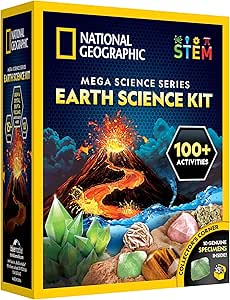 | Best Variety for Earth Science | Brand: Blue Marble (National Geographic) | Age Range: 8 years and up | Category: STEM / Earth Science | VIEW LATEST PRICE | See Our Full Breakdown |
| Science Can Human Body Model for Kids, Interactive Anatomy Learning Toys |  | Best for Biology and Anatomy | Brand: Science Can | Model Number: 160022 | Age Range: 6-12 years | VIEW LATEST PRICE | See Our Full Breakdown |
| interactive science learning kit | Age Range | Model Number | Brand |
|---|---|---|---|
| Science Can Solar System for K | 6–12 years | Science Can | — |
| UNGlinga 150 Experiments Scien | — | — | UNGlinga |
| Doctor Jupiter My First Scienc | 4–8 years | DJ MFSK Starter | — |
| Science Kit for Kids | 6+ years | — | — |
| National Geographic Science Ma | 8 years and up | NGMEGAMAGIC | Blue Marble / National Geographic |
| Doctor Jupiter My First Scienc | 4 years and up | DJ Junior Science | Doctor Jupiter |
| National Geographic Magic Chem | 8 years and up | NGSCIMAGIC | Blue Marble (National Geographic) |
| Bill Nye’s VR Science Kit | 8-12 years | — | — |
| National Geographic Junior Che | 4 years and up | NGJRCHEMT | Blue Marble (National Geographic) |
| Doctor Jupiter Preschool Scien | 3 years and up | DJ Preschool Science | Doctor Jupiter |
| National Geographic Earth Scie | 8 years and up | — | Blue Marble (National Geographic) |
| Science Can Human Body Model f | 6-12 years | 160022 | Science Can |
More Details on Our Top Picks
Science Can Solar System for Kids, Interactive Talking Solar System Model
Most kits in this roundup rely on one-off experiments, but this option stands out for audio-driven, repeatable learning: a talking model with knowledge and quiz modes that actually talks back to kids. Compared with the UNGlinga chemistry kit, there’s no setup, no supervision, and no consumables to replace — a child can use it independently every day. The built-in planetarium projector adds a visual dimension that chemistry kits can’t match, and the bilingual English/French option is a rare accessibility win. The tradeoff is depth over time: the quiz content can feel too basic for kids at the upper end of the 6–12 range, and the projector images are limited in variety. Where experiment kits burn through materials, this one risks being outgrown rather than used up.
Pros:- Talking quiz and knowledge modes create genuinely interactive, repeatable learning
- Planetarium projector adds an immersive visual layer
- Bilingual English/French support broadens accessibility
- No assembly, no consumables, and safe for independent play
Cons:- Batteries (3 AA) not included
- Projector image variety is limited
- Educational depth may not challenge older children
Best for: Parents of space-obsessed kids aged 6–10 who want independent, screen-free learning with no mess or supervision required
Not ideal for: Kids over 10 or those who already know planetary basics — the quiz content will feel repetitive and shallow
- Age Range:6–12 years
- Power Source:3 AA batteries (not included)
- Features:HD space projector, bilingual EN/FR, knowledge & quiz mode
- Model Number:Science Can
- Assembly Required:No
Our verdict“This pick makes the most sense for families who want a durable, self-directed astronomy teacher rather than a messy one-time experiment box.”
UNGlinga 150 Experiments Science Kits for Kids Chemistry Lab STEM Toys
At 150 experiments, this kit nearly doubles the activity count of the National Geographic Science Magic Kit and triples the 80-experiment role-play lab, which makes it the strongest cost-per-experiment proposition in this lineup. The breadth spans chemistry, physics, earth science, and surface tension, so it keeps working when a single-topic kit would be finished. The catch is that this model is more parent-dependent than the Science Can solar system — younger children will need active adult supervision, and some experiments call for household items not included, which can stall an eager kid mid-project. Compared with Doctor Jupiter’s kit, the instructions are less thoroughly illustrated for the youngest users. This option is better suited to families who treat science time as a shared activity, not an independent one.
Pros:- 150 experiments deliver the best value per activity in this roundup
- Spans multiple disciplines, not just chemistry
- Kid-safe tools and materials included
- Works well as a long-running home curriculum or gift
Cons:- Adult supervision required for younger children
- Some experiments need household items not in the box
- Safety guidance is thinner than in name-brand kits
Best for: Families with kids 8+ who do science projects together and want maximum variety on a budget
Not ideal for: Parents seeking a self-directed activity for younger kids — supervision is required and some add-on supplies are needed
- Number of Experiments:150
- Recommended Age:8 years and up
- Includes:Science experiment tools and materials
- Subjects Covered:Chemistry, physics, earth science, surface tension
- Brand:UNGlinga
Our verdict“The best pick for households that will actually work through a huge back catalog of experiments together over months.”
Doctor Jupiter My First Science Experiments Kit for Kids Ages 4+
This kit earns its spot by lowering the entry age to 4, four years younger than the UNGlinga lab can safely accommodate. The well-illustrated instruction manual is the standout differentiator — compared with the 80-experiment role-play kit, the guidance here is genuinely readable by early readers and their parents, which matters enormously at this age. With 50+ experiments, a , and U.S. safety compliance, it’s the most confidence-inspiring choice for a first science kit. The tradeoff is a hard ceiling: content is pitched at ages 4–8 only, so an older sibling will find it trivial next to the National Geographic Magic Kit’s 100+ tricks. Small parts also mean the youngest users need a watchful adult nearby.
Pros:- Lowest entry age in this roundup at 4 years old
- Exceptionally clear, well-illustrated instructions
- Meets U.S. safety standards for worry-free play
Cons:- Age range caps out at 8, limiting longevity
- Contains small parts that pose a choking hazard for toddlers
- Some experiments still need adult supervision
Best for: Parents buying a first science kit for preschoolers and early elementary kids ages 4–8
Not ideal for: Families with kids over 8 — the content will be outgrown quickly, and older siblings will lose interest
- Age Range:4–8 years
- Number of Experiments:50+
- Model Number:DJ MFSK Starter
- Manufacturer:Metis Learning Solutions Pvt. Ltd.
- Key Components:Beaker, test tube, mini volcano, food colours, dropper, funnel, instruction manual, and more
- Learning Objectives:STEM, critical thinking, observation, problem solving
Our verdict“The clear first-kit choice for young beginners, as long as you accept they’ll graduate to a bigger set within a couple of years.”
Science Kit for Kids – 80 Science Lab Experiments with Scientist Role Play
What separates this kit from the UNGlinga box is theater: it includes goggles, gloves, petri dishes, test tubes, and measuring cups so kids dress and act the part of a real scientist, not just follow recipes. That role-play layer is a genuine motivator for kids who engage with identity and imagination more than abstract experiments — something neither the Science Can solar system nor Doctor Jupiter’s kit offers. At 80 experiments, it sits sensibly between Doctor Jupiter’s 50 and UNGlinga’s 150. The tradeoffs are real, though: it contains chemical materials requiring careful handling, supervision is non-negotiable, and there’s little documentation on how well the chemicals store between sessions — a kit that dries out halfway through loses its value fast.
Pros:- Included goggles, gloves, and lab tools create authentic role play
- 80 experiments offer strong variety for the price
- Guidance cards build confidence in young scientists
- Encourages scientific thinking through immersive play
Cons:- Chemical materials require careful adult-supervised handling
- Unclear guidance on chemical storage and shelf life between uses
Best for: Kids 6+ who love dressing up and pretending, and parents who want imaginative play woven into STEM learning
Not ideal for: Households wanting independent play — the chemicals demand hands-on adult supervision every session
- Number of Experiments:80
- Age Range:6+ years
- Includes:Goggles, gloves, chemical materials, petri dishes, test tubes, measuring cups, droppers, balloons, guidance cards
- Highlight Experiments:Rainbow rain, erupting volcanoes
- Supervision:Adult required
Our verdict“Best for the kid who wants to be a scientist, not just do science — provided a parent is willing to co-pilot each session.”
National Geographic Science Magic Kit for Kids with 100+ Experiments and Tricks
This kit reframes science as a magic show, which changes who it’s for: kids who want an audience. The bonus booklet with 85+ extra tricks pushes total content past 185 activities — more raw material than even UNGlinga’s 150 experiments — but the real differentiator is presentation. Compared with the 80-experiment role-play lab, this one gives kids something to perform for family and friends, building confidence alongside chemistry knowledge. The National Geographic branding and award history also mean better editorial polish and reliability than generic competitors. The tradeoffs: adult supervision is needed for some experiments, a few tricks have a learning curve that may frustrate impatient kids, and material durability isn’t well documented for repeat performances of the same trick.
Pros:- 100+ experiments plus a bonus booklet of 85+ additional tricks
- Performance angle builds confidence and social skills
- Award-winning National Geographic pedigree
- Great gift appeal for birthdays and holidays
Cons:- Some tricks are complex enough to frustrate younger or impatient kids
- Material durability for repeat performances is unclear
- Adult supervision needed for certain experiments
Best for: Outgoing kids 8+ who want to perform science tricks for an audience, and parents who value a trusted brand
Not ideal for: Quiet, methodical kids who prefer open-ended exploration — the trick-based structure can feel gimmicky
- Age Range:8 years and up
- Number of Experiments:100+ (plus 85+ bonus tricks)
- Brand:Blue Marble / National Geographic
- Model Number:NGMEGAMAGIC
- Included Components:Magic experiments, bonus trick booklet
- UPC:816448027680
Our verdict“The obvious pick for the showman in the family — a kid who learns best when there’s an audience to amaze.”
Doctor Jupiter My First Science Experiments Kit for Kids Ages 4+
For a four-year-old’s first real lab experience, this kit strikes the strongest balance between structure and open-ended play that I’ve seen in this price bracket. The 100+ experiments range from color mixing to simple reactions, and the included glassware-style tools—beakers, conical flask, funnel—make kids feel like genuine scientists rather than just mess-makers. Compared with the National Geographic Junior Chemistry Set, this option includes more of its own consumables (food colors, additives, essences), so fewer frantic pantry raids mid-experiment. The tradeoff is real, though: many activities still demand a supervising adult, and the depth plateaus quickly once a child passes age seven or eight, at which point something like Bill Nye’s VR kit offers more challenge.
Pros:- Over 100 experiments with real lab-style tools like beakers, flask, and goggles
- Includes most consumables (colors, additives, essences) so experiments are ready to run
- Illustrated instructions a young child can follow with minimal help
- Bonus experiment booklet extends play beyond the core set
Cons:- Several experiments require active adult supervision and setup
- Not enough depth for older siblings or advanced kids
- A handful of activities still call for extra household items
Best for: Parents of 4-to-6-year-olds who want a self-contained first chemistry kit with most ingredients in the box
Not ideal for: Families with kids 8 and older — the experiment complexity tops out well below their curiosity level
- Brand:Doctor Jupiter
- Age Range:4 years and up
- Experiments:100+
- Key Components:2 beakers, conical flask, safety goggles, funnel, food colors, additives, instruction manual, bonus booklet
- Model Number:DJ Junior Science
- Manufacturer:Metis Learning Solutions Pvt. Ltd.
Our verdict“This pick makes the most sense for families starting their science journey early and wanting a kit that’s stocked on day one.”
National Geographic Magic Chemistry Set with 10 Tricks for Kids Ages 8-12
Not every child wants to be a scientist—some want to be a showman who happens to know science. This set reframes chemistry as a magic act: floating coins, instant snow, color-changing liquids, complete with wand and gloves. Compared with the UNGlinga 150 Experiments kit, the experiment count looks thin at just 10 tricks, but that’s the point—each one is a rehearsed, repeatable performance rather than a one-off reaction. The included full-color learning guide explains the real chemistry behind each illusion, which keeps it educational rather than pure spectacle. The tradeoff is burnout risk: a dedicated kid can exhaust all ten tricks in a weekend, and there’s little room for independent experimentation once they’re done.
Pros:- Every trick is designed to be performed, not just observed, building confidence and presentation skills
- All materials are included with no household scavenging needed
- Learning guide explains the actual chemistry behind each trick
- Recognizable brand with an award-winning track record
Cons:- Only 10 experiments — one of the lowest counts in this roundup
- Some tricks still need adult setup to work properly
- Less open-ended than chemistry sets built for free exploration
Best for: Kids 8-12 who love performing for family and friends and learn best when science has an audience
Not ideal for: Parents wanting long-term experiment volume — 10 tricks runs dry fast compared with 100+ activity kits
- Brand:Blue Marble (National Geographic)
- Age Range:8 years and up
- Experiments:10 magic tricks
- Key Components:All trick materials, magic wand, gloves, full-color learning guide, kid-friendly instructions
- Model Number:NGSCIMAGIC
Our verdict“Choose this if your child is a budding show-off who’d rather wow a crowd than run quiet experiments at the kitchen table.”
Bill Nye’s VR Science Kit – Kids STEM Set, Gift Ages 8-12
This is the only kit in the lineup where physical and digital learning actually merge. The 50-piece lab set handles hands-on experiments—volcanoes, density, thrust—while the VR goggles and 80-page activity book layer a visual, guided dimension that flat instruction manuals can’t match. Compared with the National Geographic Earth Science Kit, which offers more total activities on paper, this option delivers something none of the others can: Bill Nye himself walking kids through concepts in virtual reality. The compromises matter, though. The VR component demands a compatible smartphone—tablets are excluded outright—and some experiments still send you hunting for baking soda and dish soap. Households trying to limit screen time may also find the digital hook works against them.
Pros:- VR component makes abstract concepts like density and thrust visually concrete
- 50 reusable lab pieces give it lasting value beyond the digital content
- 80-page activity book structures learning across 30 experiments
- Beloved instructor brand that kids already recognize and trust
Cons:- Requires a compatible smartphone; no tablet support at all
- Several experiments need common household items not included
- Higher price point than comparable non-VR kits
Best for: Tech-comfortable families with kids 8-12 who already own a compatible smartphone and want a multi-sensory STEM experience
Not ideal for: Screen-time-conscious households or anyone without an iOS 11+/Android 8+ phone — the VR half of the kit is unusable
- Age Range:8-12 years
- Experiments:30
- Pieces:50-piece lab set
- Extras:VR goggles, 80-page interactive activity book
- Compatibility:iOS 11.0+, Android 8.0+ (smartphones only)
- Safety Standards:Meets toy safety standards
Our verdict“This model is better suited to buyers who see technology as a learning accelerator rather than a distraction, and who have the phone to power it.”
National Geographic Junior Chemistry Set with 50 Experiments for Kids
When the goal is maximum experiments per dollar for a preschooler, this set is hard to beat. Fifty experiments plus 20-plus kid-safe lab tools—test tubes, goggles, and more—come at a friendlier price than the Doctor Jupiter My First Science Kit, though the savings come with a catch: many activities rely on household items like baking soda and vinegar that aren’t in the box. The illustrated instructions are genuinely toddler-friendly, which matters at this age when text-heavy manuals kill momentum. Compared with Doctor Jupiter’s offering, this set feels more traditional-chemistry focused (test tubes and reactions) versus Doctor Jupiter’s sensory-play approach. It’s also worth knowing the ceiling is low—older kids will outgrow it fast, and adult supervision is expected throughout.
Pros:- 50 experiments with 20+ kid-safe lab tools at a lower price than premium rivals
- Illustrated, picture-based instructions preschoolers can follow
- Genuine test-tube-and-goggles format introduces real lab habits early
- Trusted National Geographic educational pedigree
Cons:- Relies heavily on household ingredients that aren’t included
- Too simple for kids over about age 7
- Requires consistent adult supervision for safe use
Best for: Budget-conscious parents of 4-to-7-year-olds who already stock baking soda and vinegar at home
Not ideal for: Gift-givers wanting a fully self-contained box — expect immediate supply runs for everyday ingredients
- Brand:Blue Marble (National Geographic)
- Age Range:4 years and up
- Experiments:50
- Lab Tools:20+ kid-safe tools including test tubes and goggles
- Educational Objective:STEM / Chemistry
- Model Number:NGJRCHEMT
- Manufacturer:JMW Sales, Inc.
Our verdict“This pick makes the most sense for cost-aware buyers willing to supply pantry staples in exchange for a lower sticker price.”
Doctor Jupiter Preschool Science Kit for Kids Ages 3-5
Most science kits quietly assume a five-year-old minimum; this one starts at age three, and the design choices show it. Instead of chemistry reactions, the 100+ activities center on colors, bubbles, water play, and motion—concepts a three-year-old can actually grasp with their hands. The food-grade, child-safe materials and included face mask reflect a genuinely preschool-first safety approach. Compared with the Doctor Jupiter My First Science Kit for ages 4+, this set skews more sensory and exploratory, while the older kit leans toward structured experiments with measurable outcomes. The online activity access adds value when the printed manual runs dry. The downsides: expect to be elbows-deep in supervision, it demands counter or floor space for messy setups, and kids beyond five will find it babyish almost immediately.
Pros:- One of the few genuine science kits rated for age 3 and up
- Food-grade, child-safe materials throughout
- 100+ activities spanning colors, bubbles, water, and motion
- Illustrated manual plus online activity access extends longevity
Cons:- Requires near-constant adult supervision and setup
- Needs dedicated space for messy, multi-part experiments
- Very narrow age window before it’s outgrown
Best for: Parents of 3-to-4-year-olds wanting a safe, screen-free introduction to scientific thinking through sensory play
Not ideal for: Families with kids 6 and up — the activity design will feel too simple within a year or two
- Brand:Doctor Jupiter
- Age Range:3 years and up
- Experiments:100+
- Key Components:Beaker, conical flask, color mixing tray, bubble wand, pH paper, snowman mold, face mask, instruction manual, online activity access
- Material Safety:Child-safe, food-grade materials
- Model Number:DJ Preschool Science
Our verdict“If your scientist is still in preschool and too young for every other kit here, this is the entry point that meets them where they are.”
National Geographic Earth Science Kit with 100+ Activities for Kids 8-12
Where kits like the UNGlinga 150 Experiments Chemistry Lab stay inside one discipline, this option spreads its 100+ activities across geology, volcanology, crystal growing, and digging excavations, which keeps a curious 8-to-12-year-old from burning out on a single topic. The full-color learning guide does real teaching work here, tying each activity back to actual Earth science rather than just delivering a spectacle. Compared with the National Geographic Science Magic Kit, which leans on performance and tricks, this version favors genuine scientific exploration. The tradeoff is breadth over depth: no single experiment is especially rigorous, difficulty levels aren’t clearly labeled, and several activities require adult supervision, so it works best as a family project rather than an independent one.
Pros:- Over 100 experiments spanning multiple Earth science topics
- Full-color learning guide adds real educational context
- Great for sharing among siblings, friends, or family sessions
- Trusted National Geographic educational brand
Cons:- Several experiments require adult supervision
- Individual experiment difficulty is not clearly indicated
- Too advanced for children under 8
Best for: Families with kids aged 8-12 who want months of varied hands-on Earth science they can do together
Not ideal for: Parents seeking a self-directed kit for a child to use alone, since many experiments need adult help
- Brand:Blue Marble (National Geographic)
- Age Range:8 years and up
- Category:STEM / Earth Science
- Activities Included:100+ experiments and activities
- Guide:Detailed full-color learning guide
- Manufacturer:JMW Sales, Inc.
- Warranty:Backed by quality service
Our verdict“This pick makes the most sense for families who want long-lasting variety across Earth science topics and don’t mind supervising the messier experiments.”
Science Can Human Body Model for Kids, Interactive Anatomy Learning Toys
Every other kit in this lineup is about mixing, erupting, or observing — this one is the only option focused on human anatomy, with 15+ removable organs, muscles, and bones kids can actually handle and reassemble. The interactive explanation and quiz modes are what set it apart from a static plastic model: instead of a parent narrating, the model itself asks questions and checks answers, making it workable for independent play. Compared with the Science Can Solar System model, it covers a completely different curriculum area, so the two are complementary rather than competing. The tradeoffs are real: it needs 3 AA batteries that aren’t included, some organs feel fragile in younger hands, and it’s strictly a learning tool — no roughhousing.
Pros:- Interactive explanation and quiz modes reinforce learning without a parent
- 15+ removable organs, muscles, and bones for tactile anatomy learning
- Includes learning booklet and 4 knowledge cards for deeper study
- Wide 6-13 age range grows with the child
Cons:- Requires 3 AA batteries that are not included
- Some removable parts are fragile for younger children
- Limited replay value once anatomy is mastered
Best for: Kids aged 6-13 fascinated by how the body works, especially those who learn better from quizzes than from books
Not ideal for: Rough-and-tumble younger kids under 6 who might snap the removable organs
- Brand:Science Can
- Model Number:160022
- Age Range:6-12 years
- Size:11 inches
- Removable Parts:15+ organs, muscles, and bones
- Includes:Human body model, learning booklet, 4 knowledge cards
- Batteries:3 AA (not included)
Our verdict“This model is the clear choice for a child curious about biology, provided the household has AA batteries on hand and handles the pieces gently.”
How We Picked
I evaluated each kit against four buyer-focused criteria. Educational depth came first: a kit had to explain why something happens, not just produce a visual reaction, so instruction quality and learning scaffolding counted as much as experiment count. Longevity was second, because the biggest frustration in this category is a kit that’s finished in one afternoon — I weighed how many sessions each kit realistically supports and whether common household items extend the play.
Age-appropriateness and safety determined whether a kit could actually be used independently or needed constant adult supervision, and value per dollar separated kits that justify their price from those trading on a brand name. Ranking favored kits that balance all four factors. That’s why high-volume, well-documented sets like UNGlinga and National Geographic’s Earth Science Kit sit near the top, while single-topic interactive models rank lower overall despite excelling for specific learners.
| interactive science learning kit | Brand |
|---|---|
| Science Can Solar System for K | — |
| UNGlinga 150 Experiments Scien | UNGlinga |
| Doctor Jupiter My First Scienc | — |
| Science Kit for Kids | — |
| National Geographic Science Ma | Blue Marble / National Geographic |
| Doctor Jupiter My First Scienc | Doctor Jupiter |
| National Geographic Magic Chem | Blue Marble (National Geographic) |
| Bill Nye’s VR Science Kit | — |
| National Geographic Junior Che | Blue Marble (National Geographic) |
| Doctor Jupiter Preschool Scien | Doctor Jupiter |
| National Geographic Earth Scie | Blue Marble (National Geographic) |
| Science Can Human Body Model f | Science Can |
Factors to Consider When Choosing Interactive Science Learning Kits
Before choosing a kit, it helps to understand what actually separates a great science kit from one that collects dust after one use. These are the factors I weighed most heavily, plus the mistakes I see buyers make repeatedly.Match the Kit to the Child’s Actual Age, Not the Box Range
Manufacturer age ranges are marketing-optimized, often stretching two to three years beyond the realistic sweet spot. A kit labeled 6+ may still require an adult to read every instruction and measure every chemical, which frustrates both child and parent. The reverse mistake is just as common: buying an overly simple kit for an 8-year-old guarantees boredom after the first session. A useful rule is that chemistry and multi-step experiment kits genuinely suit the upper half of their labeled range, while interactive models and role-play sets suit the lower half. If you’re gifting across siblings, favor kits with tiered difficulty or large experiment counts so each child finds an entry point.
Consumable Versus Durable: The Longevity Question
This is the single biggest tradeoff in the category and most buyers don’t recognize it until the box is empty. Experiment kits are consumable — chemicals run out, and unless the kit uses household staples like baking soda and vinegar, refill costs add up. Interactive models like talking solar systems and anatomy figures are durable and reusable for years, but they teach one subject with fixed depth. The strongest approach for most families is a hybrid: one durable model for a topic your child loves, plus one high-volume consumable kit for variety. Check whether a kit’s experiments rely on included materials or pantry items before buying, because pantry-based kits effectively never run out.
Instruction Quality Matters More Than Experiment Count
A kit advertising 150 experiments with a thin, poorly translated manual delivers less learning than a 50-experiment kit with clear step-by-step guides and scientific explanations. Look for manuals that explain the underlying principle after each activity, not just the procedure — that’s the difference between doing science and watching a trick. Illustrated guides with troubleshooting tips dramatically reduce abandoned experiments, especially for kids working semi-independently. Video companion content, like the QR-linked tutorials some National Geographic kits include, adds real value for visual learners. When comparing two kits at similar prices, I’d take better documentation over a higher experiment count nearly every time.
Screen-Based Interactivity: Enhancement or Distraction?
VR and app-enhanced kits sit at the premium end of this category, and they genuinely engage kids who’ve grown up with tablets. But they carry hidden requirements: a compatible smartphone, storage space, charged batteries, and a tolerance for screen time you may be trying to limit. Consider whether the screen adds learning or just spectacle — the best VR kits use the phone to visualize what’s physically in front of the child, while weaker ones replace hands-on work entirely. Also confirm the app is still supported and updated; abandoned companion apps have turned several otherwise good kits into paperweights. If your household is screen-light, talking models and classic experiment kits deliver interactivity without the device dependency.
Supervision Requirements and Mess Tolerance
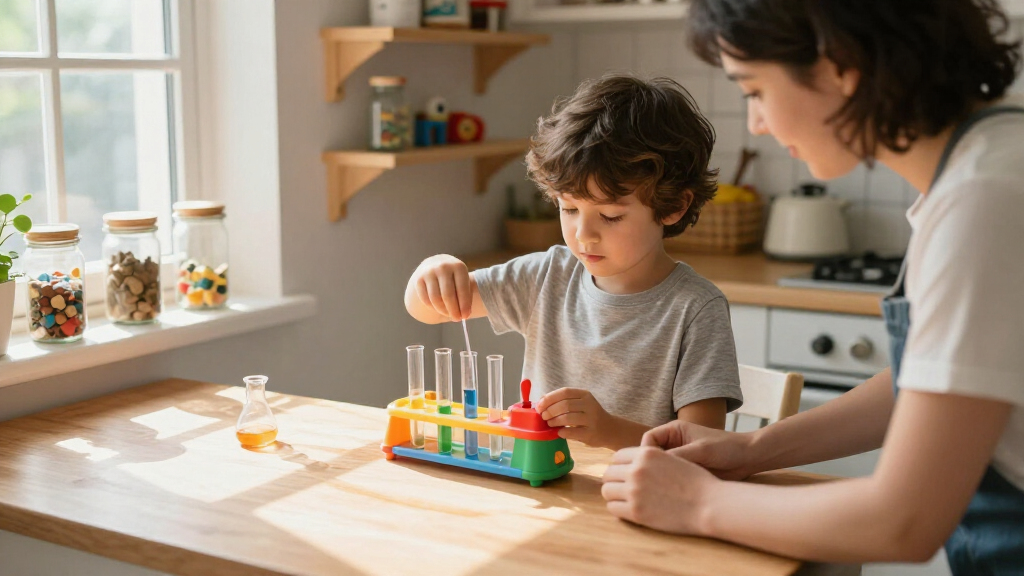
Be honest about how much time you’ll spend alongside your child, because many kits quietly assume an adult co-scientist. Chemistry sets for ages 8-12 typically need an adult for setup, measuring, and cleanup — expect dyed water on counters and baking soda volcanoes on the kitchen table. Kits marketed to preschoolers are usually designed for independent play with large, safe components, which is exactly why the Doctor Jupiter preschool options rank well for busy parents. Check whether the kit includes safety gear like goggles and whether experiments require outdoor space. A kit that matches your actual supervision capacity will get used; one that doesn’t will stay in the closet regardless of quality.
When Paying More Actually Buys Something
Price in this category ranges from roughly $20 to $80, and the premium usually buys one of three things: brand trust (National Geographic’s consistent quality control), technology (VR headsets, talking models), or volume (experiment counts above 100). Premium pricing does not guarantee better learning — a $25 pantry-science kit with excellent documentation often outperforms a $60 gadget kit. Pay up when the child has a demonstrated interest in the specific topic, when durability matters for multiple children, or when documentation quality is clearly better. Skip the premium when you’re testing whether a child likes science at all; cheap, broad kits are the right probe for that question.
Frequently Asked Questions
Are large experiment-count kits like the 150-experiment UNGlinga set actually better, or is it padding?
Experiment count is partially marketing, but high-count kits still tend to win on value. In practice, many of the 100+ activities in these sets are variations of a core reaction — five color-changing versions of the same acid-base experiment, for example — so the real unique-experiment number is closer to 40 or 50. That said, variations help kids build intuition through repetition, and they extend the kit’s life across multiple sessions. What matters more is whether chemicals are included or the experiments rely on pantry items, since pantry-based kits can be repeated indefinitely. The UNGlinga set balances both reasonably well, which is part of why it earned the top spot.
Which kit is best if I want to avoid screen time entirely?
Skip the Bill Nye VR kit and lean toward physical-first options. The National Geographic Earth Science Kit is the strongest screen-free choice because its 100+ activities involve digging, erupting, growing crystals, and weather experiments that require no app or device. The UNGlinga chemistry set is also fully analog, as are all three Doctor Jupiter kits. The talking Science Can models do contain electronics, but they’re self-contained with no screens or apps, which many screen-cautious parents find acceptable. The key is checking the product description for app requirements or QR-code-dependent instructions before you buy, since some nominally physical kits hide digital dependencies in their manuals.
My child is 5 — should I buy the preschool kit or jump to the ages 4+ experiment kit?
It depends on attention span and fine motor skills more than the birthday. The Doctor Jupiter preschool kit (3-5) uses larger components and simpler cause-and-effect activities, ideal for a five-year-old who loses interest quickly or can’t yet follow multi-step directions. The My First Science Kit (4+) introduces real experiment structure — measuring, mixing, observing — which suits a five-year-old with strong focus or an older sibling to model. Jumping ahead prematurely usually results in the parent doing the experiment while the child watches, which defeats the purpose. If in doubt, start simple; a child who masters the easy kit will be ready for the chemistry sets within a year.
Do these kits actually teach science, or are they just entertainment?
They teach, but the depth varies a lot by design. Kits in the National Geographic line consistently include real scientific explanations of each reaction, which is why three of their sets appear in this roundup. The magic-themed kits sit on the entertainment end — they’re structured as tricks first — but a child who asks why the trick works is doing science, so they work as engagement gateways. The weakest teaching kits are ones with thin manuals that show steps but never explain outcomes. If education is the priority, read the manual quality before buying: any kit that pairs each activity with a ‘what’s happening’ section is genuinely instructional rather than merely amusing.
What’s the best kit for a child who already says they want to be a scientist or doctor?
For an aspiring doctor or biologist, the Science Can Human Body Model is the most directly relevant pick — it’s the only option here focused on anatomy, and its interactive quiz-style engagement suits a child with a specific vocational interest. For a general science interest, the role-play element of the 80-experiment Scientist Kit adds a lab-coat identity component that motivated kids love. Pair one durable model with one broad consumable kit rather than spending the full budget on a single item, since specific interests at ages 8-12 often shift within months. The Earth Science Kit is the best complement for a child drawn to geology, weather, or the outdoors.
Conclusion
For best overall, the UNGLinga 150 Experiments Science Kit delivers the widest learning surface and longest usable life at a fair price, making it the safest choice for most families. The best value pick is the National Geographic Junior Chemistry Set, which proves that 50 well-documented experiments can outperform kits twice its size. For best premium, the Bill Nye’s VR Science Kit justifies its higher price through genuine immersion — provided you have a compatible phone and a child who thrives on screen-enhanced learning. Best for beginners goes to the Doctor Jupiter My First Science Kit (Ages 4+), the gentlest real-experiment entry point in the lineup, while the preschool version covers the youngest learners. For specific needs: choose the Science Can Human Body Model for a future doctor, the Solar System Model for a space-obsessed child, and the Earth Science Kit for a kid who loves the outdoors. Whatever you choose, match the kit to the child in front of you — their age, attention span, and existing curiosity — rather than the boldest number on the box.