
The multiverse concept suggests countless interconnected realities beyond your own universe. It challenges your understanding of existence by proposing alternate dimensions with different physical laws. Theories like quantum entanglement reveal how particles can influence each other across vast distances, hinting at a web of realities. Cosmological inflation could create distinct universes through multiple expansion events. While concrete evidence remains elusive, technological advancements may soon bring new insights. You’ll discover even more about this fascinating exploration ahead.
Key Takeaways
- The multiverse theory posits interconnected realities and alternate dimensions, challenging the notion of a single universe.
- Quantum entanglement shows particles influence each other instantaneously, suggesting a network of realities beyond our observable universe.
- Cosmological inflation may lead to multiple universes, each with different physical laws, formed from separate inflationary events.
- The multiverse concept raises philosophical questions about existence, identity, and the nature of reality across different universes.
- While evidence for the multiverse remains elusive, advancements in AI and quantum mechanics may unlock new insights into its existence.
Have you ever wondered what lies beyond our universe? The vastness of space is mind-boggling, and the idea that there could be multiple universes—often referred to as the multiverse—adds an intriguing layer to our understanding of existence. Concepts like quantum entanglement and cosmological inflation fuel this exploration, leading you to question the very fabric of reality.
Quantum entanglement is a phenomenon where pairs of particles become interconnected, regardless of the distance separating them. This means that a change in one particle instantly influences its partner, even if they’re light-years apart. Imagine being able to communicate across dimensions in ways that defy conventional physics! This strange behavior suggests that our universe isn’t isolated; instead, it hints at a web of interconnected realities. While you might not see evidence of this in your daily life, the implications of quantum entanglement could extend far beyond what you perceive.
Quantum entanglement reveals a mesmerizing connection between particles, hinting at a web of realities beyond our own.
In addition to quantum entanglement, cosmological inflation plays a pivotal role in multiverse theories. This rapid expansion of space in the early universe explains the uniformity we observe today. But what if this inflation didn’t just happen once? Some scientists propose that different regions of space could experience separate inflationary events, leading to the formation of distinct universes with varying physical laws. Your own universe could be just one bubble in an infinite sea of universes, each with its own unique properties and possibilities.
If you contemplate the implications of both quantum entanglement and cosmological inflation, the multiverse becomes a more tangible concept. It challenges you to think about existence beyond the confines of a single universe. The idea that our universe might be just one of many opens up exciting avenues for exploration and understanding. Are there other versions of you existing in these alternate realities? What if other universes contain entirely different laws of physics?
As you speculate the multiverse, you’re not just pondering an abstract theory; you’re engaging with some of the most profound questions in science and philosophy. The multiverse theory invites you to explore the limits of your imagination, urging you to consider what lies beyond the stars. While concrete evidence remains hidden, the interplay of quantum mechanics and cosmology continues to inspire new ideas, pushing the boundaries of human knowledge. The multiverse might not just be a dream; it could be a reality waiting to be disclosed. Recent advancements in on-device AI capabilities are also beginning to reshape how we understand complex scientific concepts, potentially leading to new insights into the nature of reality itself.

Introducing Microsoft Quantum Computing for Developers: Using the Quantum Development Kit and Q#
As an affiliate, we earn on qualifying purchases.
As an affiliate, we earn on qualifying purchases.
Frequently Asked Questions
What Is the Origin of the Term “Multiverse”?
The term “multiverse” originates from the combination of “multiple” and “universe,” reflecting its cosmological origins. It gained traction in the mid-20th century, particularly in discussions around quantum mechanics and cosmology. Its etymology highlights the idea of many universes existing alongside our own. You’ll find that this concept has evolved, inspiring various theories about the nature of reality and the possibility of infinite worlds beyond what we perceive.
How Do Different Cultures Perceive the Multiverse Concept?
Different cultures perceive the multiverse concept through their unique cultural myths and religious beliefs. For instance, some Indigenous traditions describe multiple worlds inhabited by spirits, while Hinduism speaks of vast cycles of creation and destruction. You might find that in Western thought, science fiction often explores parallel universes, reflecting modern existential questions. Each perspective enriches your understanding of existence, showing how diverse human thought can be about the nature of reality.
Are There Philosophical Implications of the Multiverse?
Imagine standing at a crossroads, each path leading to different realities. The multiverse challenges your notions of determinism and morality, suggesting that every choice branches into new lives. It questions your identity and consciousness, as you ponder if you’re truly unique or just one of many versions of yourself. As you explore these ideas, you realize the multiverse isn’t just a cosmic concept; it’s a mirror reflecting the complexities of human existence.
What Are the Potential Implications for Free Will?
The potential implications for free will in a multiverse scenario can challenge your understanding of moral responsibility. If every choice you make leads to branching realities, it blurs the lines of determinism debate. You might question whether your actions are truly yours or just one of many possibilities. This could lead to a sense of detachment from accountability, as your decisions seem less significant when countless versions of you exist, making moral responsibility complicated.
Can the Multiverse Theory Be Tested Scientifically?
You might find it intriguing that testing the multiverse theory isn’t straightforward. While the idea sparks your imagination, experimental validation faces significant observational challenges. Scientists can’t directly observe other universes, which makes it tough to gather concrete evidence. Instead, they look for indirect signs, like cosmic background radiation, to support or refute the theory. So, while it’s an exciting concept, proving it scientifically is a bit like chasing shadows!

The Simulated Multiverse: An MIT Computer Scientist Explores Parallel Universes, Quantum Computing, The Simulation Hypothesis and the Mandela Effect
As an affiliate, we earn on qualifying purchases.
As an affiliate, we earn on qualifying purchases.
Conclusion
In the grand tapestry of existence, the multiverse whispers secrets, inviting you to explore its myriad domains. While the theories dance like fireflies in the twilight, the evidence glimmers faintly, hinting at possibilities beyond imagination. Embrace the wonder of this cosmic symphony, where every choice may ripple through countless dimensions. As you ponder your place in this vast expanse, remember: the journey through the multiverse is a delightful riddle, waiting for you to unravel its mysteries.
cosmological inflation educational model
As an affiliate, we earn on qualifying purchases.
As an affiliate, we earn on qualifying purchases.
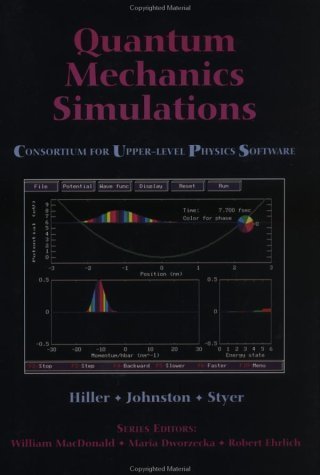
Quantum Mechanics Simulations: The Consortium for Upper-Level Physics Software (Cups)
As an affiliate, we earn on qualifying purchases.
As an affiliate, we earn on qualifying purchases.