
NASA’s Mars Sample Return mission is set to revolutionize space exploration by bringing back priceless samples from the Red Planet. This ambitious endeavor aims to uncover Mars’ history, geology, and potential for life, while tackling the challenges posed by harsh Martian conditions. With meticulous planning and innovative technology, you’ll witness the coordination of several spacecraft and rovers as they secure and transport Martian materials. Stay tuned to discover how these samples could reshape our understanding of the universe.
Key Takeaways
- The mission aims to retrieve Martian samples to study Mars’ history, geology, and potential for life.
- Meticulous planning and coordination are essential for the safe transport and retrieval of samples from Mars.
- Samples must be contained and preserved to prevent contamination and maintain integrity during transit to Earth.
- Harsh Martian conditions pose significant challenges to spacecraft operations, impacting equipment performance and timing.
- Successful analysis of the samples could lead to advancements in space technologies and future exploration missions.

Have you ever wondered what secrets Mars might hold? As humanity sets its sights on the Red Planet, one of the most exciting endeavors is the Mars Sample Return mission. This ambitious project aims to bring back samples from Mars, allowing scientists to study them in detail and answer questions about the planet’s history, geology, and potential for life. Imagine holding pieces of another world in your hands, sparking curiosity and discovery across generations.
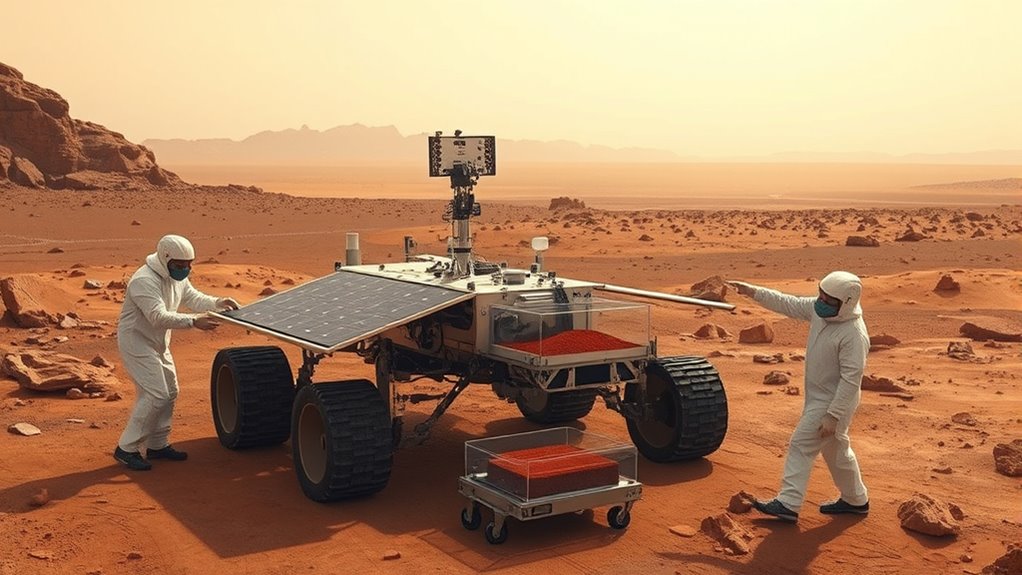
To make this mission a reality, meticulous planning around mission logistics is essential. You might not realize how complex this operation is. It involves coordinating multiple spacecraft, landing systems, and even a rover that will collect samples on the Martian surface. Each component must work seamlessly together, ensuring that the samples can be safely retrieved and stored. This is where sample containment becomes indispensable. The samples collected need to be preserved in a way that protects them from contamination and preserves their integrity during the long journey back to Earth.
Meticulous planning and seamless coordination are crucial for the Mars Sample Return mission’s success and sample integrity.
As you think about the logistics involved, picture the challenges faced by mission planners. They need to consider the harsh conditions on Mars, including dust storms and extreme temperatures, which can affect the equipment’s performance. The precision in timing is also indispensable; rocket launches have specific windows, and any delays could mean waiting for a year or more for the next opportunity. You can appreciate the level of detail that goes into launching and landing a spacecraft safely while ensuring the sample containment systems are ready to handle whatever Martian materials they encounter.
Furthermore, the success of this mission could pave the way for future AI-driven technologies that enhance space exploration. Moreover, once the samples are collected and contained, they must be transported back to Earth. This phase is just as essential, as the samples will travel through space and need to be carefully handled upon arrival. Scientists will require a secure facility to analyze them, ensuring they’re not contaminated by Earth’s microbes. You can almost feel the excitement in the air as researchers anticipate the wealth of information that these samples could provide.
Top picks for "mars sample return"
Open Amazon search results for this keyword.
As an affiliate, we earn on qualifying purchases.
Frequently Asked Questions
How Will the Samples Be Transported Back to Earth?
The samples will be securely packed in specialized containers designed for sample containment, ensuring they remain uncontaminated during their journey. You’ll need to contemplate transportation logistics carefully, as the return involves multiple stages, including launch from Mars, transit through space, and re-entry into Earth’s atmosphere. Each phase requires precise planning to safeguard the samples, allowing scientists to study them safely once they arrive back on Earth.
What Types of Samples Will Be Collected From Mars?
You’ll collect a variety of samples from Mars, including rock, soil, and atmospheric materials. These samples will undergo careful preservation to maintain their integrity and authenticity. Additionally, you’ll implement strict contamination prevention measures to guarantee that Earth’s biosphere remains uncontaminated. By focusing on diverse geological and biological specimens, you’ll provide invaluable insights into Mars’ history and potential for life, paving the way for future exploration and understanding of our neighboring planet.
Who Is Leading the Mars Sample Return Mission?
NASA’s leading the Mars Sample Return mission, collaborating closely with the European Space Agency (ESA). Together, they’re combining their expertise and resources to guarantee the mission’s success. You’ll see a robust framework of mission leadership guiding the project, focusing on sample collection, transportation, and eventual return to Earth. This partnership exemplifies how international collaboration can push the boundaries of space exploration, bringing us closer to understanding Mars and its potential.
When Is the Estimated Return Date for the Samples?
You can expect the samples to return around 2033, assuming everything goes smoothly. With the stakes this high, they’re taking every precaution to guarantee sample preservation and prevent planetary contamination. It’s essential they get it right, as the findings could change our understanding of Mars entirely. So, while waiting may feel like watching paint dry, the scientific community’s efforts are working tirelessly to bring back valuable insights from the Red Planet.
What Will Happen to the Samples Upon Arrival on Earth?
When the samples arrive on Earth, they’ll undergo strict planetary quarantine to prevent any contamination. You’ll see scientists carefully transport them to specialized facilities where they’ll start sample analysis procedures. These procedures include examining the samples for microbial life and studying their geological history. Once scientists verify there’s no risk, they’ll share findings with the public and integrate the knowledge into future missions, expanding our understanding of Mars and its potential for life.
Conclusion
So, get ready, because Mars Sample Return isn’t just a mission; it’s the cosmic equivalent of receiving the universe’s most exclusive gift! Imagine unwrapping a package filled with ancient Martian secrets that could unseal the mysteries of life itself! This isn’t just about rocks and dirt; it’s a thrilling adventure that’ll make you feel like an astronaut in your own living room. Hold onto your helmets, because this interplanetary delivery is set to change everything we thought we knew!