
TL;DR
Researchers, led by Diego Garate Maidagan, are uncovering previously unseen prehistoric cave art across northern Spain. These findings could reshape understanding of early human expression and survival of ancient pigments.
Researchers led by Diego Garate Maidagan are uncovering faint, previously unnoticed prehistoric cave paintings in northern Spain, suggesting a broader scope of early human artistic activity than previously known. This development offers new insights into the preservation of ancient pigments and the extent of Paleolithic art, making it a significant breakthrough for archaeology and anthropology.
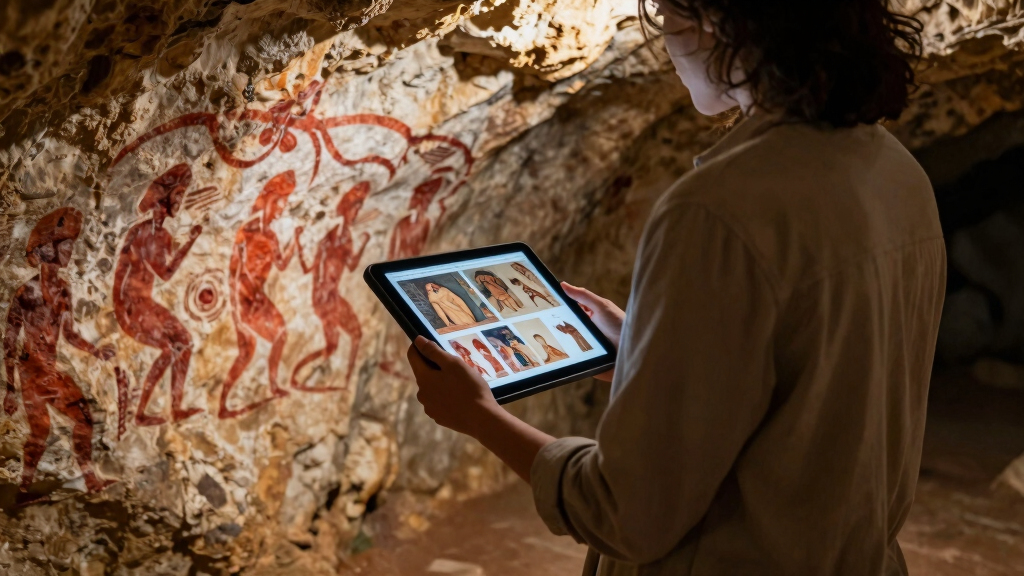
Garate, a professor of prehistory at the University of Cantabria, and his team have been systematically exploring caves in the Basque Country and southwest France, using specialized techniques to detect faint pigment traces that are invisible to the naked eye. Their efforts have led to the identification of several new images of animals, including bison and horses, in caves such as Mount Lumentxa and others that had previously yielded only vestigial marks or no visible art at all.
These discoveries are based on meticulous fieldwork involving expert manipulation of lighting and imaging equipment, revealing ghostly images that resemble prehistoric pictograms and petroglyphs. Garate emphasizes that many of these artworks are remarkably well-preserved, thanks to the unique geological and climatic conditions of the caves, which have shielded the pigments from decay for tens of thousands of years.
Current research also involves testing the limits of cave preservation and exploring the possibility that many more hidden artworks exist, awaiting discovery through advanced imaging techniques. The team has established a laboratory within a pristine cave, Isuntza, to conduct controlled experiments on pigment stability and image visibility, providing a model for future explorations.
This research broadens the scope of known prehistoric art, indicating that early humans may have created more extensive and sophisticated pictorial narratives than previously thought. Discovering faint images preserved in dark, inaccessible parts of caves suggests that much of early human expression remains hidden, waiting to be uncovered with new technology.
These findings could impact theories about the cognitive and cultural development of our ancestors, as well as their artistic capabilities. They also highlight the importance of preserving these fragile sites, which contain invaluable insights into human history that could be lost without careful scientific investigation.

COSOOS 2 Pack UV Flashlight, 12 LED Handheld Blacklight Flashlight 395nm Mini Light Torch Detector for Dog Pet Urine Stains, Bed Bugs and Scorpions. (Batteries not Included)
- Detects Hidden Pet Stains: 395nm wavelength reveals invisible stains
- Compact & Lightweight: Each flashlight measures 3.7'' x 1.13'' and weighs 1.8oz
- Includes 2 Blacklights: Perfect for pets, security, and detection needs
As an affiliate, we earn on qualifying purchases.
As an affiliate, we earn on qualifying purchases.
Recent Advances in Cave Art Detection Techniques
Historically, only a handful of caves, such as Altamira, have been recognized for their vivid prehistoric paintings. Many others, however, have suffered from natural and human-made erosion, leaving behind only faint traces or none at all. Recent technological breakthroughs, including specialized lighting and imaging methods, have enabled researchers like Garate to detect subtle pigment residues and etchings that were previously invisible.
Garate’s work builds on decades of archaeological research, but recent efforts are distinguished by a systematic approach to exploring lesser-known caves and employing multidisciplinary techniques. The discovery of new images in caves like Mount Lumentxa and Isuntza signifies a potential paradigm shift in understanding the scale and diversity of Paleolithic art across Europe.
Despite these advances, many caves remain unexplored, and the full extent of prehistoric art in these regions is still unknown. The ongoing fieldwork aims to map these hidden artworks and develop methods to preserve them in situ.
“Many of these images are like ghostly echoes of our ancestors’ creativity, preserved in the darkness and silence of the caves.”
— Diego Garate Maidagan
high-resolution imaging camera for archaeological sites
As an affiliate, we earn on qualifying purchases.
As an affiliate, we earn on qualifying purchases.
While many new images have been identified, it remains unclear how widespread these faint artworks are across other caves in Europe. The full extent of undiscovered prehistoric art in northern Spain and beyond is still unknown, and the effectiveness of current detection methods varies depending on cave conditions.
Researchers acknowledge that some images may be too faint or degraded to recover, and there is ongoing debate about how to accurately date and interpret these ghostly images without risking damage to the sites.

DIY Mold 3 Test Kit (Same Day Results) Expert Consultation and AIHA-LAP, LLC Accredited Lab Analysis Included
- Easy DIY Mold Test Kit: For home and office surfaces
- Includes Consultation and Lab Fees: No extra charges needed
- Same Day Results: Fast turnaround on sample analysis
As an affiliate, we earn on qualifying purchases.
As an affiliate, we earn on qualifying purchases.
Future Excavations and Technological Developments in Cave Art Research
The team plans to continue systematic surveys of caves in the Basque Country and southwest France, employing cutting-edge imaging technologies like 3D scanning and multispectral imaging to uncover more hidden artworks. They also aim to develop non-invasive methods for long-term preservation and documentation.
Further, interdisciplinary collaborations are expected to refine dating techniques and interpretative frameworks, helping to situate these artworks within broader prehistoric cultural contexts. The discovery of new images could lead to revisions of existing theories about Paleolithic symbolic behavior and artistic expression.

Rechargeable LED Mining Headlamp, Super Bright Safety Head Torch with 1+2 LEDs and Battery Pack, Waterproof Hard Hat Cap Light, Durable Coal Miner Headlight for Caving, Tunneling, Outdoor Work
- Super Bright LED Light: Main and auxiliary LEDs with long lifespan
- Multiple Lighting Modes: High/Low, White, Red, Flashing modes
- Versatile Use: Suitable for camping, mining, outdoor work
As an affiliate, we earn on qualifying purchases.
As an affiliate, we earn on qualifying purchases.
Key Questions
How do researchers detect faint prehistoric cave paintings?
Researchers use specialized lighting, imaging techniques, and spectral analysis to reveal pigment residues and etchings that are invisible under normal conditions.
Why are many cave paintings so well-preserved?
Conditions inside caves—stable temperature, limited light, and minimal exposure to air and water—help preserve pigments for tens of thousands of years.
What is the significance of discovering new prehistoric images?
It suggests that early humans created more extensive art than previously thought, which can reshape understanding of their cognitive and cultural development.
Are these new images authentic Paleolithic art?
Experts believe these faint images are likely from the Paleolithic era, but precise dating is ongoing and remains a challenge.
What are the risks to these fragile cave sites?
Human activity, moisture, and natural erosion threaten the preservation of these sites, making careful, non-invasive research essential.
Source: Hacker News