
TL;DR
Archaeologists have uncovered the remains of a 450-year-old hospital beneath the Santa Rosa de Lima Sanctuary in Lima. The find includes walls, floors, and human burials, offering new insights into colonial-era healthcare and urban history.
Archaeologists in Lima have confirmed the discovery of the remains of a 450-year-old hospital beneath the Santa Rosa de Lima Sanctuary. The find includes ancient walls, colonial-era floors, and human burials, providing new insights into the city’s early colonial history and healthcare practices. This discovery is significant for understanding Lima’s urban development and colonial infrastructure.
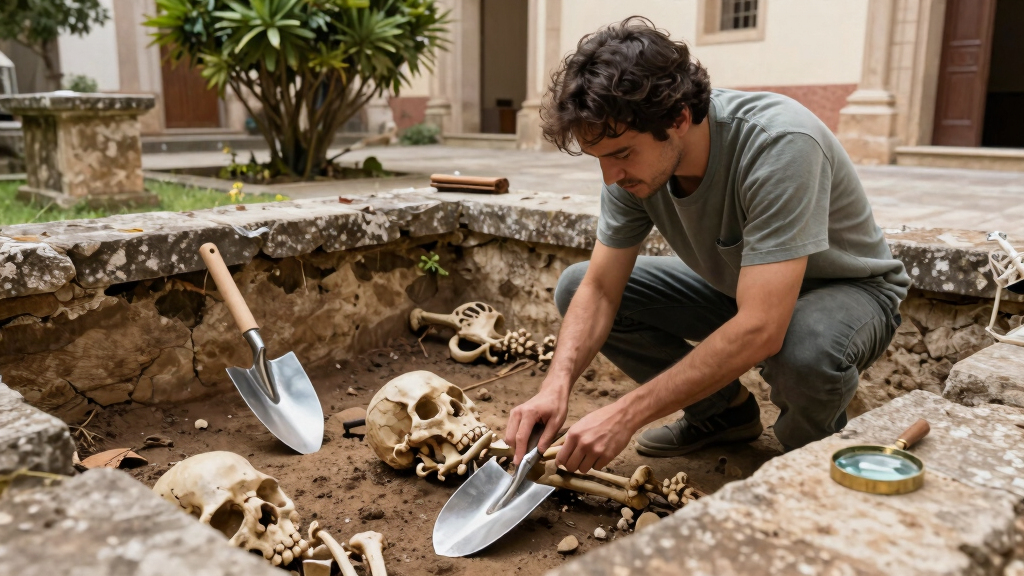
The excavation, carried out by a team of archaeologists from the Peruvian Institute of Cultural Heritage, uncovered structural remains believed to date back to the mid-16th century, shortly after the founding of Lima. The site includes well-preserved stone walls, tiled floors from the colonial period, and several human burials, some of which are thought to be patients or staff associated with the hospital.
According to the lead archaeologist, Dr. Maria Alvarez, “The structural features and artifacts suggest this was a significant medical facility during the early colonial era. The presence of burials indicates it also served as a burial ground for patients or staff.” The site is located directly beneath the current Santa Rosa de Lima Sanctuary, which is a prominent religious site in Lima.
Historical and Cultural Impact of the Discovery
This discovery offers a rare glimpse into early colonial healthcare infrastructure and urban planning in Lima. It sheds light on how medical facilities were integrated into colonial settlements and the role they played in community life. Additionally, the find enhances understanding of colonial burial practices and the historical significance of the site, which was previously undocumented.
Experts suggest that the site could provide valuable artifacts and information about colonial medicine, daily life, and the social hierarchy of 16th-century Lima. Preservation of the site is now a priority to protect these invaluable historical resources.

JOINPAYA 10 Set Excavation Tool Kit: Dino Fossils Dig Kit for Kids, Bulk Archaeology Dig Tools with Mini Hammer Chisel and Brush for Fossil Gem Digging, Science Toy
- Realistic and Fun Experience: Imaginative play with individual tools
- Ideal for Education and Parties: Perfect for classroom and birthday activities
- Includes Multiple Tools: Hammer, chisel, and brush for excavation
As an affiliate, we earn on qualifying purchases.
As an affiliate, we earn on qualifying purchases.
Background of Colonial Lima and the Santa Rosa Site
Lima was founded in 1535 by Spanish conquistador Francisco Pizarro and quickly developed into a major colonial city. Over the centuries, many colonial structures have been lost or built over due to urban expansion. The Santa Rosa de Lima Sanctuary is a key religious and historical landmark, but until now, its subterranean history was largely unknown.
The discovery of the hospital remains adds a new layer to the city’s colonial past, aligning with recent archaeological efforts to explore Lima’s early urban and medical history. Previous excavations in the area have uncovered colonial artifacts, but this is the first confirmed site of a hospital from this period beneath the sanctuary.
“This site provides a rare window into Lima’s early colonial healthcare system and urban development.”
— Dr. Maria Alvarez, Lead Archaeologist
colonial-era artifacts preservation kit
As an affiliate, we earn on qualifying purchases.
As an affiliate, we earn on qualifying purchases.
Unanswered Questions About the Hospital’s Use and Extent
It is not yet clear exactly how large the hospital was, how many patients it served, or how it was integrated into the city’s broader colonial infrastructure. Further excavations are needed to determine the full extent of the site and its operational details. Additionally, the precise dating of the structures and burials requires further analysis.

Unearthed Treasures: Exploring the World of Metal Detecting on Archaeological Sites (Treasures Beneath: Unveiling the World of Metal Detecting)
As an affiliate, we earn on qualifying purchases.
As an affiliate, we earn on qualifying purchases.
Next Steps in Archaeological and Preservation Efforts
The archaeological team plans to continue excavation to uncover more structural elements and artifacts. Conservation efforts are underway to protect the site, with plans to possibly establish it as an open-air museum or protected archaeological zone. Researchers aim to analyze artifacts and human remains to better understand colonial medical practices and social hierarchies.

Excavation & Trench Safety Quick-Card
- Number of pages: 6-page quick reference
As an affiliate, we earn on qualifying purchases.
As an affiliate, we earn on qualifying purchases.
Key Questions
What is the significance of this discovery?
The site offers rare insights into early colonial healthcare and urban planning in Lima, revealing structures and burial practices from the 16th century.
When was the hospital believed to be in use?
Based on preliminary dating, the structures are estimated to date back to the mid-16th century, shortly after Lima’s founding in 1535.
Will the site be open to the public?
Conservation and further research are ongoing. Plans for public access depend on preservation outcomes and official decisions by cultural authorities.
What remains unknown about the site?
Details about the hospital’s full size, the number of patients, and its operational history are still under investigation. Further excavations are needed.
Source: local