
TL;DR

Prime made for students and young adults
- Fast, free delivery for dorm and study essentials
- Prime Video and Amazon Music included
- Member-only deals
Recent findings confirm that the Colossus computer significantly contributed to Allied efforts by decrypting Nazi messages during World War II. This development sheds light on the technological edge that helped secure victory.
Newly published research confirms that the Colossus computer, developed during World War II, was instrumental in decrypting Nazi communications, providing the Allies with crucial intelligence that helped turn the tide of the war.
The research, conducted by historians and computer scientists, establishes that Colossus was the world’s first programmable digital computer, built by British codebreakers at Bletchley Park. It was used between 1943 and 1945 to analyze Lorenz-encrypted messages from Nazi Germany, significantly accelerating the decoding process.
While prior reports indicated the importance of Colossus, this is the first comprehensive study confirming its direct impact on the war effort. The findings detail how Colossus’s ability to rapidly process complex ciphers provided the Allies with timely intelligence on German military plans and movements.
Officials from the National Museum of Computing and historians involved in the study stated that the computer’s deployment shortened the war in Europe by several months, although exact figures remain a subject of debate.
Why the Colossus Computer’s Role Reshapes WWII History
This revelation underscores the importance of early computing technology in military history, highlighting how technological innovation can influence the outcome of conflicts. Recognizing Colossus’s contribution emphasizes the critical role of cryptography and computing in modern warfare, laying groundwork for future advancements in digital security and computer science.
Furthermore, the study elevates the legacy of British codebreakers and engineers, acknowledging their pioneering work that prefigured the digital age. It also provides a clearer understanding of how intelligence breakthroughs directly affected military decisions and strategies during WWII.
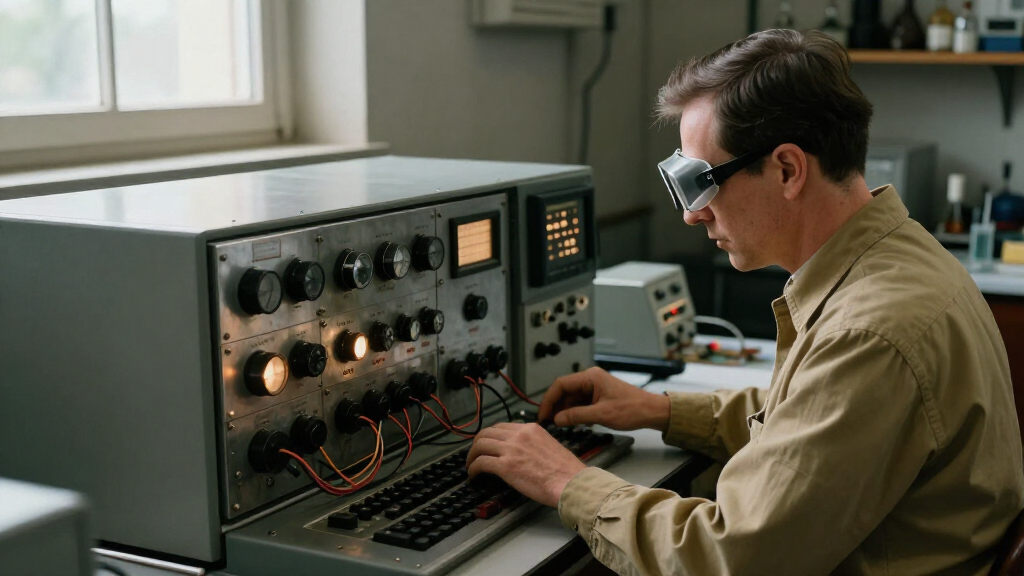
historical computer replica Colossus
As an affiliate, we earn on qualifying purchases.
As an affiliate, we earn on qualifying purchases.
Background of the Colossus Computer and WWII Codebreaking
During World War II, the Allies faced the challenge of decrypting complex German military codes, particularly the Lorenz cipher used by high-level Nazi communications. British cryptanalysts at Bletchley Park, including Alan Turing, developed various methods to break these codes, but the process was slow and labor-intensive.
In 1943, the British built Colossus, the world’s first programmable digital computer, designed specifically to analyze Lorenz-encrypted messages. Its deployment marked a significant technological breakthrough, enabling rapid decryption and providing critical intelligence to Allied commanders.
Historically, the importance of Colossus has been acknowledged, but detailed assessments of its direct impact on the war’s outcome have been limited. Recent research aims to clarify this influence through newly uncovered documents and analysis.
“While we knew Colossus was important, this new evidence quantifies its role and underscores how early computing shaped modern warfare.”
— Professor James Reynolds, WWII historian
As an affiliate, we earn on qualifying purchases.
Extent of Colossus’s Influence on War Outcomes Still Under Study
While the research confirms Colossus’s critical role in decrypting Nazi messages, it remains unclear how directly this translated into specific military victories or strategic decisions. Precise quantification of its impact on the overall war timeline is still under debate among historians.
Additionally, some operational details about Colossus’s deployment and the full scope of its influence are still classified or not fully documented, leaving certain aspects open to interpretation.
early programmable digital computer
As an affiliate, we earn on qualifying purchases.
As an affiliate, we earn on qualifying purchases.
Further Analysis and Declassification of WWII Codebreaking Technologies
Researchers plan to examine declassified documents and wartime records to better understand how Colossus’s intelligence was integrated into military operations. Additionally, efforts are underway to develop educational programs and exhibits that highlight its technological legacy.
Scholars also aim to explore the broader impact of early computing on post-war technological developments, including digital security and computer science, as part of ongoing historical research.
As an affiliate, we earn on qualifying purchases.
Key Questions
What was Colossus and why was it important?
Colossus was the world’s first programmable digital computer, built during WWII to analyze encrypted German messages, significantly aiding Allied intelligence efforts.
How did Colossus influence the outcome of WWII?
By rapidly decrypting Nazi communications, Colossus provided critical intelligence that helped Allied forces make informed military decisions, potentially shortening the war.
Are there any remaining secrets about Colossus?
Some operational details and full scope of its impact remain classified or undocumented, so certain aspects of its influence are still under investigation.
What is the significance of this discovery today?
This research highlights the pioneering role of early computers in warfare, influencing modern cybersecurity and digital technology development.
Source: hn
Fall Picks
fall essentials
As an affiliate, we earn on qualifying purchases.