
TL;DR

Prime made for students and young adults
- Fast, free delivery for dorm and study essentials
- Prime Video and Amazon Music included
- Member-only deals
NASA Armstrong Flight Research Center is marking 80 years since five NACA engineers arrived at Muroc Army Airfield on Sept. 30, 1946. The center now tests the X-59 for planned quiet supersonic demonstrations and supports Artemis missions with research aircraft.
NASA’s Armstrong Flight Research Center is marking 80 years of flight research on Sept. 30, the anniversary of the day five National Advisory Committee for Aeronautics engineers arrived at Muroc Army Airfield in California in 1946. The center says its work has since ranged from early supersonic research to current X-59 testing and aircraft support for NASA’s Artemis missions.
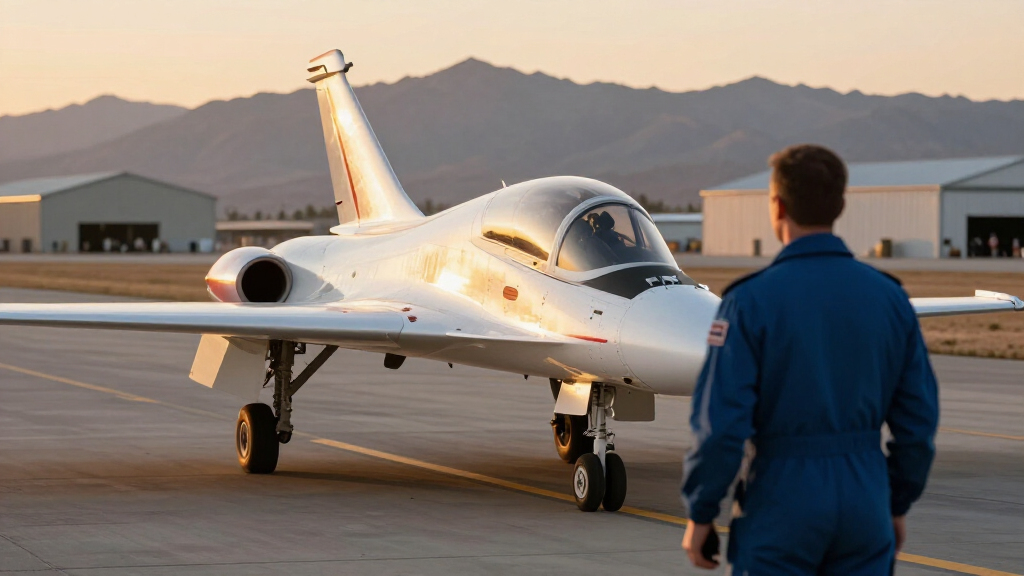
NASA’s Sept. 28 announcement recounts that the NACA team came to the high desert to pursue supersonic flight. In less than two years, NACA flew the X-1 faster than the speed of sound, a milestone in aviation history. The former outpost is now NASA Armstrong in Edwards, California, where the agency is testing the X-59, designed to support research into quieter supersonic flight.
The center provides aircraft and flight-test work for other NASA programs. For Artemis, NASA says a 737 is used for astronaut suit testing, a Gulfstream III is gathering heat-shield data for Artemis II, and an F/A-18 tested the SLS rocket’s autopilot. NASA describes the X-59 as undergoing rigorous testing and a series of flights ahead of planned quiet supersonic demonstrations over U.S. communities.
NASA Administrator Jared Isaacman recently named Armstrong the agency’s Center of Excellence for Flight Test and Aircraft Operations. The announcement also points to the center’s research aircraft, including the ER-2, C-20A and Gulfstream III, IV and V, which gather data on subjects such as wildfires, glacier melt, pollution and minerals.
From Supersonic Tests to Artemis
Armstrong’s anniversary links a foundational period in U.S. supersonic research with current flight-test work. The center’s role spans aeronautics, Earth science and human spaceflight: its aircraft can test technologies and collect measurements in flight, supporting research that would be difficult to conduct from the ground alone.
The work also has potential public consequences. NASA plans to use the X-59 in demonstrations over U.S. communities to study whether supersonic travel can be made quieter. The agency has not provided a schedule or results for those demonstrations in this announcement. Its Artemis aircraft work, meanwhile, supports testing and data collection for missions aimed at returning astronauts to the Moon.
Top picks for "nasa armstrong celebrat"
As an affiliate, we earn on qualifying purchases.
The Muroc Research Legacy
The center began as a NACA operation at Muroc Army Airfield, where the X-1 program pursued flight beyond the speed of sound. NASA says the site later became Armstrong Flight Research Center and contributed to developments in commercial and military aviation, including digital fly-by-wire. Its historical work also included support for space shuttle landings and SR-71 flights.
NASA presents the 80th anniversary as a bridge between that history and upcoming research. The agency says Armstrong works with government partners, industry and universities on aviation safety, autonomy and efficiency. Those broad aims are NASA’s description of the center’s work; the anniversary release does not provide performance metrics or detailed results for individual programs.
X-59 Demonstration Details Pending
NASA’s release does not give dates, locations or a timetable for the planned X-59 demonstrations over U.S. communities. It also does not report test results showing how quiet the aircraft is in flight or how communities will assess its sound. Those details remain unreported in the anniversary announcement.
The release describes the center’s Artemis support but does not specify when the cited aircraft activities will conclude or provide new mission milestones. It also offers no quantified measures of the center’s broader effects on aviation safety, efficiency or autonomy.
Testing Before Community Flights
NASA says the X-59 is undergoing testing and a series of flights at Armstrong to prepare for quiet supersonic demonstrations over U.S. communities. The announcement does not set a date for those demonstrations. NASA’s ongoing work at the center also includes aircraft testing and data collection in support of Artemis and Earth science research.
The center’s 80th anniversary falls on Sept. 30, 2026. NASA directs readers seeking more information about its programs and history to the Armstrong Flight Research Center website.
Key Questions
What is NASA Armstrong marking?
NASA Armstrong is marking 80 years since five NACA engineers arrived at Muroc Army Airfield on Sept. 30, 1946.
What is the X-59 being tested for?
NASA says the X-59 is being tested ahead of planned quiet supersonic demonstrations over U.S. communities. The anniversary release does not give a schedule or demonstration locations.
How does Armstrong support Artemis?
NASA cites a 737 used for astronaut suit testing, a Gulfstream III collecting Artemis II heat-shield data, and an F/A-18 that tested the SLS rocket’s autopilot.
Where is Armstrong Flight Research Center?
The center is in Edwards, California, at the site NASA identifies with the former Muroc Army Airfield.
Source: primary
Fall Picks
fall essentials
As an affiliate, we earn on qualifying purchases.