

🔍 Read the full analysis: 9 AI Developments That Could Reshape Tech In 2027 on ThorstenMeyerAI.com

Prime made for students and young adults
- Fast, free delivery for dorm and study essentials
- Prime Video and Amazon Music included
- Member-only deals
TL;DR
Nine key AI developments are confirmed to impact technology by 2027, from improved generative models to new hardware and ethical standards. These innovations could significantly alter how tech evolves.
Several major AI innovations are confirmed to be progressing toward widespread adoption by 2027, with potential to significantly reshape the tech industry. For an overview of these developments, see the original analysis. These developments include advances in generative AI, hardware integration, and ethical frameworks, making AI more powerful, accessible, and responsible. The confirmation comes from industry leaders, research institutions, and recent technological milestones, emphasizing their importance for the future of technology.
Among the nine developments, the most notable is the rapid improvement of generative AI models, such as GPT-5 and successors, which are expected to offer enhanced language understanding and creative capabilities. These models are already showing promise in fields like content creation, coding, and customer service, with confirmed progress reported by leading AI labs. You can explore more about AI hardware advancements in this resource. Hardware advancements are also confirmed, including the integration of AI-specific chips like the upcoming Neural Processing Units (NPUs) that will enable faster and more energy-efficient AI processing at the edge.
Another confirmed development is the evolution of AI safety and ethical frameworks, driven by both regulatory bodies and industry initiatives. These frameworks aim to mitigate biases, improve transparency, and ensure responsible AI deployment. Additionally, breakthroughs in AI-powered robotics are underway, with companies like Boston Dynamics and Tesla reporting ongoing progress in autonomous systems that could impact logistics, manufacturing, and personal assistance. For further insights, see the comprehensive guide.
These confirmed advancements collectively suggest a future where AI becomes more integrated into daily life and industrial processes, with improvements in speed, safety, and usability. However, many of these developments are still in the maturation phase, and their full impact will depend on regulatory responses, technological integration, and societal acceptance.
The 9 picks
- 1
 ASUS ROG Strix G18 (2025) Gaming Laptop, 18” FHD+ 16:10 144Hz/3ms Display, NV…View on Amazon →
 - 2
 ASUS ROG Strix G16 (2025) Gaming Laptop, G615LR-AS96View on Amazon →
 - 3
 MSI Katana 15 HX 15.6” QHD+ Gaming Laptop with Intel Core i9-14900HX and NVID…View on Amazon →
 - 4
 ASUS TUF Gaming A18 18-Inch WUXGA IPS Gaming Laptop with Ryzen 7 and RTX 5060View on Amazon →
 - 5
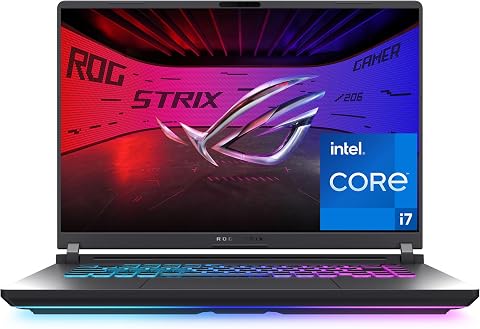 ASUS ROG Strix G16 (2025) Gaming Laptop, 16” FHD+ 165Hz, NVIDIA GeForce RTX 5…View on Amazon →
 - 6
 Acer Nitro V 16S AI Gaming Laptop with AMD Ryzen 7 2600 and NVIDIA GeForce RT…View on Amazon →
 - 7
 Alienware 16 Aurora Gaming Laptop with NVIDIA RTX 5060 and Intel Core i7-12400HView on Amazon →
 - 8
 MSI Cyborg 17 17.3" FHD 144Hz Gaming Laptop with Intel Core i7, NVIDIA GeForc…View on Amazon →
 - 9
 ASUS ROG Strix G16 Gaming Laptop, 16” FHD+ 165Hz, NVIDIA GeForce RTX 5050, In…View on Amazon →
Implications of 2027 AI Breakthroughs for Industry and Society
The confirmed AI developments slated for 2027 could influence multiple sectors, including healthcare, manufacturing, entertainment, and consumer technology. Enhanced generative models will support more sophisticated automation, content creation, and personalized experiences. Hardware innovations aim to provide more efficient and accessible AI applications at the edge, potentially reducing reliance on cloud infrastructure. Ethical frameworks are being developed to promote responsible AI use and build public trust, which is increasingly important as AI becomes more embedded in society.
These advances may lead to increased productivity, new business models, and improvements in quality of life, while also raising concerns related to job displacement, privacy, and security. The progress highlights the importance of ongoing regulation and societal dialogue to ensure AI benefits are maximized while risks are managed.
Recent Milestones and Industry Commitments on AI Progress
Over the past few years, AI research has accelerated, with notable milestones such as the release of GPT-4 and the deployment of AI in critical sectors like healthcare diagnostics and autonomous vehicles. Industry leaders like OpenAI, Google DeepMind, and Microsoft have publicly committed to advancing AI capabilities responsibly, often announcing collaborations with regulators and ethicists. Governments worldwide are drafting policies to manage AI risks, reflecting a global consensus on AI’s transformative potential. Many of these efforts are aligned with the confirmed developments expected by 2027, which are seen as natural progressions in AI research and deployment.
While some breakthroughs, like generative models, are already operational, others, such as advanced robotics and edge AI chips, are still in testing or early deployment phases. The industry’s focus remains on balancing innovation with safety, with ongoing investments in both hardware and ethical standards to support sustainable growth.
Uncertainties Surrounding Regulatory and Ethical Adoption
While the technological advancements are confirmed, the timeline for widespread regulatory approval and societal acceptance remains uncertain. Governments are in the process of drafting policies, but global consensus and enforcement could face delays or disagreements, affecting deployment speed. Additionally, ethical concerns around bias, misuse, and privacy are still being addressed, and it is unclear how quickly comprehensive frameworks will be adopted universally.
Furthermore, the impact of these AI developments on employment and economic structures is still debated, with some experts warning of disruptive transitions that are difficult to predict precisely.
Key Milestones and Policy Developments Expected Before 2027
In the coming years, expect continued progress in AI model capabilities, with new versions of generative models announced annually. Hardware manufacturers will likely release specialized AI chips tailored for edge and cloud deployment, with pilot programs demonstrating their capabilities. Regulatory bodies are expected to finalize and implement AI safety standards, possibly influencing industry practices globally. Public discussions and pilot projects around AI ethics and governance will increase, shaping the societal framework for AI deployment.
Investors and industry players will monitor these developments closely, preparing for the integration of these AI innovations into commercial and consumer products by 2027. The pace of technological and regulatory evolution will influence the ultimate impact of these confirmed advancements.
Key Questions
What are the most impactful AI developments expected by 2027?
The most impactful confirmed developments include advanced generative AI models, AI-specific hardware like NPUs, improved safety and ethical frameworks, and autonomous robotics systems.
Will these AI advancements be accessible to all industries?
Many of these innovations are expected to become more widely available, especially as hardware costs decrease and frameworks mature, enabling broader adoption across sectors.
Are there risks associated with these AI developments?
Yes, potential risks include misuse, bias, job displacement, and privacy concerns. Managing these risks depends on regulatory and societal responses, which are still evolving.
How soon will AI be integrated into everyday life at a significant level?
By 2027, many AI applications are expected to be commonplace in personal devices, healthcare, transportation, and industrial automation, though the extent will vary by region and sector.
Source: ThorstenMeyerAI.com
Fall Picks
fall essentials
As an affiliate, we earn on qualifying purchases.