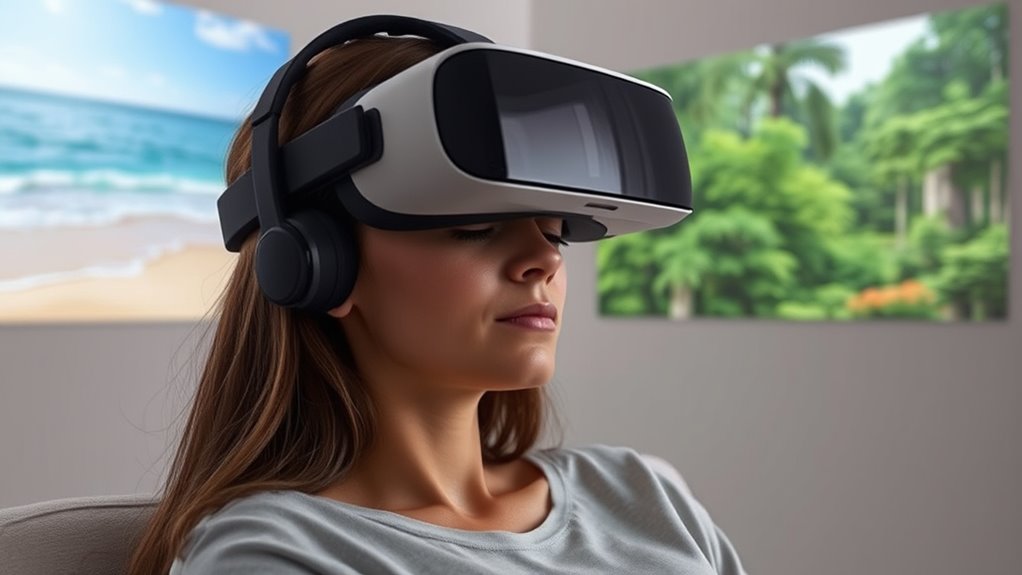

VR pain therapy immerses you in engaging digital environments that help transform your perception of pain. By distracting your mind with stunning visuals and multi-sensory experiences, it offers a powerful, non-invasive alternative or complement to traditional pain management methods. You can customize your experience for relaxation or active engagement, promoting a personalized approach to your pain relief. If you’re curious about how this innovative therapy can fit into your routine, you’ll discover even more insights ahead.
Key Takeaways
- VR therapy immerses users in engaging digital environments, effectively distracting from pain and altering perception.
- It provides a personalized, non-invasive approach to chronic pain management, complementing traditional methods.
- Multi-sensory engagement in VR enhances distraction through visual, auditory, and tactile stimuli.
- Customizable experiences allow users to actively participate in their healing process and tailor sessions to their preferences.
- Integration with advanced technologies like AI enables data-driven insights for personalized pain management strategies.
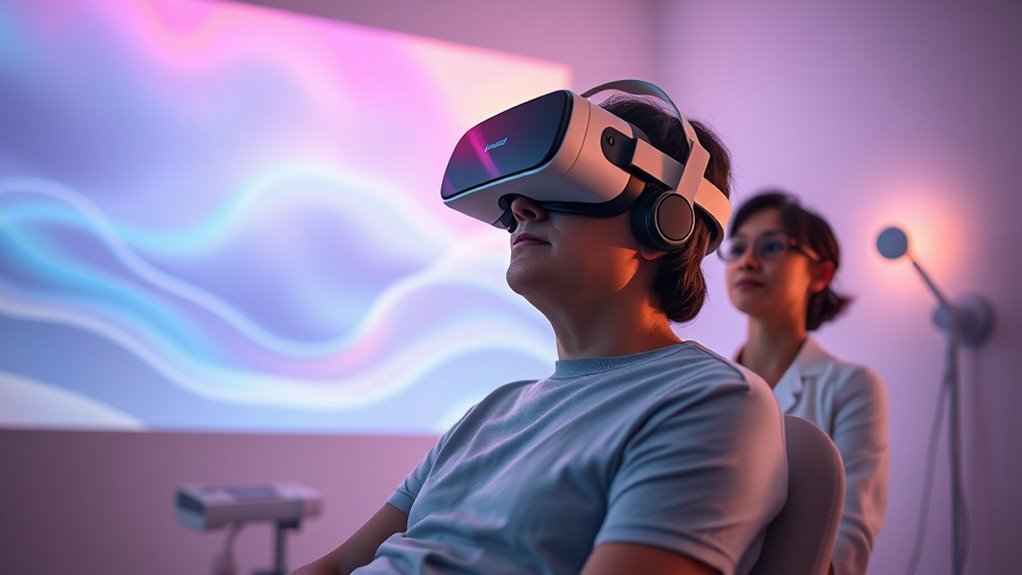
As you navigate the complexities of chronic pain, virtual reality (VR) therapy offers a promising escape that can transform your experience. Unlike traditional pain management methods, VR immerses you in a digital environment that distracts your mind and alters your perception of pain. Through engaging visuals and interactive experiences, VR can redirect your focus away from the discomfort, providing a mental sanctuary where you can find relief.
Imagine slipping on a VR headset and being transported to a serene beach or a tranquil forest. In these immersive worlds, you’re encouraged to explore and interact, which can shift your brain’s attention from the pain signals it’s receiving. Studies have shown that this distraction can markedly reduce the perception of pain, making VR therapy a potent tool for those grappling with chronic pain conditions. It’s not just a temporary escape; it can also enhance your coping strategies, helping you manage your pain in everyday life.
Experience the transformative power of VR therapy to shift your focus and enhance your coping strategies for chronic pain relief.
One of the key benefits of VR therapy is its ability to engage multiple senses simultaneously. As you step into a simulated environment, you’re not just seeing it—you’re hearing the waves crash, feeling the breeze, and even smelling the salt in the air. This multi-sensory engagement can create a more profound distraction from pain than traditional methods. It’s a unique approach that taps into the brain’s natural ability to adapt and respond to stimuli, offering a fresh perspective in pain management.
Furthermore, VR therapy can be tailored to your specific needs. Whether you’re seeking relaxation, a guided meditation, or a more active experience, there are various programs designed to address your unique pain experience. This personalization makes it easier for you to find something that resonates, enhancing the therapy’s effectiveness. You’re not just a passive recipient; you actively participate in your healing journey.
As you explore this innovative solution, it’s essential to remember that while VR therapy offers valuable support, it’s not a replacement for holistic pain management strategies. Instead, think of it as a complementary approach that can work alongside other treatments. By incorporating VR into your routine, you’re taking an active role in your health and well-being, embracing new tools designed to help manage chronic pain effectively. In a world where options can feel limited, virtual reality stands out as an exciting avenue for relief and empowerment. Moreover, the integration of advanced technologies like AI can further enhance the effectiveness of VR therapy by providing data-driven insights that personalize your treatment experience.
As an affiliate, we earn on qualifying purchases.
Frequently Asked Questions
How Long Does a Typical VR Pain Therapy Session Last?
A typical VR pain therapy session lasts about 30 to 60 minutes. You’ll often attend these sessions multiple times a week, depending on your needs and treatment plan. The session duration might vary based on your comfort level and the specific techniques used during the therapy. It’s essential to discuss your therapy frequency with your healthcare provider to find the best schedule that suits you and maximizes the benefits.
Is VR Pain Therapy Suitable for All Types of Pain?
VR pain therapy isn’t a one-size-fits-all solution; it shines brightest for certain types of pain. Think of it as a tailored suit, perfect for chronic pain and acute injuries. It can help you escape the clutches of discomfort, but it may not work for everyone. Some individuals might find little relief, while others experience transformative results. Always consult a healthcare professional to see if it’s the right fit for your unique pain journey.
Are There Any Side Effects Associated With VR Pain Therapy?
Yes, there are potential side effects associated with VR pain therapy. You might experience nausea, dizziness, or eye strain, especially during longer sessions. It’s important to take into account your own safety; if you have a history of motion sickness or certain neurological conditions, consult with a healthcare professional before trying it. Monitoring your comfort level during sessions can help mitigate any adverse effects, ensuring a safer, more effective experience.
Do I Need Special Equipment for VR Pain Therapy?
Yes, you will need special VR hardware for VR pain therapy. Typically, this includes a VR headset and possibly motion controllers to enhance your experience. The specific equipment requirements can vary depending on the therapy program you choose. Make sure to check compatibility with your computer or gaming console, and consider any additional accessories that might improve your comfort and immersion during the sessions.
How Many Sessions Are Usually Required for Effective Pain Relief?
Typically, you’ll need around 6 to 12 sessions for effective pain relief, much like how a sculptor chisels away at marble to reveal a masterpiece. The session frequency can vary based on your specific needs and goals. With consistent engagement, you may achieve significant long-term effectiveness in managing your pain. Remember, everyone’s journey is unique, so it’s essential to work closely with your therapist to tailor the approach that suits you best.
immersive virtual reality relaxation
As an affiliate, we earn on qualifying purchases.
As an affiliate, we earn on qualifying purchases.
Conclusion
In the domain of pain management, VR therapy is a beacon of hope, illuminating new paths to relief. By immersing yourself in these engaging virtual experiences, you can transform your relationship with pain, making it feel less like an anchor and more like a fleeting shadow. As technology advances, the future of pain therapy becomes brighter and more accessible, inviting you to explore a world where comfort and healing dance hand in hand. Embrace this journey!
multi-sensory VR experience for pain relief
As an affiliate, we earn on qualifying purchases.
As an affiliate, we earn on qualifying purchases.
personalized VR meditation for pain management
As an affiliate, we earn on qualifying purchases.
As an affiliate, we earn on qualifying purchases.