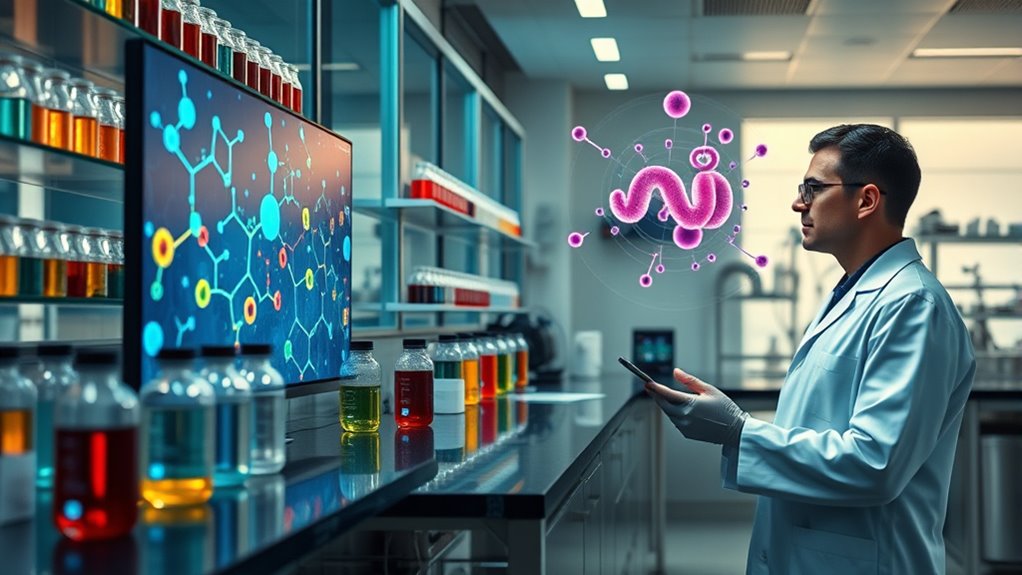

AI-driven drug discovery is transforming how you approach developing new therapies. It accelerates the pipeline by rapidly analyzing massive data sets and predicting compound interactions, allowing for quicker identification of effective treatments. This tech not only boosts research productivity but also paves the way for personalized medicine tailored to individual genetic profiles. As you explore this exciting field, you’ll discover the ongoing developments and challenges shaping the future of drug discovery and patient care.

Prime made for students and young adults
- Fast, free delivery for dorm and study essentials
- Prime Video and Amazon Music included
- Member-only deals
Key Takeaways
- AI accelerates the drug discovery pipeline by rapidly analyzing vast datasets to identify potential drug candidates.
- Machine learning algorithms predict compound interactions, streamlining the identification of effective therapies.
- AI enhances research productivity and innovation, leading to faster development of new treatments.
- The integration of AI allows for the customization of therapies based on individual genetic profiles, promoting personalized medicine.
- Overcoming regulatory challenges will further accelerate AI-driven drug development and improve patient outcomes.

How has artificial intelligence transformed the landscape of drug discovery? This question is at the forefront of innovation in healthcare. AI has markedly accelerated the drug discovery pipeline, making it more efficient and tailored to individual needs. You may have already noticed how AI helps researchers analyze vast amounts of data quickly, pinpointing potential drug candidates that traditional methods might overlook. By utilizing machine learning algorithms, AI can predict how different compounds will interact with biological systems, ultimately speeding up the identification of effective therapies.
Artificial intelligence is revolutionizing drug discovery by enhancing efficiency and personalizing treatment options through advanced data analysis.
One of the most exciting developments in this field is the move towards personalized medicine. AI allows for a deeper understanding of how genetic variations affect drug efficacy and safety. This means treatments can be customized to fit the unique genetic makeup of each patient, leading to better outcomes and reduced side effects. Imagine a future where a simple genetic test could guide your doctor in prescribing the best medication for you, ensuring that you get the right treatment at the right time. As this approach gains traction, you’ll see a shift from a one-size-fits-all model to a more nuanced, individualized treatment landscape.
However, integrating AI into drug discovery isn’t without its hurdles. Regulatory challenges loom large as the FDA and other governing bodies grapple with how to evaluate AI-generated results. You might wonder how these algorithms can produce reliable data when they often operate as a black box, making it difficult to understand their decision-making processes. Regulators are tasked with ensuring that AI-driven discoveries meet safety and efficacy standards, which can slow down the approval process. It’s essential for the industry to find ways to demonstrate AI’s reliability to reassure both regulators and the public. Recent discussions at the UK Government AI Safety Summit highlight the importance of collaborative approaches to address these challenges.
Despite these challenges, the potential for AI in drug discovery is immense. Researchers are optimistic that as they overcome regulatory hurdles, the pace of drug development will only increase. You’ll likely witness a future where AI not only identifies new drugs but also helps in monitoring their effects post-market, ensuring ongoing patient safety.
As an affiliate, we earn on qualifying purchases.
Frequently Asked Questions
How Does AI Improve the Accuracy of Drug Discovery?
AI improves the accuracy of drug discovery by leveraging machine learning and predictive modeling. You’ll find that these technologies analyze vast datasets, identifying patterns and predicting how different compounds will interact with targets. This streamlines the process, reducing trial and error in lab testing. With AI’s ability to continuously learn from new data, you can expect more reliable outcomes and faster identification of promising drug candidates, ultimately enhancing the efficiency of the entire discovery process.
What Ethical Concerns Arise With AI in Drug Development?
Ethics in AI for drug development can feel like a double-edged sword. On one hand, you’ve got the potential for groundbreaking discoveries, but on the other, you face privacy concerns and the risk of bias. If data isn’t managed correctly, it could lead to unfair treatment of certain groups. You must guarantee fairness throughout the process, balancing innovation with ethical responsibility, to truly harness AI’s power without compromising integrity.
Can AI Replace Human Researchers in Drug Discovery?
AI can’t fully replace human researchers in drug discovery. While it excels at data analysis and identifying patterns, it faces automation challenges that require human oversight. Your intuition, creativity, and ethical judgment are vital in interpreting results and making decisions. AI can enhance your work, streamlining processes and reducing time, but it lacks the emotional intelligence and critical thinking that only you can provide in complex and nuanced situations.
What Are the Costs Associated With Ai-Driven Drug Discovery?
When considering the costs associated with AI-driven drug discovery, you’ll need to conduct a thorough cost analysis. Budget considerations include software licensing, data acquisition, infrastructure, and talent acquisition for skilled personnel. While initial investments might seem high, the potential for reduced time and resources in drug development can lead to long-term savings. Balancing these factors will help you make informed decisions about implementing AI in your research processes.
How Long Does Ai-Driven Drug Discovery Typically Take?
AI-driven drug discovery typically takes several months to a few years, but you might worry about regulatory challenges and data privacy concerns. Don’t let that discourage you! While maneuvering these hurdles can slow things down, the efficiency gains from AI often offset delays. By leveraging advanced algorithms, you can streamline the process, ultimately bringing life-saving drugs to market faster. Embrace the potential; it’s worth it for patients in need.
personalized medicine genetic testing kits
As an affiliate, we earn on qualifying purchases.
As an affiliate, we earn on qualifying purchases.
Conclusion
In the rapidly evolving landscape of drug discovery, AI is more than just a tool; it’s a catalyst for innovation. By streamlining processes and uncovering novel insights, it’s reshaping how we approach complex diseases. As you consider the future of medicine, isn’t it exciting to think about the possibilities that AI can open? Embracing these advancements not only accelerates the pipeline but also paves the way for breakthroughs that could transform countless lives.
laboratory AI data analysis tools
As an affiliate, we earn on qualifying purchases.
As an affiliate, we earn on qualifying purchases.
clinical trial AI management platform
As an affiliate, we earn on qualifying purchases.
As an affiliate, we earn on qualifying purchases.
Halloween Picks
halloween
As an affiliate, we earn on qualifying purchases.