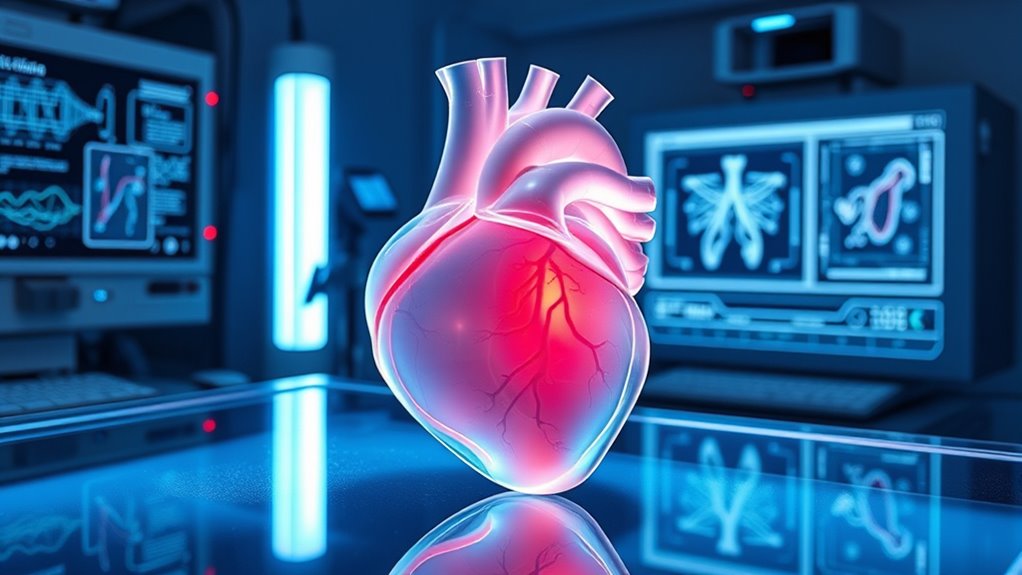

Bio-printed organs are your ticket to the future of transplants. They can eliminate donor waitlists and reduce rejection risks by creating organs tailored just for you. With advancements in bioprinting technology and materials, these organs could become viable for transplantation soon. This could revolutionize how we think about organ donation, making access more equitable. Curious about the ethical implications and the broader impact on healthcare? There’s much more to explore!

Prime made for students and young adults
- Fast, free delivery for dorm and study essentials
- Prime Video and Amazon Music included
- Member-only deals
Key Takeaways
- Bio-printed organs could eliminate donor waitlists, significantly reducing patient suffering and improving transplant outcomes.
- Customization of bio-printed organs allows for tailored solutions to individual medical needs, enhancing compatibility and reducing rejection rates.
- Advancements in bioprinting technology are steadily improving organ functionality, making them viable for transplantation.
- The use of bio-printed organs raises ethical questions, including access equity and the implications of “playing God” with organ creation.
- Bio-printed organs may transform healthcare by decreasing demand for traditional donor organs and streamlining allocation processes.

Have you ever wondered how bio-printed organs could revolutionize medicine? Imagine a world where patients no longer have to wait for a donor organ, where the risk of rejection and long-term complications could be markedly reduced. This isn’t just a dream; it’s becoming a reality through technological advancements in 3D bioprinting. By using a patient’s own cells to create organs tailored to their specific needs, bio-printing has the potential to transform the landscape of transplants.
Bio-printed organs could eliminate donor waitlists, reduce rejection risks, and customize transplants to individual needs, transforming medicine.
As you explore this fascinating field, you’ll notice that the implications of bio-printed organs extend far beyond the technical aspects. The ethical considerations surrounding this technology are essential. You might ask yourself, what happens when we can create organs at will? The prospect of playing God raises numerous questions. For instance, should there be limits on the types of organs we can print? What about the socioeconomic implications? If bio-printed organs become standard, will they be accessible to everyone, or will they only benefit those who can afford them? These questions are critical as society navigates the intersection of technology and ethics.
Technological advancements in bioprinting have already shown promising potential. Researchers are continuously improving the materials and techniques used to create bio-printed organs, making them more viable for transplantation. With innovations like bio-ink, which mimics the natural cellular environment, you can see how scientists are working to enhance the functionality and compatibility of these organs. It’s not just about creating a physical structure; it’s about ensuring that the organ can perform its intended function once implanted. This involves intricate engineering and biological science, which is progressing at an impressive pace.
You should also consider the implications for organ donation. With bio-printed organs, the demand for donor organs could drastically decrease. This might lead to fewer ethical dilemmas surrounding organ allocation and the challenges of finding matching donors. Imagine the relief for families who currently face the agonizing wait for a transplant. The shift towards bio-printing could provide a more efficient and equitable solution to organ shortages.
As an affiliate, we earn on qualifying purchases.
Frequently Asked Questions
How Do Bio-Printed Organs Compare in Function to Natural Organs?
Bio-printed organs can offer promising functional efficiency, but they’re not quite on par with natural organs just yet. When you consider organ integration, bio-printed versions might struggle to seamlessly connect with your body’s systems. While they can mimic certain functions, the complexity of natural organs often leads to better performance. As technology advances, you may see improvements, but for now, natural organs still hold the edge in many aspects.
What Materials Are Used in Bio-Printing Organs?
In bio-printing, brilliant biomaterial choices play a pivotal role in creating functional organs. You’ll find a variety of materials like hydrogels, decellularized tissues, and synthetic polymers used in scaffold development, which mimic natural structures. These materials support cell growth and maintain the necessary environment for organ development. By understanding these components, you can appreciate how they contribute to the creation of viable, life-saving alternatives to traditional organ transplants.
Are There Any Ethical Concerns Related to Bio-Printing?
Yes, there are ethical concerns related to bio-printing. You need to consider informed consent, as patients must fully understand the risks and benefits before participating. Additionally, equitable access is vital; if only certain populations can afford these technologies, it could widen the healthcare gap. It is important to address these issues to guarantee that bio-printing benefits everyone and doesn’t create further disparities in medical care. Balancing innovation and ethics is key.
What Is the Cost of Bio-Printed Organs?
Imagine you’re in a bakery, eyeing a cake priced beyond your budget. Bio-printed organs can feel similar, with costs often soaring into tens of thousands of dollars. Manufacturing expenses play a huge role, as producing these complex structures isn’t cheap. While insurance coverage might help, many policies still lag behind, leaving you to wonder how accessible these life-saving solutions truly are. In the end, it’s a delicate balance between innovation and affordability.
How Long Do Bio-Printed Organs Last?
Bio-printed organs’ longevity estimates vary, but many experts suggest they could last several years, depending on the organ’s type and the individual’s health. You’ll find that organ durability relies on factors like integration with the body and maintenance. As technology advances, these estimates may improve, offering longer-lasting solutions. Staying informed about developments in bio-printing will help you understand how these organs might perform over time in real-world scenarios.
As an affiliate, we earn on qualifying purchases.
Conclusion
As we stand on the brink of a medical revolution, bio-printed organs shimmer like stars in a night sky, promising to illuminate the path to a future where transplants are no longer a race against time. With each layer of living tissue, hope is stitched into the fabric of our lives, offering a second chance at life. Embrace this wave of innovation, for it’s not just science; it’s the heartbeat of humanity, pulsing with possibilities.
organ transplant simulation models
As an affiliate, we earn on qualifying purchases.
As an affiliate, we earn on qualifying purchases.
As an affiliate, we earn on qualifying purchases.
Halloween Picks
halloween
As an affiliate, we earn on qualifying purchases.