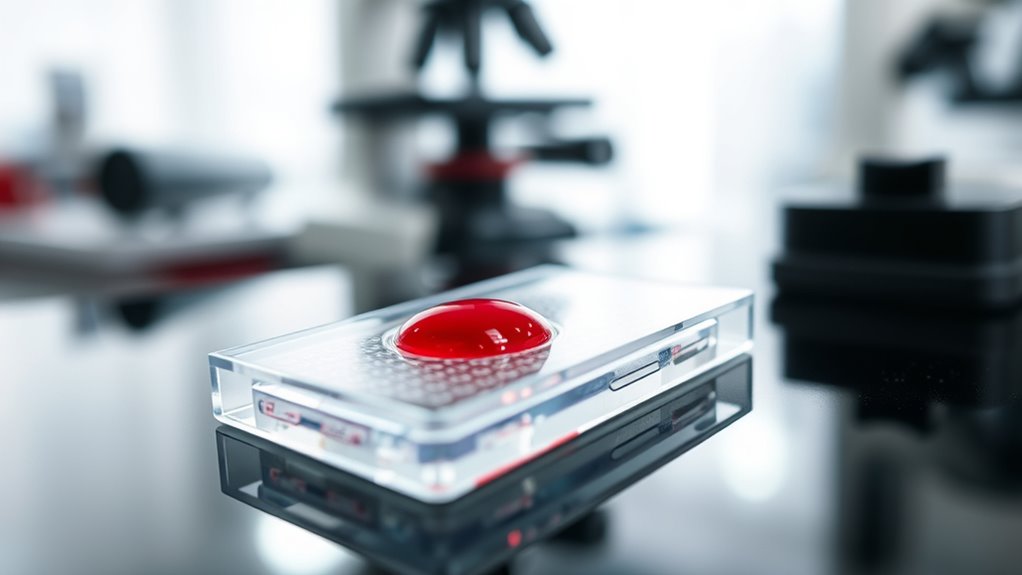

Lab-on-a-chip devices offer you portable diagnostics by combining multiple lab functions into a compact platform. These innovative tools manipulate tiny fluid volumes, enabling quick test results from minimal samples, making them ideal for use in remote clinics or home settings. With user-friendly designs, you don’t need extensive training to operate them. Their accessibility can revolutionize healthcare, especially in resource-limited areas. If you’re curious about how these devices are changing medical diagnostics, there’s much more to explore.

Prime made for students and young adults
- Fast, free delivery for dorm and study essentials
- Prime Video and Amazon Music included
- Member-only deals
Key Takeaways
- Lab-on-a-Chip devices integrate multiple diagnostic processes on a single micro-scale chip for efficient testing and analysis.
- These portable devices utilize microfluidic technology to manipulate tiny fluid volumes, enabling precise and rapid testing from minimal samples.
- Ideal for point-of-care testing, they provide quick results, significantly reducing wait times compared to traditional diagnostic methods.
- User-friendly interfaces make Lab-on-a-Chip devices accessible, requiring minimal training for effective operation in various settings.
- These innovations promise improved healthcare access and timely interventions, particularly in resource-limited regions and developing countries.
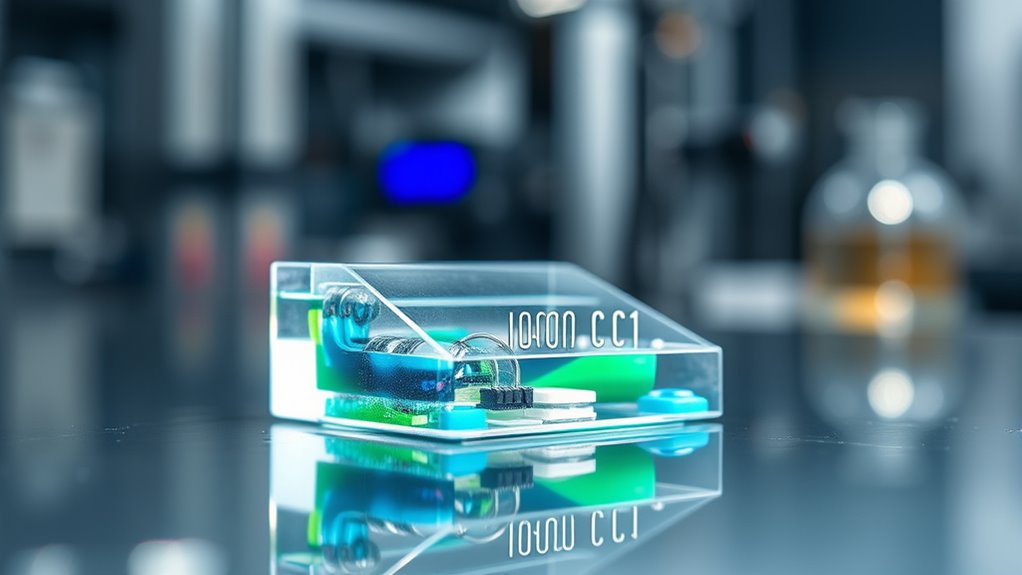
Have you ever wondered how tiny devices can perform complex lab functions? Welcome to the world of lab-on-a-chip devices, where cutting-edge technology meets the simplicity of miniaturization. These innovative tools integrate various laboratory processes onto a single chip, allowing for rapid and efficient testing. You might not realize it yet, but this technology has the potential to revolutionize how we approach diagnostics, particularly in point-of-care testing.
Imagine being able to perform multiple analyses from just a drop of blood or a few milliliters of saliva. With microfluidic integration, these chips manipulate tiny volumes of fluids through channels etched onto their surfaces. This precise control enables you to conduct intricate tests that were once only possible in large laboratories. The beauty of these devices lies in their ability to deliver results quickly, eliminating the need for lengthy wait times associated with traditional testing methods.
In point-of-care testing, the advantages of lab-on-a-chip technology truly shine. You can conduct tests in various settings—from remote medical clinics to your home—without the need for extensive equipment or trained personnel. This accessibility is essential, especially in areas where medical resources are limited. By utilizing lab-on-a-chip devices, healthcare providers can make timely decisions and implement treatments sooner, potentially saving lives.
Moreover, these devices are designed to be user-friendly. You don’t need a PhD in biochemistry to operate them. Many lab-on-a-chip systems are built with intuitive interfaces, allowing you to perform tests with minimal training. You simply follow the prompts, and the chip takes care of the rest. This democratization of technology means that more people can access necessary medical tests, no matter their background or location.
The implications for global health are remarkable. In developing regions where access to healthcare is a challenge, lab-on-a-chip devices can provide essential diagnostics rapidly. You can monitor diseases like malaria or HIV without the need for complex lab setups. Additionally, as technology continues to evolve, these devices will become more affordable, making them even more accessible. Establishing consistent routines can further enhance the effectiveness of health monitoring in various communities.
portable lab-on-a-chip diagnostic device
As an affiliate, we earn on qualifying purchases.
As an affiliate, we earn on qualifying purchases.
Frequently Asked Questions
How Do Lab-On-A-Chip Devices Differ From Traditional Diagnostic Methods?
Lab-on-a-chip devices differ from traditional diagnostic methods mainly through their miniaturization challenges and material innovations. You’ll find that these devices integrate multiple laboratory functions onto a single chip, allowing for rapid testing and analysis. Unlike conventional methods that often require larger equipment, lab-on-a-chip solutions offer portability and efficiency, enabling quicker results. Their use of advanced materials also enhances sensitivity and accuracy, making them a promising alternative for modern diagnostics.
What Types of Samples Can Be Analyzed Using These Devices?
You can analyze a variety of biological samples using lab-on-a-chip devices, including blood, saliva, and urine. These devices can also process environmental samples, such as water and soil, to detect pollutants or pathogens. With their ability to handle small volumes, you’ll find they provide quick and accurate results for both medical and environmental applications. This versatility makes them invaluable tools in diagnostics and environmental monitoring.
Are Lab-On-A-Chip Devices Cost-Effective for Small Clinics?
Lab-on-a-chip devices are like a revitalizing breeze for small clinics. They offer significant cost savings, making advanced diagnostics more accessible to your patients. By reducing the need for extensive lab infrastructure, these devices allow you to provide timely results without breaking the bank. You’ll find that faster diagnostics enhance patient care, making it easier for you to meet their needs while keeping your clinic financially healthy.
How Long Does It Take to Get Results From These Devices?
You can expect result turnaround from these devices to be quite fast, often within minutes to a couple of hours. After sample processing, which usually takes a short time, you’ll receive reliable results that help in making quick decisions. This efficiency is particularly beneficial in clinical settings where timely information is essential. So, you won’t be left waiting long for the answers you need to provide the best care.
What Advancements Are Expected in Lab-On-A-Chip Technology?
You can expect significant advancements in lab-on-a-chip technology, like enhanced nanotechnology integration and improved wireless connectivity. These innovations will allow for faster, more accurate diagnostics, enabling immediate results in remote locations. As devices become smaller, more efficient, and capable of multitasking, you’ll benefit from streamlined healthcare processes. With real-time data transmission and precise analysis, the future of diagnostics will be more accessible, more reliable, and more effective in meeting your health needs.
microfluidic point-of-care testing kit
As an affiliate, we earn on qualifying purchases.
As an affiliate, we earn on qualifying purchases.
Conclusion
In a world where convenience and speed matter, lab-on-a-chip devices are revolutionizing diagnostics. They bring the lab to your fingertips, allowing for rapid testing and real-time results. Imagine being able to diagnose a condition in the comfort of your home or on the go—how much easier would that make your life? With continuous advancements in technology, these portable diagnostics are set to transform healthcare, making it more accessible and efficient for everyone.
As an affiliate, we earn on qualifying purchases.
compact medical diagnostic device
As an affiliate, we earn on qualifying purchases.
As an affiliate, we earn on qualifying purchases.
Fall Picks
fall essentials
As an affiliate, we earn on qualifying purchases.