
Smart diagnostics help you catch health issues earlier by constantly monitoring essential data through wearables, electronic records, and integrated devices. They detect subtle signs of illness before symptoms appear, allowing for proactive treatment. By ensuring accurate data collection and using machine learning, these tools improve diagnosis precision and speed. This shift from reactive to proactive care can protect you from serious complications. Keep exploring to discover how this technology is shaping the future of healthcare for everyone.

Prime made for students and young adults
- Fast, free delivery for dorm and study essentials
- Prime Video and Amazon Music included
- Member-only deals
Key Takeaways
- Enable detection of subtle health changes before symptoms appear, allowing timely intervention.
- Use continuous data monitoring for early identification of irregularities and potential health risks.
- Integrate advanced machine learning algorithms to improve early diagnosis accuracy over time.
- Facilitate seamless communication between devices and healthcare systems for rapid decision-making.
- Shift healthcare from reactive treatment to proactive prevention, improving patient outcomes.
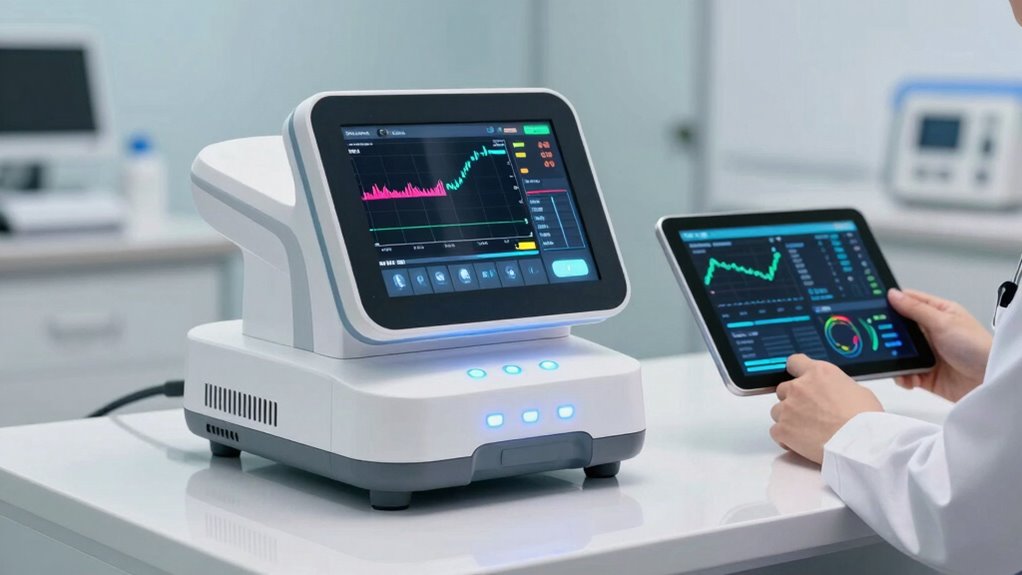
Have you ever wondered how technology is transforming healthcare? It’s revolutionizing the way medical professionals diagnose and treat illnesses, especially with the rise of smart diagnostics. These advanced tools leverage data accuracy and technological integration to detect health issues earlier than ever before. Instead of waiting for symptoms to appear or for invasive tests, smart diagnostics analyze vast amounts of data from various sources—wearable devices, electronic health records, imaging, and lab results—to identify subtle signs of disease. This means you could receive a diagnosis at a stage when treatment is more effective, potentially preventing serious complications down the line.
Smart diagnostics analyze diverse data sources for early, more effective disease detection and improved healthcare outcomes.
The key to this early intervention lies in data accuracy. Modern diagnostics don’t just rely on one piece of information; they aggregate and process real-time data to create a thorough health picture. When data is accurate and reliable, healthcare providers can make informed decisions quickly. Imagine wearable sensors continuously monitoring your vital signs and feeding precise data into sophisticated algorithms. These systems can detect irregularities that might escape the naked eye, like slight changes in heart rate variability or subtle shifts in blood glucose levels, alerting your doctor before symptoms even manifest. This proactive approach helps catch health issues early, often before they develop into full-blown conditions. Additionally, data integration enhances the ability of these systems to provide comprehensive insights, leading to more accurate and timely diagnoses.
Technological integration plays a significant role in making all this possible. Different devices and platforms seamlessly communicate, creating an interconnected health ecosystem. For example, your smartwatch, smart home devices, and hospital systems work together to gather and share data securely. This integration ensures that your healthcare team has access to up-to-date information at all times, enabling them to act swiftly and accurately. No longer are diagnoses based solely on episodic visits; instead, continuous data streams allow for ongoing monitoring and immediate response when anomalies are detected. This interconnectedness accelerates decision-making and reduces diagnostic delays, which can be life-saving in conditions like stroke or cardiac events. Additionally, advancements in dog breeds overview demonstrate how specialized knowledge and data can improve tailored care, emphasizing the importance of precise and breed-specific health monitoring. Furthermore, the use of accurate data collection enhances the reliability of these systems, making early detection even more dependable. As these systems evolve, they can also incorporate machine learning algorithms, further refining diagnostic accuracy over time. Recognizing the importance of standardized data formats in healthcare ensures that different systems can communicate effectively, ultimately improving patient outcomes.
As smart diagnostics become more sophisticated, the potential for earlier intervention grows exponentially. You benefit from personalized, data-driven care that’s more precise and timely. Healthcare providers can identify risks long before symptoms appear, offering preventive strategies or early treatments that can dramatically improve outcomes. In this way, technology isn’t just helping to diagnose illnesses; it’s transforming the entire approach to health, shifting the focus from reactive to proactive care. The future of medicine is here, and it’s built on the foundation of smart diagnostics, data accuracy, and seamless technological integration that puts early intervention within reach for everyone.
wearable health monitoring device
As an affiliate, we earn on qualifying purchases.
As an affiliate, we earn on qualifying purchases.
Frequently Asked Questions
How Accurate Are Smart Diagnostics in Predicting Health Issues?
Smart diagnostics are quite accurate in predicting health issues, especially with advancements in early detection and predictive analytics. They analyze vast amounts of data from wearable devices, medical records, and sensors to identify patterns and potential risks early on. While no system is perfect, these tools markedly improve early intervention chances, helping you catch health concerns sooner and enabling proactive treatment that can save lives and improve outcomes.
What Technologies Are Used in Smart Diagnostic Systems?
Smart diagnostic systems use advanced technologies like machine learning algorithms and wearable sensors. Machine learning analyzes vast amounts of health data to identify patterns and predict issues early. Wearable sensors continuously monitor essential signs and health metrics in real-time. Together, these technologies enable you to detect potential health problems sooner, allowing for earlier intervention and more personalized care. This combination makes diagnostics more accurate and proactive, improving overall health management.
Are Smart Diagnostics Affordable for Most Healthcare Providers?
Smart diagnostics are becoming more affordable for healthcare providers, but cost barriers and implementation challenges still exist. You’ll find that initial investments in technology and training can be significant, yet the long-term benefits, like earlier interventions and improved patient outcomes, often justify the expense. As technology advances and adoption grows, prices tend to drop, making these systems more accessible, though overcoming some implementation hurdles remains essential for widespread use.
How Do Smart Diagnostics Improve Patient Outcomes?
Smart diagnostics improve patient outcomes by enabling personalized medicine and seamless data integration. You can catch issues early before symptoms escalate, leading to more targeted treatments. Unlike traditional methods, these diagnostics synthesize vast data for precise insights, reducing misdiagnoses and delays. This proactive approach means you receive care tailored to your unique health profile, ultimately leading to faster recovery, better management, and improved quality of life.
What Are Privacy Concerns Related to Smart Diagnostic Data?
You should be aware that privacy concerns with smart diagnostic data revolve around patient consent and data security. When your health information is collected and shared, you need clear consent to protect your rights. Additionally, robust data security measures are essential to prevent unauthorized access or breaches. Without proper safeguards, sensitive health details could be exposed, making it crucial that providers prioritize confidentiality and transparent data handling practices.
continuous blood glucose monitor
As an affiliate, we earn on qualifying purchases.
As an affiliate, we earn on qualifying purchases.
Conclusion
By embracing smart diagnostics, you’re opening the door to catching health issues before they become major problems. This technology allows you to act quickly and prevent complications, giving you peace of mind. Remember, a stitch in time saves nine—early intervention truly makes a difference. So, stay proactive, leverage these innovations, and take control of your health journey. The future of wellness is smarter, and it’s in your hands to make the most of it.
As an affiliate, we earn on qualifying purchases.
As an affiliate, we earn on qualifying purchases.
Columbus Day / Indigenous Peoples' Day Picks
long weekend sales
As an affiliate, we earn on qualifying purchases.