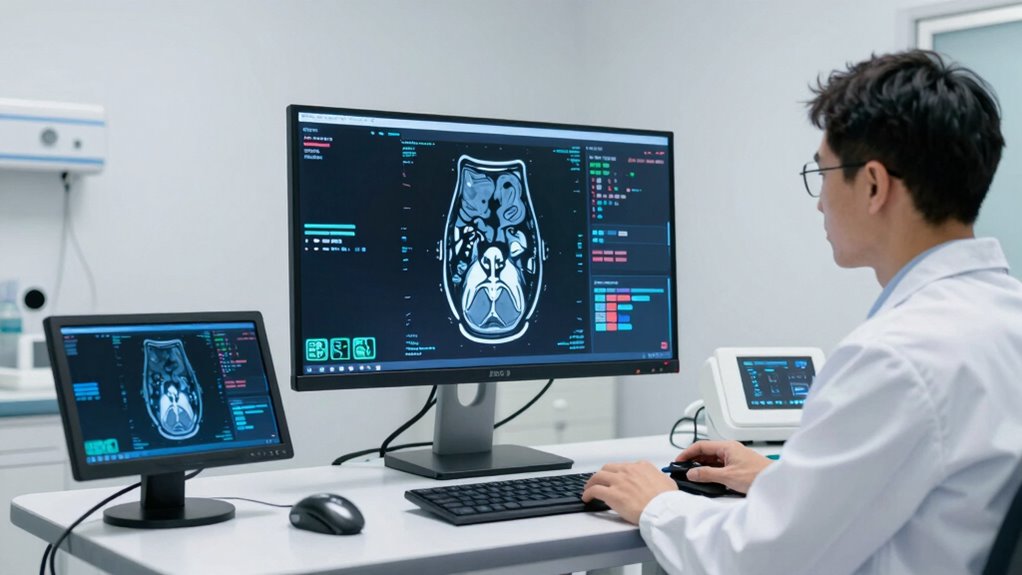

AI-assisted imaging helps you make faster clinical decisions by quickly analyzing medical images to detect abnormalities and patterns. It enhances image quality and identifies difficult-to-see issues, reducing diagnostic delays and allowing you to prioritize urgent cases. By supporting rapid, accurate assessments, AI streamlines workflows and improves patient outcomes. If you’re curious about how these advancements can further transform healthcare, there’s more to explore on how AI achieves this in practice.

Prime made for students and young adults
- Fast, free delivery for dorm and study essentials
- Prime Video and Amazon Music included
- Member-only deals
Key Takeaways
- AI analyzes medical images in real time to quickly detect abnormalities and patterns, accelerating diagnosis.
- Enhanced image quality through calibration and AI analysis improves diagnostic confidence and speed.
- AI-supported imaging prioritizes urgent cases, enabling faster clinical decision-making.
- Rapid image processing reduces delays, allowing clinicians to make timely treatment choices.
- AI tools support clinical assessments, helping streamline workflows and reduce diagnostic turnaround times.
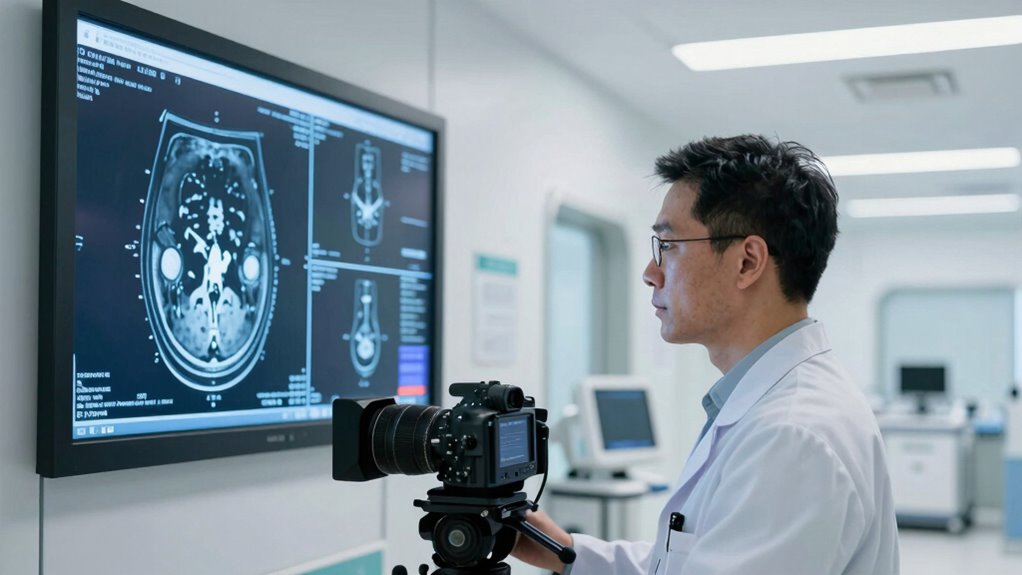
Advancements in AI-assisted imaging are revolutionizing how healthcare professionals make clinical decisions, enabling faster and more accurate diagnoses. With AI tools analyzing medical images in real time, you can identify abnormalities and patterns that might be difficult to detect manually, reducing diagnostic delays and improving patient outcomes. This rapid processing accelerates the decision-making process, allowing you to prioritize urgent cases and start treatment sooner. As AI algorithms grow more sophisticated, the accuracy of diagnoses continues to improve, helping you make confident clinical decisions based on thorough data analysis. Calibration techniques further enhance image quality, making AI-assisted analysis even more reliable.
AI-assisted imaging enhances diagnostic speed and accuracy, enabling quicker, more confident clinical decisions for better patient outcomes.
However, integrating AI into medical imaging isn’t without challenges. Data privacy becomes a critical concern, as these systems require access to vast amounts of sensitive patient information. You need to guarantee that AI platforms comply with strict privacy regulations, like HIPAA, to protect patient confidentiality. Proper data handling protocols and encryption methods are essential to prevent breaches and unauthorized access. When deploying AI tools, transparency about data use helps maintain trust with patients and colleagues, reinforcing the ethical standards of your practice.
Ethical considerations also come into play when using AI-assisted imaging. You must remain vigilant about potential biases embedded within algorithms, which can influence diagnostic accuracy across different populations. Relying solely on AI outputs without human oversight could lead to misdiagnoses or overlooked conditions, especially in cases where the system’s training data is limited or unrepresentative. Your role involves critically evaluating AI recommendations, ensuring they complement your clinical judgment rather than replace it. Balancing technological reliance with ethical responsibility safeguards patient well-being and upholds the integrity of your decision-making process.
Additionally, consider the implications of AI’s automation capabilities. While it streamlines workflows and reduces workload, it raises questions about accountability and informed consent. Patients should understand how AI influences their diagnosis and treatment plans. Maintaining open communication about the use of AI in their care fosters transparency and respects patient autonomy. Moreover, ongoing training helps you stay updated on the evolving ethical standards and best practices for AI deployment in healthcare. Recognizing the importance of inclusive algorithms can help mitigate biases and promote equitable healthcare outcomes. Incorporating regulatory compliance into your practice ensures adherence to the legal standards surrounding AI tools, further supporting ethical deployment. Staying informed about data privacy regulations is essential to navigate the legal landscape effectively and protect patient rights.
In essence, AI-assisted imaging empowers you to make faster, more accurate clinical decisions, but it also requires careful attention to data privacy and ethical considerations. By implementing robust privacy safeguards and maintaining a human-centered approach, you can leverage AI’s benefits while upholding the highest standards of patient care. Embracing this technology with responsibility ensures that advancements serve both your clinical goals and your patients’ trust.
AI-assisted medical imaging software
As an affiliate, we earn on qualifying purchases.
As an affiliate, we earn on qualifying purchases.
Frequently Asked Questions
How Does AI Improve Image Accuracy Over Traditional Methods?
AI improves image accuracy over traditional methods through advanced image enhancement techniques, making details clearer and more precise. You benefit from increased diagnostic precision, as AI algorithms detect subtle abnormalities that might be missed manually. This technology reduces noise and artifacts, providing sharper images. As a result, you can make quicker, more confident clinical decisions, ultimately leading to better patient outcomes and more efficient healthcare workflows.
What Are the Main Challenges in Integrating AI Into Clinical Workflows?
You face challenges in workflow integration and clinician training when incorporating AI into clinical settings. Seamless integration requires adapting existing systems and processes, which can be complex and time-consuming. Additionally, training clinicians to effectively interpret AI outputs is essential, yet often overlooked. Overcoming these hurdles involves collaborative efforts, investing in education, and customizing AI tools to fit your specific workflow, ensuring smoother adoption and improved patient care outcomes.
How Is Patient Data Privacy Maintained With AI Imaging Tools?
You guarantee patient data privacy with AI imaging tools by implementing strict privacy policies and utilizing data encryption. These policies define how data is collected, stored, and shared, preventing unauthorized access. Data encryption secures sensitive information during transmission and storage, making it unreadable to outsiders. Combining these measures helps protect patient confidentiality, maintains trust, and complies with legal standards like HIPAA, so you can confidently use AI imaging without risking privacy breaches.
Can AI Detect Rare or Unusual Conditions More Effectively?
AI acts like a skilled detective, uncovering clues others might miss. It detects rare conditions more effectively by recognizing unusual patterns in imaging data that often evade human eyes. With advanced algorithms, AI excels at rare condition detection, spotting anomalies quickly and accurately. This heightened ability improves diagnosis, ensuring that uncommon or unusual patterns don’t go unnoticed, ultimately leading to more targeted treatments and better patient outcomes.
What Training Is Required for Clinicians to Use Ai-Assisted Imaging?
You need to complete specialized training protocols designed for AI-assisted imaging to effectively incorporate it into your practice. This includes understanding the technology’s capabilities, interpreting AI-generated insights, and maintaining your diagnostic skills. Skill development involves hands-on exercises, case studies, and ongoing education to stay current with updates. By actively engaging in this training, you’ll confidently use AI tools, enhancing your clinical decision-making and ensuring patient safety.
As an affiliate, we earn on qualifying purchases.
Conclusion
You might think that faster decisions mean sacrificing accuracy, but AI-assisted imaging proves otherwise. It’s like switching from a dim flashlight to a spotlight—you see clearer, act quicker, and make better choices. While traditional methods can slow you down, AI enhances your diagnostic precision without delay. In this race against time, embracing AI doesn’t mean losing control; instead, it sharpens your edge, letting you deliver confident, timely care when every second counts.
As an affiliate, we earn on qualifying purchases.
HIPAA compliant medical imaging AI
As an affiliate, we earn on qualifying purchases.
As an affiliate, we earn on qualifying purchases.
Fall Picks
fall essentials
As an affiliate, we earn on qualifying purchases.