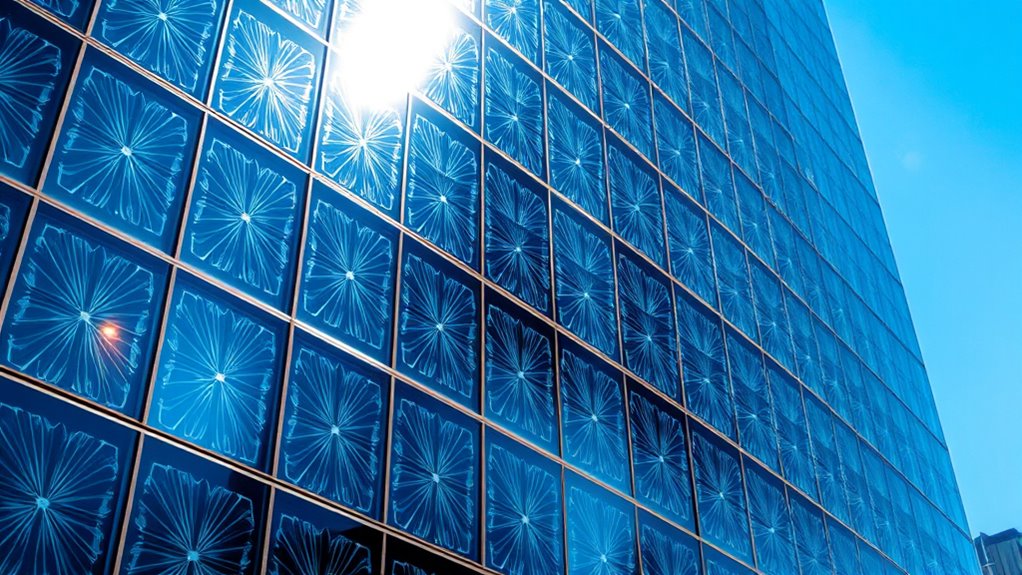

Solar windows are innovative glass walls that generate electricity while serving as transparent windows for skyscrapers. They incorporate photovoltaic layers within durable, transparent materials like crystalline silicon or perovskite, converting sunlight into power. Adjustable blinds can optimize light entry and energy collection, making buildings more energy-efficient and environmentally friendly. Although there are challenges like cost and efficiency, ongoing advancements aim to improve their performance and affordability. If you continue exploring, you’ll discover how these solar windows are shaping smarter, cleaner cityscapes.

Prime made for students and young adults
- Fast, free delivery for dorm and study essentials
- Prime Video and Amazon Music included
- Member-only deals
Key Takeaways
- Solar windows integrate photovoltaic layers within transparent glass to generate electricity while serving as building windows.
- They use advanced materials like crystalline silicon, perovskite, or organic molecules for efficient energy conversion.
- Adjustable blinds and automated systems optimize light entry and energy harvesting based on weather and building needs.
- Challenges include balancing transparency with energy output, durability, and manufacturing costs for large-scale deployment.
- These innovative windows can transform skyscrapers into self-sufficient energy producers, supporting sustainable urban development.
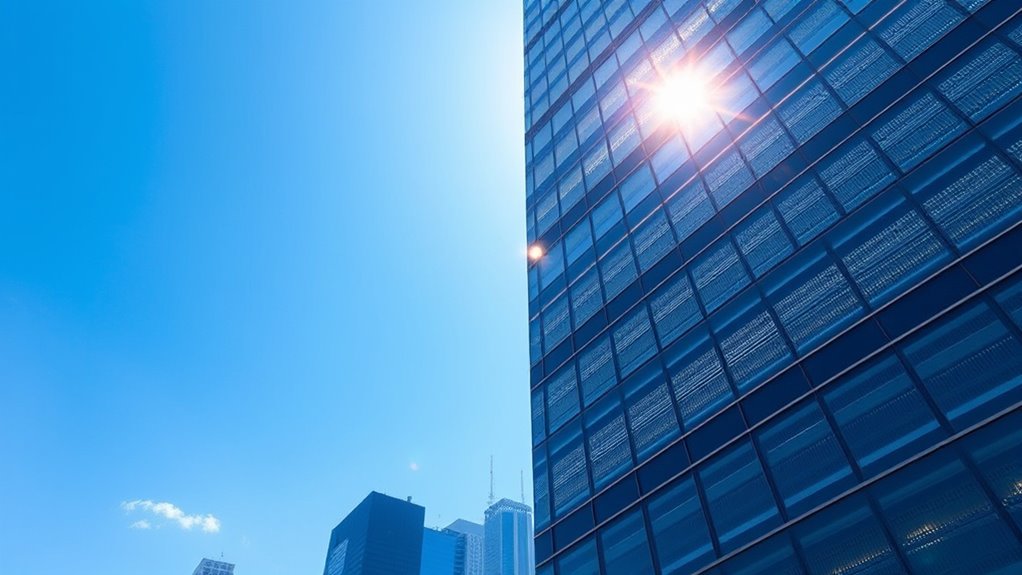
Have you ever considered how windows could do more than just let in light? Imagine your skyscraper’s glass walls not only providing a view but actively generating energy. That’s the promise of solar windows—advanced, power-producing glass designed to harness sunlight while serving as regular windows. These innovative windows incorporate photovoltaic layers within transparent materials, allowing light to pass through while capturing solar energy. They’re made from materials like crystalline silicon, known for efficiency and stability, but emerging options like perovskite and organic molecules are gaining attention for their unique transparency and potential efficiency benefits. The glass often combines advanced polymers and tempered glass, making it durable enough for everyday use. Some designs even use cadmium telluride (CdTe), which offers different absorption spectra to maximize energy capture across various light conditions. Convert sunlight into electricity via the photovoltaic effect.
You can control how much sunlight enters your building by adjusting the position of the blinds—horizontal blinds reflect partial sunlight and offer moderate energy gain, while vertical blinds block out almost all light for maximum energy efficiency. When the system is automated, it dynamically adjusts the blinds throughout the day to optimize light and heat, creating a comfortable indoor climate while boosting energy production. Retracted blinds let in maximum daylight but don’t contribute to energy generation, whereas fully closed blinds enhance the energy-harvesting capacity of the windows. This multifunctionality means your building can generate power without sacrificing natural light or comfort. As a result, your skyscraper becomes more energy-efficient, reducing reliance on external power sources and lowering costs.
However, integrating solar technology into windows isn’t without challenges. Currently, transparent solar windows are less efficient than traditional opaque solar panels, mainly because balancing transparency with power output remains a technical hurdle. Durability and cost are also concerns—manufacturing large-scale, affordable, long-lasting solar windows needs ongoing research and development. Researchers are exploring multifunctional designs that combine shading, insulation, and energy generation to maximize utility. The focus is on increasing energy yield, bringing down costs, and making these windows widely available. As innovations continue, you can expect future solar windows to become more efficient and more affordable, transforming the building industry. With ongoing advancements, solar windows will likely become a standard feature in skyscrapers and urban landscapes, seamlessly blending aesthetic appeal with sustainable energy solutions. This evolution promises buildings that are not just structures but active participants in generating their own power, reducing environmental impact, and shaping smarter cities for the future.
solar power generating window glass
As an affiliate, we earn on qualifying purchases.
As an affiliate, we earn on qualifying purchases.
Frequently Asked Questions
How Durable Are Solar Windows Compared to Traditional Glass?
You’re wondering how durable solar windows are compared to traditional glass. Solar windows are designed with thicker, heat-treated glass that resists impact, hail, and extreme weather better than standard windows. They also contain specialized materials to withstand temperature fluctuations and reduce micro-cracks. While they offer superior strength and longevity, ongoing research is still evaluating their long-term durability relative to traditional glass, but early data looks promising.
What Is the Cost Difference Between Standard Windows and Solar Windows?
You’re wondering about the cost difference between standard and solar windows. Standard windows typically cost between $473 and $3,109 each, depending on size and features. Solar windows, however, have a higher upfront price because of their advanced technology, often exceeding standard window costs considerably. While they require a larger initial investment, they can save you money over time by generating power and reducing energy bills.
Can Solar Windows Be Integrated With Existing Building Designs?
You can definitely integrate solar windows into existing building designs. They’re designed for retrofitting, replacing traditional glass without compromising structural integrity. Plus, they blend seamlessly with your current architecture, matching finishes and tints to preserve aesthetics. Whether you want to enhance natural light or improve energy efficiency, solar windows adapt to your building’s style, allowing you to upgrade without major redesigns or visual disruptions.
How Do Solar Windows Perform in Low-Light or Cloudy Conditions?
You wonder how solar windows perform in low-light or cloudy conditions, and the answer is they tend to produce less energy—sometimes considerably less. When skies are cloudy, efficiency drops, with heavy clouds reducing output to as low as 10–25%, and light clouds allowing 50–80%. Despite these drops, advanced materials and smart design help solar windows still generate power, supporting sustainability even on gloomy days.
Are There Any Health or Safety Concerns With Solar Window Materials?
You should be aware that solar window materials can pose health and safety concerns. During installation, you face risks like falls, cuts, and exposure to UV radiation. The materials themselves may emit VOCs or require special cleaning chemicals, which can affect indoor air quality over time. Proper safety procedures, certified materials, and trained installers help minimize these risks and protect your health and safety.
As an affiliate, we earn on qualifying purchases.
Conclusion
Solar windows aren’t just glass; they symbolize a brighter future you can help build. As you look up at towering skyscrapers, imagine each window as a tiny sun, silently fueling dreams and powering progress. By embracing this innovation, you become a part of a world where every building breathes life and hope. Together, we can turn everyday structures into symbols of sustainable change, lighting the way for generations to come.
transparent photovoltaic window panels
As an affiliate, we earn on qualifying purchases.
As an affiliate, we earn on qualifying purchases.
automated adjustable window blinds
As an affiliate, we earn on qualifying purchases.
As an affiliate, we earn on qualifying purchases.
Halloween Picks
halloween
As an affiliate, we earn on qualifying purchases.