TL;DR

Get school and study supplies delivered free — and shop member deals
- Fast, free delivery on millions of items
- Access to Prime Big Deal Days deals on October 6–7
- Prime Video, Amazon Music and more included
A late-June 2026 report from Thorsten Meyer AI says the memory crunch has reached high-end PC builders and workstation buyers, with RAM and SSDs now taking a far larger share of system costs. The report says DIY buyers face spot-market pricing while large OEMs may still benefit from bulk contracts and stockpiled inventory.
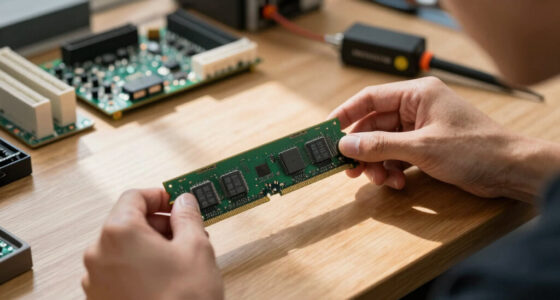
High-end PC builders and workstation buyers are facing a sharp cost shift as memory and storage move from secondary expenses to major invoice items, according to a late-June 2026 report from Thorsten Meyer AI. The report says RAM and SSDs now account for about 35% of some PC bills of materials, changing the long-standing assumption that building a machine yourself reliably saves money.
The report cites HP Q1 2026 earnings as saying memory rose from roughly 15% to 18% of a PC bill of materials to about 35% in a single quarter. For buyers, the practical effect is that RAM and storage can now rival or exceed the cost of components that usually dominate attention, including the graphics card.
Thorsten Meyer AI pointed to a late-June retail snapshot in which a 32GB DDR5 kit was priced at about $369, near the cost of the GPU in the same example build. The report said some premium systems that cost around $2,000 a year earlier now fall between roughly $2,800 and $4,500, with memory and storage described as the main swing factor.
The report frames the change as a market-structure problem for DIY buyers. Large PC makers and system integrators can buy through bulk contracts and draw on inventory acquired earlier, while individuals buying parts at retail face spot prices on the day they place an order.
The high-end PC & workstation tax
If you build your own machines or spec your team’s workstations, you’re the most exposed buyer in this market — no hedge, no bulk contract, just a parts cart and a number you used to ignore, now the biggest line on the invoice.
OEMs buy on bulk contracts and hold hedged stock; you pay the spot price on the day. The DIY builder is now the most exposed buyer in the chain — and the prebuilt is sometimes cheaper. Price it before you commit.
96GB & 128GB DDR5 RDIMMs are the scarcest, closest to the server memory makers prioritize. 64GB RDIMM could cost 2× by end-2026 vs early 2025. The parts that define a workstation are the ones squeezed hardest.
The squeeze didn’t just raise prices — it inverted the value system of high-end building. Buy big, buy early, build it yourself: each enthusiast virtue is now a way to overpay. Discipline beats ambition in 2026 — right-size hard, buy deliberately, lean on bundles, treat the prebuilt as a real price check. You can’t avoid the AI tax levied a layer up in the fabs; you can refuse to pay more of it than the job needs. Next: Cloud’s Hidden Memory Bill.
DIY Savings Are Less Certain
The report matters because it challenges a core buying rule for enthusiast PC builders: that self-assembly is usually the cheaper path. Thorsten Meyer AI says that in 2026 high-end builds, a comparable prebuilt system can sometimes cost less than sourcing the same parts individually, mainly because the buyer is exposed to current retail memory pricing.
That does not mean building a PC has lost all value. The report says DIY still offers component control, repairability and configuration freedom. But it argues that buyers should now treat a prebuilt quote as a serious price benchmark before buying parts, especially when memory and storage account for a large share of the total.
As an affiliate, we earn on qualifying purchases.
AI Demand Reaches Desktops
The report is the fifth part of a series on the 2026 memory crunch, which it links to demand moving from HBM into broader RAM and storage markets. It says the cost pressure has now reached the buyer who specs a desktop workstation, CAD system, local-AI machine or high-end gaming PC.
The most exposed workstation buyers are those needing high-capacity DDR5 RDIMMs, including 96GB and 128GB modules. Thorsten Meyer AI says those parts are among the hardest hit because they are close to the server memory products that manufacturers are prioritizing for higher-margin demand.
“memory had gone from 15-18% of a PC’s bill of materials to about 35%”
— HP, cited in Thorsten Meyer AI’s report
As an affiliate, we earn on qualifying purchases.
Prices May Still Move
The exact size of the price increase depends on component choice, region, retailer, availability and timing. The report describes its pricing as a late-June 2026 snapshot and says the numbers are fast-moving, so a given build may price differently within days or weeks.
It is also unclear how long OEM inventory and contract advantages will last. The report says large manufacturers have more protection than individual buyers, but it does not confirm how much hedged stock remains at each company or how quickly higher memory costs will pass into prebuilt PC prices.
As an affiliate, we earn on qualifying purchases.
Buyers Face New Checklists
The next step for buyers is more disciplined system planning. The report advises people to right-size memory, avoid buying 128GB simply as a safety margin, use CPU and motherboard bundles when available, stage upgrades instead of front-loading them, and reuse parts that still meet the job.
For workstation teams, the next milestone is watching RDIMM availability and vendor quotes through the rest of 2026. Thorsten Meyer AI says one analysis projects 64GB DDR5 RDIMMs could cost twice as much by the end of 2026 as they did in early 2025, but that remains a projection rather than a confirmed end-year price.
As an affiliate, we earn on qualifying purchases.
Key Questions
What is the high-end PC and workstation tax?
It is the report’s term for the extra cost buyers face as RAM and SSD prices take a much larger share of PC and workstation budgets in 2026.
Is building a PC still cheaper than buying a prebuilt?
Not always, according to the report. DIY builds still offer control and repairability, but large OEMs may have pricing advantages from bulk contracts and older inventory.
Which buyers are most exposed?
The report says DIY builders, small teams and workstation buyers needing high-capacity DDR5 RDIMMs are among the most exposed because they buy at current retail or spot prices.
What should buyers do now?
The report recommends right-sizing memory, pricing comparable prebuilt systems, using bundles where possible, staging upgrades and reusing working parts.
Source: Thorsten Meyer AI
Halloween Picks
halloween
As an affiliate, we earn on qualifying purchases.