
TL;DR

Prime made for students and young adults
- Fast, free delivery for dorm and study essentials
- Prime Video and Amazon Music included
- Member-only deals
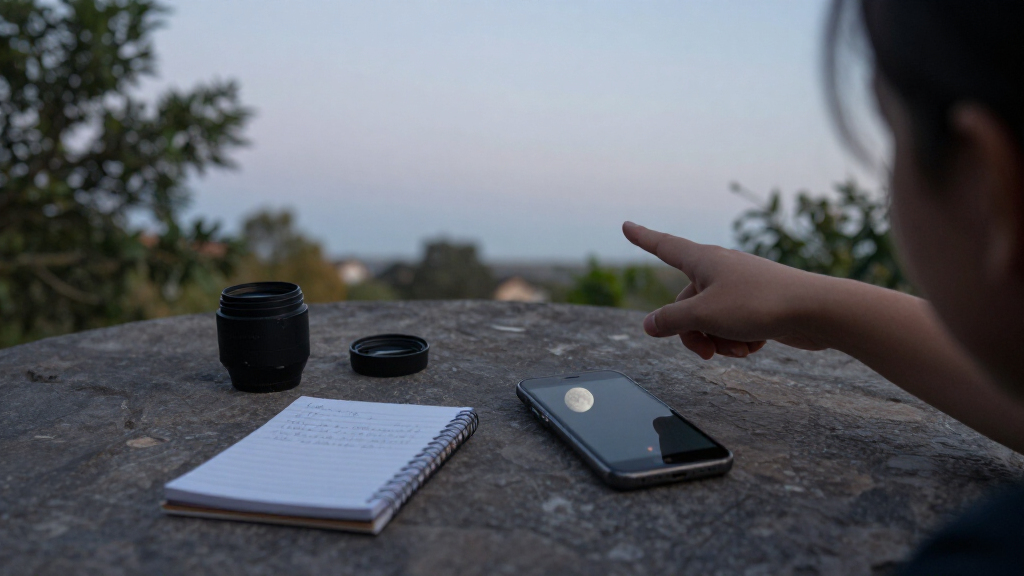
A partial lunar eclipse will be visible tonight in select regions, with observers able to see the Earth’s shadow partially covering the Moon. The event is confirmed and visible under clear skies.
A partial lunar eclipse is happening tonight and can be observed in parts of the world where skies are clear, according to astronomical authorities. The event involves the Earth casting a shadow that partially covers the Moon, creating a distinctive visual phenomenon. This eclipse is confirmed by multiple observatories and skywatching organizations, making it a notable event for astronomers and enthusiasts alike.
The eclipse began around 9:15 p.m. local time in regions with clear skies, with the maximum coverage occurring approximately at 10:30 p.m. local time. During this peak, roughly 60% of the Moon’s surface will be obscured by Earth’s shadow, according to data from the International Astronomical Union (IAU). The event will conclude around 11:45 p.m., with the Moon gradually emerging from Earth’s shadow.
Visibility depends heavily on local weather conditions; clear skies are necessary for observers to see the eclipse. Regions in North America, parts of South America, and some areas in Africa are expected to have the best viewing conditions, while cloud cover could obscure the event in others. No special equipment is required to view the partial eclipse, though binoculars or a telescope can enhance the experience.
Why This Partial Lunar Eclipse Matters for Skywatchers
This partial lunar eclipse provides a rare opportunity for skywatchers to observe a significant astronomical event without the need for complex equipment. Such events have historically helped scientists understand lunar and Earth dynamics. For the public, it offers a chance to engage with astronomy firsthand, fostering interest and education about celestial phenomena.
Additionally, this event occurs during a period of increased social media activity related to astronomy, with trending topics on platforms like Bluesky highlighting the event’s visibility and cultural interest. The eclipse’s partial nature means it is accessible to casual viewers, making it a noteworthy event for amateur astronomers and families alike.
As an affiliate, we earn on qualifying purchases.
Recent and Upcoming Lunar Eclipses Explained
Lunar eclipses occur when the Earth aligns between the Sun and the Moon, casting its shadow onto the lunar surface. Partial eclipses, like tonight’s, happen when only part of the Moon passes through Earth’s shadow. The last lunar eclipse visible in many regions was a penumbral event earlier this year, which is more subtle and less noticeable.
This partial eclipse is part of a series of lunar events that happen roughly twice a year, with the next similar event expected in approximately six months. Historically, lunar eclipses have been observed for thousands of years, often interpreted as significant cultural or spiritual events. Scientifically, they help astronomers study Earth’s shadow and lunar surface properties.
According to NASA and other space agencies, tonight’s eclipse is well within the predicted schedule, with no anomalies reported. The event’s timing aligns with the lunar cycle and Earth’s orbital position, confirming its occurrence as expected.
small telescope for moon observation
As an affiliate, we earn on qualifying purchases.
As an affiliate, we earn on qualifying purchases.
Weather Conditions Could Affect Visibility
While the eclipse itself is confirmed and scheduled, actual visibility depends heavily on local weather conditions. Cloud cover, fog, or pollution could obscure the view in some areas, making it uncertain whether all observers will witness the event as planned. No major technical or observational anomalies are expected, but weather remains an unpredictable factor.
As an affiliate, we earn on qualifying purchases.
Next Lunar Eclipses and Future Sky Events
The next lunar eclipse is expected in approximately six months, likely a penumbral event that will be subtler but still visible in many regions. Astronomers recommend following local weather forecasts for the best viewing opportunities tonight and in upcoming events. Additionally, space agencies and astronomy organizations will continue to provide live streams and updates for those unable to see the eclipse in person.
For those interested in further celestial events, upcoming meteor showers and planetary conjunctions are scheduled for later this year, offering more opportunities for public engagement with astronomy.
As an affiliate, we earn on qualifying purchases.
Key Questions
What is a partial lunar eclipse?
A partial lunar eclipse occurs when Earth’s shadow covers only part of the Moon, creating a visible darkening on its surface. Unlike a total eclipse, the Moon is not completely obscured.
Can I view the eclipse without any special equipment?
Yes, the eclipse can be seen with the naked eye. Binoculars or a telescope can enhance the view but are not necessary for observing the partial shadow.
Where will the eclipse be visible?
Visibility depends on local weather and geographic location. Regions with clear skies in North America, parts of South America, and Africa are most likely to see the event tonight.
How long will the eclipse last?
The partial eclipse began around 9:15 p.m. local time and will end around 11:45 p.m., with maximum coverage occurring near 10:30 p.m.
Is this event rare?
Partial lunar eclipses happen roughly twice a year, making them relatively common, but each event offers a unique viewing experience depending on timing and location.
Source: bluesky
Fall Picks
fall essentials
As an affiliate, we earn on qualifying purchases.