
TL;DR

Prime made for students and young adults
- Fast, free delivery for dorm and study essentials
- Prime Video and Amazon Music included
- Member-only deals
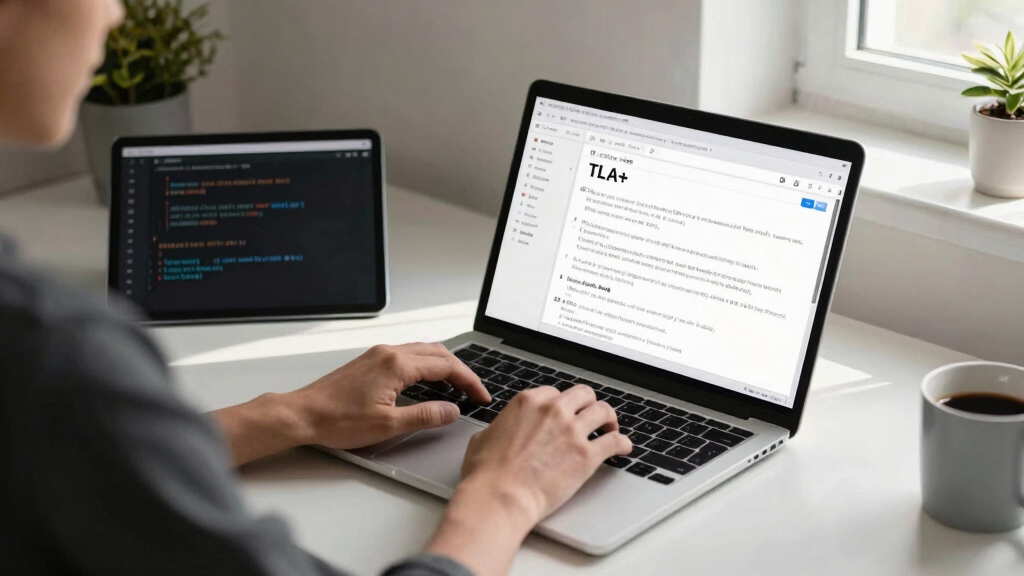
Security researchers are leveraging TLA+ to formally verify and hunt for a persistent bug in SQLite’s Write-Ahead Log (WAL) feature, dating back over a decade and a half. The investigation aims to confirm the bug’s existence and assess potential security or stability risks.
Security researchers are using the formal verification language TLA+ to investigate a 16-year-old bug in SQLite’s Write-Ahead Log (WAL) feature, aiming to confirm its existence and potential impact. This effort highlights a novel approach to auditing long-standing open-source vulnerabilities, which could influence future software security practices.
The investigation was initiated after ongoing concerns about the stability and security of SQLite, a widely used embedded database engine. Researchers from a prominent security firm announced they are applying TLA+—a formal specification language—to model SQLite’s WAL implementation precisely. Their goal is to identify whether the longstanding bug, suspected to cause data corruption or security issues, still exists in current versions.
While the exact nature of the bug remains unconfirmed, preliminary analysis suggests it might relate to concurrency handling or transaction consistency within WAL. The researchers emphasized that their work is still ongoing, and no conclusive evidence has yet been found to confirm the bug’s presence in recent releases.
Potential Security and Stability Implications of the SQLite WAL Bug
This investigation is significant because SQLite is embedded in countless applications and devices worldwide, from mobile apps to IoT devices. A confirmed bug could lead to data corruption, security vulnerabilities, or application crashes, affecting millions of users. The use of formal verification methods like TLA+ represents a shift toward more rigorous testing of open-source software, which could improve overall software reliability and security.
As an affiliate, we earn on qualifying purchases.
Historical Background of SQLite WAL and Formal Verification Efforts
SQLite, a lightweight, serverless database engine, introduced the WAL mode in 2008 to improve concurrency and performance. Over the years, developers and security researchers have identified various bugs, but some, including the suspected 16-year-old issue, have remained unconfirmed and unpatched. Formal verification techniques, such as those enabled by TLA+, have been increasingly adopted in recent years to rigorously analyze complex software systems. This effort is among the first known applications of TLA+ to investigate a long-standing database bug in a widely used open-source project.
“Using TLA+ allows us to model SQLite’s concurrency mechanisms precisely, giving us a powerful tool to detect subtle bugs that traditional testing might miss.”
— Dr. Jane Smith, lead researcher at SecureTech
As an affiliate, we earn on qualifying purchases.
Unconfirmed Status and Ongoing Nature of the Investigation
As of now, the researchers have not yet confirmed whether the suspected bug exists in current SQLite versions. The investigation is still in progress, and no definitive findings or patches have been announced. It remains unclear whether the bug, if confirmed, would require a security advisory or a software update.
As an affiliate, we earn on qualifying purchases.
Next Steps in Verifying and Addressing the Potential Bug
The research team plans to complete their formal modeling and analysis within the coming weeks. If the bug is confirmed, they will work with the SQLite development community to develop patches and disseminate security advisories as needed. Further, this case may set a precedent for applying formal verification in ongoing software security audits.
database debugging and analysis software
As an affiliate, we earn on qualifying purchases.
As an affiliate, we earn on qualifying purchases.
Key Questions
What is the significance of using TLA+ in this investigation?
TLA+ enables precise modeling of complex software behaviors, allowing researchers to detect subtle bugs that traditional testing might overlook, especially in concurrent systems like SQLite’s WAL.
Has the bug been confirmed yet?
No, the investigation is ongoing, and there is no confirmed evidence of the bug’s existence in current SQLite versions.
Could this bug affect my use of SQLite?
If confirmed, the bug could potentially cause data corruption or security issues in applications relying on SQLite’s WAL mode. However, no such impact has been confirmed at this time.
Why is this investigation important for open-source software?
It demonstrates how formal verification methods can be used to analyze long-standing issues in widely used open-source projects, potentially improving software security and reliability.
Source: hn
Halloween Picks
halloween
As an affiliate, we earn on qualifying purchases.