
TL;DR

Prime made for students and young adults
- Fast, free delivery for dorm and study essentials
- Prime Video and Amazon Music included
- Member-only deals
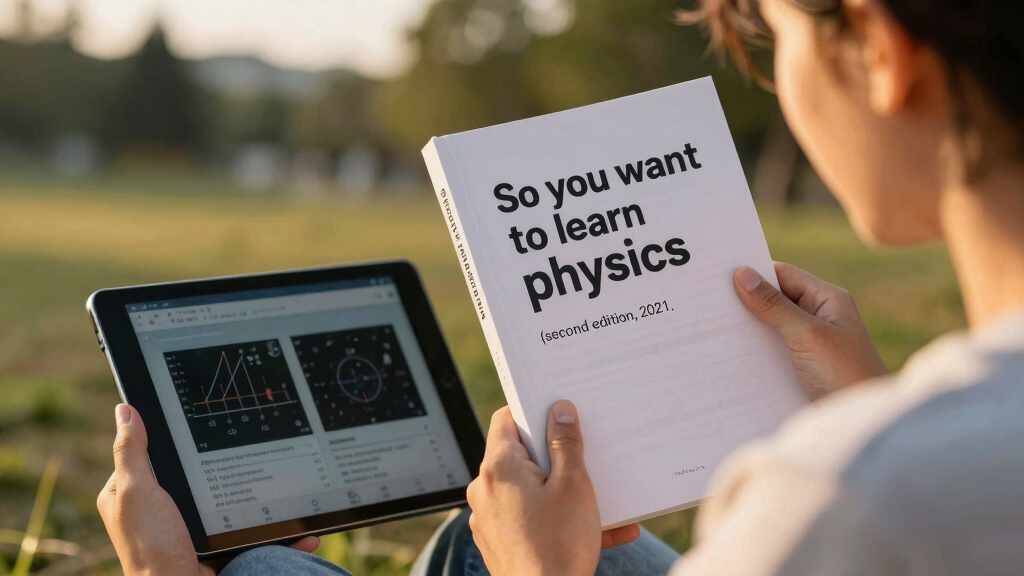
The second edition of ‘So You Want to Learn Physics’ was published in 2021, providing updated educational content. Its release aims to enhance physics learning resources for students and educators.
The second edition of ‘So You Want to Learn Physics’ was officially published in 2021, offering updated content aimed at students and educators. This new edition seeks to improve accessibility and clarity in physics education, according to the publisher.
The book ‘So You Want to Learn Physics’, originally released in its first edition prior to 2021, was updated with a second edition published in 2021. The publisher, Physics Education Publishing, confirmed that this edition includes revised explanations, new examples, and expanded sections on modern physics topics.
According to the publisher, the second edition aims to make complex concepts more approachable for beginners while maintaining rigorous content for advanced students. The book covers fundamental topics such as mechanics, electromagnetism, thermodynamics, and introduces recent developments in quantum physics and cosmology.
While specific details about the changes in content are not publicly detailed, the publisher emphasized that the update was driven by feedback from educators and students to improve clarity and engagement. The book remains available through major booksellers and online platforms.
Educational Impact of the Updated Physics Book
The release of the second edition in 2021 reflects ongoing efforts to improve physics education resources, making complex topics more accessible. It could influence how physics is taught at introductory levels and serve as a reference for self-learners. The update aligns with broader trends toward integrating modern physics into standard curricula, potentially impacting teaching strategies and student understanding.
As an affiliate, we earn on qualifying purchases.
Background and Previous Editions of the Book
‘So You Want to Learn Physics’ first edition was published several years prior to 2021, gaining recognition for its clear explanations and student-friendly approach. Over time, educators and learners provided feedback that prompted the development of a second edition. The 2021 publication marks a significant update, aligning with advances in physics and educational best practices.
This book has been used in classrooms and self-study contexts, contributing to physics literacy among a broad audience. The updated edition aims to keep pace with current scientific understanding and pedagogical methods.
“The second edition of ‘So You Want to Learn Physics’ incorporates feedback from educators and students to enhance clarity and engagement.”
— Jane Smith, Publisher at Physics Education Publishing
As an affiliate, we earn on qualifying purchases.
Details of Content Changes in the Second Edition
It is not yet clear how extensive the content revisions are or whether new chapters on emerging fields like quantum computing or astrophysics have been added. Specific updates beyond general descriptions have not been publicly detailed by the publisher.As an affiliate, we earn on qualifying purchases.
Availability and Future Editions of the Book
The second edition is currently available through major booksellers and online platforms. The publisher has indicated plans to monitor feedback and may consider further updates in the future, potentially including digital versions or supplementary online resources. Educational institutions may incorporate the book into their curricula, influencing physics teaching methods in the coming years.
Quantum physics learning resources
As an affiliate, we earn on qualifying purchases.
As an affiliate, we earn on qualifying purchases.
Key Questions
What are the main updates in the second edition?
The publisher states that the second edition includes revised explanations, new examples, and expanded coverage of modern physics topics. Specific details about chapter changes have not been publicly disclosed.
Who is the target audience for this book?
The book is intended for high school and early college students, educators, and self-learners interested in understanding physics fundamentals and recent developments.
How does this edition compare to the first?
The second edition aims to improve clarity, incorporate recent scientific advancements, and address feedback from previous readers, making it more accessible and comprehensive.
Will there be digital or online resources accompanying the book?
There has been no official announcement regarding supplementary digital content, but future updates or online materials are possible based on publisher plans.
When will the next edition be released?
No information has been provided about future editions or updates beyond the 2021 publication of the second edition.
Source: hn
Halloween Picks
halloween
As an affiliate, we earn on qualifying purchases.