
Science experiment kits for kids vary widely: some offer a broad mix of activities, while others focus on chemistry, earth science, magic, or electronics. I’d put the National Geographic Mega Science Lab in the best overall spot for its wide range of 75 experiments, with the UNGLINGA 150 Experiments Science Kit standing out for activity count and Snap Circuits Explorer SC-100 for kids drawn to building circuits. The main tradeoffs are variety versus depth, adult help versus independent play, and a large activity count versus experiments a child will want to repeat. Age fit and the need for household supplies can matter as much as the number on the box. Read on for the full comparison and help matching a kit to your child.

Prime made for students and young adults
- Fast, free delivery for dorm and study essentials
- Prime Video and Amazon Music included
- Member-only deals
Key Takeaways
- The Mega Science Lab is the strongest all-around starting point: its 75 experiments span more activities than a narrow chemistry or electronics set without relying only on a very high count.
- Large experiment counts do not automatically mean the best fit: UNGLINGA’s 150- and 272-experiment kits promise breadth, but families should weigh how much variety they want against setup, sorting, and adult involvement.
- Specialized kits offer a clearer learning path: Snap Circuits focuses on electronics, Earth Science Kit on geology and related topics, and chemistry sets on reactions rather than a broad sampler.
- Age fit changes the shortlist: Doctor Jupiter’s My First kit is aimed at children 4+, while many National Geographic and Snap Circuits options target older children who can follow more detailed steps.
- Magic-themed kits trade broad coverage for presentation: National Geographic’s Science Magic and Magic Chemistry options may suit kids motivated by tricks, while a conventional lab kit is a better pick for wider subject exploration.
| UNGLINGA 150 Experiments Science Kit for Kids |  | Best for Broad Science Variety | Brand: UNGLINGA | Experiment count: 150 | Recommended age: 8 years and up | VIEW LATEST PRICE | See Our Full Breakdown |
| National Geographic Mega Science Lab: 75 Experiments for Kids Ages 8–12 |  | Best for a Three-Theme Starter Lab | Brand: Blue Marble | Age range: 8 years and up | Number of experiments: 75 | VIEW LATEST PRICE | See Our Full Breakdown |
| National Geographic Science Magic Kit for Kids, 100+ Experiments |  | Best for Science-Minded Showmanship | Brand: Blue Marble | Age range: 8 years and up | Experiment count: 100+ | VIEW LATEST PRICE | See Our Full Breakdown |
| National Geographic Earth Science Kit with 100+ Activities for Kids 8-12 | 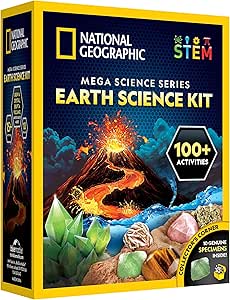 | Best for Geology and Earth Science | Brand: Blue Marble | Sub-brand: National Geographic | Age range: 8 years and up | VIEW LATEST PRICE | See Our Full Breakdown |
| Snap Circuits Flight Deck STEM Toy |  | Best for Building and Applied Physics | Brand: Snap Circuits | Manufacturer: Elenco Electronics, LLC | Model number: SCFLTKIT | VIEW LATEST PRICE | See Our Full Breakdown |
| National Geographic Amazing Chemistry Set, 100+ Experiments |  | Best for Guided Chemistry Variety | Brand: Blue Marble | Recommended age: 8 years and up | Experiments: 15 with included materials, plus 85 bonus experiments using household items | VIEW LATEST PRICE | See Our Full Breakdown |
| Doctor Jupiter My First Science Experiments Kit for Kids Ages 4+ |  | Best for Preschool Science Beginners | Brand: Doctor Jupiter | Recommended age: 4–8 years | Experiments: Over 50 | VIEW LATEST PRICE | See Our Full Breakdown |
| UNGLINGA 40+ Experiments Science Kit for Kids |  | Best Compact Activity Set | Brand: UNGLINGA | Recommended age: 8 years and up | Experiments: 40+ | VIEW LATEST PRICE | See Our Full Breakdown |
| UNGLINGA 272 Experiments Science Kit for Kids, Chemistry Set |  | Best for Maximum Experiment Variety | Brand: UNGLINGA | Recommended age: 8 years and up | Experiments: 272 | VIEW LATEST PRICE | See Our Full Breakdown |
| National Geographic Magic Chemistry Set with 10 Tricks for Kids Ages 8-12 |  | Best for Science-Themed Performances | Brand: Blue Marble | Sub-brand: National Geographic | Recommended age: 8 years and up | VIEW LATEST PRICE | See Our Full Breakdown |
| National Geographic Junior Chemistry Set with 50 Experiments for Kids |  | Best for Young Beginners | Brand: Blue Marble | Recommended age: 4 years and up | Experiments: 50 | VIEW LATEST PRICE | See Our Full Breakdown |
| Science Kit for Kids – 80 Science Lab Experiments – Scientist Role Play |  | Best for Variety | Brand: Kuovei | Experiments: 80 | Recommended age: 36 months–12 years | VIEW LATEST PRICE | See Our Full Breakdown |
| Snap Circuits Explorer SC-100 STEM Electronics Kit – 100+ Projects, Ages 8+ |  | Best for Electronics Experiments | Components: 28 pieces | Projects: 100+ | Recommended age: 8 years and up | VIEW LATEST PRICE | See Our Full Breakdown |
| 60+ Science Experiment Kit for Kids Ages 4-8+ |  | Best for Ready-to-Start Activities | Brand: melican | Recommended age: 4 years and up | Experiments: 60+ | VIEW LATEST PRICE | See Our Full Breakdown |
| UNGLINGA 70 Lab Experiments Science Kit for Kids |  | Best for Older Kids’ Mixed Science Projects | Brand: UNGLINGA | Recommended age: 8 years and up | Experiments: 70 | VIEW LATEST PRICE | See Our Full Breakdown |
| science experiment kits for kid | Brand | Recommended age | Experiments |
|---|---|---|---|
| UNGLINGA 150 Experiments Scien | UNGLINGA | 8 years and up | — |
| National Geographic Mega Scien | Blue Marble | — | — |
| National Geographic Science Ma | Blue Marble | — | — |
| National Geographic Earth Scie | Blue Marble | — | — |
| Snap Circuits Flight Deck STEM | Snap Circuits | — | — |
| National Geographic Amazing Ch | Blue Marble | 8 years and up | 15 with included materials, plus 85 bonus experiments using household items |
| Doctor Jupiter My First Scienc | Doctor Jupiter | 4–8 years | Over 50 |
| UNGLINGA 40+ Experiments Scien | UNGLINGA | 8 years and up | 40+ |
| UNGLINGA 272 Experiments Scien | UNGLINGA | 8 years and up | 272 |
| National Geographic Magic Chem | Blue Marble | 8 years and up | 10 chemistry experiments presented as magic tricks |
| National Geographic Junior Che | Blue Marble | 4 years and up | 50 |
| Science Kit for Kids | Kuovei | 36 months–12 years | 80 |
| Snap Circuits Explorer SC-100 | — | 8 years and up | — |
| 60+ Science Experiment Kit for | melican | 4 years and up | 60+ |
| UNGLINGA 70 Lab Experiments Sc | UNGLINGA | 8 years and up | 70 |
More Details on Our Top Picks
UNGLINGA 150 Experiments Science Kit for Kids
For families who want one kit to move between chemistry, physics, Earth science, and surface tension, the 150 experiments give this UNGLINGA set the broadest stated activity count in this group. Its illustrated, step-by-step manual and included lab tools make it easier to start than a collection of activities that relies mainly on household supplies. Compared with the National Geographic Mega Science Lab, which highlights rock and mineral specimens alongside chemistry and science magic, this kit spreads its subject matter across more general science areas. That breadth can keep projects varied, but it may offer less emphasis on specimens or a single theme. Some activities also need common household items, so the listed count does not mean every project is ready to begin straight from the box. I’d choose it for variety, not for a fully self-contained lab.
Pros:- Lists 150 experiments spanning chemistry, physics, Earth science, and surface tension
- Illustrated step-by-step manual supports following projects independently
- Includes lab tools and kid-friendly materials
- Mix of subjects offers more variety than a kit centered on one science theme
Cons:- Some experiments require household items that are not included
- Broad subject coverage may provide less depth in any one area than a themed kit
Best for: Families with children age 8 or older who want a wide mix of science topics and are comfortable supplying a few household materials.
Not ideal for: Buyers who want every experiment’s materials included or children focused mainly on rocks, minerals, and crystals.
- Brand:UNGLINGA
- Experiment count:150
- Recommended age:8 years and up
- Science topics:Chemistry, physics, Earth science, and surface tension
- Included components:Science experiment tools and materials
- Material:Plastic
- Dimensions:11.42 x 8.67 x 3.94 inches
- Number of packs:1
Our verdict“Choose this set for a large range of science activities, provided you are willing to gather a few supplies from home.”
National Geographic Mega Science Lab: 75 Experiments for Kids Ages 8–12
The Mega Science Lab suits kids who would rather sample distinct kinds of science than work through a single-topic kit. It pairs Earth science, chemistry, and science magic, with volcano and crystal activities plus real rock, mineral, and crystal specimens. That gives the projects a tangible collecting-and-observing element that the broader UNGLINGA 150 Experiments does not specifically promise. The activity count is split between 45 experiments in the kit and a guide to 30 more using household items, so the full total is not all ready-to-go from the box. Compared with the National Geographic Science Magic Kit, this one gives more attention to Earth science and specimens, while the Science Magic Kit leans harder into tricks. I’d pick it for variety with a geology angle, not for the largest supply of included experiments.
Pros:- Combines Earth science, chemistry, and science magic in one kit
- Includes rock, mineral, and crystal specimens for hands-on observation
- Offers 45 kit-based experiments plus ideas using household materials
- Activities encourage critical thinking and observation
Cons:- 30 of the listed experiments use household items rather than only kit contents
- Its three-theme approach gives less focused depth than a dedicated Earth science or magic kit
Best for: Children ages 8–12 who enjoy switching between chemistry, Earth science, and science tricks, especially those drawn to rocks and crystals.
Not ideal for: Families seeking a large set of fully supplied experiments or a kit focused mainly on chemistry or magic activities.
- Brand:Blue Marble
- Age range:8 years and up
- Number of experiments:75
- Kit areas:Earth science, chemistry, and science magic
- Experiments using kit contents:45
- Additional household-item experiments:30
- Included components:Earth science kit, chemistry kit, and science magic kit
- Model number:NGMEGASCIKIT
Our verdict“Pick this kit for a varied introduction to science with real specimens, if you are comfortable sourcing supplies for some activities.”
National Geographic Science Magic Kit for Kids, 100+ Experiments
This kit makes the most sense for a child who likes demonstrations as much as explanations. It combines materials for 20 magic experiments with a bonus booklet listing more than 85 additional experiments, giving kids a way to turn science concepts into tricks they can show family or friends. The booklet-heavy format differs from the National Geographic Mega Science Lab, which supplies specimens and divides its activities across Earth science, chemistry, and magic. Here, the magic theme is the draw, while the supplied materials cover a smaller portion of the stated experiment total. Compared with the Snap Circuits Flight Deck, this set offers a wider range of activity ideas but not the same focused, reusable circuit-building experience. It’s a good fit for curious performers, though buyers should check how much of the booklet’s activity list depends on materials already at home.
Pros:- Combines science-based magic tricks with hands-on STEM activities
- Includes materials for 20 magic experiments
- Bonus booklet adds more than 85 experiment ideas
- Compact box is easier to store than larger multi-topic sets
Cons:- The included materials are specified for 20 magic experiments, not all 100-plus activities
- The magic-centered theme may not suit children seeking geology or electronics projects
Best for: Children age 8 or older who enjoy performing simple science tricks and want a booklet of additional activities to explore.
Not ideal for: Families looking for a fully supplied kit for every listed experiment or a focused electronics or Earth science project set.
- Brand:Blue Marble
- Age range:8 years and up
- Experiment count:100+
- Included experiment materials:Materials for 20 magic experiments
- Additional activities:Bonus booklet with 85+ experiments
- Educational objective:STEM
- Materials:Metal and paper
- Dimensions:8.86 x 3.15 x 12 inches
- Weight:1.5 pounds
Our verdict“Choose it for a child who wants science activities to perform, rather than a kit with supplies for every listed experiment.”
National Geographic Earth Science Kit with 100+ Activities for Kids 8-12
For a child who keeps returning to volcanoes, crystals, and rocks, this Earth-focused kit is a more coherent choice than the multi-topic UNGLINGA 150 Experiments. It lists more than 100 activities, including crystal growing and geologic dig kits, and pairs them with a detailed, full-color learning guide. That combination can make the projects feel connected by a central subject rather than like a sampler across unrelated areas. The tradeoff is exactly that focus: it offers less variety in chemistry tricks or physics projects than UNGLINGA, and it is not the pick for a child who wants circuits like the Snap Circuits Flight Deck. The supplied details also flag that younger children may need adult supervision for some components. I’d choose it when Earth science is the main interest, not as an all-purpose science kit.
Pros:- More than 100 Earth science activities, including volcano, crystal, and geologic dig projects
- Full-color learning guide explains the science behind activities
- Focused theme helps connect individual projects to Earth science
- Designed for hands-on STEM learning
Cons:- Narrower subject range than multi-topic kits such as UNGLINGA 150 Experiments
- Some components may require adult supervision for younger children
Best for: Children ages 8–12 who are especially interested in volcanoes, crystals, and geology activities with explanatory guidance.
Not ideal for: Families seeking broad coverage across physics, chemistry, and electronics, or children who prefer independent projects without adult oversight.
- Brand:Blue Marble
- Sub-brand:National Geographic
- Age range:8 years and up
- Number of activities:100+
- Science focus:Earth science
- Educational objective:STEM
- Dimensions:8.66 x 3.15 x 12 inches
- Weight:2.6 pounds
- Model number:NGMEGAEARTH
Our verdict“Choose this kit when geology and Earth science are the child’s main interests, rather than broad science variety.”
Snap Circuits Flight Deck STEM Toy
Unlike experiment collections built around many separate demonstrations, the Snap Circuits Flight Deck centers on five buildable projects that connect electricity, physics, and aerodynamics. The paper airplane launcher and spinning art wheel give children a concrete result to assemble and observe, while the easy-to-follow instructions support independent play. That makes it a stronger fit for a child who likes building and adjusting mechanisms than the National Geographic Earth Science Kit, whose activities focus on geology and specimens. The clear tradeoff is scope: five projects are far fewer than the activity counts in the UNGLINGA or National Geographic kits. It also needs batteries, which are not included, and expanding beyond the set may depend on owning compatible Snap Circuits components. Choose it for focused construction, not a large menu of experiments.
Pros:- Five projects connect circuit building with physics and aerodynamics
- Includes a working paper airplane launcher and spinning art wheel
- Requires no extra tools for assembly
- Compatible with other Snap Circuits kits for project expansion
Cons:- Only five unique projects are listed, far fewer than the experiment counts of the other kits here
- Batteries are not included
- Expansion may require specific Snap Circuits components
Best for: Children age 8 or older who prefer assembling working projects and exploring basic electricity, physics, and aerodynamics.
Not ideal for: Buyers seeking dozens of varied experiments, or families who do not want to supply batteries or potentially add compatible Snap Circuits components.
- Brand:Snap Circuits
- Manufacturer:Elenco Electronics, LLC
- Model number:SCFLTKIT
- Age range:8 years and up
- Number of projects:5
- Educational objectives:Critical thinking, problem solving, and STEM
- Included components:Flight Deck Kit
- Batteries included:No
- Tools required:None
Our verdict“Pick this focused build kit for a child who wants working mechanical projects rather than a large collection of experiments.”
National Geographic Amazing Chemistry Set, 100+ Experiments
I’d choose this set for a child who wants recognizable chemistry activities and enough structure to keep returning to the workbench. The included materials support 15 experiments, including crystal growing and color-changing solutions, while the bonus guide adds 85 more ideas using household items. That split is the key tradeoff: it offers more directions than the National Geographic Magic Chemistry Set, but far fewer activities are ready to run from the box than the headline count suggests. Test tubes, beakers, and pipettes help children practice using lab-style tools rather than treating each activity as a one-off trick. The 8-and-up age guidance also makes it a better fit for school-age learners than Doctor Jupiter’s kit for younger children. I’d pick it for chemistry-focused families comfortable sourcing extra supplies for the bonus activities.
Pros:- Includes materials for 15 hands-on chemistry experiments, including crystal growing and color-changing solutions.
- Bonus guide offers 85 additional activities using common household items.
- Test tubes, beakers, and pipettes introduce children to familiar lab tools.
- Chemistry focus gives it a clearer subject emphasis than broader activity kits.
Cons:- Only 15 experiments use the included kit materials.
- The bonus activities depend on families having or sourcing household supplies.
- Its chemistry emphasis offers less variety than kits spanning several science topics.
Best for: Families with children 8 and up who want a chemistry-focused kit, basic lab tools, and extra activities that can use household supplies.
Not ideal for: Buyers who want all 100 activities supplied in the box or a large number of experiments that require no extra household materials.
- Brand:Blue Marble
- Recommended age:8 years and up
- Experiments:15 with included materials, plus 85 bonus experiments using household items
- Included tools:Test tubes, beakers, and pipettes
- Item dimensions:8.78 x 3.19 x 11.93 inches
- Item weight:1.8 pounds
- Educational objective:STEM
- Model number:NGMEGACHEMAR
Our verdict“Choose this for school-age kids who want guided chemistry and lab tools, but not if you expect every advertised experiment to be supplied in the box.”
Doctor Jupiter My First Science Experiments Kit for Kids Ages 4+
For a young child’s first experiments, I’d put this ahead of the more demanding UNGLINGA 40+ Experiments Science Kit, thanks to its 4–8 age range and illustrated, step-by-step instructions. The activity mix includes volcanoes, Oobleck, and perfume making, so children can encounter different kinds of simple science without relying on one theme. More than 50 activities suggest plenty of variety, though the supplied components include small tools and materials that call for close adult supervision; the age guidance is not a reason to leave a preschooler to work alone. Its dedicated ingredients and tools make it feel more ready to start than kits that expect household supplies, but the younger audience is also a limit. Compared with the National Geographic Amazing Chemistry Set, this is less focused on school-age chemistry and better suited to shared parent-child exploration.
Pros:- Offers more than 50 activities spanning volcanoes, Oobleck, and perfume making.
- Illustrated step-by-step instructions support shared activities with a young child.
- Includes a variety of tools and materials such as a beaker, dropper, mini volcano, and food colors.
- Designed for ages 4–8, younger than the school-age chemistry kits in this roundup.
Cons:- Small parts and experiment materials require active adult supervision.
- The age range may feel limiting to older children seeking greater complexity.
- The number and variety of activities may require adults to help children choose and organize each experiment.
Best for: Parents or caregivers looking for a varied, guided first science kit to use together with children ages 4–8.
Not ideal for: Families shopping for an independent activity for a preschooler, or for an older child who wants more challenging experiments.
- Brand:Doctor Jupiter
- Recommended age:4–8 years
- Experiments:Over 50
- Included components:Food essences, cups, stirring sticks, spatula, beaker, test tube, mini volcano, tray, spray bottle, funnel, dinosaur mould, dropper, food colors, baking soda, corn starch, jelly powder, face masks, aroma bag, and instruction manual
- Safety standard:ASTM F963-17
- Number of items:1 kit
- Manufacturer:Metis Learning Solutions Pvt. Ltd.
- Model number:DJ MFSK Starter
Our verdict“Pick this as a supervised first science kit for ages 4–8, rather than as an independent or advanced chemistry set.”
UNGLINGA 40+ Experiments Science Kit for Kids
I’d favor this kit when storage space and a manageable starting point matter more than a huge experiment count. Its 8 x 5.7 x 2.7-inch package is notably compact beside the UNGLINGA 272 Experiments Science Kit, whose broader scope suits children ready for a much larger menu. The 40-plus activities include making bouncy balls and lava lamps, and illustrated instructions give kids a path through each activity instead of leaving them to guess. The tradeoff is that the product data lists the included components only as “science experiments,” so buyers have less detail about the tools and materials supplied. Some activities also need common household items, which can interrupt a session if those supplies aren’t on hand. This is a sensible choice for a child who wants variety without a large kit footprint, not for families seeking a fully specified lab setup.
Pros:- Offers more than 40 activities, including bouncy balls and lava lamps.
- Illustrated, step-by-step instructions help children follow each experiment.
- Compact dimensions make it easier to store than larger experiment collections.
- Recommended for children ages 8 and up.
Cons:- Some experiments need household items beyond the kit.
- The listed included components provide little detail about the actual tools and materials.
- Its activity count and known tool information are less extensive than those of the UNGLINGA 272 Experiments kit.
Best for: Families with children 8 and up who want a compact kit with a moderate number of guided activities and can provide household supplies when needed.
Not ideal for: Buyers who want detailed component information, a self-contained set of materials, or an extensive library like the UNGLINGA 272 Experiments kit.
- Brand:UNGLINGA
- Recommended age:8 years and up
- Experiments:40+
- Item dimensions:8 x 5.7 x 2.7 inches
- Item weight:0.32 kg
- Material:Plastic
- Number of items:1
- Manufacturer part number:HZDZKH52
Our verdict“Choose this for a compact, guided activity set for kids 8 and up, provided you’re comfortable supplying some materials from home.”
UNGLINGA 272 Experiments Science Kit for Kids, Chemistry Set
If the main goal is to keep a curious child supplied with a long list of activities, I’d rank this above the UNGLINGA 40+ Experiments kit. Its 272-experiment claim covers ideas from volcano eruptions and crystal growing to holographic projection and rainbow walking water, giving the kit a much broader menu. Test tubes, beakers, and a conical flask add a lab-like feel, while the illustrated guide gives children a route through the activities. That volume can be a drawback: a younger or less self-directed child may need help choosing what to do next, and the product information doesn’t specify the contents or supplies for each experiment. The tools are described as plastic, which may not feel as substantial as more durable equipment. I’d choose it for activity-hungry kids, not for families who want a short, tightly focused introduction like the National Geographic Magic Chemistry Set.
Pros:- Advertises 272 experiments across several activity types.
- Includes test tubes, beakers, and a conical flask for lab-style activities.
- Illustrated guide supports following experiment steps.
- Activities include both familiar chemistry projects and visual demonstrations.
Cons:- The large activity menu may overwhelm children who need more direction.
- The product details do not itemize all included materials or what each experiment requires.
- Plastic tools may feel less substantial than more durable lab equipment.
Best for: Families with children 8 and up who enjoy choosing from a broad activity menu and have an adult available to help organize experiments.
Not ideal for: Younger children who need a small, carefully bounded set of choices, or buyers who want detailed information about all included materials.
- Brand:UNGLINGA
- Recommended age:8 years and up
- Experiments:272
- Included tools:Test tubes, beakers, and conical flask
- Dimensions:7.7 x 9.8 x 4 inches
- Material:Plastic
- Number of items:1
- Manufacturer part number:HZDZKH56
Our verdict“Pick this for an organized, activity-hungry child who wants a large experiment menu, rather than for a beginner who benefits from fewer choices.”
National Geographic Magic Chemistry Set with 10 Tricks for Kids Ages 8-12
This is the pick I’d make for a child who would rather present a surprising demonstration than work through a long experiment list. It packages 10 chemistry activities as magic tricks, including floating a coin and making instant snow, with a full-color guide and tools such as a wand and gloves. That performance angle gives it a different purpose from the National Geographic Amazing Chemistry Set: the latter offers more chemistry activities and lab tools, while this set puts the reveal and presentation first. The stated age range is 8–12, so it’s not aimed at preschool experimenters like Doctor Jupiter’s kit. Its shorter activity list also limits repeat variety compared with the UNGLINGA 272 Experiments set. I’d see it as a focused way to make science demonstrations social and theatrical, not as a broad home chemistry course.
Pros:- Turns 10 chemistry experiments into demonstrations with a magic-trick format.
- Includes a full-color guide to lead children through the activities.
- Comes with a magic wand, gloves, and required tools for getting started.
- A more performance-oriented choice than the National Geographic Amazing Chemistry Set.
Cons:- Ten activities offer less variety than the larger experiment collections in this roundup.
- The age guidance of 8 and up makes it a poor match for younger children.
- The magic-trick emphasis may not suit children who prefer open-ended lab exploration.
Best for: Families with children ages 8–12 who enjoy performing demonstrations for others and want the required tools included.
Not ideal for: Buyers seeking a large experiment library, a broad range of science topics, or a kit for children younger than 8.
- Brand:Blue Marble
- Sub-brand:National Geographic
- Recommended age:8 years and up
- Experiments:10 chemistry experiments presented as magic tricks
- Included items:Full-color guide, magic wand, gloves, and tools
- Educational objective:STEM
- Model number:NGSCIMAGIC
- Manufacturer:JMW Sales, Inc.
Our verdict“Choose this for an 8–12-year-old who wants to perform science demonstrations, not for a child seeking a large, open-ended experiment collection.”
National Geographic Junior Chemistry Set with 50 Experiments for Kids
For younger children starting out with simple chemistry, this set pairs 50 hands-on experiments with more than 20 child-safe lab tools and illustrated instructions. Its age guidance begins at 4, making it a more approachable entry point than Snap Circuits Explorer SC-100, which is aimed at children 8 and up and focuses on electronics rather than household-material experiments. The illustrated steps can help kids follow along, though younger users will still benefit from an adult handling setup and explaining what is happening. A key tradeoff is that many activities depend on common household items, so families may need to gather supplies and the kit offers less self-contained experimentation than the melican 60+ Science Experiment Kit. Some projects can also get messy. Choose it for an early, guided introduction—not for a deep chemistry curriculum or independent use by preschoolers.
Pros:- Offers 50 activities to provide variety for a first chemistry set.
- Includes more than 20 child-safe lab tools, including test tubes and goggles.
- Illustrated, step-by-step instructions suit young learners.
- Household-item experiments can make activities easier to continue beyond the supplied tools.
Cons:- Many experiments require families to find additional household materials.
- Some activities can be messy and call for adult supervision.
- The age-friendly format may feel basic to older children seeking more complex experiments.
Best for: Families with children aged 4 and up who want illustrated, adult-guided chemistry activities using familiar household supplies.
Not ideal for: Buyers seeking experiments with every material supplied or older children ready for more involved, independent science projects.
- Brand:Blue Marble
- Recommended age:4 years and up
- Experiments:50
- Lab tools:Over 20 child-safe tools
- Included components:Test tubes, goggles, and other lab tools
- Instructions:Fully illustrated, step-by-step
- Item dimensions:11 x 4.22 x 9.64 inches
- Item weight:0.72 kg
Our verdict“Choose this for a young beginner who benefits from visual guidance and an adult nearby, but not for a fully self-contained or advanced chemistry program.”
Science Kit for Kids – 80 Science Lab Experiments – Scientist Role Play
This kit is a fit for families who want a broad menu of activities, with 80 experiments spanning demonstrations such as rainbow rain, volcanoes, and balloon activities. The included goggles, test tubes, measuring tools, chemicals, and guidance cards give it a more lab-role-play feel than the National Geographic Junior Chemistry Set, whose experiments often call for household supplies. That wider activity count does not mean every project can be repeated indefinitely: chemical reagents are limited and may run out, while small plastic pieces such as test tubes and petri dishes may need careful handling. Compared with the UNGLINGA 70 Lab Experiments kit, this set advertises more activities and a similarly varied accessory mix, but its listed age range is broad and its product dimensions appear unusually small, so buyers should verify package details before ordering.
Pros:- Includes 80 experiments across a range of demonstrations.
- Supplies goggles, test tubes, measuring tools, and chemicals for a lab-play setup.
- Step-by-step guidance cards help children follow activities.
- Safety-tested plastic components are described as suitable for children’s use.
Cons:- Chemical reagents may be depleted after repeated use.
- Small plastic pieces, including test tubes and petri dishes, can be fragile.
- The supplied product dimensions are listed as 1 x 1 x 1 inches, which may not help buyers judge the kit’s actual size.
Best for: Gift buyers seeking a varied, guided experiment set with lab-style accessories for children who enjoy trying different demonstrations.
Not ideal for: Families who want replenishable reagents, especially durable small components, or clear confidence in the kit’s physical package dimensions.
- Brand:Kuovei
- Experiments:80
- Recommended age:36 months–12 years
- Included accessories:Goggles, chemicals, test tubes, and measuring tools
- Instructions:Step-by-step guidance card
- Material:Safety-tested plastic components
- Listed dimensions:1 x 1 x 1 inches
- Item weight:0.75 kg
Our verdict“Pick this for children who value activity variety and lab-style role play, while accepting that some consumables and small parts may limit repeat use.”
Snap Circuits Explorer SC-100 STEM Electronics Kit – 100+ Projects, Ages 8+
This is the lineup’s clearest choice for kids curious about how circuits work, rather than chemistry reactions or general science demonstrations. Its 28 color-coded pieces snap onto a plastic grid, letting children build more than 100 projects without soldering or tools. That makes the setup more structured and repeatable than the UNGLINGA 70 Lab Experiments kit, whose activities span several science themes and use plastic lab components. The tradeoff is a narrower subject: children interested in volcanoes, crystals, or household chemistry will get more variety from the UNGLINGA or National Geographic Junior Chemistry Set. The SC-100 also requires batteries that are not included. Its projects are aimed at ages 8 and up, so it is a poor match for younger children who need simpler, adult-led activities.
Pros:- Provides more than 100 projects from 28 circuit components.
- Color-coded, numbered pieces make circuit layouts easier to follow.
- Snap-together construction avoids soldering and separate tools.
- Plastic grid supports repeatable builds and experimentation.
Cons:- Batteries are required but not included.
- The focus on electronics offers less subject variety than chemistry and general experiment kits.
- The provided product data notes inconsistent part counts across listings.
Best for: Families with children aged 8 and up who want repeatable, tool-free projects that introduce basic electronics and circuit building.
Not ideal for: Buyers seeking chemistry, earth science, or hands-on activities for preschool-age children; batteries must also be supplied separately.
- Components:28 pieces
- Projects:100+
- Recommended age:8 years and up
- Grid type:Plastic snap-grid
- Power source:Batteries, not included
- Assembly:Snap-together; no soldering or tools required
- Instructions:Full instruction manual
Our verdict“Choose the SC-100 for an older child who wants to build and rebuild basic circuits, not for a broad chemistry-focused experiment kit.”
60+ Science Experiment Kit for Kids Ages 4-8+
For families who would rather open a kit and start than collect supplies, the melican set stands out for its claim that all required materials are included, along with goggles and illustrated guides. Its 60-plus activities include volcanoes, lava lamps, and dinosaur egg digs, giving it a broader project mix than the National Geographic Junior Chemistry Set, which relies more on common household items. The age guidance starts at 4, but the detailed manuals may ask more of younger readers than the age label suggests, so adult participation remains part of the plan. Compared with the Kuovei 80-experiment kit, this one offers fewer listed activities but makes a stronger promise of ready-to-use materials. Messy projects are a tradeoff, and the supplied description does not specify the number or type of lab tools.
Pros:- Includes materials for the activities, reducing the need to gather supplies separately.
- Offers more than 60 activities across themes such as volcanoes, lava lamps, and dinosaur digs.
- Includes safety goggles and illustrated guides.
- Age guidance begins at 4 years and up.
Cons:- Some experiments can be messy and may require adult supervision.
- Detailed instructions may overwhelm younger children without adult help.
- The product details do not specify the quantity or types of lab tools included.
Best for: Parents of young children who want a varied, giftable activity kit with project materials and goggles included.
Not ideal for: Families seeking a compact, low-mess set or children who need very brief, minimal instructions to follow independently.
- Brand:melican
- Recommended age:4 years and up
- Experiments:60+
- Included materials:Materials for the experiments
- Safety gear:Safety goggles
- Instructions:Illustrated guides
- Model number:SYTZ2
- Manufacturer part number:SYTZ2
Our verdict“Choose this for a younger child when having activity materials ready matters more than the highest experiment count or independent use.”
UNGLINGA 70 Lab Experiments Science Kit for Kids
The UNGLINGA 70 is a strong match for older children who want several types of hands-on science in one set: listed activities include volcano eruptions, crystal growing, balloon rockets, and fruit circuits. Its illustrated, concept-focused guide gives the projects more learning context than a kit that only supplies activity steps. Compared with the Snap Circuits Explorer SC-100, which concentrates on electronics and offers more than 100 circuit projects, this kit trades a deep focus on one topic for a wider mix of chemistry and other experiments. It is also less aimed at preschoolers than the National Geographic Junior Chemistry Set, with an age recommendation of 8 and up. The all-plastic construction may feel less like real lab equipment, and some projects need adult supervision, so the activity count does not guarantee fully independent play.
Pros:- Includes 70 activities across several science themes.
- Illustrated instructions explain the concepts behind experiments.
- Activities include crystal growing, balloon rockets, volcanoes, and fruit circuits.
- Compact listed dimensions make the kit easier to store than a large lab set.
Cons:- Plastic components provide less of a real-lab feel than more equipment-focused kits.
- Some experiments may require adult supervision.
- The age recommendation of 8 years and up rules it out for younger beginners.
Best for: Children aged 8 and up who want a mix of chemistry-style experiments, crystal growing, and simple engineering activities.
Not ideal for: Families seeking sturdy real lab equipment, a kit for preschoolers, or projects children can complete without adult oversight.
- Brand:UNGLINGA
- Recommended age:8 years and up
- Experiments:70
- Material:Plastic
- Dimensions:11 x 8.66 x 3.54 inches
- Example activities:Volcano eruptions, crystal growing, balloon rockets, and fruit circuits
- Instructions:Illustrated guide with explanations of chemistry concepts
Our verdict“Choose this for an older child who wants varied projects and explanations, but choose Snap Circuits SC-100 instead for a focused electronics pathway.”

How We Picked
I compared these kits on the factors that affect how well they work as gifts and at-home activities: age range, subject variety, clarity of the kit’s focus, and whether the format encourages children to follow steps, build, or explore. I also looked at the difference between a large experiment count and a more focused set; a higher number alone does not establish that activities are easy to prepare, repeatable, or right for a child’s age.
The ranking favors kits with a useful balance of accessible activities and a clear reason to choose them. Broad experiment labs rank ahead for families seeking one general-purpose science gift, while beginner, magic, earth science, chemistry, and electronics picks rank for their more specific audiences. A kit’s placement reflects its role in this roundup, not a claim that one subject is better for every child. Before buying, check the listed age guidance and whether experiments call for household materials or adult supervision.
| science experiment kits for kid | Brand |
|---|---|
| UNGLINGA 150 Experiments Scien | UNGLINGA |
| National Geographic Mega Scien | Blue Marble |
| National Geographic Science Ma | Blue Marble |
| National Geographic Earth Scie | Blue Marble |
| Snap Circuits Flight Deck STEM | Snap Circuits |
| National Geographic Amazing Ch | Blue Marble |
| Doctor Jupiter My First Scienc | Doctor Jupiter |
| UNGLINGA 40+ Experiments Scien | UNGLINGA |
| UNGLINGA 272 Experiments Scien | UNGLINGA |
| National Geographic Magic Chem | Blue Marble |
| National Geographic Junior Che | Blue Marble |
| Science Kit for Kids | Kuovei |
| Snap Circuits Explorer SC-100 | — |
| 60+ Science Experiment Kit for | melican |
| UNGLINGA 70 Lab Experiments Sc | UNGLINGA |
Factors to Consider When Choosing Science Experiment Kits For Kids
Before choosing a box, match the kit to the kind of science your child actually wants to do. The best fit depends on age, attention span, adult availability, and whether your goal is a varied first look or a deeper run at one subject.
Match the Kit to Your Child’s Age and Independence
Age labels are a starting point, not a promise that a child can complete every activity alone. Younger children may enjoy observing a simple change but still need an adult to measure, explain instructions, or handle small components. For older kids, a kit that feels too guided can lose its appeal, even if it contains many activities. Think about how your child handles multi-step directions and whether they enjoy reading instructions or prefer hands-on trial and error. A common mistake is buying for the child’s future ability rather than what they can comfortably do now. If you expect independent play, prioritize clarity and age fit over a headline experiment count.
Choose Breadth or Subject Depth
A multi-topic kit gives a child a taste of different scientific ideas, which can be useful when their interests are still developing. A focused set is more suitable when they already gravitate toward chemistry, geology, or circuits and want to spend time on one kind of problem. Broad kits can feel less satisfying to a child who wants to build on one topic, while a specialized kit may get less use if interest fades. Consider whether the kit can prompt follow-up questions or projects after the included activities are complete. Do not treat “more experiments” as a substitute for subject fit. Choose range for exploration and focus for a known interest.
Look Beyond the Experiment Count
Activity totals are easy to compare, but they do not tell you how much time each experiment takes, how varied the outcomes are, or whether the same supplies appear across several activities. A large count may be appealing for a child who likes sampling new tasks, while a smaller set can work better when each activity develops a clear skill or idea. Check product details for included materials and any need for common household items. Also think about cleanup: projects involving liquids, powders, or small parts can need more preparation and storage than a simple build. The real value is how often a child will want to use the kit, not how many activities are printed on the package.
Plan for Adult Help and Safe Setup
Science kits are often shared activities, even when they are marketed for children. Younger users may need help measuring, following safety directions, or managing materials, and some families will prefer an adult-led activity to a child working alone. Set aside a stable work surface and read the instructions before starting so you can tell whether an experiment fits your space and schedule. A kit that needs frequent setup may be less practical on busy days, even if its activities sound appealing. Avoid assuming that an age label means no supervision is needed. For a gift, consider whether the recipient will have an adult available to join in.
Decide Whether Building or Demonstrating Is the Draw
Not every science kit provides the same kind of engagement. Electronics kits center on assembling circuits and seeing how components work together, while magic-themed sets use surprising effects and performance as a way into scientific ideas. Traditional experiment labs may offer more variety but less of a single, sustained project. Ask whether your child likes to construct, observe, perform, or move between different activities. Choosing a format that matches their play style can matter more than choosing the broadest subject list. If the kit is for a sibling pair, a format that supports taking turns or working together may also help it get used.
Factor in Storage, Reuse, and Follow-Up
A kit’s usefulness does not end with its first activity: the parts need somewhere to go, and children may want to repeat favorite projects. Small components are easier to lose when a box has no practical storage plan, while consumable materials can limit how often certain experiments are repeated. Check what stays in the kit and what gets used up, and consider whether the child can continue exploring with ordinary materials afterward. A larger set can take up more shelf space than a compact, focused option. If you are choosing a gift, ask whether the family has room to store it and a surface for experiments. These practical details can decide whether a kit becomes a regular activity or sits unused.
Frequently Asked Questions
Which kit makes the most sense if my child has not settled on a science interest?
Start with a broad lab kit rather than a set devoted to one subject. The National Geographic Mega Science Lab is the roundup’s best all-around pick because it combines a substantial activity selection with a general science focus. A high-count UNGLINGA kit may also suit a child who likes sampling many activities, but its number of experiments should not be the only deciding factor. If your child already talks about circuits, rocks, or chemical reactions, a focused set may hold their attention better. Match the kit to current curiosity, not the assumption that broader is always better.
Are these science kits suitable for a child to use without an adult?
Do not assume that any kit is fully independent just because it lists a child-friendly age range. Younger children often benefit from help reading steps, measuring materials, and keeping the work area organized. The level of support can also vary by activity within the same box, so check the directions and safety notes before starting. If independent use is a priority, choose for your child’s reading and instruction-following skills, not age alone. When uncertain, plan to supervise the first activity and see what help the child needs.
Should I choose a kit with more experiments or one focused on a single subject?
Choose a larger activity range when your child enjoys variety or is still discovering what they like. A subject-specific kit is a better match when they already want to build circuits, explore earth science, or perform chemistry-based demonstrations. Experiment totals do not show whether activities are distinct, repeatable, or require extra supplies. Consider how your child plays: some prefer short, varied tasks, while others stay engaged by building knowledge in one area. A smaller focused kit can be a better gift than a larger box that does not match their interests.
What should I check before buying a chemistry or magic-themed kit?
Read the listed age guidance, included-material details, and safety instructions rather than choosing by theme alone. Chemistry and magic kits can appeal to children who enjoy surprising results, but the format may involve more adult setup than a straightforward building activity. Check whether the product relies on household supplies and whether those supplies are easy for your family to provide. Think about whether your child wants to learn how an effect works or mainly enjoys presenting it as a trick. That distinction can help you choose between a conventional experiment lab and a magic-led set.
When is an electronics kit a better choice than a general experiment lab?
An electronics kit is a stronger fit when a child enjoys connecting parts, testing how a system responds, and building toward a working result. Snap Circuits Explorer SC-100 and Flight Deck offer a more defined electronics direction than broad experiment kits, so they make less sense for a child seeking chemistry and earth science activities in one box. Consider whether the child likes assembling components and following a project through several steps. A general lab may be a better first gift when interests are not yet clear. If electronics already hold their attention, the focused format can offer a more satisfying path than a mixed-topic sampler.
Conclusion
For one broadly appealing science gift, I recommend the National Geographic Mega Science Lab as the best overall. The UNGLINGA 40+ Experiments Science Kit is the best value-style choice for families who prefer a more modest activity selection, while the UNGLINGA 272 Experiments Science Kit is the best premium-style pick for buyers prioritizing a large chemistry activity range. For younger first-timers, I’d start with Doctor Jupiter My First Science Experiments Kit. Choose Snap Circuits Explorer SC-100 for electronics, the National Geographic Earth Science Kit for geology-focused activities, or a magic-themed option for a child who enjoys demonstrations. If you are undecided, favor age fit and the child’s interests over the biggest number on the box.