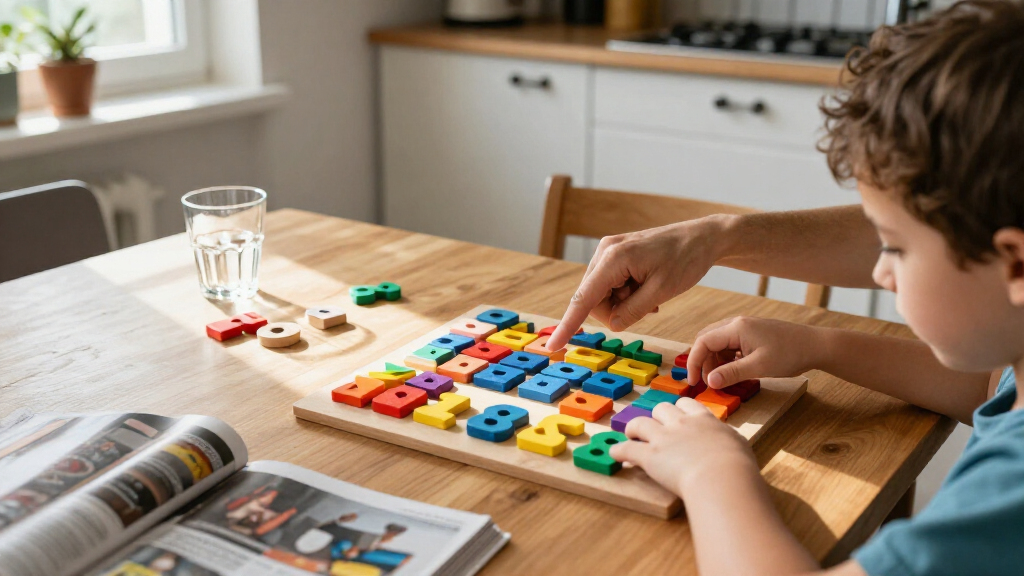
For a versatile starting point, I’d choose Kasfalci 160-Piece Math Puzzles, which spans time, money, numbers, and place value; Match It! Counting Puzzle is a simpler self-checking pick for early learners, while 300 Math Crossword Puzzles suits kids ready for paper-based practice. The main choice is between hands-on matching, reusable or written challenges, and electronic play, with age fit and adult involvement varying across formats. Younger children often benefit from large pieces and concrete number matching, while older kids may prefer riddles, crosswords, or broader skill practice. Each option trades breadth, portability, and tactile play differently. Read on for the full comparison and help matching a game to your child’s stage and interests.

Prime made for students and young adults
- Fast, free delivery for dorm and study essentials
- Prime Video and Amazon Music included
- Member-only deals
Key Takeaways
- The broadest skill coverage comes from Kasfalci’s 160-piece set, which includes time, money, numbers, and place value; most other picks focus on a narrower skill or age band.
- Self-correcting matching is a strong early-learning pattern: Match It! and the wooden number puzzles let children check pairings without relying on an adult for every answer.
- Not every “puzzle” is a hands-on game: the riddles, math books, and crossword collections offer more reading and written practice than manipulatives.
- Electronic and active-play formats change the learning experience: alilo adds portable audio-led play, while Mathswatters asks children to respond physically to number prompts.
- Age fit matters more than piece count: preschool matching sets and ages 8–12 challenge books serve different stages, so a larger set is not automatically a better match.
| Kasfalci Number Puzzle Flash Cards, 80-Piece Counting and Matching Game |  | Best for Number-Range Practice | Brand: Kasfalci | Puzzle cards: 20 | Puzzle pieces: 80 | VIEW LATEST PRICE | See Our Full Breakdown |
| Math Puzzles and Games for Kids Ages 8–12 |  | Best for Multiplication Practice | Format: Book | Age range: 8–12 years | Activities: Math puzzles, games, and multiplication practice | VIEW LATEST PRICE | See Our Full Breakdown |
| The Learning Journey Match It! Counting Puzzle, 30 Self-Correcting Puzzle Pairs |  | Best for Independent Beginners | Brand: The Learning Journey | Puzzle pieces: 60 pieces (30 pairs) | Recommended age: 3–6 years | VIEW LATEST PRICE | See Our Full Breakdown |
| Math Riddles for Smart Kids: Math Riddles and Brain Teasers for Kids and Families |  | Best for Family Brain Teasers | Format: Book | Series: Thinking Books for Kids | Content: Math riddles and brain teasers for kids and families | VIEW LATEST PRICE | See Our Full Breakdown |
| Melissa & Doug Self-Correcting Wooden Number Puzzles |  | Best Wooden Set for Repeated Play | Brand: Melissa & Doug | Material: Wood | Piece count: 40 | VIEW LATEST PRICE | See Our Full Breakdown |
| D-FantiX 30-Piece Self-Correcting Number Puzzles for Kids |  | Best for Early Number Practice | Puzzle format: 30 two-piece puzzles | Puzzle mix: 10 addition pairs, 10 subtraction pairs, and 10 number pairs | Card design: Double-sided with numbers, math problems, shapes, and animals | VIEW LATEST PRICE | See Our Full Breakdown |
| Math Blast! Cool Math Games for Kids 8-12 |  | Best for Group Game Play | Age range: 8–12 years | Players: 2–6 | Equation cards: 75: 20 addition, 20 subtraction, 20 multiplication, and 15 division | VIEW LATEST PRICE | See Our Full Breakdown |
| Edulok Math Puzzle Cards for Kids Ages 5–7 |  | Best for Focused Addition and Subtraction | Product type: Math puzzle cards | Recommended age: 5–7 years | Listed age range: 3 years and up | VIEW LATEST PRICE | See Our Full Breakdown |
| Kasfalci 160-Piece Math Puzzles for Kids: Time, Money, Numbers & Place Value |  | Best for Broad Topic Practice | Puzzle pieces: 160 | Puzzle cards: 80 double-sided cards | Learning activities: 160 | VIEW LATEST PRICE | See Our Full Breakdown |
| 300 Math Crossword Puzzles: Addition, Subtraction, Multiplication, and Division |  | Best for Independent Pencil-and-Paper Practice | Puzzle count: 300 | Math operations: Addition, subtraction, multiplication, and division | Format: Crossword-style puzzles | VIEW LATEST PRICE | See Our Full Breakdown |
| alilo Math Games for Kids, Portable Electronic Math Learning Toy |  | Best for Portable Solo Practice | Brand: alilo | Model: KS-1 | Age range: 36 months–10 years | VIEW LATEST PRICE | See Our Full Breakdown |
| Learning Resources Mathswatters Addition & Subtraction Game |  | Best for Active Group Practice | Brand: Learning Resources | Recommended age: 5–10 years | Players: 1–4 | VIEW LATEST PRICE | See Our Full Breakdown |
| Number Puzzles for Kids Ages 3-5 – Kindergarten Math Games & Manipulatives |  | Best for First Number Matching | Brand: Momo & Nashi | Age range: 3+ years (listed for ages 3–5) | Puzzle sets: 20 | VIEW LATEST PRICE | See Our Full Breakdown |
| 24-Piece Addition and Subtraction Puzzle Set for Preschoolers |  | Best for Early Arithmetic Puzzles | Brand: SpriteGru | Age range: 3 years and up | Puzzle count: 24 double-sided puzzles | VIEW LATEST PRICE | See Our Full Breakdown |
| math puzzle games for kid | Brand | Material |
|---|---|---|
| Kasfalci Number Puzzle Flash C | Kasfalci | Cardboard |
| Math Puzzles and Games for Kid | — | — |
| The Learning Journey Match It! | The Learning Journey | Cardboard |
| Math Riddles for Smart Kids: M | — | — |
| Melissa & Doug Self-Correcting | Melissa & Doug | Wood |
| D-FantiX 30-Piece Self-Correct | — | Paper/cardboard |
| Math Blast! Cool Math Games fo | — | Paper |
| Edulok Math Puzzle Cards for K | — | — |
| Kasfalci 160-Piece Math Puzzle | — | Cardstock |
| 300 Math Crossword Puzzles: Ad | — | — |
| alilo Math Games for Kids | alilo | — |
| Learning Resources Mathswatter | Learning Resources | — |
| Number Puzzles for Kids Ages 3 | Momo & Nashi | — |
| 24-Piece Addition and Subtract | SpriteGru | Thick cardboard |
More Details on Our Top Picks
Kasfalci Number Puzzle Flash Cards, 80-Piece Counting and Matching Game
For preschoolers ready to match numerals with quantities, Kasfalci’s 20 puzzles cover numbers 1–20, giving this set a wider number range than The Learning Journey Match It! Counting Puzzle, which focuses on counting pairs. Colorful illustrations turn number practice into a hands-on matching task, while the different piece counts add a small step-up in challenge: puzzles for 1–10 use six pieces, and those for 11–20 use two. That split may make the later numbers easier to assemble, but it also means the puzzles are not equally challenging across the set. The storage bag and light 0.34 kg weight suit travel or quick cleanup. Choose it for variety in number recognition; skip it if tiny loose pieces are likely to get lost or you want a game built for multiple players.
Pros:- Covers number recognition from 1 through 20
- Includes 20 puzzles and 80 pieces for repeated matching practice
- Illustrations connect counting with visual clues
- Storage bag makes the set easier to carry and put away
Cons:- Loose cardboard pieces can be misplaced
- Designed for one player rather than shared group play
- Puzzles for 11–20 use fewer pieces than those for 1–10, so challenge varies
Best for: Families with a child aged 3 or older who is practicing counting and recognizing numbers through 20, especially those wanting a portable solo activity.
Not ideal for: Households seeking a multiplayer math game or caregivers concerned about keeping track of many small cardboard pieces.
- Brand:Kasfalci
- Puzzle cards:20
- Puzzle pieces:80
- Number range:1–20
- Pieces per puzzle:6 for numbers 1–10; 2 for numbers 11–20
- Material:Cardboard
- Recommended age:3 years and up
- Players:1
- Included components:Jigsaw puzzle pieces and storage bag
Our verdict“Pick Kasfalci for portable, hands-on practice across numbers 1–20, but choose a sturdier or multiplayer option if loose pieces are a concern.”
Math Puzzles and Games for Kids Ages 8–12
Older children who have moved beyond picture-based counting may get more from Math Puzzles and Games for Kids Ages 8–12. The book combines puzzles and games with multiplication practice, making it a better fit for building arithmetic fluency than Melissa & Doug Self-Correcting Wooden Number Puzzles, which pairs numbers with familiar objects for younger learners. A book format can also suit quiet practice at home or in a bag, without loose pieces to sort. The product information does not specify how many activities it contains or how the difficulty progresses, so I would choose it for its stated age range and multiplication focus rather than assume a particular level of depth. It gives up the tactile matching of physical puzzle sets, and children who prefer hands-on play may stay more engaged with a piece-based option.
Pros:- Aimed specifically at children ages 8–12
- Combines math puzzles with games rather than focusing on a single activity type
- Includes multiplication practice
- Book format avoids losing or storing separate game pieces
Cons:- Does not offer the tactile, hands-on matching found in wooden or cardboard puzzle sets
- Activity count and difficulty progression are not specified
- May not suit children who prefer visual pieces to a book-based activity
Best for: Families with children aged 8–12 who want a book-based mix of math puzzles and multiplication activities for independent or shared practice.
Not ideal for: Younger children learning to count, or kids who engage best with physical pieces, colorful matching, and tactile play.
- Format:Book
- Age range:8–12 years
- Activities:Math puzzles, games, and multiplication practice
Our verdict“Choose this book for an older child who wants varied math puzzles with multiplication practice, not for a learner who needs hands-on counting pieces.”
The Learning Journey Match It! Counting Puzzle, 30 Self-Correcting Puzzle Pairs
For a young child just starting to connect a number with a counted group, 30 self-correcting pairs make this set especially approachable: only the matching pieces fit together, giving children a built-in way to check their work. Compared with Kasfalci Number Puzzle Flash Cards, which span numbers 1–20 and vary the piece count by puzzle, Match It! keeps the activity centered on simple counting and matching. Its thick cardboard pieces are described as suited to little hands, and the 3–6 age range makes it a natural first step before more involved arithmetic games. The tradeoff is a narrow learning scope: it focuses primarily on counting and number recognition, not multiplication or broader puzzle solving. Families wanting a longer progression may prefer a more varied activity.
Pros:- Self-correcting pairs let children check matches without constant adult help
- Thirty pairs provide repeated counting and number-recognition practice
- Thick cardboard is designed for small hands
- Encourages concentration and hand-eye coordination
Cons:- Learning focus is largely limited to counting and number recognition
- Cardboard pieces may be less durable than the wooden Melissa & Doug number puzzles
- Offers less number-range detail than Kasfalci’s set, which explicitly covers 1–20
Best for: Caregivers of children aged 3–6 who want a self-checking first counting puzzle for independent practice.
Not ideal for: Families seeking math practice beyond early counting and number recognition, such as multiplication or a broader range of puzzle types.
- Brand:The Learning Journey
- Puzzle pieces:60 pieces (30 pairs)
- Recommended age:3–6 years
- Material:Cardboard
- Model number:868942
- Manufacturer warranty:90 days against manufacturer defects
Our verdict“Choose Match It! as a simple, self-checking starting point for preschool counting, but move to a broader game once those matches feel easy.”
Math Riddles for Smart Kids: Math Riddles and Brain Teasers for Kids and Families
Math Riddles for Smart Kids takes a different route from physical matching games: it offers math riddles and brain teasers in a book for kids and families. That makes it a better choice for a child who enjoys reasoning through a question with an adult or sibling than Melissa & Doug Self-Correcting Wooden Number Puzzles, which support concrete number-to-picture matching. Being part of the Thinking Books for Kids series also gives it a clear brain-teaser identity rather than a preschool manipulative focus. The available details do not state an age range, subject breakdown, or puzzle count, so I would not choose it when a specific skill progression is needed. It also lacks the tactile feedback and self-checking pieces of the other options, leaving more room for an adult to help guide the activity.
Pros:- Centers on math riddles and brain teasers rather than routine matching
- Designed for kids and families to use together
- Book format is easy to store alongside other reading materials
- Part of the Thinking Books for Kids series
Cons:- Product details do not specify an age range
- Puzzle count and math topics are not listed
- No physical pieces or self-correcting mechanism for independent checking
Best for: Families looking for a book of math riddles to solve together with children who enjoy verbal puzzles and reasoning challenges.
Not ideal for: Buyers who need a stated age range, a defined math skill progression, or hands-on pieces for early number matching.
- Format:Book
- Series:Thinking Books for Kids
- Content:Math riddles and brain teasers for kids and families
Our verdict“Pick this book for family riddle-solving, but choose a self-correcting puzzle set when a child needs concrete counting practice.”
Melissa & Doug Self-Correcting Wooden Number Puzzles
When durability and independent matching matter more than a large assortment of activity types, Melissa & Doug’s wooden number puzzles are the strongest fit in this group. The 40 pieces pair numbers 1–20 with pictures of familiar objects, and the self-correcting design helps children spot a wrong match without waiting for an adult. Compared with The Learning Journey Match It! Counting Puzzle, this set uses wood rather than cardboard and includes a slide-in-lid storage box, making it a sturdier option for repeat use and tidier cleanup. It is still an early-number activity, not a route into multiplication or advanced puzzles. The age range starts at 4, so families with a younger beginner may find The Learning Journey’s 3–6 positioning a closer match.
Pros:- Wooden pieces are suited to repeated hands-on play
- Self-correcting matches support independent learning
- Pictures of familiar objects connect numerals with quantities
- Wooden box with slide-in lid keeps the pieces together
Cons:- Designed primarily for ages 4 and up, making it a less direct fit for younger beginners
- Focuses on number matching rather than broader math skills
- The set does not offer the variety of riddles and games found in book-based options
Best for: Families with children aged 4–7 who want a sturdy, self-checking number-matching set with contained storage.
Not ideal for: Caregivers shopping for a child under 4 or for learners ready for multiplication, riddles, or more advanced math challenges.
- Brand:Melissa & Doug
- Material:Wood
- Piece count:40
- Numbers:1–20
- Age range:4–7 years
- Included components:40 puzzle pieces and storage box
- Storage:Wooden box with slide-in lid
- Model number:MND2542
Our verdict“Choose Melissa & Doug for a sturdy, neatly stored number-matching set for ages 4–7, but look elsewhere for younger learners or broader math practice.”
D-FantiX 30-Piece Self-Correcting Number Puzzles for Kids
Three simple puzzle formats make this set a gentle entry point for children learning number recognition, addition, and subtraction. Its 30 two-piece puzzles pair an answer with a problem or number, while the double-sided animal and shape artwork gives young learners a visual cue to check their match. Compared with Edulok Math Puzzle Cards for Kids Ages 5–7, D-FantiX specifies separate number, addition, and subtraction pairs, making its practice mix easy to understand; Kasfalci’s 160-piece set covers broader topics such as time and money but asks children to manage many more pieces. The large cardboard pieces suit small hands and pack into a compact box for travel. The tradeoff is limited complexity: children ready for multi-step challenges may outgrow the two-piece format, and the set has no manufacturer warranty.
Pros:- Self-checking matches let children practice with less adult prompting.
- Includes separate number, addition, and subtraction pairs.
- Large pieces are designed for small hands.
- Compact package suits travel and classroom storage.
Cons:- Two-piece matching offers limited challenge as arithmetic skills grow.
- Cardboard pieces may wear with frequent handling.
- No manufacturer warranty is listed.
Best for: Caregivers and preschool or early-primary teachers seeking short, self-checking number and basic-operation activities for young children.
Not ideal for: Families whose children already solve more advanced arithmetic or want puzzles with multiple steps, varied difficulty, or a longer challenge.
- Puzzle format:30 two-piece puzzles
- Puzzle mix:10 addition pairs, 10 subtraction pairs, and 10 number pairs
- Card design:Double-sided with numbers, math problems, shapes, and animals
- Material:Paper/cardboard
- Recommended age:36 months to 8 years
- Package dimensions:About 6.3 x 3.5 x 3.5 inches
- Model number:AM-OP039
- Warranty:No warranty
Our verdict“Choose D-FantiX for portable, beginner-friendly matching practice, but pick Kasfalci if your child needs a wider range of math topics.”
Math Blast! Cool Math Games for Kids 8-12
For children who learn better through a lively contest than quiet matching, Math Blast! turns arithmetic practice into timed rounds for two to six players. Equation cards cover addition, subtraction, multiplication, and division, while challenge cards, dice, and a 30-second timer give turns a brisk pace. Compared with 300 Math Crossword Puzzles, which offers a large supply of solo written challenges, this game brings in partners and head-to-head modes; it also gives older children broader operations than D-FantiX’s early number pairs. That makes it a better fit for family game nights, homeschool groups, or classroom activities where interaction matters. The tradeoff is that quick rounds can reward speed over careful reasoning, and children who have mastered the included problems may find the challenge too easy. Paper components also need careful storage.
Pros:- Practices all four basic operations through play.
- Supports two to six players and several game modes.
- Timer and dice add structure and pace to rounds.
- Teacher-developed format suits family, homeschool, and classroom use.
Cons:- Fast timed play may favor speed over deliberate problem-solving.
- May be too easy for older children or adults.
- Paper cards and rules can be lost or damaged.
Best for: Families, homeschoolers, and teachers looking for a short, multiplayer arithmetic activity for children ages 8–12.
Not ideal for: Children who prefer calm, independent puzzles, need advanced difficulty, or are likely to lose small paper game components.
- Age range:8–12 years
- Players:2–6
- Equation cards:75: 20 addition, 20 subtraction, 20 multiplication, and 15 division
- Challenge cards:50
- Other components:30-second sand timer, 4 dice, and game rules
- Round timing:30 seconds per round
- Dimensions:1.9 x 4 x 4 inches
- Material:Paper
Our verdict“Pick Math Blast! when shared, timed arithmetic practice is the priority; choose 300 Math Crossword Puzzles for a quieter solo challenge.”
Edulok Math Puzzle Cards for Kids Ages 5–7
Edulok keeps the learning goal narrow: children match hands-on puzzle cards to practice basic addition and subtraction. The self-correcting format helps them spot a mismatch without waiting for an adult, while colorful illustrations and rounded corners make the cards approachable for young learners. Compared with D-FantiX’s 30-piece set, Edulok is framed specifically around the 5–7 age range and the two core operations, rather than also including number pairs; Kasfalci covers more subjects, including time and money, for children ready to move beyond arithmetic basics. An included storage bag supports tidier packing between home and classroom use. The main limitation is also its focus: there is no stated multiplication, division, or broader topic coverage, and the product details do not specify the number of cards, so buyers cannot judge the size of the activity set from the listed information.
Pros:- Self-correcting cards support independent practice.
- Hands-on matching reinforces basic addition and subtraction.
- Rounded corners suit frequent handling by young children.
- Storage bag helps keep the cards together at home or school.
Cons:- Activities focus only on addition and subtraction.
- The number of cards or puzzles is not specified in the product details.
- Children who have moved beyond basic arithmetic may find the set repetitive.
Best for: Parents and early-primary teachers seeking portable, self-checking addition and subtraction practice for children around ages 5–7.
Not ideal for: Buyers who want a clearly stated large activity count, varied math topics, or challenges beyond basic addition and subtraction.
- Product type:Math puzzle cards
- Recommended age:5–7 years
- Listed age range:3 years and up
- Activities:Addition and subtraction
- Included components:Math puzzle cards
- Packs:1
- Design:Vivid colors, rectangular cards, and rounded corners
- Model number:JJF-01
Our verdict“Choose Edulok for focused, portable addition and subtraction practice; choose Kasfalci for more topics and a stated activity count.”
Kasfalci 160-Piece Math Puzzles for Kids: Time, Money, Numbers & Place Value
Kasfalci offers the broadest subject mix among these hands-on card puzzles: 80 double-sided cards create 160 activities across time, money, numbers, and place value. Color-coded sides and uniquely cut, self-checking pieces help children work through matching tasks independently, while the variety gives families room to revisit different math concepts without switching products. Compared with D-FantiX, which concentrates on number recognition and basic addition and subtraction, Kasfalci is better suited to children ready to connect arithmetic with everyday topics. It also offers a wider curriculum than Edulok’s focused operation practice. The tradeoff is a more involved set to sort and handle: the product is designed for one player, and the listing advises separating pieces gently. Its breadth may also be less useful for a child who needs repeated practice in just one skill.
Pros:- Covers four foundational math themes.
- Double-sided cards provide 160 learning activities.
- Self-checking design supports independent matching.
- Can be used at home, in class, or while traveling.
Cons:- Designed for one player rather than group game play.
- The large number of pieces may take time to sort and organize.
- Pieces should be separated gently during handling.
Best for: Families and teachers who want one-player practice across number recognition, place value, time, and money.
Not ideal for: Children who need multiplayer game play, a single focused skill drill, or a compact set with fewer pieces to sort.
- Puzzle pieces:160
- Puzzle cards:80 double-sided cards
- Learning activities:160
- Themes:Time, money, numbers, and place value
- Players:1
- Recommended age:4 years and up
- Material:Cardstock
- Use:Indoor
Our verdict“Pick Kasfalci for varied, independent math practice; choose Math Blast! if your child needs an interactive group game.”
300 Math Crossword Puzzles: Addition, Subtraction, Multiplication, and Division
Three hundred crossword-style puzzles make this the longest-running option here for children who enjoy solving arithmetic on a page. The collection covers addition, subtraction, multiplication, and division, giving learners a chance to work across the four basic operations rather than match physical pieces. Compared with Math Blast!, this book-style format suits quiet solo practice instead of timed competition; unlike Kasfalci’s double-sided cards, it does not include self-checking pieces or hands-on matching. That makes it a better fit for children comfortable recording and checking answers on their own, and less suited to early learners who benefit from concrete visual prompts. The large puzzle count is appealing, but the supplied details do not state an age range, difficulty progression, answer key, or physical format beyond crossword-style puzzles, so parents have less guidance about fit.
Pros:- Includes 300 puzzles for extended practice.
- Covers addition, subtraction, multiplication, and division.
- Crossword-style format offers a change from standard worksheets.
- Intended for both kids and adults.
Cons:- No age range or difficulty progression is specified.
- The listed details do not confirm whether an answer key is included.
- Written puzzle format lacks hands-on or self-checking components.
Best for: Families seeking a large supply of solo arithmetic puzzles for children who can work comfortably with written problems.
Not ideal for: Young beginners who need manipulatives, self-checking feedback, multiplayer play, or a clearly described difficulty level.
- Puzzle count:300
- Math operations:Addition, subtraction, multiplication, and division
- Format:Crossword-style puzzles
- Intended audience:Kids and adults
- ASIN:B0CSRQMRXH
- Physical format details:Not specified in the supplied product information
Our verdict“Choose this collection for extensive solo written practice, but favor Kasfalci or D-FantiX for tactile, self-checking puzzles.”
alilo Math Games for Kids, Portable Electronic Math Learning Toy
For kids who want to practice math without laying out cards or puzzle pieces, the alilo Math Games packs 19 activities and up to 50,000 questions into a device about 2.9 inches across. Its mix of arithmetic and logic games, timed challenges, voice feedback, and mistake review gives children several ways to revisit skills; star rewards can make short practice sessions feel more like play. Compared with the group-based Mathswatters, this is a better fit for independent use and travel, but it lacks the shared, physical action of swatting answers with other players. The device covers addition, subtraction, multiplication, and division, giving it a wider operation range than the preschool puzzle sets here. The tradeoffs are its one-player format and screen-like electronic play, which may not suit families seeking hands-on, shared puzzles.
Pros:- Offers 19 games and a large pool of questions across four arithmetic operations.
- Voice feedback and mistake review can help children identify skills to revisit.
- Portable size, lanyard, adjustable volume, and silent mode suit travel and quieter settings.
- Timed challenges and star rewards add variety to solo practice.
Cons:- Designed for one player, so it does not create a shared family or classroom game.
- Electronic play may be a poor match for families prioritizing screen-free manipulatives.
- Age guidance is not fully consistent across the product details.
Best for: Families seeking compact, independent arithmetic practice for a child who can use a small electronic toy and benefits from feedback and repeat questions.
Not ideal for: Parents looking for a cooperative tabletop game, screen-free practice, or a toy that supports multiple children at once.
- Brand:alilo
- Model:KS-1
- Age range:36 months–10 years
- Number of games:19
- Math operations:Addition, subtraction, multiplication, and division
- Math questions:Up to 50,000
- Modes:5
- Players:1
- Size:2.9 inches
Our verdict“Choose the alilo for portable, feedback-rich solo practice across several math operations, not for hands-on group play.”
Learning Resources Mathswatters Addition & Subtraction Game
Mathswatters turns answer finding into a quick physical contest: children listen or look for a sum or difference, then swat the matching bug card. With four swatters, 90 double-sided cards, dice, and a spinner, it can support solo play or a small group, making it a more social choice than the one-player alilo Math Games. The varied components also let an adult adjust how children practice, which is useful when players are at different stages. Its focus is deliberately narrower, though: it covers addition and subtraction rather than the multiplication and division available on alilo. The action may help restless learners stay engaged, but fast play can shift attention toward speed instead of careful calculation. Cardboard cards also need gentler handling than the plastic swatters, particularly in busy classrooms.
Pros:- Physical swatters make answer selection active rather than purely worksheet-like.
- Supports one to four players, unlike the single-player alilo device.
- Cards, dice, an operations die, and a spinner provide multiple play styles.
- Suitable for home, homeschool, and classroom practice.
Cons:- Practices addition and subtraction only, with no multiplication or division.
- Fast-paced play may reward quick reactions more than deliberate problem-solving.
- Double-sided cardboard cards may wear with frequent or rough use.
Best for: Parents and teachers who want an active addition-and-subtraction game for one to four children, with components for changing the way each round is played.
Not ideal for: Families seeking broad arithmetic coverage, quiet independent practice, or a game whose cards can withstand rough handling without care.
- Brand:Learning Resources
- Recommended age:5–10 years
- Players:1–4
- Math focus:Addition and subtraction
- Bug cards:90 double-sided
- Swatters:4 plastic
- Other components:2 number dice, 1 operations die, and 1 spinner
- Materials:Plastic and cardboard
Our verdict“Pick Mathswatters for lively shared practice of addition and subtraction, but choose a broader or quieter option for other needs.”
Number Puzzles for Kids Ages 3-5 – Kindergarten Math Games & Manipulatives
For a young child just connecting written numerals with quantities, Momo & Nashi Number Puzzles keep the task visual and hands-on: 20 self-correcting puzzles pair numerals with colorful images and words. Matching interlocking pieces gives early learners a simple way to check whether a number belongs with its representation, while handling the pieces also brings fine-motor practice into play. Compared with the 24-puzzle SpriteGru Addition and Subtraction Set, this set stays at number recognition rather than moving into arithmetic problems, so it is a gentler starting point but offers less progression for a child ready to add and subtract. Thick cardstock and a portable format suit home, classroom, or travel use. The main limitation is repetition: 20 puzzle variations may lose appeal once a child has mastered the matches, and small pieces call for supervision with very young children.
Pros:- Self-correcting matches connect numerals with pictures and words.
- Screen-free puzzle play combines early number recognition with fine-motor practice.
- Twenty sets offer more matching variety than a single puzzle activity.
- Thick cardstock and portable pieces suit home, classroom, and travel use.
Cons:- Focuses on number recognition rather than arithmetic practice.
- The 20 puzzle variations may become repetitive after children learn the matches.
- Small pieces may require supervision for the youngest users.
Best for: Caregivers and early-years educators introducing numeral recognition through screen-free matching for children around preschool age.
Not ideal for: Families whose child already solves basic addition and subtraction, or caregivers who need a set with large pieces for unsupervised toddler play.
- Brand:Momo & Nashi
- Age range:3+ years (listed for ages 3–5)
- Puzzle sets:20
- Puzzle style:Self-correcting counting puzzles
- Components:Cards with oversized interlocking puzzle pieces
- Card thickness:2.5 mm cardstock
- Theme:Number and color
- Shape:Rectangular
Our verdict“Choose this set for a screen-free first step in number matching, but move to SpriteGru or another arithmetic game when a child is ready for sums.”
24-Piece Addition and Subtraction Puzzle Set for Preschoolers
SpriteGru’s 24-Piece Set bridges counting and basic arithmetic with 48 problems split evenly between addition and subtraction. Its double-sided, color-coded puzzles make the operation types easy to distinguish, while self-correcting pieces let children check matches without needing an adult to confirm every answer. That makes it a more arithmetic-focused step than Momo & Nashi Number Puzzles, which centers on matching numerals to images and words; SpriteGru is the stronger fit once a child is ready to work with sums and differences. The pieces are larger than a flashcard-style prompt, turning each problem into a hands-on assembly task. The set remains limited to basic operations, however, and it does not offer the varied rounds or multiplayer action of Mathswatters. Small pieces can also go missing, making storage part of the routine.
Pros:- Provides 24 addition and 24 subtraction problems across the set.
- Self-correcting design supports independent practice.
- Color-coded sides help children distinguish addition from subtraction.
- Puzzle assembly makes arithmetic practice tactile rather than purely verbal.
Cons:- Limited to basic addition and subtraction, without broader operations or advanced challenges.
- Small puzzle pieces can be lost between sessions.
- Cardboard construction requires care to keep the pieces in good condition.
Best for: Families and preschool educators who want self-checking, hands-on addition and subtraction practice for children beginning basic arithmetic.
Not ideal for: Children who need number recognition before sums, learners ready for multiplication or division, or households that prefer games with multiplayer competition.
- Brand:SpriteGru
- Age range:3 years and up
- Puzzle count:24 double-sided puzzles
- Math problems:48 total: 24 addition and 24 subtraction
- Material:Thick cardboard
- Puzzle type:Jigsaw
- Educational objectives:Logical thinking and problem-solving
- Dimensions:8.66 × 6.3 inches
Our verdict“Choose SpriteGru for hands-on early sums and differences, while Momo & Nashi is a better starting point for numeral recognition alone.”
How We Picked
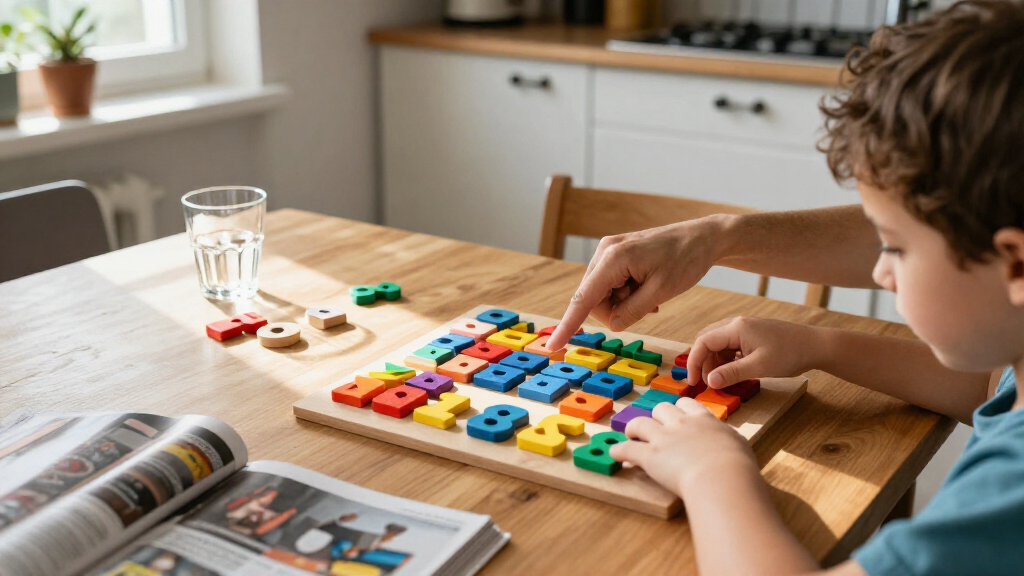
I compared the 14 options by the kind of math practice they provide, the ages and skill stages their formats appear suited to, and how easily a child can use them with or without adult help. I also looked at whether each product supports tactile matching, independent answer checking, repeated practice, portability, or a mix of math topics. These factors matter because a game that holds a preschooler’s attention may not stretch an older child, while a wide-ranging set can be less useful if its tasks are too difficult to use independently.
The ranking favors useful learning coverage, age-appropriate play, and a clear reason to choose the format, rather than treating all 14 products as interchangeable. Broad skill sets and flexible play rank higher for families seeking one adaptable option; focused matching sets earn their place for beginners, and books or electronic toys rank for buyers who specifically want those formats. Each pick has a tradeoff, including narrower subject coverage, a greater need for reading or adult support, or less tactile play.
| math puzzle games for kid | Material |
|---|---|
| Kasfalci Number Puzzle Flash C | Cardboard |
| Math Puzzles and Games for Kid | — |
| The Learning Journey Match It! | Cardboard |
| Math Riddles for Smart Kids: M | — |
| Melissa & Doug Self-Correcting | Wood |
| D-FantiX 30-Piece Self-Correct | Paper/cardboard |
| Math Blast! Cool Math Games fo | Paper |
| Edulok Math Puzzle Cards for K | — |
| Kasfalci 160-Piece Math Puzzle | Cardstock |
| 300 Math Crossword Puzzles: Ad | — |
| alilo Math Games for Kids | — |
| Learning Resources Mathswatter | — |
| Number Puzzles for Kids Ages 3 | — |
| 24-Piece Addition and Subtract | Thick cardboard |
Factors to Consider When Choosing Math Puzzle Games For Kids
Before choosing among math puzzle games for kids, I’d start with how your child likes to solve problems and what kind of practice will fit into your routine. These broader factors can prevent a common mismatch: buying a game that looks educational but asks for more reading, patience, or adult help than the child is ready to give.
Match the challenge to the child, not just the age label
Age guidance is a starting point, but a child’s comfort with counting, reading, and following directions can matter just as much. A preschooler who can count objects may still find written riddles frustrating, while an older child may enjoy them even if the topic sounds basic. Check whether the activity asks children to recognize numerals, add mentally, read clues, or write answers. When skills are mixed, choose a game with several entry points rather than one that depends on a single advanced ability. A useful challenge should prompt thought without making every turn feel like a test. If you are unsure, start with the simpler format and add harder prompts as confidence grows.
Choose the kind of practice your child will repeat
Hands-on puzzles suit children who learn by moving, sorting, and matching pieces, while books and cards may appeal to kids who like short written challenges. Electronic play can help when portability or self-directed interaction matters, but it may offer a different experience from physically arranging numbers. Think about where the game will be used: at a table, on a trip, or in a shared family activity. A format that fits the routine is more likely to be played again than one that requires special setup. Avoid choosing only by the word “game”; some options function more like workbooks or solo brain teasers. Match the format to your child’s preferred way to engage, not an imagined ideal of learning.
Decide how much adult support is realistic
Some activities make it easy for a child to check an answer independently, while riddles and open-ended problems may call for hints or discussion. That difference can shape whether a game works during quiet solo time or is better for a parent-child session. Self-checking pieces reduce the need to confirm every match, though they do not replace conversation about why an answer fits. Books with written prompts may need an adult nearby if reading is still developing. Before buying, ask whether you want a shared activity or something a child can pick up alone. Neither approach is automatically better; the right choice depends on the time and attention your household can give.
Look for skill progression, not just a high piece count
A large collection can cover more topics, but quantity alone does not show whether challenges build in a useful order. Check whether the game moves from simple recognition toward more demanding operations, or whether it offers separate activities for different skills. A focused set may be a better fit when a child needs practice with one specific concept. Broader coverage is more useful when you want variety or expect interests to change over time. One common mistake is buying a multi-topic set before a child is ready for its harder sections. Choose breadth when variety is the goal and focus when a particular skill needs attention.
Weigh durability, storage, and setup against play style
Wooden and chunky puzzle pieces can suit repeated hands-on play, but sets with many pieces need a reliable place to keep them together. Cards and books are easier to store, though they may depend more on careful handling and a clear surface. Electronic toys reduce loose-piece management but introduce batteries or device-like operation as part of the experience. Consider whether cleanup will be manageable for the child who is expected to use the game. A product that is awkward to set up may get less play even if its activities are appealing. The best practical choice is the one your family can bring out, use, and put away without turning play into a chore.
Choose a learning goal before adding difficulty
Decide whether the immediate goal is counting confidence, basic operations, time and money familiarity, or more flexible problem-solving. Different goals call for different kinds of challenge, and an entertaining puzzle is not automatically practice in the skill your child needs. Avoid moving to harder arithmetic simply because a child has mastered matching numerals; the next useful step may be understanding quantities or explaining a strategy. If a child already knows the answers, look for tasks that require combining skills or spotting patterns. If the activity causes repeated frustration, simplify the challenge or play together before replacing it. Clear goals help you choose a meaningful next step rather than buying several games that all practice the same thing.
Frequently Asked Questions
Which type of math puzzle game is best for a child who is just learning numbers?
I’d start with a tactile matching or self-correcting puzzle rather than a book of riddles or crosswords. Matching lets a child connect a numeral with a quantity or a related piece, keeping the task concrete. Choose pieces that are easy to handle and prompts that do not depend on confident reading. If your child already recognizes numerals, a counting game can still help link number names to amounts. Save more abstract challenges for when basic number relationships feel familiar.
Should I choose a broad multi-skill set or a game focused on one math topic?
A broad set makes sense when your child enjoys variety or you want activities across several math topics in one collection. A focused game is often a better choice when your child needs practice with a particular skill and can benefit from repetition. Broad coverage can include tasks that are not yet a good fit, so check the difficulty range rather than assuming every piece will be usable now. Focused practice can feel repetitive if the child has already mastered the topic. Let the current learning goal, not the apparent amount of content, guide the choice.
Are math puzzle books a good alternative to hands-on games?
They can be, especially for children who enjoy reading clues, writing answers, and solving problems without pieces to arrange. Books are usually easier to store and can provide many rounds of practice, but they may demand more reading fluency and sustained attention. Hands-on games are often a better entry point for younger learners or children who benefit from concrete objects. A book can also work well as a supplement once a child is comfortable with the relevant math skills. Check the sample problem style and age guidance before choosing one as the main activity.
Will a self-correcting puzzle teach my child without adult help?
Self-correcting pieces can let a child notice a mismatch and try again without waiting for an adult to confirm every answer. That supports independent play, but it does not always explain why a match is correct or how to solve a harder problem. Younger children may still need help understanding directions or naming what they see. If your goal includes discussion and reasoning, plan to join for at least some play sessions. If independent practice matters most, look for a format with clear prompts and a built-in way to check answers.
What should I choose for car rides or other travel?
Portable cards, books, or a compact electronic option are generally easier to manage away from a table than sets with many loose pieces. Think about whether the child needs a flat surface, a writing tool, or room to spread out materials. A large puzzle collection may offer more variety but can be harder to keep organized on the move. Electronic play avoids loose pieces, though it may not suit families who prefer screen-free or battery-free activities. For travel, easy setup and pack-away can matter more than the number of skills included.
Conclusion
For most families seeking one adaptable choice, I’d pick Kasfalci 160-Piece Math Puzzles as the best overall for its range of topics. For best value in focused early practice, consider The Learning Journey Match It! Counting Puzzle, especially if self-checking pairs suit your child’s stage. The roundup’s best premium-style tactile option is Melissa & Doug Self-Correcting Wooden Number Puzzles for buyers who want a wooden format, while Number Puzzles for Kids Ages 3–5 is my best for beginners pick for preschool-focused play. For specific needs, choose 300 Math Crossword Puzzles for paper-based practice, alilo Math Games for portable electronic play, or Learning Resources Mathswatters for a more active game. If your child is still learning basic number recognition, start with matching pieces; if they already enjoy written challenges, move toward riddles or crosswords.