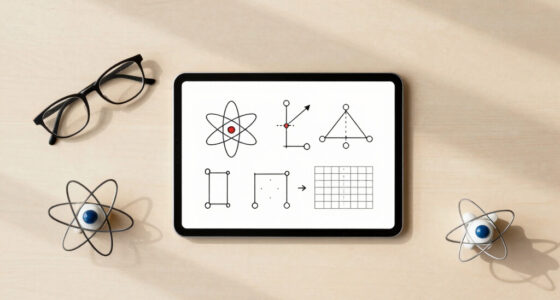

Create a science-themed Halloween costume that clearly represents a scientist, scientific concept, or famous discovery. This guide is for beginners, families, and anyone putting together a costume at home; it covers choosing a concept, gathering materials, building the main visual elements, and checking fit and safety. Most costumes take 1-3 hours, depending on the design and how much you make from scratch.

Prime made for students and young adults
- Fast, free delivery for dorm and study essentials
- Prime Video and Amazon Music included
- Member-only deals
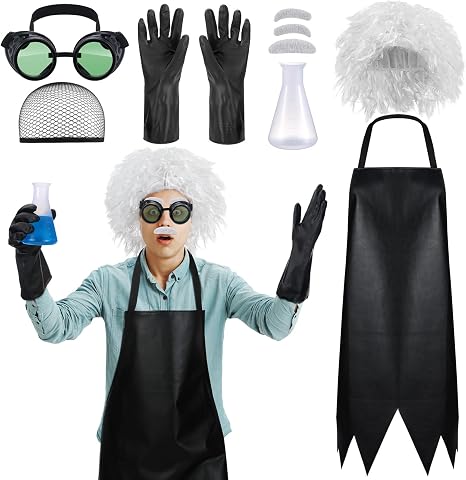
Jiuguva 8-Piece Mad Scientist Costume Set
- ✔ Set contents: 8 costume accessories
- ✔ Included look pieces: White wig, green goggles, fake mustache and eyebrows, black gloves, black apron, cone flask
- ✔ Fabric: 90% polyester, 10% polyurethane coating

Mepase 5-Piece Halloween Professor Costume Set
- ✔ Included items: 1 white lab coat, 1 black necktie, 1 plastic pipe, 2 black pens
- ✔ Material: Polyester-cotton
- ✔ Size: XL
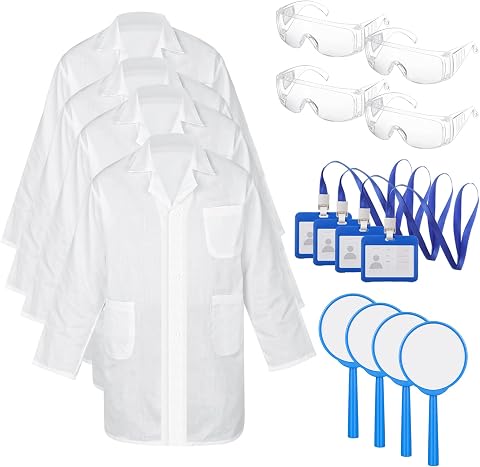
Tarpop Kids Lab Coat Costume Kit with Goggles, ID Holders, and Magnifiers
- ✔ Total pieces: 16
- ✔ Package contents: 4 lab coats, 4 pairs of goggles, 4 ID card holders, 4 magnifiers
- ✔ Fabric: Polyester
Difficulty: Beginner | Time: 1-3 hours
What You’ll Need
Tools & Materials:
- Comfortable base clothing, such as a shirt, pants, or dress
- Cardboard, poster board, or craft foam
- Scissors
- Markers or paint
- Tape or glue suitable for the materials
- Optional accessories such as safety goggles, a lab coat, a headband, or a flashlight
Knowledge:
- Basic cutting and simple assembly
- Ability to check costume fit and safe movement
Choose washable or inexpensive base clothing, and check any event rules before using props, masks, lights, or makeup. Keep sharp tools, hot glue, chemicals, and small loose parts away from children unless an adult supervises. Use craft materials rather than real laboratory substances or equipment.
Jiuguva 8-Piece Mad Scientist Costume Set
For the most recognizable Halloween character in this lineup, we’d start with the Jiuguva 8-Piece Mad Scientist Costume Set. The white wig, green goggles, fake mustache and eyebrows do the work of establishing the persona before the wearer adds a lab coat or their own clothing. The black gloves, PU leather apron, and cone flask fill out the costume so it feels more like a deliberate character than a basic scientist outfit.Compared with Mepase, Jiuguva is more eccentric and Halloween-forward; Mepase’s white coat and tie read more like a professor or career-day scientist. Compared with Tarpop, Jiuguva is designed around one dramatic character rather than four children sharing a play kit. That focus makes it the best overall pick for an individual who wants an easy transformation without assembling several separate costume pieces.There are practical compromises. The apron’s PU leather needs dry cleaning, even though the other costume fabric is listed as machine washable, so this isn’t the easiest kit to clean as one load. The accessories are also designed for dress-up rather than everyday wear. We’d skip it if a washable, size-specific garment is the priority, or if the wearer prefers a restrained lab-coat look.
Pros:
- Wig, goggles, facial-hair pieces, gloves, apron, and flask create a coordinated character
- More visually theatrical than the lab-coat-centered Mepase set
- Works for Halloween, cosplay, parties, performances, and science-themed events
Cons:
- PU leather apron requires dry cleaning
- Costume accessories are not intended for everyday wear
- Supplied details do not specify garment sizing or fit
Best for: One person who wants a bold, instantly legible mad scientist costume for Halloween, cosplay, a party, or a performance.
Not ideal for: Buyers seeking a fully machine-washable outfit, a conventional professor look, or durable everyday clothing.
Bottom line: We rank Jiuguva first for Halloween because its coordinated accessories deliver the strongest mad-scientist character, though the apron takes extra care.
“We rank Jiuguva first for Halloween because its coordinated accessories deliver the strongest mad-scientist character, though the apron takes extra care.”
Mepase 5-Piece Halloween Professor Costume Set
The Mepase 5-Piece Halloween Professor Costume Set is the most conventional option here: a long-sleeved white lab coat, black necktie, plastic pipe, and two pens. Rather than building a wild character like Jiuguva, it suggests a professor, lecturer, or scientist who has stepped out of a classroom or laboratory. That makes it a natural fit for career day and performances as well as Halloween.The main practical advantage is the machine-washable polyester-cotton coat. Against Jiuguva, it avoids a specialty-cleaning requirement for an apron, and the coat gives the wearer a recognizable base layer. But this is still a five-piece costume set, not a detailed scientist kit: it does not supply Jiuguva’s wig, goggles, or flask, nor Tarpop’s child-focused group accessories. The plastic pipe is a character prop, not a substitute for more science-specific accessories.Its biggest limitation is straightforward: the coat is listed only in XL, with no additional sizing information in the supplied details. We would verify that this size works before choosing it, especially when fit matters for a child or a particular costume silhouette. Skip Mepase if the wearer wants a flamboyant mad scientist, needs a different coat size, or is dressing multiple children.
Pros:
- Long-sleeved lab coat gives the costume a clear professor or scientist foundation
- Machine-washable polyester-cotton coat is simpler to care for than Jiuguva’s PU leather apron
- Tie, pipe, and pens add recognizable character details
- Suitable for Halloween, career day, theme parties, carnivals, and performances
Cons:
- Coat is listed only in XL
- Plastic pipe is a costume prop
- Less visually distinctive than Jiuguva’s wig-and-goggles character kit
Best for: A wearer who wants a simple professor or scientist costume with a washable coat and can use the listed XL size.
Not ideal for: Anyone needing a range of coat sizes, a child-sized option, a group kit, or the more theatrical accessories supplied by Jiuguva.
Bottom line: We recommend Mepase for a washable, traditional professor look, provided the listed XL coat is an appropriate fit.
“We recommend Mepase for a washable, traditional professor look, provided the listed XL coat is an appropriate fit.”
Tarpop Kids Lab Coat Costume Kit with Goggles, ID Holders, and Magnifiers
When one Halloween costume needs to cover several children, the Tarpop Kids Lab Coat Costume Kit is the clear group pick. Its 16 pieces are divided into four lab coats, four pairs of goggles, four ID holders, and four magnifiers, giving four children matching role-play sets rather than asking families to assemble each look separately. The pieces also support scientist, doctor, veterinarian, laboratory technician, dentist, and chemist pretend-play.That versatility distinguishes Tarpop from the two single-character adult-oriented options. Jiuguva is more dramatic for one mad scientist, while Mepase creates a more polished professor look for one wearer. Tarpop is less of a finished Halloween character: it offers the basic lab-coat-and-accessories foundation, not the distinctive wig, apron, tie, or character props that define the other kits. Its strength is coordinated play across a group, not theatrical detail.The coats can be machine washed in cold water and line dried, useful for repeated dress-up, but the listing does not provide specific sizing details. We would not assume the coats fit every child without checking available sizing information. Also, although the goggles are described as providing protection, no safety certification is stated; treat them as costume accessories, not protective equipment. Choose another option if one child needs a highly specific size or the Halloween brief calls for a more dramatic, individually styled costume.
Pros:
- Four lab coats and four matching accessory sets support coordinated group costumes
- Includes goggles, ID holders, and magnifiers for interactive pretend-play
- Supports several science and healthcare role-play themes
- Coats are machine washable in cold water
Cons:
- Specific coat sizing details are not provided in the supplied description
- Goggles have no stated safety certification
- Less Halloween-character detail than Jiuguva and less professor styling than Mepase
Best for: Families, classrooms, or groups dressing four children for science-themed Halloween activities, school performances, or pretend play.
Not ideal for: A single wearer seeking a standout character costume, buyers needing confirmed sizing details, or anyone looking for certified protective eyewear.
Bottom line: We’d pick Tarpop for four children who need coordinated, reusable role-play outfits, not for a single wearer seeking the most distinctive Halloween look.
“We’d pick Tarpop for four children who need coordinated, reusable role-play outfits, not for a single wearer seeking the most distinctive Halloween look.”
As an Amazon Associate we earn from qualifying purchases.
Before You Start
Decide where the costume will be worn. A school parade, indoor party, and outdoor trick-or-treat route may have different rules for props, visibility, and weather. Plan to see clearly, walk freely, and use the restroom without removing complicated pieces. If making a costume for a child, let them help choose the concept and test the finished outfit before the event.
Pick one recognizable idea rather than combining several unrelated science themes. Strong options include a scientist in a lab coat, an astronaut, a planet, a DNA strand, a robot, a molecule, or a famous scientist. You can make the idea readable with one large visual feature and a simple label.
Step-by-Step Instructions
Step 1: Choose one science concept
Select a subject you can show with clothing or a simple prop. For a quick costume, wear a white shirt or lab coat with goggles and a name badge reading “Scientist.” For a larger visual design, make a planet, DNA strand, atom, or robot the main feature. Write down the concept in a few words before shopping or crafting.
Think about the wearer’s age, comfort, mobility, and interests. An astronaut costume can use regular clothes and a cardboard control panel; a molecule can use lightweight balls attached to a shirt. Choose a design that can be recognized without a long explanation.
Tip: Use a familiar symbol or clear label if the idea might otherwise be hard to identify. A colored ringed planet is easier to recognize than an unlabeled sphere.
Check: Someone who sees the concept name and main visual feature can tell what the costume represents.
Step 2: Set a budget and make a materials list
List what you already own, then note only the missing items. A basic scientist look may need a shirt, a paper name badge, and toy goggles. A planet costume may need a cardboard circle, paint or markers, and a way to attach it to clothing. Set a spending limit before buying accessories.
Choose lightweight, non-toxic craft supplies and soft or blunt-edged props. Use clothing and reusable household materials where possible. Avoid buying a full set of specialized accessories before checking whether the costume works with items you have.
Tip: If you are making a wearable sign or panel, test the size against the wearer before decorating it. Oversized pieces can block vision or catch on doorways.
Check: Your list includes every item needed to wear and secure the costume, and the materials fit your budget and event rules.
Step 3: Prepare the base outfit
Put on the clothing that will form the base. A lab coat or button-up shirt works for a scientist; dark clothing can make a space-themed costume stand out; a plain shirt provides a good surface for a molecule or atom design. Check that the clothing fits comfortably over the layers the wearer expects to use.
Attach a paper or fabric name badge if it helps identify the character. For a famous scientist, include the person’s name and one small related symbol rather than relying on an elaborate imitation. Keep the outfit comfortable enough to sit, bend, and walk in.
Tip: Avoid using a real medical or laboratory uniform in a way that could mislead people about professional credentials. A simple costume coat and clearly playful badge make the theme clear.
Check: The base outfit is comfortable, appropriate for the venue, and already gives a clue to the chosen theme.
Step 4: Make the main visual element
Create one focal feature that makes the science idea recognizable. For a planet, cut a large circle from cardboard, color it, and add a ring or surface markings. For DNA, arrange colored paper strips or soft craft shapes into a twisted ladder pattern on a shirt. For a robot, make a flat control panel from cardboard and add large, simple buttons.
For an atom or molecule, use flat, lightweight shapes attached securely to clothing rather than hard objects projecting outward. Write the concept name on a sign or badge if the design needs clarification. Let paint and glue dry fully before putting the costume on.
Tip: Do not attach anything that covers the eyes, nose, or mouth, or that makes the wearer’s outline too wide for safe walking. Keep decorations away from shoes and moving joints.
Check: The main feature is visible from a few steps away, firmly attached, and does not restrict breathing, sight, or movement.
Step 5: Add accessories and secure loose parts
Add only accessories that support the concept, such as plastic goggles, a cardboard telescope, a paper rocket badge, or a small flashlight. Check that each item is comfortable and allowed at the event. Attach loose decorations with suitable tape, thread, or hook-and-loop fasteners; do not use pins where they may poke the wearer.
Keep props small enough to carry easily. Avoid glass, real tools, dry ice, open flames, lasers, and containers that look like hazardous chemicals. If the costume includes a light, use a battery-powered light with the battery secured in its proper compartment.
Tip: For costumes worn outdoors after dark, add reflective tape to the clothing or a bag without covering important costume details.
Check: Accessories stay in place when the wearer walks and turns, and no sharp, hot, or hazardous item is part of the costume.
Step 6: Test the complete costume
Have the wearer put on every costume layer and accessory. Ask them to walk, sit, turn their head, raise their arms, and reach into any pockets they will use. Check that the costume does not drag, snag, block peripheral vision, or make it hard to hear instructions.
Inspect all attachments and remove anything that feels heavy, scratchy, or unstable. If the costume will be worn outdoors, test it with the coat or warm layer the wearer plans to use. Make a small repair kit with spare tape or fasteners for the event.
Tip: Do not wait until the event to discover that a cardboard prop prevents the wearer from sitting in a car or passing through a doorway.
Check: The wearer can move comfortably, see clearly, and keep all costume pieces attached during a short walk and movement test.
Common Mistakes to Avoid
- Finishing the costume without testing its fit over outdoor layers. — Try on the full outfit, including a coat or warm layer, and check the fit before Halloween.
Troubleshooting
Problem: Paint or glue is still wet near the event.
Solution: Set the piece on a protected, ventilated surface and allow it to dry according to the product directions. If time is short, switch to markers, paper, or tape rather than wearing a wet or tacky costume.
What Success Looks Like
The completed costume has one recognizable science theme, a clear focal feature, and accessories that stay secure. The wearer can see, breathe, walk, sit, and move comfortably in the full outfit. The costume follows the event’s rules and uses no hazardous materials or props.
Next Steps
Pack the costume with any spare tape, fasteners, and accessories, then store it in a clean, dry place after the event. Remove batteries from lights before long-term storage and separate reusable pieces from paper or cardboard parts. Repair or label reusable accessories so they are ready for a future costume, classroom activity, or science-themed event.
Frequently Asked Questions
What is the easiest science-themed Halloween costume to make?
A scientist costume is usually the quickest: wear a white shirt or coat, add safe toy goggles and a name badge, and carry a lightweight paper notebook. Keep the props clearly artificial and comfortable.
How can I make a science costume without buying a lab coat?
Use a white button-up shirt, a plain top with a science label, or regular clothing decorated with a simple molecule, planet, or DNA design. The concept can be clear without a coat if you add a recognizable symbol.
How do I make the costume work in cold weather?
Plan the design around warm layers. Try on the complete costume over the jacket or sweater the wearer will use, and attach decorations to the outer layer when possible so they remain visible.
Can I use real safety goggles or lab equipment?
Use goggles only if they fit comfortably and do not limit vision. Do not use glassware, chemicals, sharp instruments, or other real laboratory equipment as costume props; choose lightweight craft substitutes instead.