
TL;DR

Prime made for students and young adults
- Fast, free delivery for dorm and study essentials
- Prime Video and Amazon Music included
- Member-only deals
Science experiment kits for kids offer a hands-on way to learn core scientific concepts safely. With options ranging from simple chemistry sets to advanced STEM projects, they spark curiosity and make learning fun. Choosing the right kit depends on age, interests, and safety considerations.
Imagine your child opening a box filled with colorful chemicals, tiny gadgets, or mysterious biological specimens. The thrill of discovery, the smell of new materials, and the satisfying click of a well-designed experiment—these kits turn learning into a tangible experience. But not all kits are created equal. Some are safe, engaging, and educational; others fall flat or pose safety risks.
In this article, you’ll learn how to pick the perfect science experiment kit for your child’s age and curiosity. Plus, discover what recent innovations are shaping this booming market—making science more fun, safe, and relevant than ever before.
Choose age-appropriate kits with clear safety features to ensure safe, engaging learning.
Latest kits integrate AR, eco-friendly materials, and current themes like climate change to stay relevant and exciting.
Look for reusable components, detailed instructions, and engaging visuals to maximize educational value.
Make science part of daily life with small experiments, encouraging questions and documentation.
Selecting the right kit can turn a child’s curiosity into a lifelong love of science and discovery.
Why Science Experiment Kits Are the Best Way to Teach Kids Science
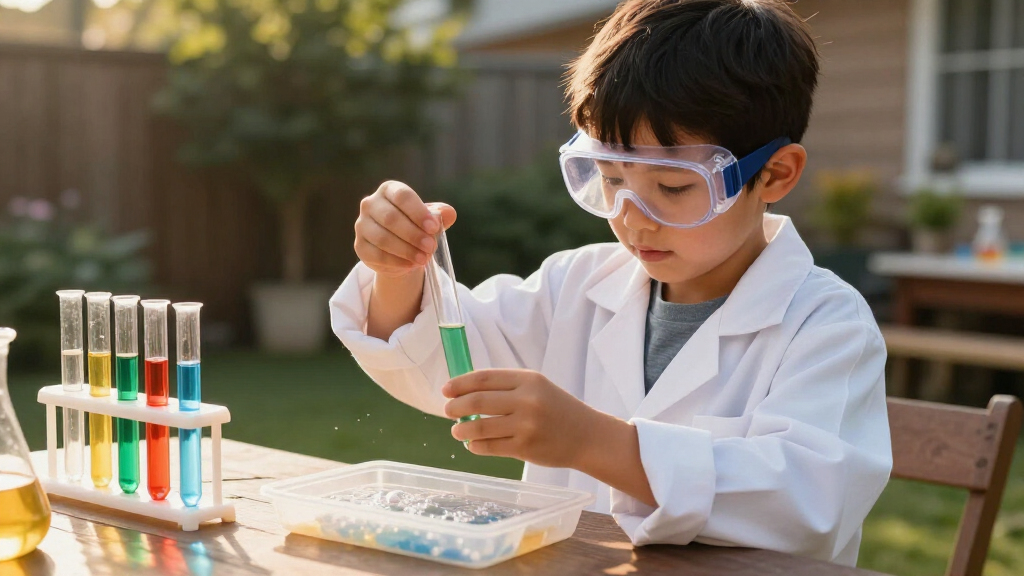
Science experiment kits transform abstract concepts into hands-on adventures. Instead of just reading about chemical reactions or biological processes, kids get to see, touch, and even smell science come alive. For example, a chemistry set might include colorful acids and bases that fizz and bubble, making reactions vivid and memorable.
Research shows that kids who engage with science through experiments develop critical thinking and problem-solving skills faster. They learn to ask questions, test hypotheses, and see failure as part of the learning process. When children actively participate in experiments, they internalize scientific principles more deeply, which can influence their attitudes toward learning and science careers later on.
Choosing the right kit means matching it to your child’s curiosity and skill level. The goal: make science exciting enough to keep them asking, “What if?” long after the experiment ends. This engagement fosters a mindset of exploration, resilience, and curiosity—traits essential for lifelong learning and innovation.
As an affiliate, we earn on qualifying purchases.
How to Pick the Perfect Science Kit for Your Child’s Age and Interests
- Check the recommended age range—kits for preschoolers focus on simple sensory experiments, while older kids can handle complex chemical reactions or engineering projects. This ensures the content matches their developmental stage, preventing frustration or boredom.
- Identify what excites your child—space, bugs, robots, or chemistry. Selecting a kit aligned with their interests increases intrinsic motivation, making learning feel like an adventure rather than a chore. Recognizing their passions also helps nurture specialized skills that could influence future career choices.
- Review safety features—look for non-toxic materials, clear instructions, and protective gear like goggles or gloves. Prioritizing safety doesn’t just prevent accidents; it also teaches children about responsible experimentation and respect for science.
- Consider the learning curve—does the kit introduce concepts gradually or jump right into advanced experiments? A gradual approach builds confidence and foundational understanding, reducing the risk of discouragement and fostering a positive attitude toward science.
- Read reviews and compare brands—top names like National Geographic or Thames & Kosmos often meet high safety and educational standards. Evaluating user feedback can reveal insights about durability, clarity of instructions, and overall engagement, helping you make informed decisions that balance fun and learning.
For example, if your 8-year-old loves dinosaurs, a fossil excavation kit can make paleontology come alive, sparking curiosity about Earth’s history and the scientific methods used to uncover it. Conversely, for a preschooler interested in colors and mixing, simple slime or color-mixing sets introduce foundational concepts of chemistry and observation, setting the stage for more complex learning later.
As an affiliate, we earn on qualifying purchases.
The Top Features to Look for in a Quality Science Experiment Kit
| Feature | Why It Matters |
|---|---|
| Safety Certifications | Ensures non-toxic, child-safe materials and adherence to safety standards. This is critical because safety certifications serve as a quality assurance, reducing the risk of exposure to harmful substances. They also provide peace of mind for parents and educators, allowing children to explore freely without safety concerns. |
| Age-appropriate Content | Prevents frustration or safety issues by matching complexity to your child’s skills. An age-appropriate kit not only minimizes risks but also maximizes engagement by providing challenges that are neither too simple nor too complex, fostering a sense of achievement and confidence. |
| Clear Instructions | Makes it easy for kids to follow along, fostering independence and confidence. Well-designed instructions demystify scientific procedures, teach proper techniques, and help children develop reading comprehension and procedural skills—crucial for scientific literacy. |
| Reusability | Allows multiple experiments, providing long-term value and reducing waste. Reusable components encourage experimentation beyond the initial set, promoting sustained interest and deeper understanding of scientific concepts. |
| Engaging Components | Bright colors, realistic textures, and interactive parts keep kids motivated. These features stimulate sensory engagement, which enhances memory retention and makes learning more enjoyable, ultimately fostering a positive attitude toward science exploration. |
A high-quality kit balances these aspects—think of it as investing in a learning tool that sparks curiosity while keeping safety front and center. The tradeoff often lies in cost versus durability and engagement; investing in a slightly pricier kit with better safety and reusability can pay off in sustained learning and safety assurance.
As an affiliate, we earn on qualifying purchases.
Latest Trends Making Science Kits More Fun and Relevant
Science kits today aren’t just about mixing chemicals or building models. They incorporate cutting-edge trends like augmented reality (AR), where kids scan a code and see 3D models of planets or molecules floating in their living room. For example, KiwiCo’s recent space-themed kits include AR apps that simulate Mars rovers exploring the red planet. This integration of digital technology enhances spatial understanding and engagement, making abstract concepts tangible and exciting.
Eco-conscious materials are also on the rise—biodegradable plastics, recycled paper, and non-toxic dyes make these kits kinder to the planet. This shift not only reduces environmental impact but also teaches children about sustainability and responsibility from an early age. The themes of climate change or renewable energy foster awareness and critical thinking about current global issues, encouraging a sense of agency and environmental stewardship.
Subscription services, where kids receive new experiments each month, keep curiosity alive over time. They provide a continuous learning experience that adapts to the child’s growing interests and skills, preventing stagnation. And diverse narratives in kit packaging aim to inspire children from all backgrounds—showing scientists of different genders, races, and abilities—helping to broaden perceptions of who can be a scientist and fostering inclusivity in STEM fields.
In essence, today’s science kits look less like static boxes and more like gateways into an ever-changing universe of discovery, tailored to spark relevance, sustainability, and ongoing curiosity. These innovations reflect a broader understanding that science education must evolve to meet digital, environmental, and social challenges, preparing children for a future where adaptability and awareness are key.
As an affiliate, we earn on qualifying purchases.
What’s Inside a Typical Science Kit? A Breakdown of Common Components
Most science experiment kits contain a mix of safety gear, tools, and materials designed for specific experiments. For example, a chemistry set might include test tubes, pipettes, acids, and bases—along with goggles and gloves. Biology kits often feature magnifying glasses, prepared slides, and specimen tweezers.
Here’s what you typically find:
- Step-by-step instructions that guide young scientists through each experiment, fostering independent learning and procedural understanding. These instructions serve as a scaffold, gradually building confidence and mastery over scientific techniques.
- Reagents and supplies tailored to the theme—like plant seeds, minerals, or circuit parts—providing the foundational materials needed to explore specific scientific concepts. The quality and variety of these materials can influence the depth of exploration possible.
- Safety gear such as goggles, gloves, or masks—essential for teaching children about safety protocols and responsible experimentation, which are critical skills in real-world scientific work.
- Reusable tools like beakers, droppers, or small motors—encouraging repeated experimentation and exploration, which reinforce learning and allow children to test hypotheses multiple times.
- Educational extras like fact sheets, posters, or digital content—these deepen understanding, provide context, and inspire further curiosity beyond the initial experiments. They help bridge hands-on activities with broader scientific knowledge.
Imagine unboxing a kit themed around volcanoes—red lava-like slime, baking soda, vinegar, and a plastic volcano mold. The sensory experience, the smell of fizzy reactions, and the sight of bubbling “lava” make science vivid and memorable, reinforcing the connection between theory and real-world phenomena, and highlighting the importance of multisensory engagement in learning.
How to Make Science Learning a Daily Adventure
- Set aside a dedicated space—like a corner of the kitchen or a small table—where experiments become part of your routine. This consistency helps children associate science with a familiar, safe environment, encouraging regular exploration and reducing disruptions.
- Start small—one simple experiment a week—to keep curiosity alive without overwhelming your child. This paced approach allows for reflection, discussion, and deeper understanding, making each experiment a meaningful learning moment rather than a rushed activity.
- Use everyday materials when possible—baking soda, vinegar, food coloring—to make experiments more accessible and relatable. This demonstrates that science isn’t confined to special kits but is part of everyday life, fostering a mindset of curiosity and resourcefulness.
- Encourage questions—what do you think will happen? Why? What if we change this?—to promote critical thinking and active engagement. Asking questions helps children develop hypotheses, analyze outcomes, and understand the scientific method as a natural way of exploring the world.
- Document discoveries—photos, drawings, or a mini science journal—to reinforce learning and create a sense of achievement. Reflecting on experiments helps solidify concepts, track progress, and build confidence in their scientific abilities.
Imagine turning your weekend into a mini science fair—your child’s eyes light up as they watch a homemade rocket lift off or a rainbow form in a glass. Making science part of daily life turns curiosity into a habit, not just a hobby, and helps build a lifelong appreciation for discovery and analysis.
Why Choosing the Right Kit Can Spark a Lifelong Love of Science
When a child’s first experiments are fun, safe, and relevant, they associate science with discovery and excitement. This positive initial experience influences their attitude toward learning and can ignite a passion that persists into adulthood. For instance, a child who builds a simple robot at age 8 may develop an enduring interest in engineering, problem-solving, and innovation, which can shape future educational and career paths.
Picking a kit that matches their curiosity and skill level creates a positive experience because it offers achievable challenges that foster confidence. Overly simple kits may bore or frustrate, while overly complex ones can discourage. The right fit nurtures their natural wonder, turning science from a daunting subject into an engaging adventure. This approach emphasizes the importance of understanding individual interests and developmental stages, ensuring that the first experiences with science lay a strong foundation for sustained engagement and growth.
So, invest a little time in selecting a kit that excites your child. Watch as enthusiasm transforms into confidence, curiosity, and maybe even a future scientist or engineer—laying the groundwork for a lifelong love of discovery.
Your Action Plan: Choosing and Using Science Kits to Boost Learning
Start with your child’s interests and age. Pick a kit that challenges yet entertains, with clear safety guidelines. Dedicate regular time to explore experiments together—making it a special part of your routine. Consistency helps develop a habit of scientific inquiry, fostering curiosity and patience as children see the results of their efforts over time.
Supplement kits with real-world experiences—visit science museums, watch documentaries, or do outdoor activities like stargazing or bug hunting. These experiences contextualize experiments, deepen understanding, and inspire further questions, making science relevant and exciting beyond the confines of a kit.
Keep a record of progress—photos, notes, or a small journal. Celebrate successes and learn from failures. This reflection not only reinforces learning but also teaches resilience and the value of iterative problem-solving, essential skills in scientific pursuits.
By following these steps, you turn science from a subject into a daily adventure that sparks joy, learning, and maybe even a future passion. The cumulative effect of consistent engagement, real-world connections, and reflection can nurture a lifelong curiosity and love for science.
Conclusion
Science experiment kits aren’t just toys—they’re gateways to curiosity, critical thinking, and future innovations.
Pick a kit that sparks your child’s interest, keeps safety front and center, and makes learning feel like an adventure. With the right tools and a little encouragement, you’re nurturing the scientists, engineers, and thinkers of tomorrow.
Halloween Picks
halloween
As an affiliate, we earn on qualifying purchases.