TL;DR

Prime made for students and young adults
- Fast, free delivery for dorm and study essentials
- Prime Video and Amazon Music included
- Member-only deals
NASA’s Astronomy Picture of the Day for Oct. 26, 2026, features a deep, assigned-color image of the Orion Nebula, also known as M42. NASA describes it as a star-forming region about 1,500 light-years away, with young stars, gas, dust and stellar jets.
NASA’s Astronomy Picture of the Day for Oct. 26, 2026, features a deep, assigned-color view of the Orion Nebula, a nearby region where stars are forming. The image highlights gas and dust around young stars in M42, located about 1,500 light-years from Earth, according to the accompanying NASA explanation.
The NASA feature describes the nebula as an immense starbirth region at the edge of an interstellar molecular cloud. In the image, emission from hydrogen is used to highlight sheets and wisps of gas and dust. The colors are assigned to represent emissions; they should not be taken as a straightforward view of how the nebula would appear to the unaided eye.
M42 spans about 40 light-years, NASA says, and includes the bright open star cluster known as the Trapezium. The nebula also contains stellar nurseries with hydrogen gas, hot young stars, protoplanetary disks—called proplyds—and stellar jets that carry material away at high speeds.
The picture is part of NASA’s daily Astronomy Picture of the Day service, which pairs an image or photograph of the cosmos with an explanation written by a professional astronomer. NASA credits the image to Roberto Palaia. The listed authors and editors are Robert Nemiroff, Jerry Bonnell, Cecilia Chirenti and Keighley Rockcliffe.
A Nearby View of Star Formation
The image focuses attention on a region where stars are forming, making M42 a useful example of how young stars are associated with surrounding gas and dust. NASA’s description also identifies proplyds and high-speed jets in the nebula, features that make it more than a bright patch of light: it is a setting where young stellar systems and energetic outflows can be studied.
Its relative proximity—about 1,500 light-years away—helps explain why the Orion Nebula is among the best-known astronomical nebulae. The Oct. 26 feature does not announce a new discovery or a new measurement; it presents an image and a short scientific explanation to a broad audience. Its value is in showing the structure of a familiar star-forming region and connecting the visible nebula to the processes taking place within it.
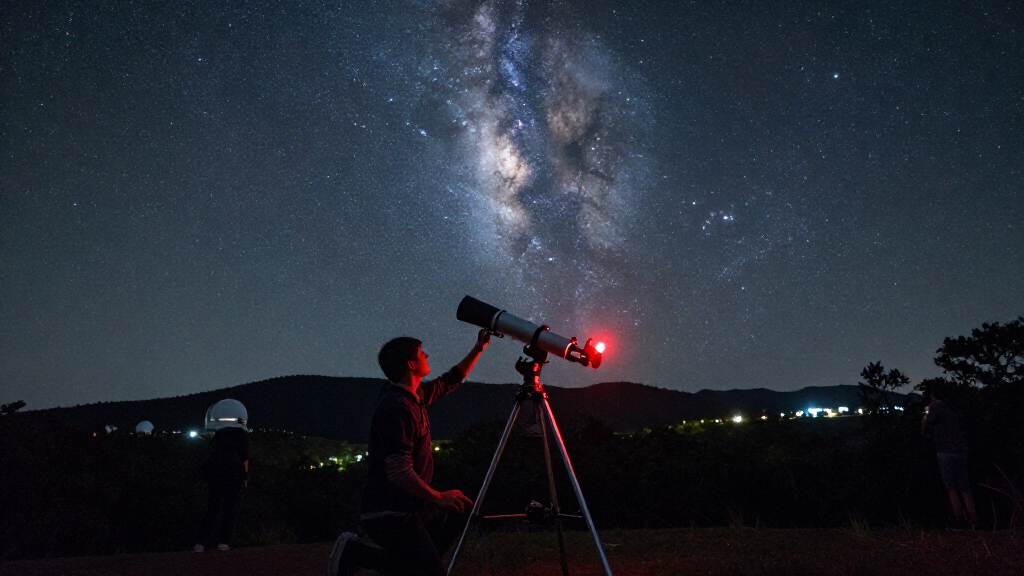
The picture also offers an accessible point of entry for readers who may recognize Orion’s belt but not know that the nebula can be found nearby in the constellation. NASA says M42 is visible to the unaided eye, while a deep image reveals details of its gas and dust that are not apparent in a naked-eye view.
Popular right now

Shark AI Ultra Robot Vacuum with Self-Empty Base

Dyson Big Ball Multi Floor Canister Vacuum, Yellow

Dyson Cyclone V10 Origin Cordless Vacuum
As an affiliate, we earn on qualifying purchases.
M42 in Orion’s Familiar Sky
The Orion Nebula is also catalogued as M42 and lies near Orion’s easily recognized belt of three stars. NASA describes it as being in the same spiral arm of the Milky Way as the Sun. The constellation’s prominence makes the nebula comparatively easy to locate in the night sky, though observing conditions and a viewer’s location affect what can be seen.
NASA’s daily picture service presents a different astronomical image or photograph each day, accompanied by a brief explanation. For this date, the selected subject is the Great Nebula in Orion. The source describes the image as a deep image in assigned colors, with hydrogen emission highlighted, and credits Roberto Palaia. The NASA page identifies the service as supported by NASA’s Astrophysics Science Division at Goddard Space Flight Center, NASA Science Activation and Michigan Technological University.
Image Details and Scope
The NASA feature supplies a general description and credit, but it does not provide technical details such as the telescope or instruments used, the exposure time, or the exact processing steps behind the image. It says the image uses assigned colors and highlights hydrogen emission, but does not specify a complete color mapping in the supplied material.
The page also does not report new observations, a discovery, or a change in scientists’ understanding of M42. The stated distance and span are presented as approximate figures; the short feature does not discuss their measurement uncertainties. No additional findings should be inferred from the image alone.
NASA’s Next Daily Image
NASA’s Astronomy Picture of the Day is scheduled to continue with a new image and explanation each day. The source page labels the following day’s picture “open space,” but provides no further details about that selection in the material available here. The Oct. 26 feature remains an image-led presentation of M42 rather than a report announcing a new research result.
Readers seeking more about the image can consult NASA’s original APOD entry for its credit and accompanying explanation. Any claims about the equipment, observation date or processing beyond the information stated on that page remain unconfirmed in the supplied source.
Key Questions
What is M42?
M42 is the Orion Nebula, a nearby region of gas and dust where stars are forming. NASA describes it as about 1,500 light-years from Earth.
What did NASA publish on October 26, 2026?
NASA’s Astronomy Picture of the Day featured a deep, assigned-color image of the Orion Nebula, credited to Roberto Palaia, with an explanation of the region.
Can the Orion Nebula be seen without a telescope?
NASA says the nebula can be found with the unaided eye near Orion’s belt. The amount of detail visible depends on observing conditions; the detailed structures in the featured image are not equivalent to a naked-eye view.
What features does the nebula contain?
NASA’s description lists the Trapezium star cluster, hydrogen gas, hot young stars, proplyds and stellar jets. The feature describes jets as carrying material away at high speeds.
Does the image announce a new discovery?
No new discovery or measurement is reported in the supplied NASA feature. It is an image and explanatory entry in the daily Astronomy Picture of the Day series.
Source: science.nasa.gov