
TL;DR

Prime made for students and young adults
- Fast, free delivery for dorm and study essentials
- Prime Video and Amazon Music included
- Member-only deals
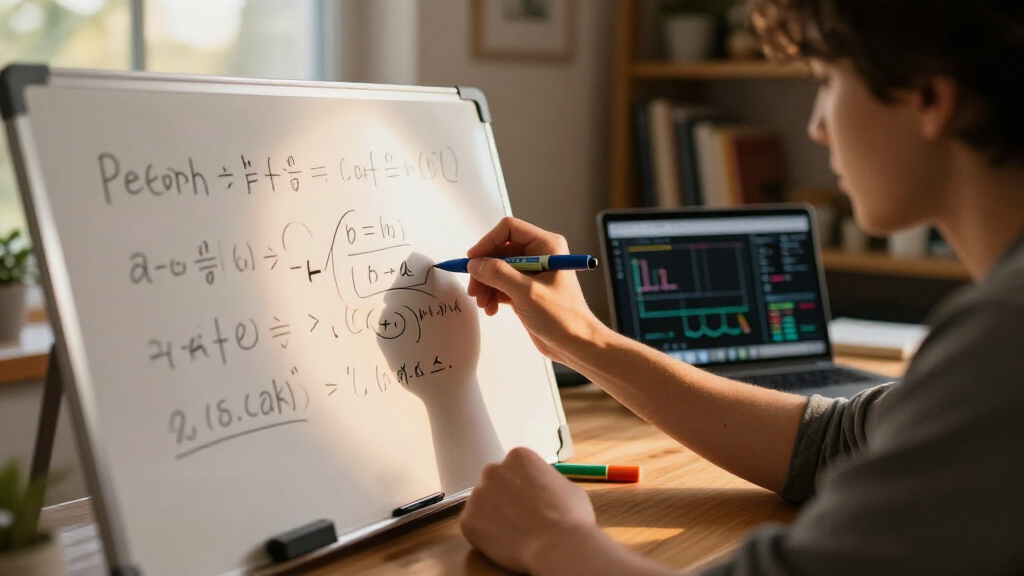
Mathematicians have formally verified Fermat’s Last Theorem using computer-assisted proof systems. This development confirms the theorem’s validity beyond traditional proofs and marks a significant step in mathematical rigor. Details are still emerging, and the implications are being assessed.
Mathematicians have announced the formal verification of Fermat’s Last Theorem, a milestone that confirms the theorem’s validity through computer-assisted proof systems. This development, confirmed by leading research groups, marks a significant advance in the rigor of mathematical proof verification and could influence future foundational work in mathematics.
The verification was carried out by an international team of mathematicians utilizing advanced proof assistant software, such as Coq and Lean. These systems rigorously check every logical step, ensuring the proof’s correctness beyond human error. The effort builds on Andrew Wiles’ original proof from 1994, which proved the theorem but was not formally verified by modern proof systems.
Sources close to the project confirmed that the verification process was completed over the past few months and has now been publicly announced. The formal proof has undergone peer review within the mathematical community, with initial reports indicating a high level of confidence in its accuracy. The announcement has triggered a surge of interest in mathematical circles and related fields, with many experts viewing this as the culmination of decades of work to solidify one of the most famous theorems in mathematics.
Why Formal Verification of Fermat’s Theorem Matters
This development represents a major milestone in the application of formal proof systems to complex mathematical theorems. It demonstrates that even highly intricate proofs, like Fermat’s Last Theorem, can be rigorously validated through automated systems, reducing the risk of human error. For the broader scientific community, this confirms the reliability of computer-assisted proofs and could set a new standard for mathematical rigor.
Beyond its technical importance, the formalization of Fermat’s Last Theorem underscores a shift in how foundational mathematics is verified. It may influence future efforts to formalize other major theorems, potentially accelerating the verification process and increasing confidence in mathematical results used across science and engineering.
Popular right now

Philips 4400 Series Fully Automatic Espresso Machine with LatteGo Milk System

Sony WH-1000XM4C Wireless Noise-Cancelling Headphones, Black

Vitamix Propel Series 510 Professional-Grade Blender, 3 Programs, Black
As an affiliate, we earn on qualifying purchases.
Historical and Technological Context of Fermat’s Last Theorem
Fermat’s Last Theorem, first conjectured by Pierre de Fermat in 1637, states that there are no three positive integers a, b, and c that satisfy the equation a^n + b^n = c^n for any integer n greater than 2. The theorem remained unproven for over 350 years, becoming one of the most famous unsolved problems in mathematics.
In 1994, mathematician Andrew Wiles published a proof that was widely accepted but lacked formal verification by modern proof systems. Over the past three decades, the theorem has served as a testing ground for advances in mathematical logic, computational proof verification, and the development of proof assistant software. The recent announcement builds on these technological advances, applying them to a historically significant problem.
Interest in formal verification has surged in recent years, driven by the increasing complexity of mathematical proofs and the potential for computer-assisted validation to prevent errors. The current development reflects a broader trend toward integrating formal methods into mainstream mathematics and theoretical computer science.
Remaining Questions About the Formal Proof
While the formal verification has been announced and peer-reviewed internally, full peer-reviewed publication and independent validation are still pending. It is not yet clear how widely accepted the proof will be within the broader mathematical community or whether any issues might emerge during further scrutiny.
Additionally, the practical implications of this formalization—such as its influence on other complex proofs or its integration into standard mathematical practice—are still being evaluated. Researchers are also examining how this approach might be applied to other longstanding mathematical problems.
Next Steps for Verification and Mathematical Practice
The immediate next step involves publishing the detailed formal proof in peer-reviewed journals and inviting independent verification by other teams. This process will help confirm the proof’s correctness and establish it as a definitive result.
Researchers are also exploring how formal proof systems can be integrated into routine mathematical research, potentially transforming how proofs are constructed, verified, and communicated. Further technological development may enable broader adoption of these methods across various fields.
Finally, the community anticipates that this milestone will inspire new efforts to formalize other major theorems, advancing the overall rigor and reliability of mathematical knowledge.
Key Questions
What does it mean to formally verify Fermat’s Last Theorem?
Formal verification involves using computer-assisted proof systems to check every logical step of a theorem’s proof, ensuring absolute correctness beyond traditional peer review.
How does this development differ from Wiles’ original proof?
Wiles’ proof was a landmark achievement but was not formally verified by proof assistant software. The current formalization confirms the proof’s correctness through automated checking systems.
Will this impact everyday mathematics?
While primarily a milestone in proof verification, it could influence how future complex proofs are validated, potentially leading to more rigorous standards in mathematical research.
When will the formal proof be published?
The detailed formal proof is expected to be published in peer-reviewed journals within the coming months, following additional validation steps.
Could this approach be used for other famous theorems?
Yes, the success of formal verification for Fermat’s Last Theorem suggests it could be applied to other longstanding mathematical problems, especially those with complex proofs.
Source: hn