
🔍 Read the full analysis: The Future Of AI Powered By External GPUs In 2026 on ThorstenMeyerAI.com

Prime made for students and young adults
- Fast, free delivery for dorm and study essentials
- Prime Video and Amazon Music included
- Member-only deals
TL;DR
In 2026, external GPUs (eGPUs) are increasingly vital for AI advancement, offering scalable power for high-performance computing. This report examines confirmed trends, benefits, and remaining uncertainties.
In 2026, external GPUs (eGPUs) are playing a pivotal role in advancing artificial intelligence, providing scalable, high-performance computing power outside traditional data centers. Industry experts confirm that the adoption of eGPUs is accelerating as AI workloads grow more demanding, especially for research institutions, large enterprises, and high-end developers. This shift matters because it democratizes access to powerful AI hardware, enabling more organizations and individual researchers to push the boundaries of AI capabilities without investing in costly internal infrastructure.
Confirmed reports indicate that leading hardware manufacturers like Razer, ASUS, and MINISFORUM have released new external GPU models optimized for AI workloads, supporting the latest high-end graphics cards and connectivity standards such as Thunderbolt 4 and USB4. The Razer Core X V2, for instance, remains a top choice due to its reliable compatibility and power delivery, enabling AI training and inference tasks that previously required dedicated data center hardware. These external enclosures support GPU configurations up to 600W, allowing for extensive parallel processing essential for modern AI models.
Industry sources state that AI developers are increasingly leveraging eGPUs in hybrid setups—connecting portable laptops or mini PCs to high-powered enclosures—thus enabling real-time data analysis, machine learning training, and large-scale inference tasks outside traditional server environments. This trend is driven by the need for flexible, cost-effective solutions that can scale performance on demand. The portability of these setups is especially appealing for field research, edge computing, and rapid prototyping.
Meanwhile, software support has improved significantly, with major AI frameworks like TensorFlow and PyTorch offering enhanced compatibility with external GPU configurations. This makes deploying complex models more accessible and efficient. However, some challenges remain, such as latency issues and thermal management, which can impact performance during intensive workloads. Experts confirm that while eGPUs are not yet a complete substitute for dedicated data centers for the largest AI models, they represent a significant step toward more distributed, accessible AI infrastructure.
The 10 picks
- 1
 ASUS ROG XG Mobile (2025) External Graphics Card with NVIDIA GeForce RTX 5090View on Amazon →
 - 2ASUS ROG XG Mobile (2025) External Graphics Card with NVIDIA GeForce RTX 5070 TiView on Amazon →
- 3
 Razer Core X V2 External Graphics Enclosure (eGPU)View on Amazon →
 - 4
 AOOSTAR AG02 OCuLink eGPU Dock with 800W PSU and USB4 Port, External GPU Dock…View on Amazon →
 - 5
 External GPU Dock Station, Mini eGPU Enclosure Compatible with Thunderbolt 3/…View on Amazon →
 - 6
 MINISFORUM DEG1 eGPU Dock, External GPU Docking Station for RTX 4090, AMD RX…View on Amazon →
 - 7
 OwlTree PCIe 5.0 x4 128Gbps eGPU Dock for 50 Series Graphics Cards, M.2 NVMe…View on Amazon →
 - 8
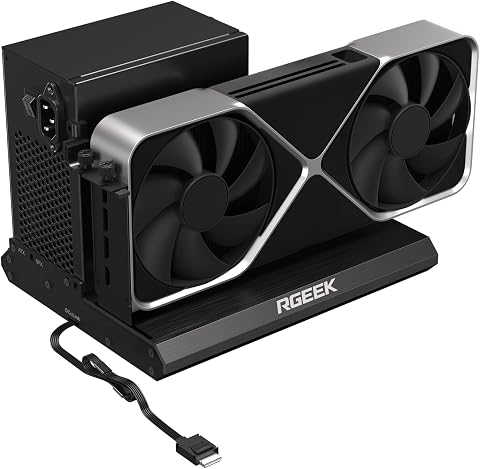 RGEEK OCuLink eGPU Dock PCIe 5.0 x4 for External Graphics CardView on Amazon →
 - 9
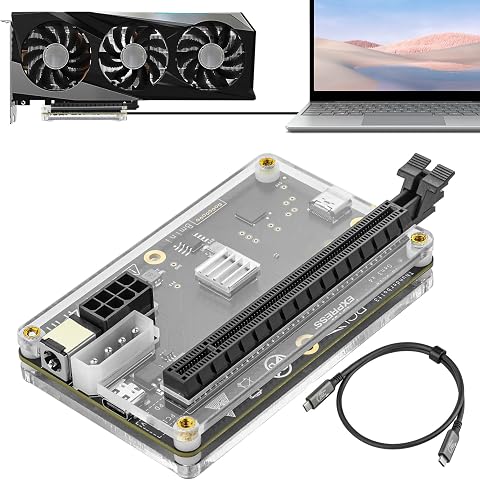 PCIe 3.0 x16 22Gbps eGPU Dock with Thunderbolt 4 Cable for Windows/LinuxView on Amazon →
 - 10
 OCuLink eGPU Dock, PCIe 4.0 x4 64Gbps, 19.7-inch SFF-8611 Cable, External GPU…View on Amazon →
Implications of eGPU Adoption for AI Development
The increasing reliance on external GPUs in 2026 signifies a major shift in AI infrastructure, making high-performance computing more accessible beyond traditional data centers. This democratization allows smaller organizations, startups, and individual researchers to participate in cutting-edge AI research, fostering innovation and reducing costs. Additionally, the flexibility of eGPU setups supports rapid iteration and deployment, accelerating AI development cycles. For enterprises, this trend offers scalable, cost-efficient solutions that can adapt to evolving workloads, potentially transforming the landscape of AI hardware deployment.
Evolution of AI Hardware and External GPU Technology
Over the past decade, AI development has driven a continuous increase in hardware demands, with models growing larger and more complex. Traditionally, this required access to expensive, specialized data center hardware. In recent years, external GPUs have evolved from simple gaming accessories into sophisticated, high-performance computing tools capable of supporting AI workloads. The rise of Thunderbolt 4 and USB4 standards has enabled faster data transfer and broader compatibility, making eGPUs a practical alternative for many AI applications. Industry leaders have highlighted that this trend is part of a broader movement toward distributed, edge, and hybrid AI architectures, where processing power is decentralized and more accessible.
Prior developments include the release of high-capacity enclosures supporting the latest NVIDIA and AMD GPUs, which are critical for training large models. As AI models continue to grow in size—requiring hundreds of gigabytes of memory and thousands of CUDA cores—the role of external GPUs becomes more prominent. Experts note that while challenges like latency and thermal management persist, ongoing innovations in cooling and connection standards are steadily mitigating these issues, making eGPUs increasingly viable for demanding AI tasks.
Remaining Challenges and Unknowns in eGPU-Driven AI
While confirmed trends point toward increased adoption, several uncertainties remain. Experts acknowledge that latency issues associated with external connections can hinder real-time AI inference, especially in latency-sensitive applications like autonomous vehicles or robotics. Thermal management during prolonged high-load operations remains a concern, despite advances in cooling technology. Additionally, compatibility and standardization across different hardware and software ecosystems are still evolving, which could impact widespread adoption. It is also unclear how rapidly software frameworks will optimize for eGPU configurations at scale, potentially limiting performance gains in some scenarios.
Future Developments and Adoption Trajectory for eGPUs in AI
Looking ahead, industry analysts expect ongoing improvements in connection standards, cooling solutions, and GPU power delivery to mitigate current limitations. Manufacturers are likely to release more compact, higher-capacity enclosures supporting next-generation GPUs, further enhancing performance and portability. Software ecosystem enhancements, including better framework support and driver optimizations, are anticipated to unlock additional efficiencies. As AI models continue to grow in complexity, the role of eGPUs is expected to expand, especially in edge computing and hybrid cloud environments. Stakeholders are also monitoring regulatory and standardization efforts that could influence hardware compatibility and security.
Key Questions
Can external GPUs fully replace data center hardware for AI training?
Currently, external GPUs cannot fully replace data center hardware for the largest AI models due to latency, thermal, and scalability limits. However, they are increasingly suitable for many training, inference, and development tasks, especially in hybrid or edge environments.
What connection standards are best for high-performance AI workloads?
Thunderbolt 4 and USB4 are currently the most capable standards, supporting high data transfer rates up to 40Gbps, which are essential for demanding AI applications. Compatibility with your device is critical for optimal performance.
Are eGPUs cost-effective for AI development?
While initial costs can be high, investing in quality enclosures supporting high-end GPUs can offer significant long-term value by enabling scalable, portable AI hardware without the expense of dedicated data centers.
Will software support for eGPUs improve in the future?
Yes, major AI frameworks and driver developers are actively enhancing support for external GPUs, which should lead to better performance and easier deployment in upcoming software updates.
What industries stand to benefit most from eGPU-enabled AI in 2026?
Research institutions, startups, edge computing, autonomous vehicle development, and fields requiring rapid prototyping or portable high-performance computing are among the primary beneficiaries of eGPU advancements in AI.
Source: ThorstenMeyerAI.com
Halloween Picks
halloween
As an affiliate, we earn on qualifying purchases.