Electronic drum kits keep improving for home musicians thanks to advances in sensor technology, making sounds more realistic and responsive. They now offer better sound customization, quieter practice options, and smoother connectivity with devices. Hardware updates improve durability and feel, while software upgrades expand features. These evolutions make electronic kits more versatile and easier to use in your space. If you stay informed, you’ll discover how these innovations can boost your drumming experience even further.
Key Takeaways
- Advancements in sensor technology and software enhance realism, response, and sound customization for a more authentic playing experience.
- Improved connectivity options like Bluetooth and MIDI facilitate seamless integration with digital devices and recording platforms.
- Hardware enhancements, including better pads and haptic feedback, increase durability and tactile feel for home practice.
- Reduced latency and increased sensitivity offer more natural playability, closely mimicking acoustic drums.
- Continuous technological innovations ensure electronic kits remain space-efficient, versatile, and suitable for evolving home musician needs.
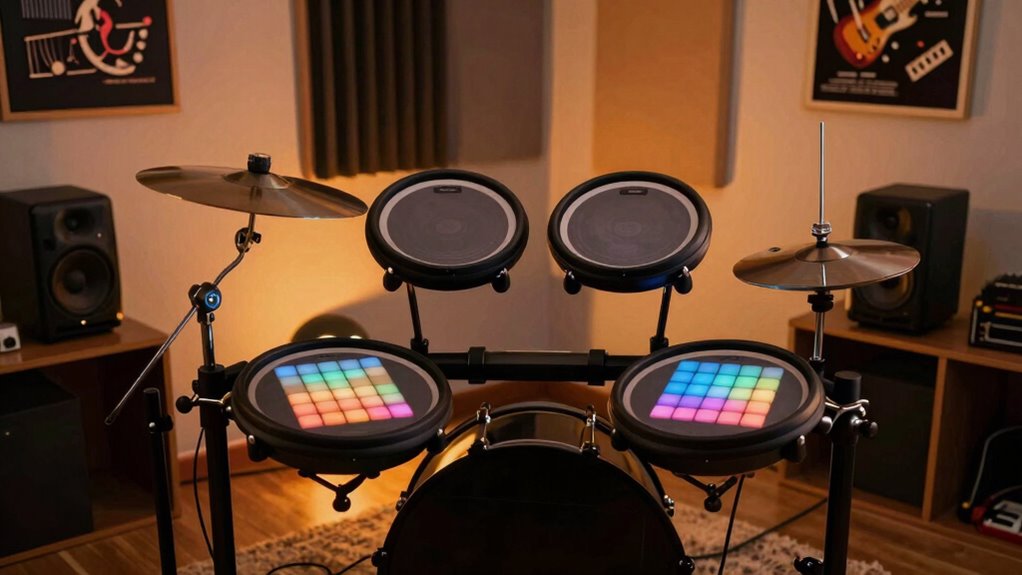
If you’re passionate about drumming but lack the space or volume control for a traditional kit, electronic drum kits offer an excellent solution. They’re compact, versatile, and perfect for home use, making them increasingly popular among musicians of all levels. One of the key reasons electronic kits keep improving is the ongoing development of technology that bridges the gap between acoustic and electronic drums. While acoustic drums produce natural sound and feel, electronic kits offer quiet operation and a range of sound options. Advances in sensor technology now deliver more realistic response and velocity sensitivity, making electronic drums feel closer to real acoustic sets than ever before. This progress appeals to players who want authentic playing experience without the disruptive noise that an acoustic kit generates. Additionally, the integration of sensor technology in electronic drums has significantly enhanced their responsiveness, further narrowing the gap between electronic and acoustic performance.
Many musicians compare acoustic vs. electronic drums to find what suits their needs best. Acoustic drums are known for their natural sound and tactile feedback, which is essential for some styles of playing. But they come with drawbacks: they’re bulky, loud, and require dedicated space. Electronic drums, on the other hand, excel in versatility. They let you select different drum sounds, customize kits, and even connect to headphones for silent practice. For home musicians, this flexibility is a game-changer. You can practice at any hour without worrying about disturbing neighbors or family members. The ongoing improvements in hardware and software also mean that electronic kits now offer more realistic sounds and better dynamic range, making them even more appealing for serious practice and recording. As software updates become more frequent, the customization options continue to expand, allowing players to tailor their sound experience even further. Moreover, software compatibility plays a crucial role in ensuring seamless integration with various digital tools and platforms. These advancements have also helped reduce the latency that can sometimes be an issue with electronic drums, providing a more natural feel during play.
Another significant advantage that contributes to the ongoing improvement of electronic drum kits is the use of practice pads. These pads are now highly advanced, offering better rebound, feel, and responsiveness. They serve as excellent training tools, especially when space is limited. Practice pads allow you to hone your sticking techniques and control without the need for a full kit. Many kits integrate electronic pads that mimic the feel of acoustic drums closely, providing a seamless transition when you switch between practicing on a pad and playing on the full electronic setup. This integration helps you develop your skills more efficiently and with less wear on your hands. As technology continues to evolve, the durability and feel of these practice pads are also steadily improving, ensuring they remain effective for long-term use. Moreover, some advanced pads now incorporate haptic feedback, which enhances the tactile sensation and makes practice more realistic.
The continual refinement of hardware and software in electronic kits also means better sound quality, more realistic drum sounds, and improved connectivity options. Bluetooth, MIDI, and USB interfaces have become standard, making it easier to record, connect to apps, or integrate with other instruments. As a result, electronic drum kits are not only practical but also highly adaptable tools that grow with your skills. All these innovations ensure that electronic drum kits remain relevant and increasingly appealing for home musicians seeking a realistic, versatile, and space-conscious drumming experience.
electronic drum kit with realistic sound
As an affiliate, we earn on qualifying purchases.
As an affiliate, we earn on qualifying purchases.
Frequently Asked Questions
How Do Electronic Drum Kits Compare in Price to Acoustic Kits?
Electronic drum kits generally cost less than acoustic kits, especially when considering affordability insights. You’ll find entry-level electronic sets priced considerably lower, making them accessible for beginners or those on a budget. While high-end electronic kits can be pricey, they still tend to be more affordable than professional acoustic drums. Overall, if you compare prices directly, electronic kits offer a cost-effective option without sacrificing quality, perfect for home musicians.
Are Electronic Drum Kits Suitable for Professional Recording Studios?
You might think electronic drum kits are just for beginners or live practice, but they’re surprisingly suitable for professional recording studios. Their advanced features, like high-quality samples and low-latency triggers, make them versatile enough for studio work. Plus, their beginner-friendly controls ease setup, making them ideal for live performances or quick recording sessions. So, don’t dismiss them—electronic drums can elevate your studio sound just as much as they do your practice space.
Can Electronic Drums Be Customized With Different Sounds and Kits?
Yes, electronic drums can be customized with different sounds and kits. You can easily explore sound customization to match your style, switching between a variety of kit options to suit your music. Modern electronic drum kits offer extensive kit variety, allowing you to tweak and personalize sounds for different genres. This flexibility makes them perfect for home musicians who want a versatile and tailored drumming experience without needing multiple acoustic sets.
What Maintenance Is Required for Electronic Drum Kits?
A stitch in time saves nine, so regular maintenance keeps your electronic drum kit in top shape. You should check drum pad durability periodically and clean the pads and connections to prevent dust and grime buildup. Maintenance frequency depends on your usage, but a quick wipe-down weekly and software updates monthly help guarantee ideal performance. Staying attentive to these tasks keeps your kit sounding great and prolongs its lifespan.
Do Electronic Drum Kits Require Special Space Considerations?
Yes, electronic drum kits require some space considerations. You’ll want a room size that comfortably fits your kit and allows for movement, preventing a cramped setup. Placement flexibility is a big advantage; you can position the kit in various locations to suit your space and sound preferences. Make certain there’s enough room for your playing style and any additional accessories, making your practice sessions more enjoyable and effective.
quiet electronic drum set for home practice
As an affiliate, we earn on qualifying purchases.
As an affiliate, we earn on qualifying purchases.
Conclusion
As technology continues to evolve, electronic drum kits become even more inviting for home musicians like you. They silently whisper promises of richer sounds, quieter practice sessions, and seamless integration into your creative space. With each new feature, they subtly encourage you to explore, create, and grow. So, don’t be surprised if these modern marvels gently steer you toward your next musical adventure—your perfect rhythm awaits just around the corner.
As an affiliate, we earn on qualifying purchases.
electronic drum pads with responsive sensors
As an affiliate, we earn on qualifying purchases.
As an affiliate, we earn on qualifying purchases.