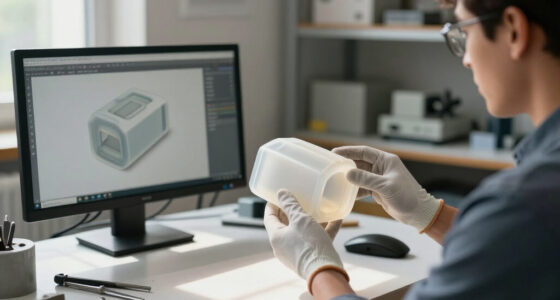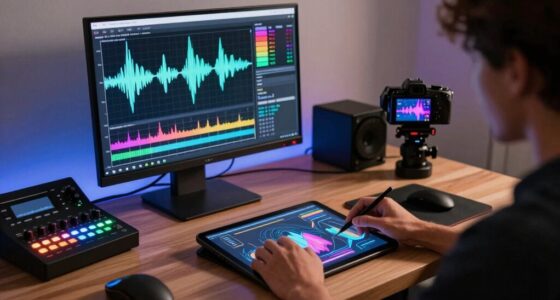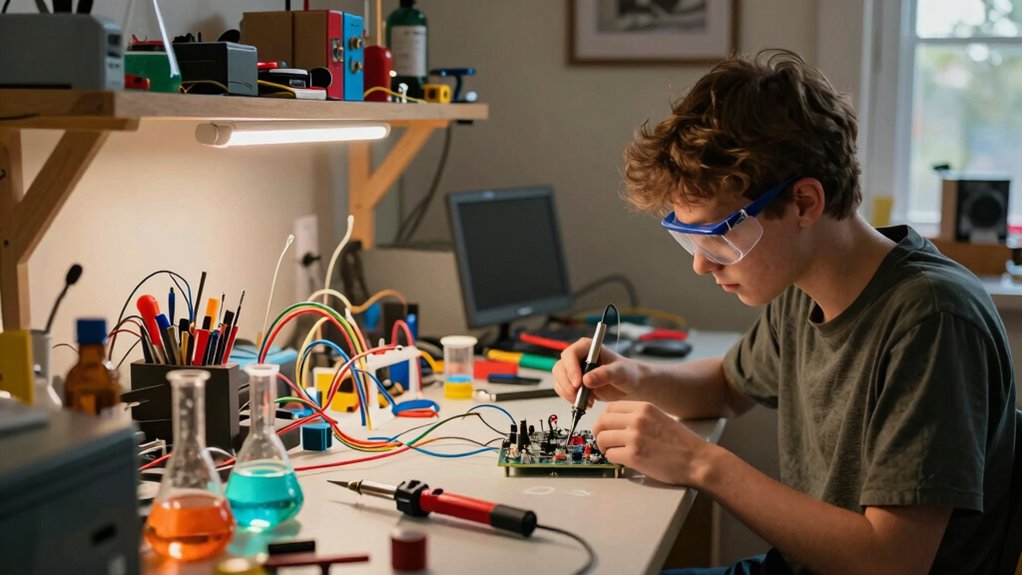

Home labs inspire you by making science fun, accessible, and personal. They encourage you to experiment, craft, and solve problems with recycled or custom-made tools. As you control and learn from your projects, your confidence grows. Connecting with a community of fellow tinkerers keeps you motivated and sparks new ideas. This movement redefines what it means to be a scientist, proving that with curiosity and effort, anyone can invent and explore. Keep going to discover how far your creativity can take you.

Prime made for students and young adults
- Fast, free delivery for dorm and study essentials
- Prime Video and Amazon Music included
- Member-only deals
Key Takeaways
- Home labs foster hands-on exploration, inspiring curiosity and empowering a new generation to experiment independently.
- Customizable, eco-friendly setups make science accessible and engaging outside traditional educational settings.
- DIY projects build confidence and deepen understanding of scientific principles through tangible results.
- Community sharing and online resources create collaborative learning environments that motivate continuous tinkering.
- The movement redefines science as creative, approachable, and achievable, encouraging innovation and lifelong curiosity.
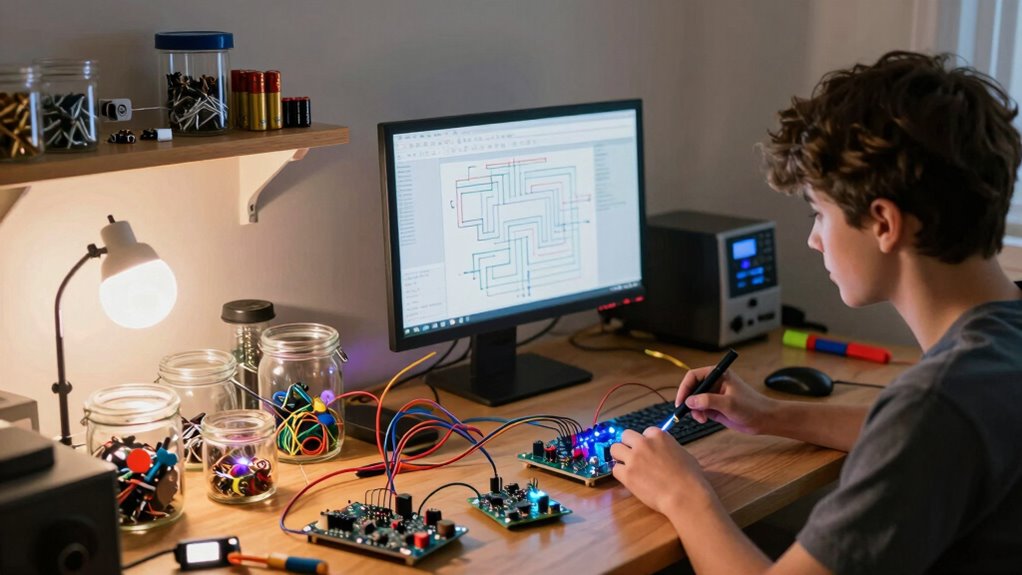
Have you ever wondered what drives the passion behind home labs tinkerers? It’s the thrill of discovery, the joy of creating something with your own hands, and the sense of empowerment that comes from turning curiosity into tangible results. Home labs have become more than just a hobby; they’re a movement that inspires a new generation to explore science and technology outside traditional settings. When you immerse yourself in DIY science, you realize that the possibilities are endless. You’re not just following instructions—you’re inventing, experimenting, and learning from mistakes. This hands-on approach fuels your curiosity and pushes you to understand how things work at a fundamental level.
Home labs ignite curiosity, creativity, and empowerment through hands-on science and DIY experimentation.
One of the most compelling aspects of home labs is equipment customization. Instead of relying solely on off-the-shelf tools, you modify and adapt equipment to suit your unique projects. This aspect of tinkering allows you to solve problems creatively and develop solutions that aren’t available commercially. For example, you might piece together a spectrometer using recycled parts or design a custom power supply to meet specific voltage requirements. This process of equipment customization makes science more accessible and personal. It transforms complex experiments into manageable projects, encouraging you to think critically and innovate. Additionally, understanding the importance of contrast ratio can help optimize the visual aspects of your DIY projects, especially when creating home cinemas or display setups. Incorporating natural materials can also enhance the sustainability and eco-friendliness of your DIY science setups. Recognizing the role of DIY science in fostering innovation underscores how accessible and empowering this hobby truly is.
As you build and refine your tools, you start seeing science as something you can control and manipulate. You’re not waiting for someone else to develop a solution—you’re creating it yourself. This mindset inspires confidence and fosters a deeper understanding of scientific principles. Plus, it’s incredibly satisfying to see your DIY science projects come to life, whether it’s a homemade battery, a weather station, or a microbial culture. These projects aren’t just educational; they’re a proof of your ingenuity and perseverance. Furthermore, engaging with digital content formats can enhance your learning experience and connect you with a broader community of enthusiasts.
Home labs also foster a community of like-minded individuals. Sharing tips on equipment customization, troubleshooting, and project ideas creates a collective knowledge base that motivates everyone to push boundaries further. You learn from others’ successes and failures, which accelerates your growth as a tinkerer. The accessibility of online tutorials, forums, and resources has democratized science, making it possible for anyone with curiosity and a bit of space to start their own experiments. This environment of collaboration and innovation encourages you to think beyond traditional science education and develop skills that could lead to new inventions or even careers in science and engineering.
In the end, home labs ignite a passion for DIY science and equipment customization that’s contagious. They empower you to explore, create, and understand the world around you in ways that traditional classrooms often can’t. Through this hands-on approach, you become part of a movement that’s redefining what it means to be a scientist or engineer—one experiment at a time.
As an affiliate, we earn on qualifying purchases.
Frequently Asked Questions
What Safety Precautions Are Essential for Home Lab Experiments?
You should prioritize lab safety by always wearing protective gear like goggles, gloves, and lab coats. Keep your workspace well-ventilated and organized to prevent accidents. Follow experiment precautions meticulously, such as reading instructions carefully and handling chemicals with care. Never work alone during hazardous activities, and have a fire extinguisher and first aid kit nearby. Staying vigilant guarantees your home lab remains a safe environment for your tinkering pursuits.
How Do Home Labs Influence Traditional Science Education?
Home labs influence traditional science education by fostering hands-on learning, encouraging curiosity, and building practical skills. You gain access to virtual mentorship, which guides your experiments and deepens understanding. Community sharing allows you to exchange ideas, troubleshoot, and celebrate successes with fellow enthusiasts. This active engagement enhances your learning experience, making science more accessible and inspiring you to pursue further exploration beyond classroom boundaries.
What Budget Is Needed to Start a Basic Home Lab?
You can start a basic home lab with around $100 to $200, but the real challenge lies in equipment sourcing and budget planning. Imagine gathering essential tools—beakers, wires, and sensors—hidden among household items or bought secondhand. Careful budget planning guarantees you acquire versatile, safe equipment without overspending. As the pieces come together, you’ll see a small investment ignite endless curiosity and experimentation—your personalized science adventure begins.
Are There Legal Restrictions for Conducting Experiments at Home?
Yes, there are legal concerns when conducting experiments at home. You need to check local regulations and may require experiment permits, especially if your experiments involve chemicals, electrical work, or biological materials. Ignoring these restrictions can lead to fines or safety issues. Always research your area’s laws beforehand, guarantee proper safety measures, and consult authorities if unsure. Staying compliant keeps your tinkering safe and enjoyable.
How Can Beginners Gain Confidence in DIY Scientific Projects?
Think of DIY scientific projects as your personal playground; confidence grows with each successful experiment. Start with DIY kits designed for beginners, which act as your safety net. Focus on clear experiment planning, breaking tasks into manageable steps. Celebrate small wins, and don’t fear mistakes—they’re your stepping stones. Over time, your curiosity turns into expertise, transforming you into a confident tinkerer ready to explore the wonders of science.
As an affiliate, we earn on qualifying purchases.
Conclusion
Your home lab journey shows just how powerful curiosity and hands-on experimentation can be. Did you know that nearly 60% of tinkerers report gaining new skills that helped them advance careers or hobbies? By embracing DIY projects, you’re not only exploring new tech frontiers but also joining a vibrant community of innovators. Keep tinkering—every experiment brings you closer to breakthrough ideas and a deeper understanding of the world around you.
recycled materials for science projects
As an affiliate, we earn on qualifying purchases.
As an affiliate, we earn on qualifying purchases.
As an affiliate, we earn on qualifying purchases.
Halloween Picks
halloween
As an affiliate, we earn on qualifying purchases.