

📊 Full opportunity report: The Hidden Security Power Of AI Benchmarks Following Washington’s Deadline on ThorstenMeyerAI.com — validation score, market gap, and execution plan.
TL;DR
The U.S. government has established a classified benchmarking process for advanced AI models, with a deadline of August 1, 2026. This move shifts oversight roles and introduces voluntary pre-release evaluations, raising questions about transparency and industry effects.
On June 2, 2026, President Trump signed Executive Order 14409, establishing a classified benchmarking process for advanced AI models, due by August 1, 2026. This process will determine which models qualify as covered frontier models, with the NSA responsible for final designation. The order also introduces a voluntary framework allowing developers to provide pre-release access to government agencies, which could influence federal procurement and industry practices. This move marks a significant shift in U.S. AI oversight, emphasizing security and control.
The order mandates four concrete actions: a classified cyber-capability benchmark to evaluate AI models, a covered-frontier-model designation process led by the NSA, a voluntary pre-release access framework allowing government review of models up to 30 days before public release, and the creation of an AI cybersecurity clearinghouse under Treasury to share vulnerability intelligence. The benchmarks will be classified, meaning developers will not see the criteria used for designation, raising concerns about transparency and potential bias.
Participation in the pre-release review is opt-in, but the order suggests that being designated as a trusted partner could become a key factor in federal procurement, effectively incentivizing voluntary cooperation. The order also allocates funding and personnel to improve AI vulnerability detection and cybersecurity talent. It builds on prior efforts, including a 2024 move requiring Anthropic to suspend access to a frontier model with advanced cyber capabilities, indicating that capability assessments already influence operational decisions.
The August 1 Deadline:
Benchmarks Become a National-Security Instrument — a Classified One
EO 14409 · signed June 2, 2026 · what actually changes, who feels it, and the European counter-move
The fuse
Two blocs, opposite horns of the same dilemma
US: sophisticated & classified
Measures the right thing (offensive capability) but cannot be reviewed, replicated, or challenged. Steelman: a public cyber benchmark is also an instruction manual for adversaries.
EU: crude & public
Arguably measures the wrong thing (compute, not capability) — but it’s public, contestable, and identical for every party. Legitimacy over precision.
Three seats at the table
Opt-in calculus before Aug 1: 30 days of government access to weights and prompts vs. trusted-partner procurement upside. IP and NDA questions unresolved.
A pre-release window is meaningless for weights on a public hub — and no US framework binds Hangzhou. The asymmetry is the design’s quiet destabilizer.
Launch timing may stagger; US designation becomes de facto capability certification; and benchmark-gating becomes politically normal — precedent cuts both ways.
The European answer: not a classified benchmark with a circle of stars on it — public, replicable, defense-relevant evaluation anyone can inspect. Whoever writes the benchmark defines “capable” and “dangerous.” After Aug 1, one definition goes behind a vault door. Europe should answer in public — that’s the VigilSAR-Bench thesis.
Implications of Classified AI Benchmarking for Industry and Security
This order signals a major shift toward security-centric AI governance in the U.S., with the government gaining significant oversight powers through classified benchmarks. While intended to mitigate risks posed by advanced AI models, the classification approach raises transparency concerns and could lead to market distortions by favoring vendors who participate voluntarily. The move also marks a strategic departure from previous hands-off policies, positioning the NSA and Treasury as central actors in AI oversight. For industry, the designation process may become a critical factor in federal procurement decisions, influencing vendor behavior and innovation.

Cybersecurity Vibe Coding Vulnerability As A Service Funny T-Shirt
- Target Audience: Software engineers and cybersecurity pros
- Design Theme: Humorous cybersecurity vulnerability warning
- Ideal For: Men, women, and tech enthusiasts
As an affiliate, we earn on qualifying purchases.
As an affiliate, we earn on qualifying purchases.
Background and Evolution of U.S. AI Oversight Policies
President Trump’s executive order builds on earlier efforts, including a 2024 move requiring AI developer Anthropic to suspend access to a frontier model due to cyber capabilities concerns. The initial draft of the order was reportedly withdrawn over fears it could hinder U.S. competitiveness. Unlike European approaches, such as the EU AI Act’s public, contestable thresholds based on FLOPs, the U.S. now emphasizes classified benchmarks, which are less transparent but arguably more secure. This shift reflects a broader trend toward security-focused AI regulation amid rapid technological advances and geopolitical tensions.
“Classified benchmarks are a double-edged sword—offering security but sacrificing transparency and contestability.”
— Industry expert
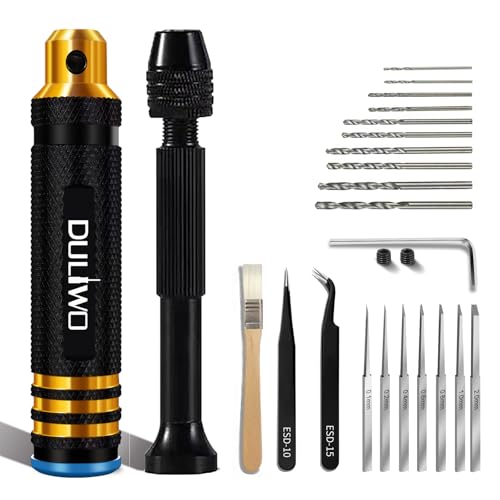
DULIWO Model Scriber Tool Kit, 7-Blade Chisel Set for Gunpla
- Complete Model Kit Tools: Includes scribe, drill, tweezers, and brush
- High-Quality Blades: Tungsten steel, wear-resistant, sharp, durable
- Ergonomic Handle: Lightweight, non-slip aluminum alloy handle
As an affiliate, we earn on qualifying purchases.
As an affiliate, we earn on qualifying purchases.
Unresolved Questions About Benchmark Transparency and Enforcement
It remains unclear how the classified benchmarks will be developed, what specific capabilities they will measure, and how the NSA will ensure fairness and accuracy. There is also uncertainty about whether participation in the voluntary pre-release review will become de facto mandatory for federal contracts, given the potential advantages of trusted partner status. Additionally, the long-term impact on industry innovation and international competitiveness is still uncertain, especially in comparison to European public and contestable standards.

AI-Assisted Risk Assessments for Small Businesses: Use Artificial Intelligence to Conduct Better Security Assessments, Reduce Risk, and Make Better Business Decisions
As an affiliate, we earn on qualifying purchases.
As an affiliate, we earn on qualifying purchases.
Next Steps and Potential Developments in AI Oversight
Developers and industry stakeholders will need to decide whether to opt into the voluntary pre-release framework before August 1, 2026. The NSA and Treasury will finalize the classification criteria and the designation process, potentially influencing market dynamics. Congress may debate whether to introduce mandatory testing requirements, which could shift the framework from voluntary to obligatory. Monitoring how the classified benchmarks are implemented and how they impact AI deployment will be critical in the coming months.
As an affiliate, we earn on qualifying purchases.
Key Questions
Will participation in the pre-release review be mandatory?
Participation is currently voluntary, but being designated as a trusted partner could become a key factor in federal procurement, effectively creating incentives to opt in.
What are the risks of having classified benchmarks?
Classified benchmarks may lack transparency, making it difficult for developers to understand evaluation criteria, potentially leading to bias or inaccuracies that cannot be publicly challenged.
How does this compare to European AI regulations?
The EU AI Act uses public, contestable thresholds based on technical metrics like FLOPs, whereas the U.S. order emphasizes classified benchmarks, prioritizing security over transparency.
Could this order impact global AI development?
Yes, by establishing a security-focused oversight model, the U.S. could influence international standards, especially if trusted partner status becomes a competitive advantage.
Source: ThorstenMeyerAI.com