
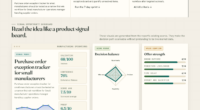
📊 Full opportunity report: The license. Why the AI content market pays the brand-name corpus and strands the long tail. on ThorstenMeyerAI.com — validation score, market gap, and execution plan.

Prime made for students and young adults
- Fast, free delivery for dorm and study essentials
- Prime Video and Amazon Music included
- Member-only deals
TL;DR
Large publishers have secured multi-million dollar licensing deals with AI companies, while small publishers remain largely excluded. This dynamic deepens existing market inequalities and raises questions about future solutions like collective licensing.
Large publishers, including News Corp, the New York Times, and major academic publishers, have secured multi-year licensing agreements with AI companies such as OpenAI and Meta, paying hundreds of millions of dollars for access to their archives. Meanwhile, small publishers remain largely excluded from these deals, which reinforces existing market inequalities and raises questions about future remedies.
Recent disclosures reveal that large publishers have negotiated exclusive licensing deals worth over $250 million with OpenAI, approximately $50 million annually from Meta, and similar amounts from other tech giants. These agreements grant AI firms access to high-trust, brand-name corpora like the Wall Street Journal, the Times, and the Associated Press, which hold significant leverage due to their scarcity and reputation.
In contrast, smaller publishers, including niche news sites and independent outlets, have not secured comparable deals. Their content, which is abundant and less authoritative, is often scraped without licensing, providing training data for AI models at little or no cost. This asymmetry means that the value flows predominantly to large publishers, while small publishers are left without compensation and with limited bargaining power.
Experts argue that this licensing pattern reproduces the same structural inequality that led to the collapse of referral traffic, where small publishers lost over 60% of search referrals, while large publishers retained a disproportionate share. The licensing deals, although presented as a market correction, effectively lock in the advantages of large publishers, making it difficult for smaller outlets to benefit.
The license.
Why the AI content market
pays the brand-name corpus
and strands the long tail.
licensing deal below it
the large-publisher reality
largest licensing deal · a rounding error
tail’s most direct shot, via aggregation
↓
leverage
↓
a fee
The license that saved the Wall Street Journal does not reach the niche site, and the only thing that could is a market the small publisher cannot build alone. The escape route is real. For most of the publishers who needed it, it leads to a door they cannot open.Thorsten Meyer · The License · Post-Wire 04
Reinforcement of Market Inequalities Through Licensing
The current licensing landscape confirms a market dynamic where leverage and scarcity determine compensation. Large publishers’ brand-name corpora are highly valued and thus attract lucrative deals, while small publishers’ content remains undervalued and largely unpaid. This pattern risks deepening the disparity in the digital news ecosystem, potentially leading to further consolidation and loss of diverse voices. The situation underscores the need for systemic solutions, such as collective licensing, to ensure fair compensation for all content creators.
As an affiliate, we earn on qualifying purchases.
Historical and Structural Factors in Content Licensing
The rise of AI training on web content has shifted the value from referral-based traffic to direct licensing, especially for high-profile publishers. Disclosed deals over recent months reveal a pattern: large publishers negotiate multi-million dollar agreements, leveraging their scarce, high-trust archives. Meanwhile, small publishers’ content, being plentiful and less authoritative, is often scraped without compensation, perpetuating an asymmetry that has been building over the past decade. Efforts to establish collective licensing regimes, akin to music royalties, are underway but face legal and political hurdles.
“The licensing market reproduces the same asymmetry it was supposed to solve—value flows to brand-name corpora, while the long tail provides training data for free.”
— Thorsten Meyer
As an affiliate, we earn on qualifying purchases.
Uncertain Effectiveness of Collective Licensing at Scale
While initiatives like the UK coalition, EU proposals, and WIPO licensing are progressing, their ability to scale effectively and provide fair compensation to small publishers remains unproven. Legal challenges and platform resistance further complicate implementation, leaving open whether collective licensing can truly address the structural inequalities.
As an affiliate, we earn on qualifying purchases.
Next Steps for Fair Content Compensation in AI Training
Efforts are ongoing to develop and implement statutory or collective licensing regimes that could provide equitable payment to all publishers, regardless of size. Key developments include legal rulings, legislative proposals, and industry negotiations. The outcome will determine whether the current asymmetry persists or if a more balanced system emerges before small publishers are pushed out of the market entirely.
AI training data licensing platform
As an affiliate, we earn on qualifying purchases.
As an affiliate, we earn on qualifying purchases.
Key Questions
Why are large publishers able to secure licensing deals while small publishers are excluded?
Large publishers have scarce, high-value archives and brand recognition, giving them leverage in negotiations. Small publishers’ content is abundant and less authoritative, providing little bargaining power, which makes them less likely to secure licensing agreements.
Could collective licensing solve the current inequality?
Yes, collective licensing could establish a system where all publishers are compensated fairly, regardless of size or leverage. However, such regimes are still in development and face legal, political, and industry resistance.
What are the risks if the current licensing pattern continues?
If the pattern persists, it could lead to increased consolidation among large publishers, reduced diversity of voices, and a further erosion of independent and small publisher content in the AI training ecosystem.
Are there any legal or policy efforts to address this imbalance?
Yes, proposals like the UK coalition’s statutory licensing, the EU’s copyright reforms, and WIPO’s licensing frameworks are aiming to establish fair payment mechanisms, but none have yet been fully implemented or proven at scale.
Source: ThorstenMeyerAI.com
Fall Picks
fall essentials
As an affiliate, we earn on qualifying purchases.