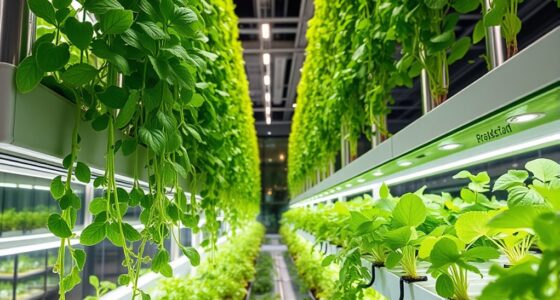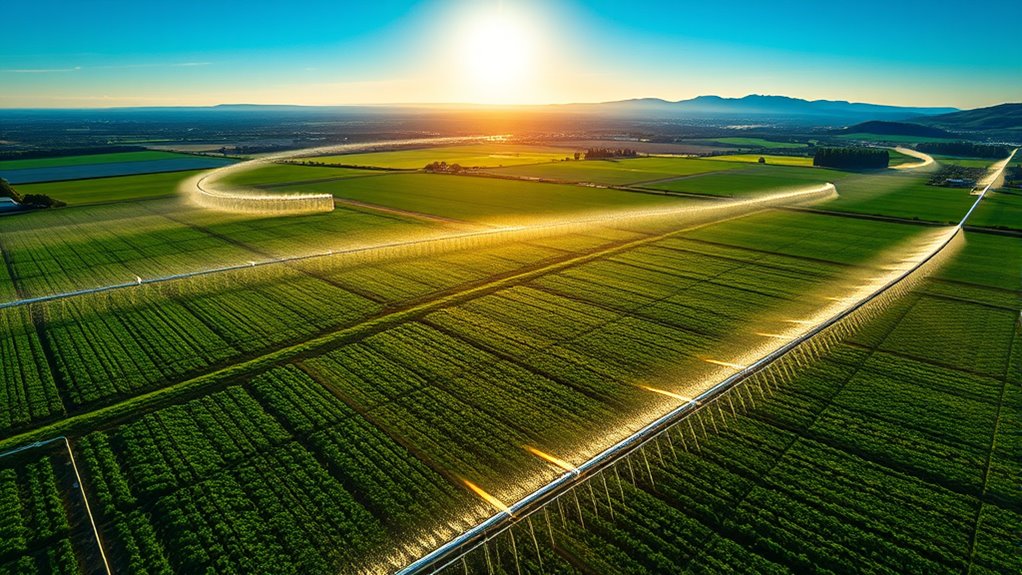

Smart irrigation systems are designed to conserve water in agriculture by delivering precise amounts directly to plant roots. This method reduces water usage by up to 50% compared to traditional techniques, preventing over-irrigation and runoff. By integrating weather data and soil sensors, you can optimize growth conditions and promote healthier crops. Plus, it supports sustainable farming practices by protecting local ecosystems. Keep exploring to discover how these systems can enhance your agricultural practices even further.
Key Takeaways
- Smart irrigation systems use drip technology to deliver water directly to plant roots, significantly reducing water wastage compared to traditional methods.
- They optimize crop growth by maintaining precise soil moisture levels, ensuring healthier plants and improved yields.
- Integration with weather data and soil sensors allows for automatic adjustments in water delivery based on real-time environmental conditions.
- These systems help prevent over-irrigation and runoff, contributing to sustainable agricultural practices and protecting local ecosystems.
- By combining water conservation with nutrient management, smart irrigation enhances crop resilience while promoting eco-conscious farming goals.
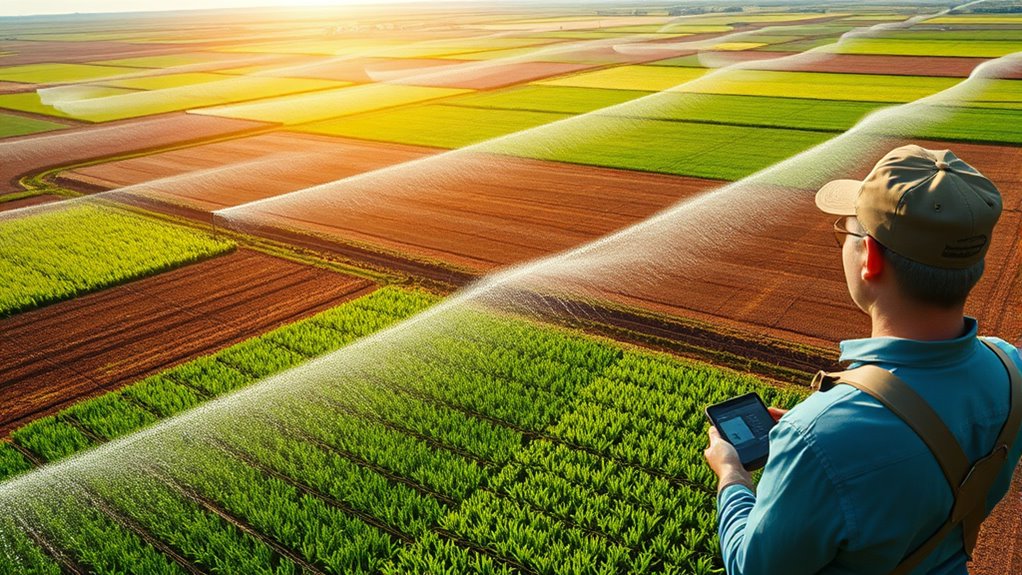
Have you ever wondered how crops thrive in arid regions? It’s a challenge, but with the right irrigation systems, farmers are turning dry fields into productive landscapes. One of the most effective methods they’re using is drip technology. This system allows water to drip directly onto the soil, minimizing evaporation and ensuring that plants get just the right amount of moisture they need to flourish.
Drip technology is revolutionary because it targets the roots of plants. Instead of flooding the entire field, which often leads to water wastage, it delivers water precisely where it’s needed. You might be surprised to learn that this method can reduce water usage by up to 50% compared to traditional irrigation methods. This is vital in arid regions where every drop counts. By focusing on soil moisture, farmers can monitor and adjust their irrigation practices based on real-time needs, ensuring ideal growth while conserving precious resources.
When soil moisture is maintained at the right levels, crops can develop strong root systems. This not only leads to healthier plants but also increases yield. In areas where water is scarce, drip irrigation empowers farmers to cultivate crops that might otherwise struggle to survive. You’d be amazed at the variety of produce that can thrive in such conditions when farmers harness the power of technology.
Another significant advantage of smart irrigation systems is their ability to integrate with weather data and soil sensors. These systems can automatically adjust water delivery based on rainfall or changes in temperature. Imagine knowing exactly how much water your crops need without the guesswork! This level of precision means you’re not just saving water; you’re also enhancing the overall efficiency of farming operations.
Farmers equipped with smart irrigation systems can now make informed decisions that lead to sustainable agricultural practices. They’re not only addressing the challenges of growing food in dry areas but also contributing to environmental conservation. By reducing runoff and preventing over-irrigation, these systems protect local ecosystems and groundwater resources. Additionally, the integration of hydration and nutrition into farming practices ensures that crops receive the essential nutrients they need for optimal growth.

MQJIAZHI 246FT Drip Irrigation System with LCD Timer, Automatic Watering System Kits,1/2 Inch Hose 1/4 Inch Distribution Tubing 3 Sprayer Types, for Garden, Greenhouse, Garden, Lawn
【Smart Timer Controller】This drip irrigation system with timer delivers fully automatic watering. Customize schedules, duration and frequency to…
As an affiliate, we earn on qualifying purchases.
As an affiliate, we earn on qualifying purchases.
Frequently Asked Questions
How Do Smart Irrigation Systems Reduce Water Wastage?
Smart irrigation systems reduce water wastage by using advanced techniques like drip efficiency and soil moisture sensors. You’ll notice that these systems deliver water directly to the plant roots, minimizing evaporation and runoff. By monitoring soil moisture levels, the system adjusts the watering schedule based on actual needs, ensuring plants get just the right amount of water. This targeted approach not only conserves water but also promotes healthier plant growth.
What Crops Benefit Most From Smart Irrigation Technology?
When you think of crops thriving like a well-tended garden, smart irrigation technology plays a vital role. Crops like tomatoes, corn, and grapes benefit the most from crop-specific irrigation. By using soil moisture sensors, you can guarantee these plants receive just the right amount of water. Imagine nurturing a delicate flower; too much or too little water can spell disaster. Smart irrigation helps you strike that perfect balance, promoting healthy growth and maximizing yields.
Are Smart Irrigation Systems Expensive to Install?
Yes, smart irrigation systems can be expensive to install, with costs varying based on the technology and scale of your operation. You’ll need to conduct a cost analysis to determine the potential return on investment. Installation challenges, like integrating with existing infrastructure, can also affect expenses. However, the long-term water savings and increased efficiency often make them a worthwhile investment for sustainable farming practices.
Can Smart Irrigation Systems Be Integrated With Existing Setups?
Yes, integrating smart irrigation systems with your existing setups is like adding a new instrument to a well-tuned orchestra. You’ll find that most modern systems offer automation integration, allowing for seamless compatibility with older models. This means you won’t have to start from scratch; you can enhance your current system’s efficiency without major overhauls. Just make certain that the components you choose are designed to work together for ideal results.
How Do Weather Patterns Affect Smart Irrigation Effectiveness?
Weather patterns profoundly affect smart irrigation effectiveness. Climate change leads to increased rainfall variability, which can disrupt your irrigation schedules. If you experience unexpected heavy rains, your system might overwater crops, wasting resources. Conversely, prolonged dry spells can result in insufficient watering, risking crop health. By closely monitoring weather forecasts and adjusting your irrigation settings, you can optimize water usage and guarantee your plants receive the right amount of moisture, regardless of changing weather patterns.

THIRDREALITY Smart Soil Moisture Sensor Gen2, Zigbee hub Needed, Enhanced Signal Stability, Capacitive Moisture Monitoring, Garden Planting, Compatible with Hubitat, SmartThings, Home Assistant, Homey
Zigbee Hub Required: Compatible with standard Zigbee 3.0, such as Echo (4th Gen), Echo Plus (1st Gen and…
As an affiliate, we earn on qualifying purchases.
As an affiliate, we earn on qualifying purchases.
Conclusion
Incorporating smart irrigation systems is like giving your crops a drink from a bottomless well of efficiency. By harnessing technology, you’re not just saving water, you’re revolutionizing agriculture. These systems optimize water usage, ensuring your plants thrive even in the driest conditions. When you adopt smart irrigation, you’re not only conserving one of our most precious resources but also paving the way for a sustainable future. It’s time to embrace innovation and watch your yield soar!

Rachio WiFi Smart Sprinkler Controller (8-Zone Irrigation Remote Control) – App-Based Scheduling, Local Weather Intelligence, Rain Skips, Easy DIY Install
DITCH THE DIAL – Upgrade to smart irrigation with the free Rachio app for precise, easy control.
As an affiliate, we earn on qualifying purchases.
As an affiliate, we earn on qualifying purchases.

HIRALIY 50FT Garden Watering System, Drip Irrigation Kits for Plants, New Quick Connector, Blank Distribution Tubing, Saving Water Automatic Irrigation Equipment for Patio Lawn
Accessory List: The kit contains 40 FT 1/4" irrigation tubing, 10 FT Main Hose, 1Pc 6-way connector, 12Pc…
As an affiliate, we earn on qualifying purchases.
As an affiliate, we earn on qualifying purchases.