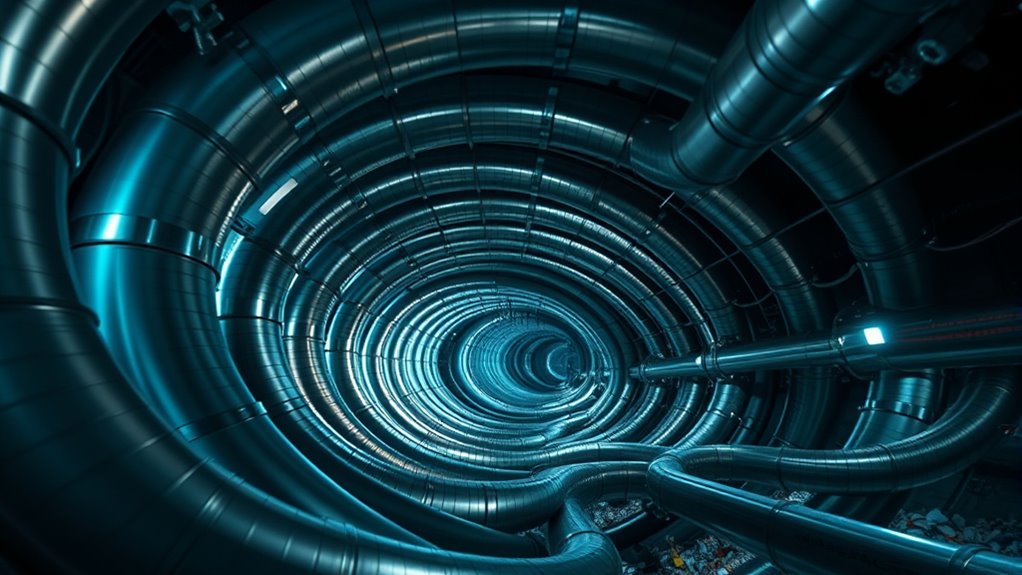

Pneumatic waste pipelines offer a modern solution for garbage transport by using underground tubes to move waste directly from collection points to processing facilities. This system reduces the need for noisy garbage trucks, minimizing traffic congestion and lowering emissions in urban areas. With the integration of smart sensors and maintenance robots, efficiency is enhanced, giving cities a cleaner and greener environment. There’s even more to explore about how these innovative systems transform waste management.

Prime made for students and young adults
- Fast, free delivery for dorm and study essentials
- Prime Video and Amazon Music included
- Member-only deals
Key Takeaways
- Pneumatic waste pipelines are underground tubes that transport garbage directly from collection points to processing facilities, enhancing urban waste management.
- This system reduces the need for traditional garbage trucks, minimizing traffic congestion and lowering emissions associated with waste transportation.
- Smart sensors monitor waste levels in real-time, ensuring efficient operation and timely alerts when bins reach capacity, activating pneumatic transport.
- Maintenance robots inspect pipelines for blockages and wear, allowing for quick diagnosis and repairs, which ensures continuous waste transport efficiency.
- The technology contributes to cleaner, quieter urban environments by eliminating noisy garbage trucks and reducing greenhouse gas emissions.
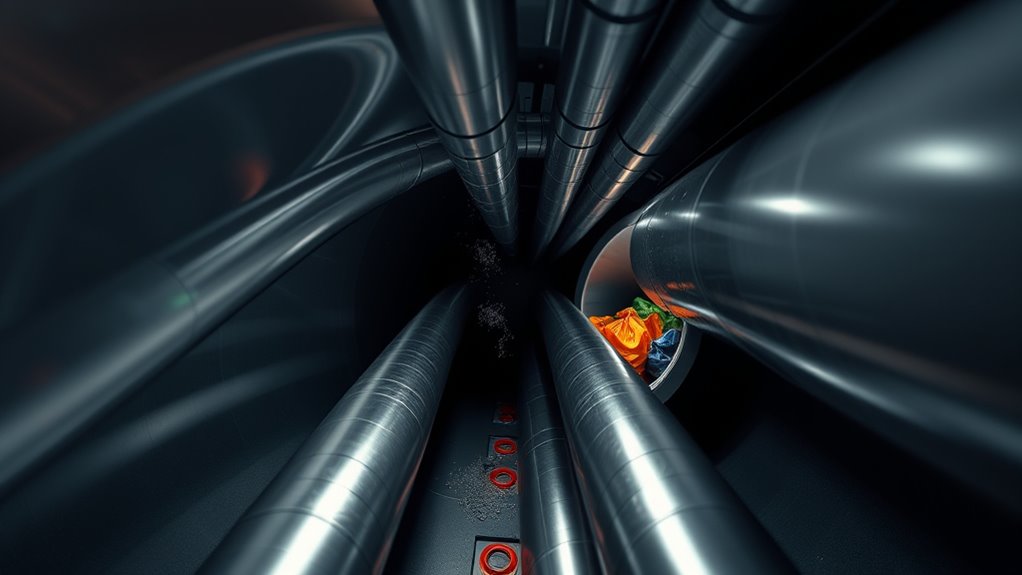
Pneumatic waste pipelines are revolutionizing how we manage waste in urban environments. By using a system of underground tubes, these pipelines transport garbage directly from collection points to processing facilities, reducing the need for traditional garbage trucks. This innovative approach not only streamlines waste management but also minimizes traffic congestion and lowers emissions. Imagine living in a city where trash is whisked away without the noise and pollution of garbage trucks rumbling through streets. That’s the promise of pneumatic systems.
Pneumatic waste pipelines transform urban waste management, eliminating garbage trucks and creating cleaner, quieter cities.
What makes these pipelines even smarter is the integration of technology like smart sensors. These sensors monitor waste levels in real-time, guaranteeing that the system operates efficiently. You won’t have to worry about overflowing bins or inefficient pickups. When a bin fills up, the sensors send alerts to the system, prompting it to activate the pneumatic transport mechanism. You’ll find that this technology allows for a more responsive waste management strategy, adapting to the needs of the city as they change throughout the day.
In addition to smart sensors, maintenance robots play a vital role in keeping these pipelines in top shape. You can rest easy knowing that any potential issues are quickly identified and addressed. These robots travel through the pipelines, inspecting for blockages or wear and tear. By automating maintenance, the system can minimize downtime and guarantee that waste is continuously transported without interruption. You might not even realize how much more efficient waste management has become until you see a maintenance robot in action, swiftly diagnosing and fixing problems without any disruption to the environment.
The benefits of pneumatic waste pipelines extend beyond just efficiency. They contribute to a cleaner, more sustainable urban landscape. As you stroll through your city, you won’t have to deal with the unpleasant sights and smells of overflowing trash bins. Moreover, by reducing the number of garbage trucks on the road, these systems help cut down on greenhouse gas emissions. Cities can become greener and more livable, making your daily life more pleasant. Additionally, the integration of AI-driven solutions into waste management systems enhances their effectiveness and responsiveness.
As an affiliate, we earn on qualifying purchases.
Frequently Asked Questions
How Does a Pneumatic Waste Pipeline System Work?
A pneumatic waste pipeline system works by using air pressure to transport waste through durable pipes. You’ll find that the system efficiently moves garbage from collection points to a central processing area. It relies on strategically placed vacuum pumps to create suction, pulling waste through the network. With a robust design, these pipes can handle various waste types, ensuring minimal leaks and maintenance issues, which ultimately enhances the overall efficiency of waste management.
What Types of Waste Can Be Transported via Pneumatic Systems?
You can transport various types of waste via pneumatic systems, including organic materials, recyclables, and even non-recyclable waste. Waste segregation plays a pivotal role in ensuring efficient handling. By categorizing waste effectively, you enhance the system’s scalability, allowing it to adapt to different volumes and types of waste generated. This flexibility helps optimize collection processes and minimizes environmental impact, making pneumatic systems a smart choice for modern waste management.
How Is Maintenance Performed on These Pipelines?
You’ll find that about 80% of pipeline failures result from inadequate maintenance. To keep your pipelines durable, you’ll perform regular inspections and cleanings to prevent clogs and wear. Maintenance challenges often arise from the system’s underground location, making access tricky. You’ll also need to monitor the pressure and airflow, ensuring everything runs smoothly. By staying proactive, you can extend the lifespan of your pipelines and minimize unexpected breakdowns.
Are There Any Environmental Benefits of Pneumatic Waste Systems?
Yes, pneumatic waste systems offer significant environmental benefits. They enhance recycling efficiency by streamlining the waste separation process, making it easier to divert recyclables from landfills. You’ll also appreciate the odor control these systems provide, as they minimize unpleasant smells associated with traditional waste collection methods. By reducing the need for heavy trucks, they lower carbon emissions, promoting a cleaner urban environment. Overall, you’ll find these systems contribute positively to sustainable waste management.
What Is the Cost of Installing Pneumatic Waste Pipelines?
Installing pneumatic waste pipelines can seem like a financial mountain to climb—expect a hefty price tag! Your cost analysis should reveal installation expenses that can range from thousands to millions, depending on the system’s complexity and scale. You’ll need to take into account factors like labor, materials, and infrastructure adjustments. While the initial investment might be shocking, the long-term savings on waste management could make it worth every penny you spend!
smart waste sensor for city trash management
As an affiliate, we earn on qualifying purchases.
As an affiliate, we earn on qualifying purchases.
Conclusion
So, while you might think that tossing your trash into a pneumatic waste pipeline is just another way to get rid of garbage, it’s actually a high-tech marvel beneath your feet. Ironically, in our quest for convenience, we’ve created a system that’s both efficient and invisible—out of sight, out of mind, right? Yet, as we bury our waste underground, we forget the very materials we’re discarding could have been transformed into something valuable instead.
underground garbage transport robot
As an affiliate, we earn on qualifying purchases.
As an affiliate, we earn on qualifying purchases.
urban waste management automation
As an affiliate, we earn on qualifying purchases.
As an affiliate, we earn on qualifying purchases.
Columbus Day / Indigenous Peoples' Day Picks
long weekend sales
As an affiliate, we earn on qualifying purchases.