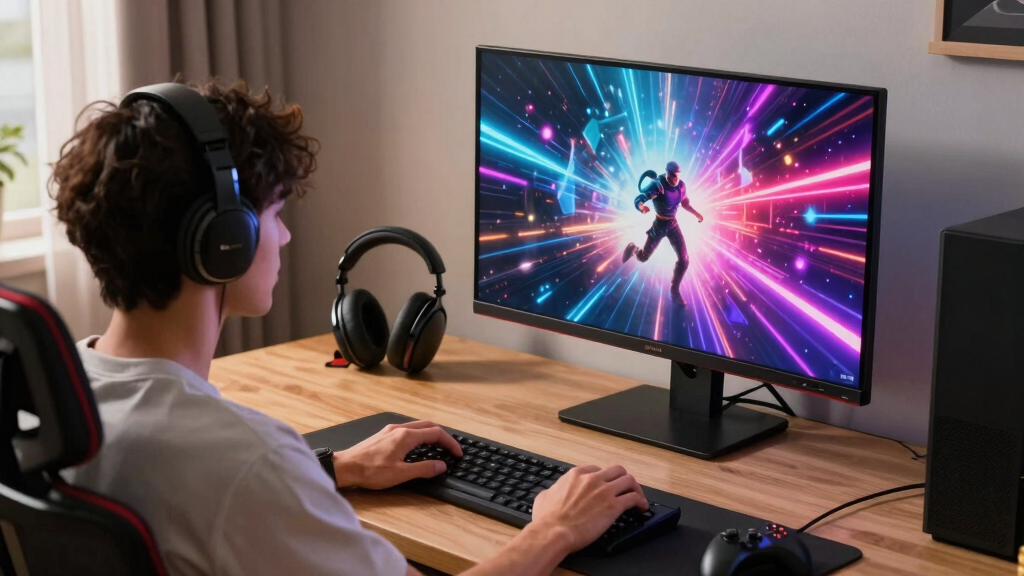

📊 Full opportunity report: AI-Powered OLED Gaming Monitors: The Future Of Fast, Vivid Gameplay In 2026 on ThorstenMeyerAI.com — validation score, market gap, and execution plan.

Get school and study supplies delivered free — and shop member deals
- Fast, free delivery on millions of items
- Access to Prime Big Deal Days deals on October 6–7
- Prime Video, Amazon Music and more included
TL;DR
AI-powered OLED gaming monitors are emerging in 2026, offering rapid response, vivid HDR visuals, and tailored gaming experiences. This development could redefine high-performance gaming displays.
Manufacturers are unveiling AI-powered OLED gaming monitors in 2026, promising faster response times, improved image quality, and smarter features tailored for gamers. For a detailed overview, see the original analysis. This shift marks a significant evolution in gaming display technology, with potential impacts on competitive play and immersive experiences.
Leading brands such as Alienware, Samsung, and ASUS have announced new models integrating artificial intelligence to optimize refresh rates, reduce motion blur, and enhance HDR contrast dynamically. These advancements are discussed in detail in the original analysis. These monitors leverage AI algorithms to analyze game content in real-time, adjusting settings for optimal visual fidelity and responsiveness.
For example, the Alienware AW3425DW now incorporates AI-driven motion smoothing and contrast enhancement, while Samsung’s Odyssey OLED G5 is expected to feature AI-based brightness and color calibration. These innovations aim to address longstanding OLED concerns like static-image burn-in and to provide tailored experiences for different game genres.
Manufacturers emphasize that these monitors will support high refresh rates—up to 240Hz or higher—with AI optimization ensuring smooth, vivid gameplay even in fast-paced titles. For more insights, see the original analysis. Early demonstrations suggest that AI algorithms can significantly improve black levels and HDR performance, making visuals more lifelike and immersive.
The 10 picks
- 1
 Samsung 27” Odyssey OLED G5 (G50SF) QHD Gaming Monitor, 180Hz, 0.03ms GtG, G-…View on Amazon →
 - 2
 Samsung 27" Odyssey OLED G6 Gaming Monitor – QD-OLED, QHD, 240Hz, 0.03ms, HDR…View on Amazon →
 - 3
 Alienware 34 240Hz QD-OLED Curved Gaming Monitor – AW3425DWView on Amazon →
 - 4
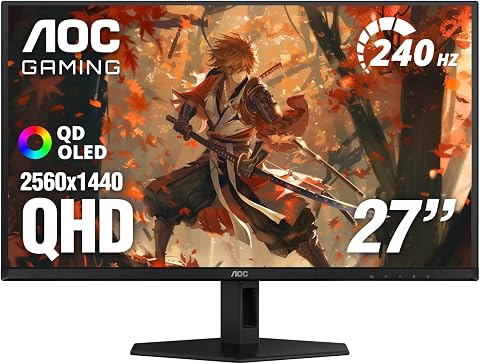 AOC 27" QD OLED Gaming Monitor, QHD 2560×1440, 240Hz, 0.03ms GtG, G-SYNC Comp…View on Amazon →
 - 5
 LG 27GX704A-B 27-inch Ultragear QHD OLED Gaming MonitorView on Amazon →
 - 6
 ASUS ROG Swift OLED 27” 1440P Gaming Monitor (PG27AQDP)View on Amazon →
 - 7
 LG 34GX900A-B 34-Inch Ultragear WQHD OLED Curved Gaming Monitor, 240Hz, 0.03m…View on Amazon →
 - 8
 Acer Predator 26.5" WQHD QD-OLED Gaming Monitor with 240Hz, AMD FreeSync PremiumView on Amazon →
 - 9
 LG 27-inch UltraGear OLED Gaming Monitor QHD 1440p 240HzView on Amazon →
 - 10
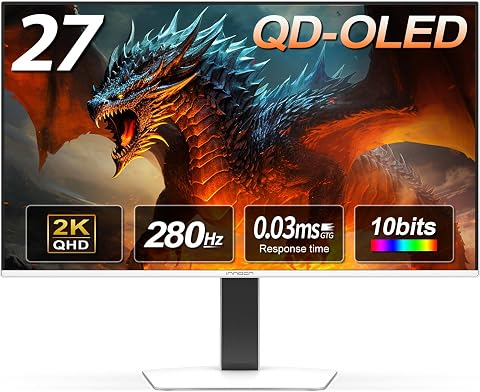 INNOCN 27" QD-OLED Gaming Monitor, 2K QHD 2560×1440, 280Hz, 0.03ms, HDR400, H…View on Amazon →
Impacts of AI-Enhanced OLED Monitors on Gaming
The integration of AI technology into OLED gaming monitors in 2026 could dramatically improve image quality, responsiveness, and user experience. Gamers may experience more vivid visuals, reduced motion artifacts, and adaptive settings that cater to specific game types, giving competitive players a potential edge. This development also signals a shift towards smarter, more customizable displays that address previous OLED limitations, such as static-image wear and ambient lighting challenges.
For consumers, these advancements could mean higher-quality gaming sessions, longer monitor lifespan, and better compatibility with next-generation gaming hardware. However, it remains to be seen how widespread these features will be across different price points and whether AI-driven adjustments will be transparent or require manual tuning.
Evolution of OLED Displays and AI Integration in Gaming
OLED technology has been favored for its deep blacks, high contrast, and fast pixel response, making it ideal for gaming. Over recent years, models like the Alienware AW3425DW and Samsung Odyssey OLED G5 have set benchmarks in visual quality and speed, with refresh rates reaching 240Hz and beyond.
Prior to 2026, the main challenges for OLED gaming monitors included static-image burn-in risk, high cost, and the need for manual calibration to optimize HDR and color accuracy. The advent of AI integration aims to mitigate these issues by dynamically adjusting settings based on content and ambient conditions. Major manufacturers announced their plans for AI-enhanced displays at CES 2026, signaling a new era of intelligent gaming monitors designed to deliver superior performance without sacrificing longevity or usability.
“Our new OLED monitors leverage AI to optimize brightness, contrast, and color in real-time, ensuring gamers get the best possible experience regardless of ambient lighting.”
— Samsung spokesperson
Unresolved Questions About AI-Powered OLED Monitors
While manufacturers have announced AI integration into OLED gaming monitors, specific performance benchmarks, long-term durability, and pricing remain unconfirmed. It is also unclear how effective AI algorithms will be in reducing static-image burn-in or managing power consumption during extended use. Consumer adoption may vary depending on the maturity of AI features and their transparency in user settings.
Upcoming Launches and Industry Adoption of AI OLED Gaming Monitors
Throughout 2026, expect to see more product launches from major brands featuring AI-enhanced OLED technology. Industry experts anticipate firmware updates and software improvements to refine AI capabilities, with early reviews providing insights into real-world performance. Adoption rates will depend on how well these features address existing OLED concerns and whether they justify premium pricing.
Additionally, ecosystem support, including gaming console compatibility and software integration, will influence how broadly these monitors are embraced by gamers and content creators alike.
Key Questions
How will AI improve OLED gaming monitors?
AI will enhance response times, optimize HDR and contrast dynamically, and reduce issues like motion blur and static-image burn-in, leading to clearer, more vivid, and longer-lasting displays.
Are AI-powered OLED monitors more expensive?
Initial models are likely to carry a premium due to advanced features, but prices may decrease as technology matures and mass production scales up.
Will AI features require manual calibration?
Many AI enhancements aim to operate automatically, adjusting settings in real-time, though manual calibration options may still be available for advanced users.
What are the main challenges for AI OLED monitors?
Key challenges include managing static-image wear, ensuring AI algorithms are effective across diverse game content, and maintaining affordability for consumers.
When will these monitors be widely available?
Major launches are expected throughout 2026, with broader availability likely by the end of the year as manufacturers ramp up production and distribution.
Source: ThorstenMeyerAI.com
Halloween Picks
halloween
As an affiliate, we earn on qualifying purchases.