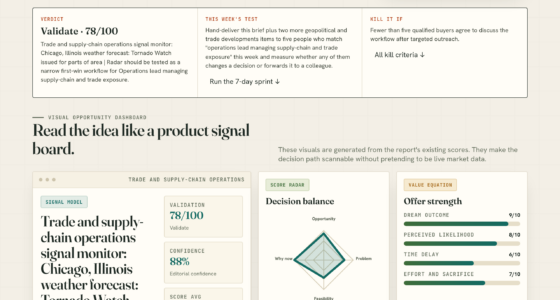
📊 Full opportunity report: District 1 Election Outcomes And Their Role In Trade And Supply Chain Dynamics on IdeaNavigator AI — validation score, market gap, and execution plan.
TL;DR

The primary election outcomes in Congressional District 1 have been identified as a key geopolitical development affecting trade and supply chain operations. This signals the importance of real-time, role-filtered monitoring for operations leaders managing exposure.
Primary election results in Congressional District 1 have been confirmed, with a narrow victory for a candidate whose policy positions could influence trade and supply chain policies. This outcome is significant for operations leaders managing supply-chain and trade exposure, as it signals potential shifts in regional trade policies and geopolitical stability that could affect supply routes and risk assessments.
Election results in District 1, a key political region, were finalized after a tightly contested race. The winning candidate’s platform emphasizes trade policy reform and regional economic integration, which could alter the trade landscape in the coming months. According to election officials, the margin was narrow, underscoring the region’s political volatility.
Trade and supply chain operations are highly sensitive to regional political shifts, especially in districts with significant economic influence. Learn more about Albany’s recent supply chain challenges. Industry sources note that changes in local governance or policy priorities can impact tariffs, border controls, and infrastructure investments, all of which are critical to supply chain stability. The results are being monitored closely by geopolitical and trade analysts, who see this as a potential early indicator of broader regional shifts. For more insights, see our analysis on supply chain disruptions.
Experts highlight that the election’s outcome could influence upcoming trade negotiations and regional cooperation efforts. Read about how regional politics impact trade. The candidate’s stance on trade agreements and infrastructure projects is under review, with some analysts suggesting that a more protectionist or interventionist approach could emerge, affecting international trade flows and supply chain resilience.
Implications of District 1 Election for Trade Policies
This election outcome matters because it could signal shifts in regional trade policies and geopolitical stability, directly impacting supply chain operations. For operations leaders managing trade exposure, understanding these developments allows for more proactive risk management, especially as political changes can influence tariffs, border policies, and infrastructure investments. The results highlight the importance of real-time, role-specific geopolitical monitoring to anticipate and adapt to such shifts effectively.
real-time geopolitical monitoring tools
As an affiliate, we earn on qualifying purchases.
As an affiliate, we earn on qualifying purchases.
Recent Political Developments in District 1 and Trade Impact
District 1 has historically been a politically competitive region, with election results often signaling broader national trends. In recent years, the district has gained prominence due to its strategic location and economic significance. The current election was closely watched because of its potential to alter regional policy directions, especially regarding trade and infrastructure.
Trade and supply chain managers have expressed concern that political instability or policy shifts could disrupt current operations, particularly in sectors reliant on regional trade agreements or border crossings. The election results come amidst ongoing global trade tensions and supply chain disruptions, making regional political stability a key factor for operational planning.
Prior to this election, regional trade policies were largely driven by national-level decisions, but local leadership changes can accelerate or modify these policies. Analysts note that this election could influence regional cooperation on trade issues, infrastructure projects, and border security, all of which are critical to supply chain resilience.
supply chain risk assessment software
As an affiliate, we earn on qualifying purchases.
As an affiliate, we earn on qualifying purchases.
Uncertain Impact of Election on Future Trade Policies
While the election results are confirmed, the precise policy directions the new leadership will pursue remain unclear. It is not yet known how the candidate’s platform will translate into actual trade and infrastructure policies, or how regional cooperation will evolve in response to the election outcome. Analysts caution that further developments, such as legislative actions or regional negotiations, are needed to clarify the full impact.
As an affiliate, we earn on qualifying purchases.
Next Steps in Monitoring Regional Trade Policy Changes
Trade and supply chain operations teams will need to closely monitor policy announcements and regional cooperation efforts following the election. Key indicators to watch include new trade agreements, infrastructure investments, border policy adjustments, and regional political stability. Analysts expect that within the next quarter, clearer signals will emerge regarding how the new leadership’s policies will shape regional trade and supply chain resilience.
supply chain disruption detection devices
As an affiliate, we earn on qualifying purchases.
As an affiliate, we earn on qualifying purchases.
Key Questions
How will the District 1 election affect supply chain routes?
The election could lead to policy shifts that impact regional trade agreements, border controls, and infrastructure investments, potentially altering supply chain routes and costs.
What specific policies are likely to change after this election?
It is still uncertain, but candidates’ platforms suggest possible reforms in trade tariffs, regional cooperation, and infrastructure development that could influence supply chain stability.
How can operations leaders prepare for these political changes?
They should implement real-time geopolitical monitoring, diversify supply routes, and build contingency plans to mitigate potential disruptions from regional policy shifts.
When will the full impact of the election become clear?
Most policy impacts will become clearer over the next three to six months as new leadership initiatives and regional negotiations unfold.
Is this election outcome unique or part of a broader trend?
While specific to District 1, the election reflects broader regional and national political trends that could influence trade policies in similar districts.
Source: IdeaNavigator AI