
TL;DR

Prime made for students and young adults
- Fast, free delivery for dorm and study essentials
- Prime Video and Amazon Music included
- Member-only deals
AI can address Europe’s fragmented online public transport landscape by creating connectors that unify ticketing and information across countries. This could simplify travel for users and boost revenue for providers.
AI technology has the potential to unify Europe’s fragmented online public transport systems by creating standardized connectors that facilitate seamless ticketing and information sharing across countries.
Currently, each European country and even regions within countries operate their own distinct public transport apps, with different interfaces, ticketing rules, and vocabulary. For example, the Netherlands has separate apps for internal and international travel, Germany’s DB app offers various ticket types, and Denmark and France have their own zone and ticket rules. Travelers often experience confusion, anxiety, and inefficiency navigating these systems, sometimes resorting to screenshots or external tools like ChatGPT to clarify options.
Recent discussions, including a post on Hacker News, suggest that AI could help by developing ‘connectors’—a concept akin to existing Multi-Channel Platforms (MCPs)—that expose common tools for discovering transport options, filtering by time and location, and purchasing tickets through a unified gateway. These connectors would standardize vocabulary, simplify ticket types (daily, weekly, monthly), and reduce user anxiety. While public transport providers might worry about losing control over customer data and branding, proponents argue that such integration could increase adoption, revenue, and user satisfaction.
Why It Matters
This development matters because it addresses a major pain point for travelers navigating Europe’s complex public transport landscape. Simplifying access and reducing confusion can encourage more use of public transit, potentially decreasing car reliance and emissions. For transport providers, it offers an opportunity to increase revenue and customer engagement. For tourists and occasional travelers, it promises a less stressful, more intuitive experience.
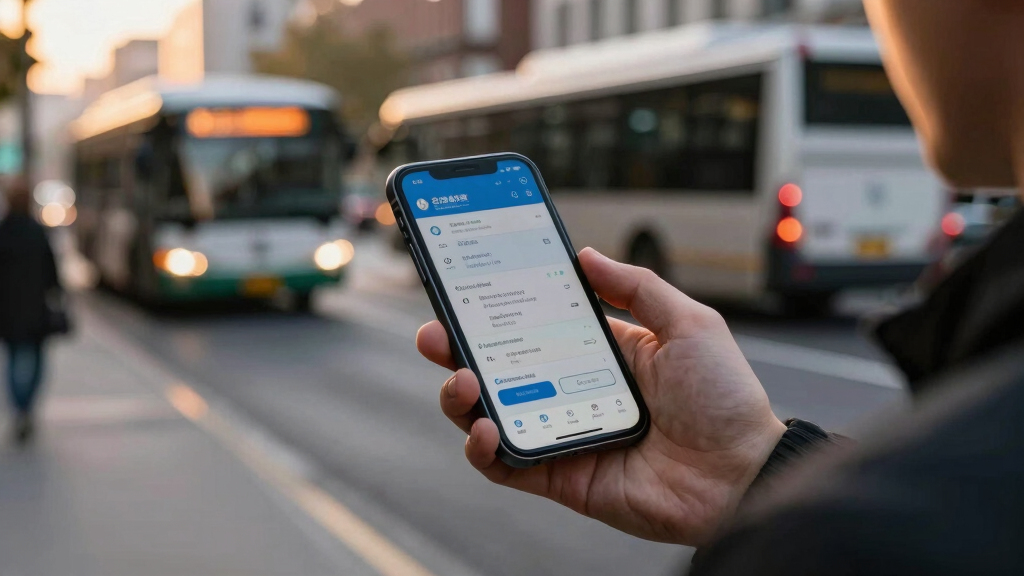
European public transport ticketing app
As an affiliate, we earn on qualifying purchases.
As an affiliate, we earn on qualifying purchases.
Background
Europe’s public transport systems have historically evolved independently, leading to a patchwork of apps and ticketing schemes. Recent years have seen attempts at digital integration, but fragmentation remains a barrier. AI-driven solutions have been discussed as a way to bridge these gaps, with some companies exploring connectors or APIs to unify services. The idea aligns with broader trends toward digital transformation and user-centered design in mobility services.
“Every such company should integrate using ‘connectors’. I don’t know what a connector is but it already exists in the form of MCPs. The connectors should expose common tools for discovering transport options with filters like time, location and so on.”
— Hacker News user
“Integrating Europe’s diverse public transport apps through AI-powered connectors could significantly enhance user experience and operational efficiency.”
— Transport industry analyst
multi-country transit ticketing app
As an affiliate, we earn on qualifying purchases.
As an affiliate, we earn on qualifying purchases.
What Remains Unclear
It remains unclear how quickly such AI-driven connectors can be developed and adopted across different countries and transport agencies. Questions about data privacy, control over customer relationships, and regulatory hurdles are still unresolved. The technical feasibility of creating truly universal standards and interfaces also requires further testing and consensus among stakeholders.
public transport connectivity API
As an affiliate, we earn on qualifying purchases.
As an affiliate, we earn on qualifying purchases.
What’s Next
Next steps include pilot projects to develop and test these connectors, discussions among European transport agencies, and potential collaboration with AI developers. Monitoring the adoption and impact of these solutions over the coming years will reveal their effectiveness in reducing fragmentation and improving user experience.
unified transit ticketing system
As an affiliate, we earn on qualifying purchases.
As an affiliate, we earn on qualifying purchases.
Key Questions
How would AI connectors improve my travel experience?
They would provide a single, standardized interface to discover, compare, and purchase tickets across multiple transport providers, reducing confusion and saving time.
Are there privacy concerns with these AI integrations?
Potential privacy issues depend on how data is shared and managed; transparent policies and regulations will be necessary to protect user information.
Will this eliminate the need for multiple transport apps?
Ideally, yes. A unified connector could reduce the need for separate apps, but implementation and user acceptance will determine the outcome.
When might we see these AI connectors in widespread use?
Pilot projects could start within the next 1-2 years, with broader adoption depending on success and regulatory approval.
Fall Picks
fall essentials
As an affiliate, we earn on qualifying purchases.