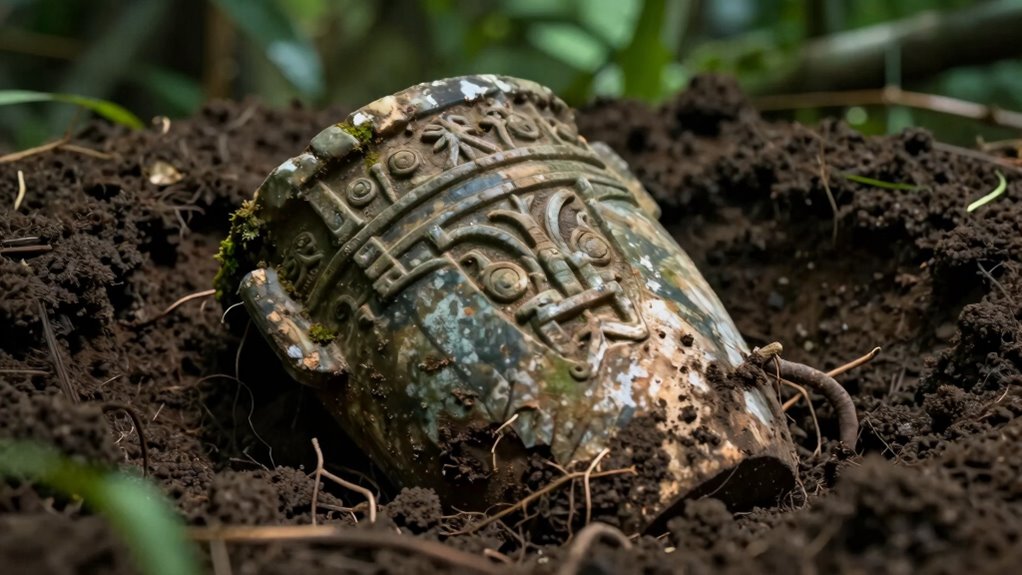

Discoveries often take decades to be fully understood because they challenge existing beliefs or paradigms, making skeptics hesitant to accept them quickly. Technological advances are usually needed to observe and validate new findings, which can delay their recognition. Societal and cultural resistance also play a role, especially when discoveries threaten power structures or long-held ideas. If you keep exploring, you’ll uncover more about how scientific progress unfolds over time and why patience is essential.

Prime made for students and young adults
- Fast, free delivery for dorm and study essentials
- Prime Video and Amazon Music included
- Member-only deals
Key Takeaways
- Scientific skepticism acts as a filter, delaying acceptance of groundbreaking discoveries until evidence is thoroughly validated.
- Prevailing beliefs and cultural factors often resist new ideas, slowing their integration into scientific consensus.
- Technological and methodological advances are necessary for understanding complex discoveries, causing initial delays.
- Deeply ingrained paradigms and existing theories require time to shift as new evidence accumulates.
- Societal and institutional resistance can hinder the recognition and acceptance of novel scientific findings.
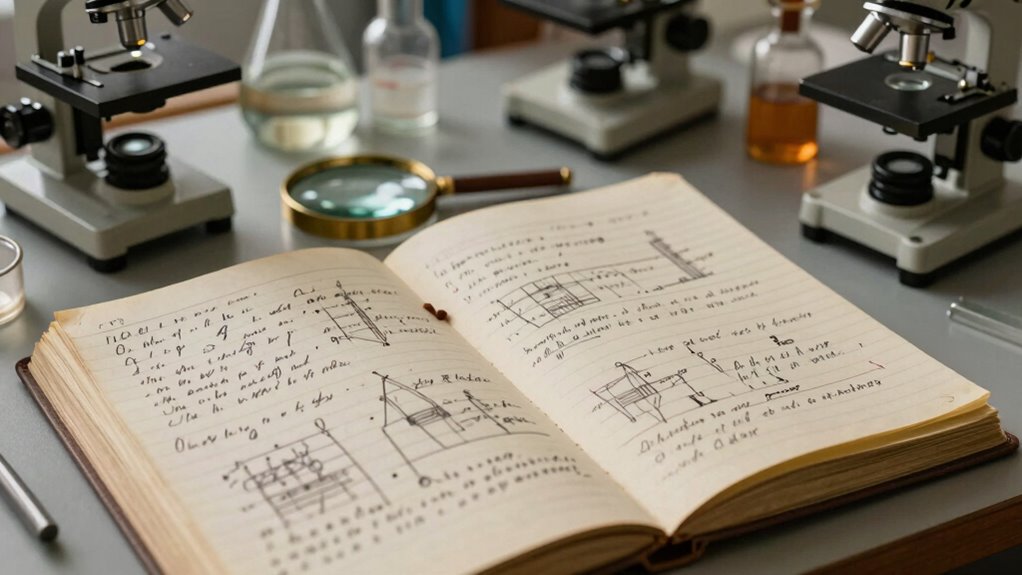
Many groundbreaking discoveries remain misunderstood for decades because their implications challenge existing beliefs or require new frameworks to be fully appreciated. When you look at scientific history, you’ll notice that breakthroughs often face an initial wave of skepticism. This skepticism isn’t just about doubting the findings; it’s rooted in the historical context of prevailing theories and accepted knowledge. Scientists and thinkers tend to interpret new data through the lens of what they already believe to be true. If a discovery contradicts those beliefs, it naturally triggers resistance. That’s part of why it takes time for the scientific community to accept and integrate new ideas.
Groundbreaking discoveries often face skepticism as they challenge established beliefs and require new frameworks to be understood.
Understanding why some discoveries take so long involves recognizing how scientific skepticism works. It’s a necessary part of progress—serving as a filter that prevents false claims from spreading rapidly. But at the same time, this skepticism can slow down acceptance, especially when the discovery disrupts a well-established paradigm. For example, when the heliocentric model of the solar system was introduced, it faced fierce opposition rooted in the religious and scientific context of that time. It took decades before it gained widespread acceptance, and even longer for it to be fully understood and integrated into accepted scientific frameworks. This process highlights how the historical context influences how quickly new ideas are embraced. Additionally, the development of innovative tools and techniques often plays a crucial role in allowing scientists to validate and understand new discoveries more thoroughly. The evolution of scientific methods and instrumentation is often a key factor in shifting perceptions and overcoming initial resistance.
You also need to acknowledge that many discoveries require the development of new tools, techniques, or theoretical frameworks before they can be fully appreciated. Sometimes, the understanding of a discovery only comes after technological advances allow scientists to observe or measure phenomena more precisely. For example, the discovery of radio waves or the nature of DNA’s structure was only possible after the development of specialized instruments. These technological and conceptual advancements often lag behind the initial discovery, adding to the delay in comprehension.
Moreover, cultural and societal factors can influence the pace of acceptance. Scientific breakthroughs often challenge deeply held beliefs or threaten existing institutions, making their acceptance a slow process. When you realize that many groundbreaking discoveries initially face resistance due to the prevailing intellectual climate, it becomes clear that patience and persistence are essential. The history of science shows us that understanding often deepens gradually, as new evidence accumulates and paradigms shift. So, the delay isn’t just about the discovery itself but also about the complex interplay of context, skepticism, and the evolution of scientific thought. Recognizing the importance of scientific paradigms can help us appreciate how scientific consensus forms over time.
As an affiliate, we earn on qualifying purchases.
Frequently Asked Questions
How Do Scientists Decide When a Discovery Is Fully Understood?
You decide a discovery is fully understood when scientific consensus emerges, backed by extensive research and testing. Historical skepticism prompts you to question initial findings, requiring further validation. You also consider ethical implications to guarantee the discovery’s responsible application. When evidence consistently supports the discovery and ethical concerns are addressed, you can confidently say it’s fully understood, marking a significant milestone in scientific progress.
What Role Does Technological Advancement Play in Understanding Discoveries?
Did you know that over 80% of scientific breakthroughs rely heavily on technological advancements? Technological progress plays a vital role in understanding discoveries by providing new tools and methods. It shapes the historical context of research and enhances scientific methodology, enabling scientists like you to analyze data more precisely and explore complex phenomena. As technology evolves, your ability to decode discoveries improves, often accelerating the timeline for full understanding.
Can Cultural Biases Delay the Acceptance of New Discoveries?
Yes, cultural biases can delay acceptance of new discoveries. When you hold preconceived notions, it’s harder to see evidence that challenges them. Confirmation bias makes you favor information that fits your beliefs, ignoring data that contradicts them. This resistance slows down understanding and acceptance. It’s essential to stay open-minded and critically evaluate new findings, even if they challenge long-held cultural beliefs.
How Do Funding and Politics Influence the Timeline of Understanding?
You might find that funding biases and political influence can slow down or speed up understanding. When financial support favors certain ideas, it can delay alternative discoveries, while political motives might hinder acceptance to protect interests. It’s often a case of “following the money,” as these factors shape research priorities and timeline. Your awareness of these influences helps you recognize why some breakthroughs take longer than they should to be understood.
Are There Examples Where Understanding of a Discovery Regressed Over Time?
Yes, there are examples where understanding regressed over time. Historical misconceptions often led scientists to dismiss or overlook new evidence, fueling scientific skepticism. For instance, early theories about the Earth’s shape or disease causes were later proven wrong, but during those periods, progress stalled or reversed. These setbacks remind us that scientific understanding isn’t always linear and that revisiting past misconceptions can be essential for true progress.
As an affiliate, we earn on qualifying purchases.
Conclusion
Sometimes, breakthroughs aren’t immediately clear; it takes time for the scientific community to grasp their significance. Imagine discovering a new element that initially seems insignificant—only to find out decades later it’s essential for renewable energy. Your curiosity and patience are important, as understanding often unfolds gradually. So, keep questioning and exploring, because what seems obscure now may be the key to future innovations. Your persistence could open the door to the next big discovery.
laboratory measurement instruments
As an affiliate, we earn on qualifying purchases.
As an affiliate, we earn on qualifying purchases.
scientific discovery validation tools
As an affiliate, we earn on qualifying purchases.
As an affiliate, we earn on qualifying purchases.
Halloween Picks
halloween
As an affiliate, we earn on qualifying purchases.



![Paxos Made Simple (2001) [Pdf]](https://thegeniusfactory.net/wp-content/uploads/2026/07/paxos-made-simple-2001-pdf-featured-560x300.jpg)