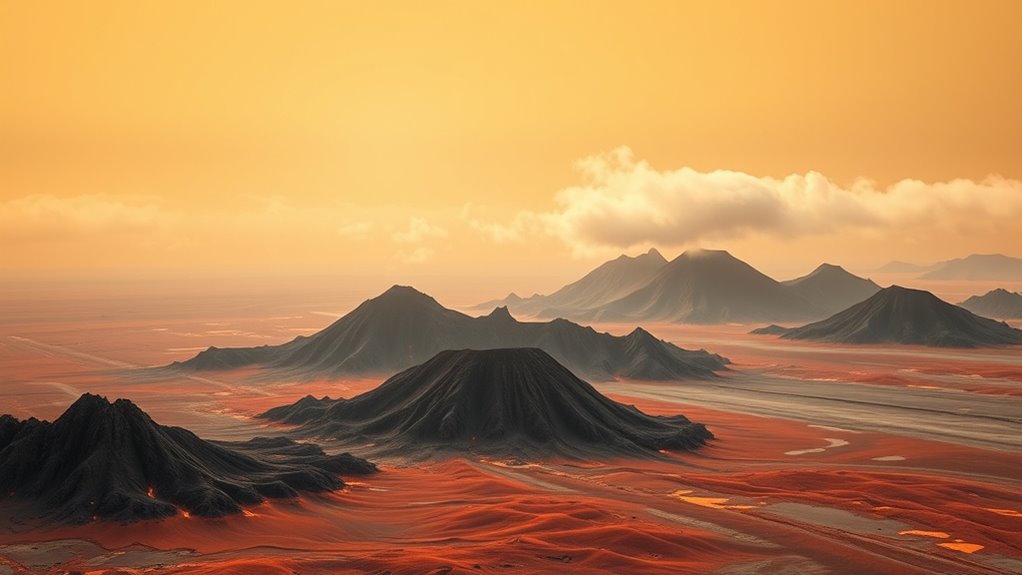

Recent discoveries reveal that Venus’s volcanoes are more active than previously thought. Evidence of ongoing eruptions, surface changes, and fresh volcanic vents suggest the planet’s interior remains dynamic. Signs like sulfur dioxide variations and new lava flows show that Venus is not a dormant world but a planet with active volcanic processes. If you want to learn more about these mysterious features shaping Venus’s surface, there’s much more to explore.

Prime made for students and young adults
- Fast, free delivery for dorm and study essentials
- Prime Video and Amazon Music included
- Member-only deals
Key Takeaways
- Recent observations reveal active volcanic eruptions and surface changes, confirming ongoing volcanism on Venus.
- Radar imaging shows new volcanic vents forming within months, indicating dynamic geological processes.
- Evidence of sulfur dioxide fluctuations suggests continuous volcanic outgassing influencing the atmosphere.
- Unique features like coronae and pancake domes highlight Venus’s distinctive volcanic activity.
- These discoveries position Venus as the closest example of a geologically active planet beyond Earth.
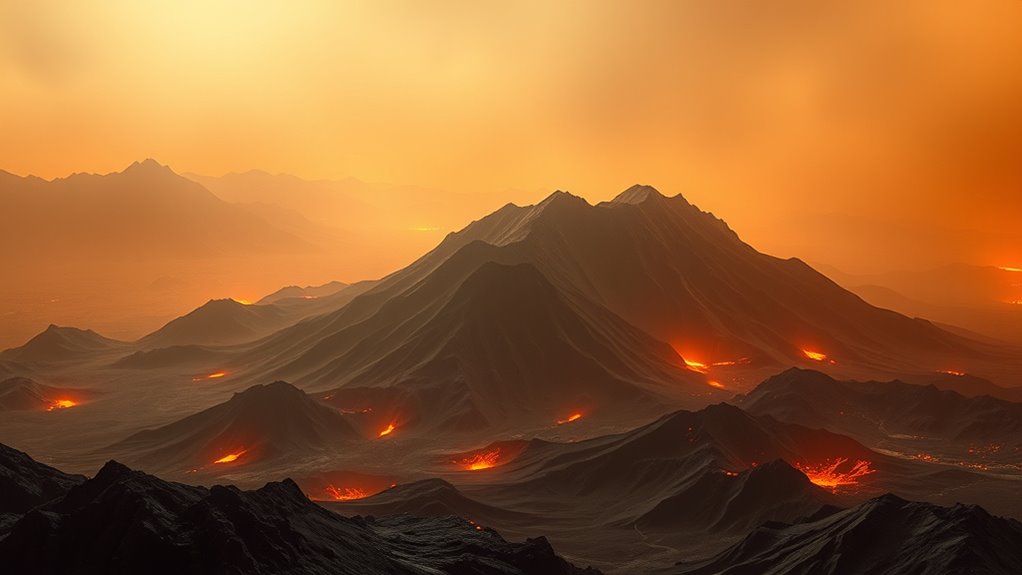
Have you ever wondered what volcanoes on Venus look like and how they shape the planet’s surface? Recent mapping efforts reveal an astonishing landscape filled with around 85,000 volcanoes, mostly small—about 99% are under 3 miles (5 km) across. This extensive inventory, primarily based on radar images from NASA’s Magellan mission in the 1990s, makes Venus’s volcanic record the most detailed for any planet besides Earth. It helps scientists locate active lava flows and understand the planet’s volcanic patterns.
Venus’s surface is dominated by volcanic features, with roughly 90% composed of basalt and over 65% covered by vast lava plains. More than 1,000 major volcanic structures punctuate its terrain, along with countless smaller ones. Evidence suggests that volcanic flows reshaped the planet globally around 500 million years ago, and the scarcity of impact craters indicates that surface renewal through volcanism is ongoing. The thick atmosphere, rich in carbon dioxide and exerting about 90 times Earth’s pressure, influences volcanic activity and lava flow behavior, making Venus a unique world.
Venus’s surface is mostly basaltic with vast lava plains and over 1,000 major volcanic structures.
Most volcanoes on Venus are shield volcanoes with broad, gentle slopes, similar to those on Earth but formed without plate tectonics. Notable examples include Gula Mons, standing about 3 km high, and Sif Mons, roughly 2 km tall. Unique features like coronae—large circular uplifts caused by mantle upwelling—add to the planet’s exotic volcanic landscape. Venus also hosts pancake domes: smaller, flatter volcanic structures distinct from Earth’s volcanoes. These features suggest a volcanic regime driven by internal heat and mantle dynamics rather than plate movements, setting Venus apart from terrestrial planets with active tectonics.
Recent evidence indicates Venus is still volcanically active. Signs include ash flows near Maat Mons’s summit and flank, and variations in atmospheric sulfur dioxide levels point to ongoing outgassing. In 2023, scientists confirmed topographical changes at Maat Mons, with the vent expanding within just eight months. These rapid changes are the first solid proof of active volcanism on Venus, challenging previous assumptions that the planet’s volcanoes were dormant. Furthermore, ongoing research continues to uncover new clues about the planet’s volcanic processes and internal dynamics, emphasizing its active nature.
Venus’s volcanic activity is less intense than Jupiter’s moon Io but still significant. Past surveys detected minimal surface changes, but the 2023 findings reveal dynamic processes occurring today. The new volcanic vent covered roughly 1.5% of the radar-mapped surface, showing how even small-scale eruptions can reshape the landscape. Unlike Mars, where lava flows from millions of years ago remain static, Venus displays recent activity, demonstrating that its volcanoes are still shaping the planet’s surface and atmosphere.
This ongoing volcanism plays a crucial role in Venus’s geological evolution. Without tectonic plates, heat escapes mainly through volcanic activity, influencing surface features and atmospheric composition. Periodic resurfacing events have profoundly affected the planet’s development, making Venus a fascinating world of active volcanoes and dynamic geological processes.
As an affiliate, we earn on qualifying purchases.
Frequently Asked Questions
How Do Venus’ Volcanoes Compare to Earth’s in Size?
When comparing Venus’s volcanoes to Earth’s, you’ll find Venus hosts some of the largest volcanoes in the solar system. Many exceed 1,000 kilometers in diameter, dwarfing Earth’s Mauna Loa, which is about 120 kilometers across. While individual Venusian volcanoes are often flatter and broader, their sheer size and extensive volcanic fields make them colossal, much more expansive than most of Earth’s volcanoes.
Could Venus’ Volcanoes Support Life in Any Form?
You might think Venus’s volcanoes could support life, but the evidence suggests otherwise. Its dry, harsh environment and thick, toxic atmosphere make it unlikely for life as we understand it to thrive there. While volcanic activity could create temporary niches or provide energy sources, the extreme conditions and dehydration inside Venus limit any possibility of sustaining life. Still, the ongoing volcanism hints at a dynamic planet that might surprise us someday.
What Materials Compose Venus’ Volcanic Structures?
You’re asking about the materials that make up Venus’ volcanic structures. The majority are composed of basaltic (mafic) lava, which forms vast plains and shield volcanoes. Some regions, like tesserae terrains and certain domes, contain felsic or silica-rich materials, indicating a more evolved crust. These volcanic features result from mantle-driven processes, with lava flows and eruptions shaping the landscape under Venus’ extreme surface conditions.
Are There Ongoing Volcanic Eruptions on Venus Today?
They say where there’s smoke, there’s fire, and on Venus, signs point to ongoing volcanic activity. You might not see eruptions directly, but recent data reveals volcanic vents like Maat Mons have changed rapidly, with fresh lava flows and surface shifts. Infrared flashes and atmospheric changes suggest eruptions still occur, albeit slowly. Though uncertainties remain, evidence indicates Venus’s volcanoes are still alive, quietly shaping the planet today.
How Do Venus’ Volcanoes Influence Its Atmosphere?
Venus’ volcanoes considerably influence its atmosphere by continuously releasing gases like CO2 and SO2. These gases create a dense, greenhouse-rich atmosphere that traps heat, raising surface temperatures dramatically. Eruptions also inject ash and aerosols, affecting cloud formation and atmospheric chemistry. Your understanding of Venus’s climate shows how volcanic activity sustains its extreme conditions, with ongoing eruptions replenishing gases and maintaining the planet’s thick, hot atmosphere over time.
As an affiliate, we earn on qualifying purchases.
Conclusion
You might think Venus’s volcanoes are just ancient wonders, but they reveal ongoing geological activity that could change what we understand about planetary evolution. Don’t dismiss these volcanoes as dead; they’re still shaping Venus’s surface today. By studying them, you gain insights not only into Venus but also into Earth’s past and future. So, stay curious—these mysterious volcanoes might hold answers we’ve yet to uncover, and you won’t want to miss what’s next.
volcano geology educational poster
As an affiliate, we earn on qualifying purchases.
As an affiliate, we earn on qualifying purchases.
As an affiliate, we earn on qualifying purchases.
Columbus Day / Indigenous Peoples' Day Picks
long weekend sales
As an affiliate, we earn on qualifying purchases.