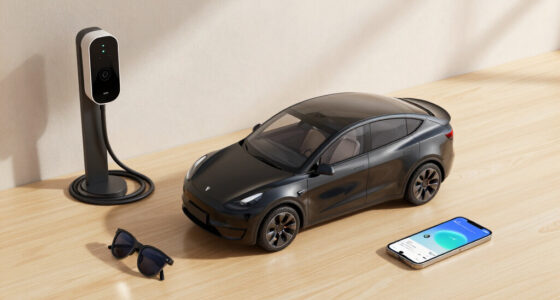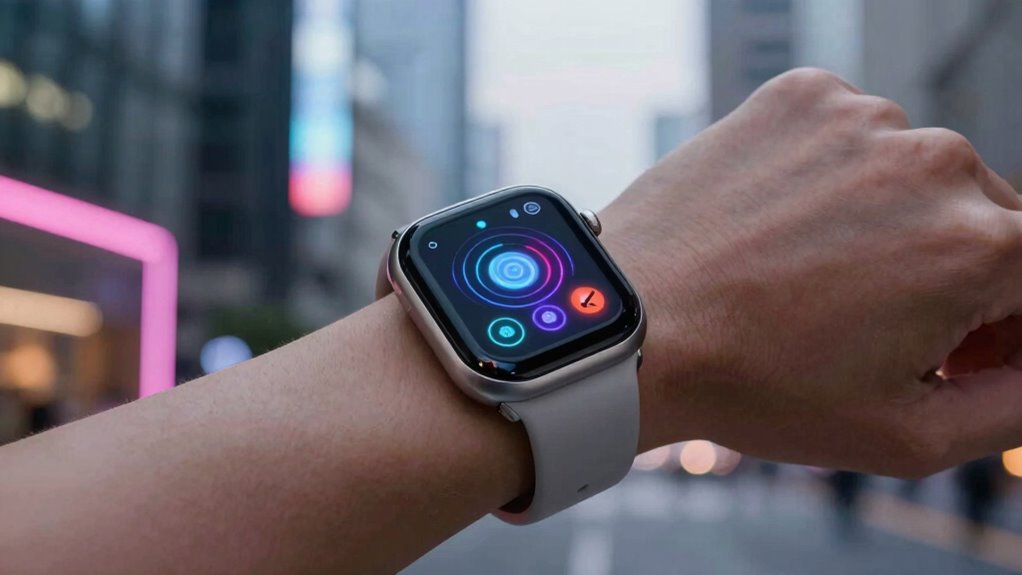

The next wave of wearable computing will deeply integrate into your daily life with seamless, natural interactions. Expect advanced AR glasses that overlay real-time info, from directions to translations, without interrupting what you’re doing. Biometric sensors will offer personalized health insights, helping you stay optimized and proactive. Devices will communicate effortlessly, adapting to your activities and environment. To discover how these innovations will shape your experience, explore what’s coming next in wearable technology.

Get school and study supplies delivered free — and shop member deals
- Fast, free delivery on millions of items
- Access to Prime Big Deal Days deals on October 6–7
- Prime Video, Amazon Music and more included
Key Takeaways
- Immersive AR glasses seamlessly overlay real-time digital information onto the physical environment.
- Wearables will integrate advanced biometric sensors for comprehensive health and performance monitoring.
- Devices will form interconnected ecosystems, adapting dynamically to user context and activity.
- Display technology will prioritize high contrast and visibility across diverse lighting conditions.
- Enhanced security and privacy features will ensure safe, trustworthy handling of personal data.
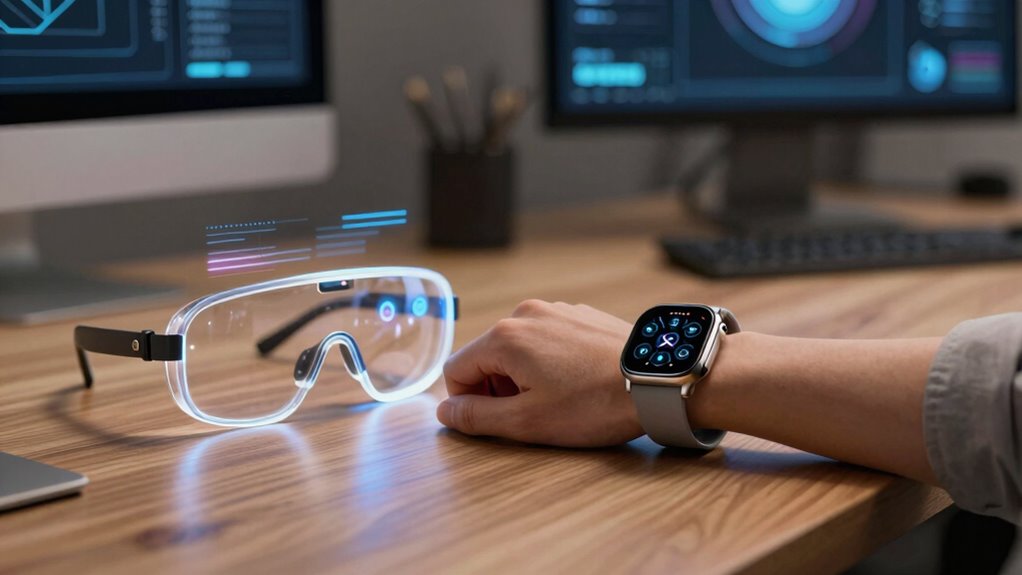
Have you noticed how wearable computing is rapidly transforming the way we interact with technology? It’s no longer just about smartwatches and fitness trackers; now, the next wave is all about immersive experiences and seamless integration into your daily life. Augmented reality, or AR, is leading the charge, blending digital elements with the real world in ways that feel natural and intuitive. Imagine wearing a sleek pair of glasses that overlay helpful information onto your field of vision—directions, notifications, or even real-time translations—without interrupting what you’re doing. These AR devices aren’t just futuristic toys; they’re becoming practical tools that improve how you work, learn, and connect.
Augmented reality glasses seamlessly overlay information, enhancing daily activities without disruption.
At the core of this evolution are advanced biometric sensors embedded into wearable devices. These sensors go beyond simple heart rate monitoring—they track your stress levels, hydration, sleep quality, and even muscle activity. With this data, your devices can offer personalized insights and recommendations, making health management more proactive and tailored to your needs. For example, as you work out, biometric sensors can adjust your training in real time, helping you optimize performance and avoid injury. They also enable a more continuous health monitoring system, providing doctors with detailed data remotely, which could revolutionize healthcare. You’ll find yourself increasingly aware of your body’s signals, making wellness an integrated part of your daily routine. Incorporating health data analysis into device design ensures these wearables can deliver even more meaningful feedback to users, especially as this field continues to evolve rapidly.
This next wave of wearable computing isn’t just about collecting data; it’s about creating a more interactive and intelligent environment around you. Think about smart clothing that adapts to your activity level or temperature, or AR glasses that change their display based on your context—whether you’re in a meeting, on a run, or relaxing at home. These devices will communicate with each other and with your smartphones, creating an interconnected ecosystem that responds to your needs almost instinctively. As a user, you’ll experience less hassle and more utility because the technology anticipates your actions, offering relevant information precisely when you need it. Additionally, integrating watt-hours and capacity considerations into device design ensures these wearables can operate efficiently over longer periods without frequent recharging, making them more practical for everyday use. Moreover, understanding the contrast ratio in display technology will be crucial for ensuring clear visibility in various lighting conditions, further enhancing user experience. Recognizing the importance of privacy and security will also be key as these devices handle increasingly sensitive personal data, ensuring user trust and safety.
augmented reality glasses with real-time overlay
As an affiliate, we earn on qualifying purchases.
As an affiliate, we earn on qualifying purchases.
Frequently Asked Questions
How Will Wearable Tech Impact Daily Personal Privacy?
Wearable tech will profoundly impact your personal privacy, raising privacy concerns as your data security becomes more vulnerable. You might find your personal information being shared or accessed without your full awareness, so it’s essential to stay vigilant. As these devices collect sensitive data, you’ll need to take proactive measures like strong passwords and encryption to protect your privacy and guarantee your data remains secure in an increasingly connected world.
What Are the Biggest Barriers to Mass Adoption?
You might hesitate to adopt wearable tech because of design aesthetics and battery longevity. If devices look bulky or unattractive, they won’t appeal to you. Poor battery life also frustrates, forcing frequent charges and limiting usage. Overcoming these barriers requires sleek designs that blend seamlessly into your style and longer-lasting batteries, making wearables more practical and attractive for everyday use.
Will Wearable Devices Become Fully Autonomous?
Imagine a world where your wearable device, like a sleek, glowing orb, seamlessly manages your day. Yes, wearable devices will become fully autonomous, with advanced autonomous functionality and device independence. You’ll no longer need to constantly connect or control them; they’ll adapt, learn, and respond on their own. This independence will make wearables more intuitive, empowering you to focus on what truly matters, free from constant tech management.
How Will Wearables Integrate With Other Smart Technologies?
You’ll see wearables seamlessly integrate with other smart technologies through enhanced connectivity and smart ecosystems. Fashion integration becomes key, allowing devices to blend into your style effortlessly, while health monitoring features become more advanced and continuous. You’ll be able to control smart home devices, track your health metrics, and even interact with virtual assistants—all from one connected, stylish wearable. This integration makes your daily tech experience more intuitive and personalized.
What New Industries Could Emerge From Wearable Computing Innovations?
You’ll find new industries sprouting from wearable innovations, surprisingly enough. Healthcare monitoring becomes more personalized and proactive, catching issues before they escalate. Environmental sensing tech could birth a whole sector focused on real-time data for climate and pollution control. Irony strikes as these wearables, meant for individual convenience, end up transforming sectors like public health and environmental management, proving that sometimes, the smallest devices can have the biggest impact.
biometric health monitoring wearable
As an affiliate, we earn on qualifying purchases.
As an affiliate, we earn on qualifying purchases.
Conclusion
As you embrace the next wave of wearable computing, you’ll discover devices that seamlessly integrate into your daily life, enhance your capabilities, and personalize your experiences. You’ll adapt to smarter, lighter, more intuitive technology that anticipates your needs, connects you more deeply, and empowers your journey. Wearable computing will become your trusted companion—guiding you, informing you, transforming you—creating a future where technology isn’t just worn, but woven into the fabric of your life.
interconnected wearable device ecosystem
As an affiliate, we earn on qualifying purchases.
As an affiliate, we earn on qualifying purchases.
As an affiliate, we earn on qualifying purchases.
Halloween Picks
halloween
As an affiliate, we earn on qualifying purchases.